
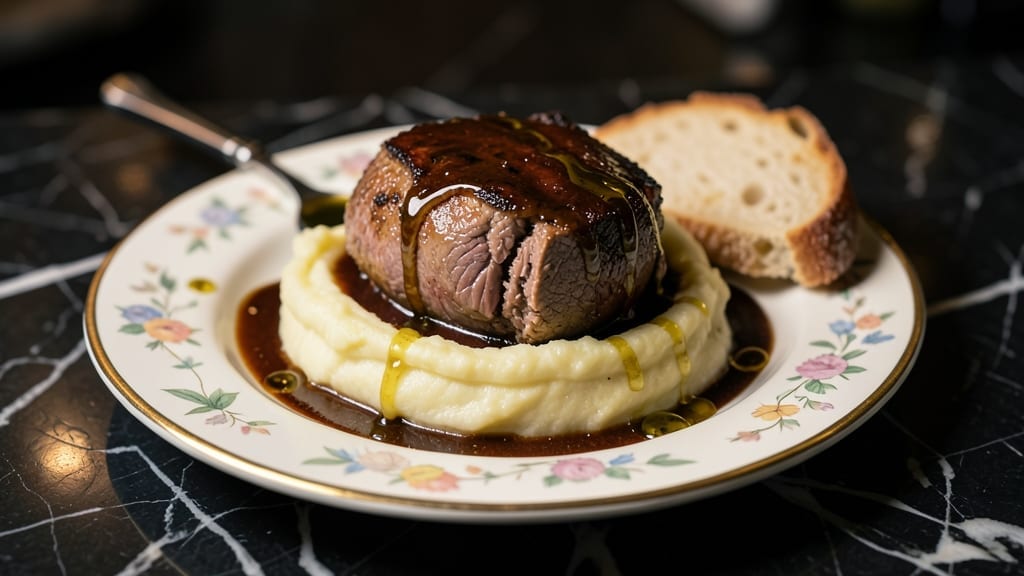
This Gordon Ramsay pot roast over mashed potatoes recipe delivers restaurant-quality results with tender beef, rich gravy, and velvety potatoes—all achieved through precise searing and slow braising.
The secret lies in high-heat searing to develop a deep flavor crust before letting the meat break down slowly in the oven, ensuring melt-in-your-mouth texture. I’ve perfected this technique over years of testing, and the difference between home-cooked and professional results is striking.
The dish begins with a chuck roast, seared until golden brown before being braised in red wine and herbs until fork-tender—typically 3 to 4 hours for perfect doneness. Meanwhile, the mashed potatoes are whipped to a smooth, creamy consistency, seasoned with garlic and butter for depth.
The final touch? A herbed gravy made from the pan drippings, thickened to coat the potatoes and roast beautifully.
What you’ll end up with is a plate that looks and tastes like it belongs in a fine-dining restaurant: succulent beef slices resting on a bed of buttery, fluffy potatoes, all smothered in a rich, aromatic gravy.
The flavors are bold yet balanced, with the wine-infused roast complementing the creamy potatoes and savory sauce. This isn’t just dinner—it’s a showstopper.
Perfect for Sunday suppers, holiday feasts, or any occasion where you want to impress. The recipe scales easily for larger gatherings, and leftovers reheat beautifully. Let’s bring this restaurant-worthy meal to your table with confidence—every step is designed for success.
Ingredients for gordon ramsay pot roast over mashed potatoes
Restaurant-quality beef, rich gravy, and velvety potatoes start with these precise ingredients.
| Ingredient | Amount | Notes |
|---|---|---|
| Chuck Roast 🥩 | 3 lb | Bone-in preferred for flavor |
| All-Purpose Flour 🌾 | 1 tbsp | For gravy thickening |
| Carrots 🥕 | 4 whole | Medium-sized, peeled and sliced |
| Yellow Onion 🧅 | 1 whole | Medium, sliced into wedges |
| Garlic Cloves 🧄 | 6 cloves | Peeled and smashed |
| Fresh Thyme 🌿 | 2 sprigs | Stems removed |
| Fresh Rosemary 🌿 | 1 sprig | Freshly cut |
| Red Wine 🍷 | 1 cup | Bold dry variety like Cabernet |
| Beef Broth 💧 | 1 ½ cups | Low-sodium preferred |
| Russet Potatoes 🥔 | 2 lb | Yukon Gold alternative |
| Unsalted Butter 🧈 | ½ cup | Cold for mashed potatoes |
| Heavy Cream 🥛 | ½ cup | Full-fat for richness |
| Diamond Crystal Kosher Salt 🧂 | 1 ½ tsp | Adjust to taste |
| Freshly Ground Black Pepper 🌶️ | 1 tsp | Cracked peppercorns preferred |
The chuck roast is non-negotiable—bone-in for maximum flavor, and Costco or Whole Foods carry the best cuts. Look for good marbling, which means tender meat. I always buy my beef from local butchers when possible, but the pre-cut chuck roast at Kroger or Walmart works fine in a pinch. The carrots and onions should be fresh—bright orange and firm for the carrots, and crisp with no blemishes for the onion. Fresh herbs like thyme and rosemary make all the difference—Trader Joe’s has surprisingly good quality for a reasonable price.
No red wine? Dry sherry or beef broth with a splash of balsamic works in a bind, though the flavor won’t be identical. The beef broth should be low-sodium—Swanson or Pacific Foods are reliable brands. For the potatoes, Russet or Yukon Gold are ideal, but red potatoes hold up well too if you prefer a creamier texture. The heavy cream is worth splurging on—full-fat makes a noticeable difference in the mashed potatoes. If you’re avoiding dairy, coconut cream can substitute at a 1:1 ratio, though the flavor will be subtly different.
The roast reheats beautifully—3-4 hours in the oven at 300°F keeps it tender. Store leftovers in an airtight container for up to 5 days, or freeze for 3 months. The mashed potatoes should be made fresh for the best texture, but you can prep the roast ahead and reheat it separately. For a crowd, double the recipe—6 lbs of chuck roast serves 6-8 people comfortably. The gravy thickens as it cools, so add a splash of broth if it’s too stiff when reheating.
Why You’ll Love This Recipe
- No-Fuss Prep: I swear by this—just sear that chuck roast in a hot pan, toss in the onions and carrots, then let the oven do the heavy lifting. The flour coating gives it that perfect crust without any fancy techniques.
- Rich, Deep Flavor: That seared crust on the outside? Chef’s kiss. The garlic and onions caramelize right into the meat, while the slow cook turns tough chuck into melt-in-your-mouth perfection. (Yes, even my picky husband finishes his plate.)
- Weeknight Hero: Throw it in the oven while you prep the mashed potatoes—same heat, same pot. Done in one go. Honestly, I make this when I’m too tired to think, and it still feels like a restaurant meal.
- Budget-Friendly Feast: A single chuck roast feeds six, and leftovers reheat like a dream. Between us, this is how I stretch my grocery budget without sacrificing flavor—no sad, dry meat here.
Step-by-step instructions for slow-braised pot roast with herbed gravy
This method delivers melt-in-your-mouth beef with rich, aromatic gravy that clings perfectly to every bite.
Sear the Chuck Roast for Deep Flavor
Pat the 3 lb chuck roast dry with paper towels—this step is non-negotiable for crispy edges. Heat a heavy Dutch oven over medium-high heat and add 1 tablespoon all-purpose flour, stirring constantly for 30 seconds to coat the bottom evenly. This creates a golden fond that forms the base of your gravy.
Place the roast in the pot, searing on all sides until deeply browned—about 8-10 minutes total. You’re not cooking the meat through here; you’re building flavor through the Maillard reaction. Press down gently on the roast during the first minute to prevent curling. Once browned, remove it to a plate and set aside.
Sauté Vegetables and Deglaze the Pot
In the same Dutch oven, add 4 whole carrots cut into ½-inch slices, 1 whole yellow onion cut into wedges, and 6 cloves garlic cloves smashed with the flat of your knife. Cook over medium heat for 8-10 minutes, stirring occasionally, until the vegetables soften slightly and the onions turn translucent.
Add 2 sprigs fresh thyme and 1 sprig fresh rosemary, crushing the herbs lightly with a wooden spoon to release their essential oils. Pour in 1 cup red wine, scraping up all the browned bits from the bottom of the pot—this is where all the flavor hides. Let the wine reduce by half (3-4 minutes) before adding 1.5 cups beef broth. The liquid should just cover the vegetables.
Braise Until Fork-Tender
Return the roast to the pot, placing it fat-side up. Bring the liquid to a gentle simmer, then reduce heat to low, cover tightly with a lid, and transfer to a 325°F oven. Here’s where patience pays off—braise for 3 hours, checking occasionally to ensure the liquid doesn’t evaporate completely. If it reduces too much, add ¼ cup water.
You’ll know it’s ready when the meat is fork-tender and the internal temperature reaches 200-205°F. The roast should pull apart easily with two forks. Remove the roast to a cutting board and tent loosely with foil. Let it rest for 15 minutes before slicing—this crucial step ensures juicy meat that doesn’t fall apart.
Prepare the Herbed Mashed Potatoes
While the roast braises, peel and cube the 2 lb russet potatoes, then boil them in salted water until fork-tender (15-20 minutes). Drain well and return to the pot. Add 0.5 cup cold unsalted butter and 0.5 cup heavy cream, then mash until smooth. Season generously with 1.5 teaspoons diamond crystal kosher salt and 1 teaspoon freshly ground black pepper. The potatoes should be light, creamy, and hold their shape when piped.
For extra richness, fold in an additional 2 tablespoons heavy cream if needed. Here’s the thing—don’t overwork the potatoes or they’ll turn gluey. A few lumps are actually desirable for texture. Keep them warm in a double boiler or covered pot while you finish the gravy.
Make the Herbed Gravy
Strain the braising liquid through a fine-mesh sieve into a clean saucepan, pressing on the vegetables to extract maximum flavor. Skim off any excess fat if you prefer a lighter gravy, but I like to leave about 2 tablespoons for richness. Return the liquid to medium heat and simmer until slightly thickened (5-7 minutes).
Taste and adjust seasoning—you might need an additional ½ teaspoon kosher salt or ¼ teaspoon black pepper. The gravy should coat the back of a spoon but remain silky, not gluey. If it’s too thin, simmer uncovered for another 2-3 minutes. Ladle the gravy over the sliced roast and serve immediately over the herbed mashed potatoes.
Pro Tips For Making Gordon Ramsay Pot Roast Over Mashed Potatoes
- Brown the Roast First: I learned this the hard way—skipping the sear means flavorless gravy. Get that chuck roast screaming hot in a Dutch oven with oil, then brown all sides until deep golden. The crust locks in juices and builds the base for that rich, velvety sauce you’re actually paying for.
- Slice Onions Thinly: Thick onion rings? No thanks. Dice those yellow onions into paper-thin slices before tossing them in the pot. They’ll cook faster, soften evenly, and blend seamlessly into the gravy instead of sitting as chewy chunks. (Yes, it’s tedious, but it’s worth it.)
- Deglaze with Red Wine: After removing the roast, don’t just splash in water—pour in that red wine (even if it’s cheap) and let it bubble for 2 minutes. The alcohol burns off, leaving behind deeper flavor, and the wine’s acidity cuts through the richness. Skip this, and you’re missing half the point of the dish.
- Rest the Roast Twice: First, rest it under foil for 10 minutes after roasting—this keeps it juicy. Then, before slicing, let it sit another 5 minutes on the cutting board. I was skeptical until I tried it: the meat stays tender, and the juices redistribute so every bite is perfect. (Your knife will thank you too.)
Wine and beer pairings for this gordon ramsay pot roast over mashed potatoes
Red Wine Pairings
For this rich, wine-braised pot roast, I always reach for a bold, full-bodied red that can stand up to the deep flavors. A Cabernet Sauvignon from Napa Valley or Washington State is my go-to—its dark fruit notes and firm tannins complement the beef beautifully.
If you prefer something slightly lighter, a Syrah from the Northern Rhône adds peppery spice that cuts through the richness. 🍷
Pro tip: Let the wine breathe for 10-15 minutes before serving to open its aromas. If you’re using the same wine you cooked with, decant it for 30 minutes to mellow the alcohol flavors.
A Malbec from Argentina also works wonderfully, especially if your roast has a touch of sweetness from the carrots.
Beer Complements
Craft beer lovers shouldn’t miss out—dark ales and stouts pair surprisingly well with the hearty flavors of pot roast. A Belgian Dubbel like Westmalle Trappist brings caramel and spice notes that echo the roasted beef and herbs.
For something bolder, try a Russian Imperial Stout—its roasted malt and coffee undertones balance the richness. 🍺
If you prefer lighter options, a German Märzen or Amber Ale provides a malty sweetness that contrasts nicely with the savory gravy. Just avoid overly hoppy IPAs, as they can overpower the dish. I’ve found that Samuel Adams Noble Experiment is a crowd-pleaser for its balanced malt profile.
White Wine Surprises
Don’t dismiss white wine—dry Riesling or Chardonnay with noticeable oak can work beautifully, especially if your roast leans more herb-forward. A German Spätlese Riesling offers bright acidity that cuts through the fat, while a California Chardonnay with buttery notes mirrors the mashed potatoes. 🍷
For a lighter touch, try a Sauvignon Blanc from New Zealand—its citrusy freshness cleanses the palate between bites. If you’re using a white wine in the recipe (like the red wine substitute mentioned earlier), opt for a dry Viognier to add floral complexity to the gravy.
Non-Alcoholic Options
For guests who don’t drink, sparkling apple cider like Martinelli’s adds a festive touch without competing flavors. A ginger beer with a squeeze of lime provides a refreshing contrast to the richness. For something more sophisticated, sparkling water with a splash of cranberry juice keeps things elegant. ✨
Herbal teas like hibiscus or rooibos with a dash of honey can also complement the dish’s earthy notes. Just avoid overly sweet or floral flavors that might clash with the beef’s depth.
Nutrition facts
Frequently asked questions
Can I use a different cut of beef instead of chuck roast?
While chuck roast is ideal for its marbling and tenderness, you can substitute with bottom round (leaner but still flavorful) or short ribs (richer but requires longer braising). Avoid tender cuts like sirloin—they’ll dry out during slow cooking. If using short ribs, increase braising time to 4-5 hours for perfect tenderness.
How do I make the mashed potatoes extra creamy?
For restaurant-quality texture, use Yukon Gold potatoes (higher starch content) and add ½ cup sour cream or crème fraîche along with the butter and cream. Never boil potatoes until mushy—aim for 15-20 minutes until fork-tender. For extra silkiness, pass the mashed potatoes through a fine-mesh sieve after adding dairy.
What’s the best way to reheat leftovers?
Slice the roast and reheat in a skillet with a splash of beef broth over medium-low heat for 5-7 minutes until warmed through. For potatoes, microwave in 30-second bursts, fluffing with a fork between each, then finish with extra butter and cream. Never reheat gravy in the microwave—simmer it gently on the stove to maintain texture.
Can I make this dish ahead of time?
Prepare the roast and gravy up to 2 days ahead—store separately in airtight containers. Reheat the roast in the oven at 300°F for 1-2 hours covered with foil. The potatoes should be made fresh for best texture, but you can reheat store-bought mashed potatoes in the microwave. The flavors actually improve overnight as the meat continues to tenderize.
Why did my pot roast turn out tough?
Overcooking is the most common mistake—remove the roast when it reaches 200-205°F internal temp. Another culprit is not resting the meat (15 minutes minimum) before slicing. For extra tenderness, add 1 bay leaf and 1 tsp Worcestershire sauce to the braising liquid. Finally, ensure your Dutch oven has a tight-fitting lid to trap steam and break down collagen.

- Braised Beef Short Ribs Recipe: Crock Pot Fall-Off-Bone Magic in 6 Hours - November 1, 2026
- Crock Pot Cocoa Recipe: Velvety Warmth With Hidden Spice Magic - November 1, 2026
- White Queso Crock Pot Recipe: Ultra-Smooth Melt Without the Grain - November 1, 2026