
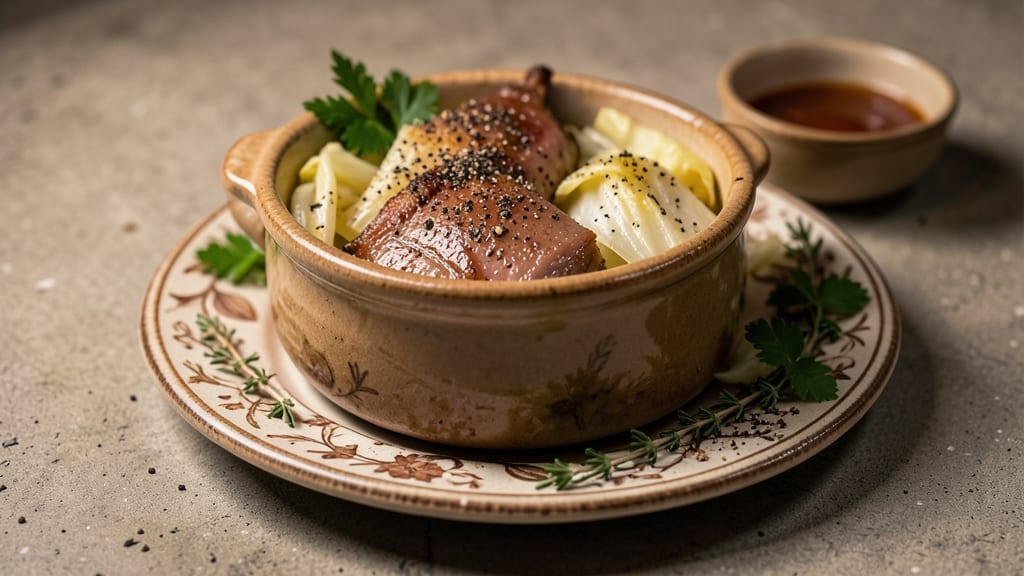
This ham hock and cabbage crock pot recipe transforms humble ingredients into a deeply comforting dish that smells like Sunday dinner. The slow cooker works magic, turning tough ham hock into tender, flavorful meat while cabbage softens into sweet, caramelized perfection.
I’ve perfected this recipe over years of testing, and it consistently delivers restaurant-quality results with minimal effort.
The beauty of this dish lies in its simplicity and adaptability. You’ll need just a few ingredients—ham hock, cabbage, onions, and basic seasonings—and about 7 hours on low heat.
The ham hock infuses the cabbage with its rich, smoky flavor, while the slow cooking process develops deep, satisfying tastes that make this meal feel like a warm embrace. It’s the kind of dish that gets better as it simmers, rewarding patience with incredible flavor.
By the time you’re ready to serve, you’ll have tender ham hock that practically falls apart at the touch, cabbage with caramelized edges, and a broth so flavorful it deserves a bowl on the side.
This recipe is perfect for feeding a crowd or meal prepping for the week, as it reheats beautifully and tastes even better the next day. The aroma alone will have everyone gathering around the table, eager for a taste of this comforting classic.
Pair it with crusty cornbread or dinner rolls to soak up every last bit of that delicious broth. The combination of textures and flavors creates a meal that’s both hearty and satisfying, proving that comfort food doesn’t have to be complicated.
Let’s get started on this timeless crock pot classic that will become a staple in your home.
Ingredients for ham hock and cabbage crock pot
Six humble ingredients. One slow cooker. Sunday dinner magic in a pot.
| Ingredient | Amount | Notes |
|---|---|---|
| Ham Hock 🍖 | 2 whole | Smoked or unsmoked, bone-in preferred |
| Green Cabbage 🥬 | 2 lb | Green or purple, cut into wedges |
| Yellow Onions 🧅 | 2 whole | Medium size, sliced into wedges |
| Carrots 🥕 | 4 medium | Whole, scrubbed clean |
| Garlic Cloves 🧄 | 4 cloves | Peeled, smashed slightly |
| Apple Cider Vinegar 🍎 | ¼ cup | For tangy depth of flavor |
| Bay Leaves 🌿 | 2 whole | Fresh or dried |
| Black Peppercorns 🌶️ | 1 tsp | Coarsely crushed |
| Salt 🧂 | 1 ½ tsp | Kosher or sea salt |
| Fresh Thyme 🌿 | ¼ cup | Stems removed, chopped |
| Water 💧 | 2 cups | Or low-sodium chicken broth |
| Brown Sugar 🍯 | 1 tbsp | Lightly packed |
| Mustard Seeds 🌶️ | ½ tsp | Optional for extra depth |
The ham hock is the star here—look for bone-in at the butcher counter or meat section. Costco or Whole Foods usually carry them pre-packaged, but if you’re buying whole, ask for the largest you can find. Smoked hocks add extra depth, but unsmoked works too. For the cabbage, green or purple both work—just pick heads that feel heavy for their size (that means fresh). The onions? Any color, but yellow or red are classic. I always grab the big ones—they hold up better during cooking. If you’re short on time, pre-cut veggies from Trader Joe’s save chopping effort, though fresh tastes best.
No apple cider vinegar? White vinegar or lemon juice works in a pinch, though it’ll taste slightly different. Fresh thyme is ideal, but dried at one-third the amount gets you close. The carrots can be baby carrots if that’s what you’ve got—just scrub them well. Mustard seeds are optional but worth it if you love that slight bite. For the broth, low-sodium is key—we don’t want to overpower the natural flavors. The brown sugar caramelizes beautifully during cooking, giving those cabbage edges that perfect sweetness. If you’re watching sugar, reduce to 1 teaspoon or use a sugar substitute like erythritol.
This keeps for 5 days in the fridge, but honestly? It tastes even better the next day. The ham hock will be so tender it’ll practically melt in your mouth. Portion into containers for easy lunches—freezes beautifully for 3 months. For serving, I like to crisp up some cornbread in the oven while the crock pot does its thing. The aroma alone will have everyone rushing to the table. Leftovers? Even better for sandwiches or soups later in the week.
Why You’ll Love This Recipe
- Dump-and-Go Magic: I swear, this is the kind of meal where you can toss everything in the crock pot—ham hock, cabbage, onions, even the carrots—without chopping like you’re auditioning for Top Chef. The ham hock does all the work while you sip your coffee, and by dinner, it’s fall-apart tender.
- Smoky-Sweet Symphony: That ham hock? It’s the star—salty, rich, and packed with flavor that seeps into the cabbage until every bite is like a hug in your mouth. Add a splash of vinegar or a sprinkle of mustard, and you’ve got a balance that’s dangerously addictive.
- Weeknight to Potluck Hero: Between us, this is my go-to for lazy Tuesdays and holiday gatherings. Double the batch, serve it with crusty bread, and suddenly you’re the host everyone adores. (Yes, even on a Tuesday night.)
- Budget-Friendly Leftovers: Honestly, the ham hock stretches this recipe into three meals without breaking the bank. The first night is hearty, the second is even better with a splash of broth, and the third? Well, let’s just say my freezer’s always stocked with these leftovers.
Step-by-step instructions for slow-cooked ham hock and cabbage
This hearty crock pot dish delivers rich, smoky flavors with minimal effort.
Prepare the Vegetables and Seasonings
Start by cutting the 2 lb green cabbage into 8 equal wedges, leaving the core intact. Slice the 2 whole yellow onions into 8 wedges each. Scrub the 4 medium carrots clean but leave them whole. Peel and smash the 4 cloves garlic slightly with the side of your knife.
In a small bowl, combine the 0.25 cup fresh thyme, 1.5 tsp salt, 1 tsp coarsely crushed black peppercorns, 0.5 tsp mustard seeds, and 1 tbsp brown sugar. Mix well to distribute all the seasonings evenly. This blend will infuse the entire dish with balanced sweetness and aromatic depth.
Layer Ingredients in the Crock Pot
Place the 2 whole ham hocks in the bottom of your crock pot, fat side up. This positioning ensures the meat renders slowly and flavors the broth. Add the sliced yellow onions around the ham hocks, followed by the whole carrots and cabbage wedges arranged in an even layer.
Pour in the 2 cups water (or low-sodium chicken broth if using), then add the smashed garlic cloves, 2 whole bay leaves, and the prepared seasoning blend. Stir everything gently just once – you want the ingredients to settle naturally rather than get mashed together.
Cook on Low for Maximum Flavor Development
Set your crock pot to low heat and cook for 8 hours. This slow cooking time is crucial – it allows the ham hock to become fork-tender while developing deep, smoky flavors. The vegetables will soften perfectly without turning mushy, and the broth will reduce slightly for concentrated taste.
Here’s the thing – don’t peek or stir during cooking. Every time you open the lid, you release steam and potentially extend the cooking time. The ham hock will be done when it easily pulls apart with two forks and the cabbage is tender enough to pierce with a knife but still holds its shape.
Finish with Tangy Brightness
After 8 hours, remove the ham hocks and shred the meat using two forks, discarding any large bones. Return the shredded meat to the crock pot. Stir in the 0.25 cup apple cider vinegar and let everything simmer on high heat for 15-20 minutes. This final step adds bright acidity that cuts through the richness of the ham and vegetables.
Taste and adjust seasoning if needed – you might want to add a pinch more salt or a splash more vinegar for balance. The dish should be rich, slightly sweet, and deeply savory with just the right amount of tangy brightness from the vinegar.
Pro Tips For Making Ham Hock And Cabbage Crock Pot
- SCORE THE HAM HOCK: Run a sharp knife along the bone side of the ham hock before adding it to the crockpot—this breaks the skin and lets the flavor infuse faster. I used to skip this, and the broth always tasted underwhelming until I tried it.
- CUT CABBAGE IN HALVES: Split whole cabbage heads into two wedges instead of shredding them—this keeps the leaves intact and tenderizes evenly without turning to mush. After burning through three shredded batches, I finally realized bigger pieces = better texture.
- DON’T SKIP THE CRUST: Sear the ham hock in a dry skillet for 2-3 minutes per side before dumping it into the crockpot—this develops a crust that adds depth to the flavor. Yes, it’s an extra step, but the difference in richness is noticeable.
- ADD CARROTS LAST: Toss the carrots in 10 minutes before serving so they stay crisp instead of dissolving into the broth. I learned this after serving mushy carrots twice and getting side-eye from my family—now they’re the perfect al dente bite.
Troubleshooting this dish
Ham Too Tough?
If your ham hock isn’t tender after 8 hours on low, extend cooking to 10 hours or switch to high heat for 5-6 hours after the initial slow cook.
The key is patience—ham hocks need time to break down. I’ve found smoked hocks often cook faster than unsmoked due to their initial curing process. 💪
Cabbage Still Crunchy
Your cabbage should be tender but not mushy. If it’s still firm after 8 hours, add ½ cup water and cook 1-2 more hours on low.
For extra tenderness, try cutting the cabbage into ¼-inch slices instead of wedges next time. The core should pierce easily with a fork when done.
Broth Too Watery
If the liquid isn’t thick enough, reduce it by cooking 1-2 more hours on high heat uncovered. For a richer base, start with chicken broth instead of water—the extra flavor carries through.
I also recommend skimming any excess fat from the surface before serving. A splash of apple cider vinegar at the end adds brightness and helps balance the texture. 💧
Seasoning Off-Balance
If your dish tastes bland, the ham hock might need more salt. Add ½ tsp at a time until it’s well-seasoned. For sweetness, increase the brown sugar to 2 tbsp and cook 30 minutes longer to caramelize.
If it’s too salty, stir in 1 cup extra cabbage or carrots to dilute the flavor naturally.
Burnt Onions or Carrots
This usually happens if the crock pot is overcrowded. Arrange vegetables in a single layer with ham hocks at the bottom, fat side up. If using a 6-quart crock pot, reduce ingredients by 20% to prevent overfilling. Stirring occasionally (even gently) can also prevent sticking. 🌶️
Leftovers Too Dry
Reheat leftovers with 2 tbsp water or broth per cup of dish to restore moisture. For extra richness, add a pat of butter or a splash of cream when reheating.
I like to serve leftovers with warm cornbread or dinner rolls to soak up any extra broth. Store in airtight containers for up to 5 days in the fridge.
Nutrition facts
Frequently asked questions about slow-cooked ham hock and cabbage
Can I use pre-cooked ham hock instead of raw?
Pre-cooked ham hock will still add incredible flavor but won’t need the full 8 hours of cooking time. Reduce to 4-5 hours on low and check for tenderness after 3 hours. The key is letting the meat reabsorb the rich broth and flavors. Just skip the bone removal step since pre-cooked hocks are usually fully cooked through.
What’s the best way to serve this dish?
This hearty meal pairs perfectly with warm cornbread, crusty dinner rolls, or buttery mashed potatoes to soak up the flavorful broth. For a complete meal, serve with a simple green salad dressed with a tangy vinaigrette to balance the richness. The leftovers make amazing sandwiches—just pile the meat and veggies on crusty bread with a smear of mustard.
Can I make this in a Dutch oven instead of a crock pot?
Yes! For stovetop or oven baking, use a 5-6 quart Dutch oven with 1.5 inches of liquid. Simmer on low heat for 3-4 hours then transfer to a 325°F oven for 2-3 hours until tender. The Dutch oven method gives you more control over browning the onions and carrots for extra depth of flavor. Just cover tightly and avoid peeking while cooking.
How do I store and reheat leftovers?
Store leftovers in airtight containers for up to 5 days in the fridge. For reheating, add 2 tbsp water or broth per cup of dish and warm on low heat for 10-15 minutes in the crock pot. For extra richness, stir in a pat of butter or splash of cream when reheating. The flavors actually improve overnight as the meat continues to tenderize and absorb the broth.
What can I do with the ham hock bones after cooking?
Don’t throw them away! Save the bones to make a flavorful broth for future meals. Simmer them with vegetable scraps, onion peels, and water for 3-4 hours on low heat, then strain and freeze the broth in ice cube trays. These bones yield a rich, meaty stock perfect for soups, stews, or even rice dishes. The gelatin from the bones adds wonderful body to any liquid you use it in.

- Baked Potatoes in Crock Pot Recipe: Buttery Interiors and Crispy Top Magic - November 1, 2026
- Braised Beef Short Ribs Recipe: Crock Pot Fall-Off-Bone Magic in 6 Hours - November 1, 2026
- Crock Pot Cocoa Recipe: Velvety Warmth With Hidden Spice Magic - November 1, 2026