
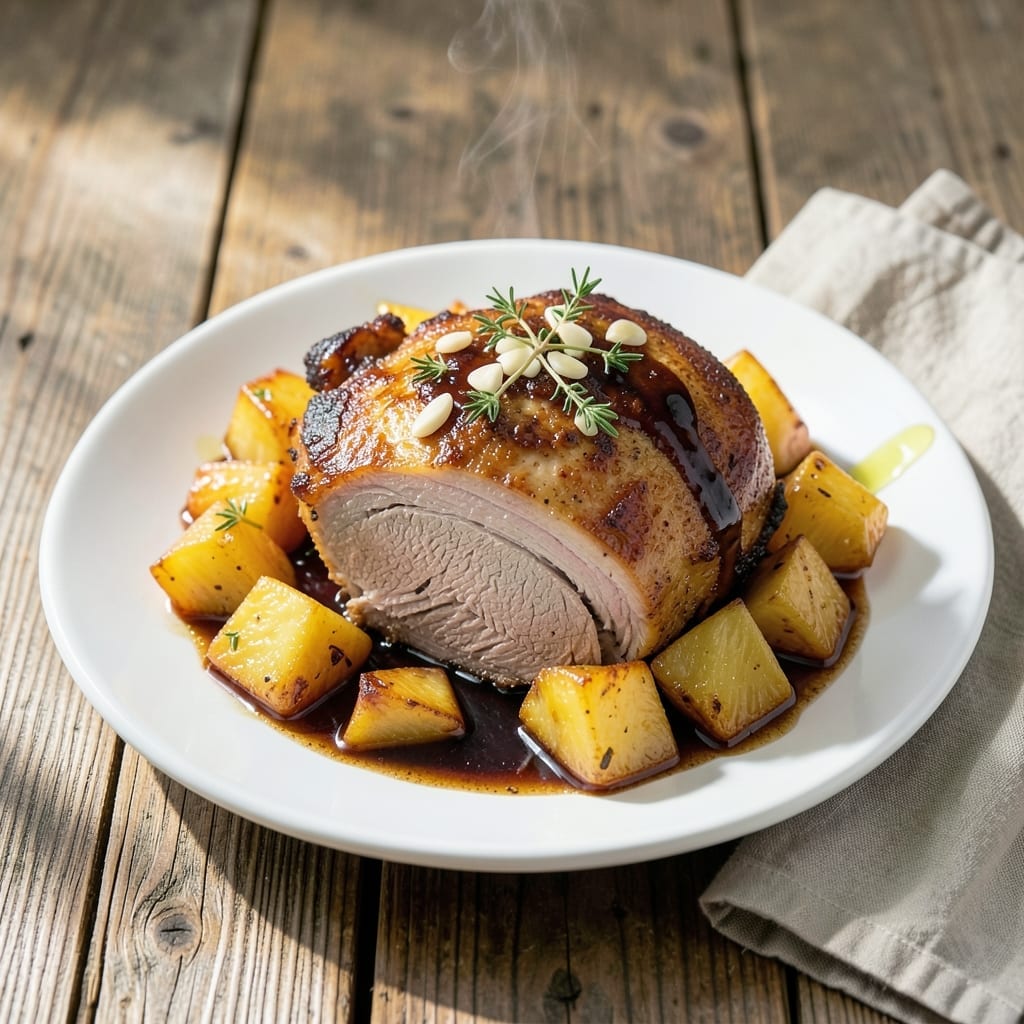
This slow-cooked pork roast delivers the kind of tender results that make crock pot cooking so rewarding. The pineapple infusion brings natural sweetness that perfectly balances the savory depth of the pork.
I’ve refined this method to ensure the meat falls apart with minimal effort. A simple blend of soy sauce, brown sugar, and pineapple juice creates a glaze that caramelizes as it cooks, locking in moisture and flavor.
The secret is patience—low and slow cooking transforms tough cuts into something melt-in-your-mouth delicious. Every bite carries the rich, slightly sweet taste of traditional Hawaiian flavors.
Serve it over rice or with roasted vegetables for a complete meal that’s as easy as it is impressive.
Ingredients for Hawaiian Pork Roast Crock Pot
Pantry staples meet tropical flavors for this melt-in-your-mouth slow cooker masterpiece.
| Ingredient | Amount | Notes |
|---|---|---|
| Pork Shoulder 🥩 | 3 lb | Boneless, trimmed of excess fat |
| Pineapple Chunks 🍍 | 2 cups | Fresh or canned in juice |
| Pineapple Juice 💧 | 1 cup | Reserved from canned chunks |
| Soy Sauce 🫙 | ½ cup | Low-sodium preferred |
| Brown Sugar 🥜 | ½ cup | Light or dark variety |
| Garlic Cloves 🧄 | 4 cloves | Minced for even distribution |
| Fresh Ginger Root 🌿 | 1 tbsp | Peeled and grated |
| Rice Vinegar 🍯 | 2 tbsp | For acidity balance |
| Green Bell Pepper 🌶️ | 1 whole | Seeded and sliced |
| Red Onion 🧅 | 1 whole | Thinly sliced |
| Cornstarch 🌾 | 2 tbsp | For thickening glaze |
| Kosher Salt 🧂 | 1 tsp | Diamond Crystal preferred |
| Ground Black Pepper 🌶️ | ½ tsp | Freshly ground |
| Dried Thyme 🍃 | ½ tsp | For herbal depth |
The pork shoulder is key here. Costco has great pre-trimmed options, but any supermarket with a decent butcher section will work. Look for good marbling—fat equals flavor in slow cooking. I’ve had luck with bone-in cuts too (just remove the bone before serving), but boneless saves time. The pineapple? Fresh is ideal, but canned in juice works perfectly—just drain and reserve that juice for the sauce.
No pineapple juice? Orange juice with a splash of lemon gets you close. Brown sugar can be swapped for coconut sugar (same amount). Out of fresh ginger? Ground ginger at one-third the amount works, though fresh is brighter. If you’re missing rice vinegar, apple cider vinegar is a fine substitute. The green bell pepper can be swapped for red or yellow—whatever’s on sale at Walmart.
This keeps beautifully—actually tastes better the next day. Refrigerate for up to 4 days or freeze for 3 months. I freeze in single-serving portions (the good stuff, not the pre-shredded kind) so I can pull out exactly what I need for quick meals.
Why You’ll Love This Recipe
- Set and Forget: I dump everything in the crock pot before work and come home to fall-apart pork with zero effort.
- Sweet and Savory: The pineapple juice and brown sugar caramelize with the soy sauce for that sticky, tangy glaze I can’t resist.
- Feeds a Crowd: I stretch one pork shoulder into tacos, rice bowls, and sandwiches all week—no complaints.
- Leftovers for Days: Honestly, it tastes even better the next day, packed with pineapple chunks and that rich sauce.
Step-by-Step Instructions for Hawaiian Pork Roast Crock Pot
This slow cooker method delivers fall-apart tender pork with minimal hands-on time.
Step 1: Season and Sear the Pork Shoulder
Pat the 3 lb Pork Shoulder dry with paper towels, then season all over with the 1 tsp Kosher Salt, 0.5 tsp Ground Black Pepper, and 0.5 tsp Dried Thyme. I always press the seasoning into the meat so it adheres well and forms a flavorful crust.
Heat a large skillet over medium-high heat and add just enough oil to coat the bottom. Sear the pork on all sides for 2-3 minutes per side until deep golden brown. This step isn’t just for color—it creates a flavor foundation that makes a huge difference in the final dish.
Step 2: Build the Flavor Base in the Slow Cooker
While the pork sears, add the 2 cups Pineapple Chunks, 1 cup Pineapple Juice, 0.5 cup Soy Sauce, 0.5 cup Brown Sugar, minced 4 cloves Garlic Cloves, grated 1 tbsp Fresh Ginger Root, and 2 tbsp Rice Vinegar to your crock pot. Stir these together until the brown sugar mostly dissolves.
Add the seared pork on top of this mixture, then scatter the sliced 1 whole Green Bell Pepper and thinly sliced 1 whole Red Onion around it. These vegetables will soften and absorb all the sweet-savory flavors as everything cooks.
Step 3: Slow Cook to Tender Perfection
Cover and cook on low heat for 7-8 hours or on high heat for 4-5 hours. You’ll know it’s done when the pork shreds easily with a fork. I prefer the low setting—it gives the pork shoulder time to break down slowly and absorb all the tropical flavors.
Resist the urge to lift the lid during cooking. Every time you do, you lose heat and add 20-30 minutes to the cooking time. The pork is ready when it reaches an internal temperature of 195-200°F and practically falls apart when prodded.
Step 4: Thicken the Sauce and Finish
Carefully remove the pork to a serving dish and cover to keep warm. Transfer the cooking liquid and vegetables to a saucepan, leaving behind any excess fat. Bring to a simmer over medium heat.
In a small bowl, mix the 2 tbsp Cornstarch with 2 tbsp of cold water to create a slurry. Whisk this into the simmering liquid and cook for 2-3 minutes until the sauce thickens to a glossy consistency that coats the back of a spoon. Pour this over the shredded pork and toss to combine.
Pro Tips For Making Hawaiian Pork Roast Crock Pot
- Sear the Pork: Brown the pork shoulder in a hot pan for 2-3 minutes per side before adding it to the crock pot—it locks in juices and adds depth to the sweet-savory sauce.
- Drain Pineapple Well: Use fresh pineapple chunks and pat them dry with a paper towel to avoid a watery sauce; reserve the juice for the marinade instead.
- Skip the Overcook: Pork shoulder is forgiving, but 6-7 hours on low is enough; any longer and the meat turns to mush instead of tender, pull-apart strands.
- Brown Sugar Last: Stir in the brown sugar during the last hour of cooking to prevent it from caramelizing too early and turning bitter in the slow heat.
Essential Equipment for This Dish
Crock Pot Essentials
Invest in a 6-quart programmable slow cooker—I swear by my Crock-Pot Touchscreen. The programmable feature lets you switch to warm mode automatically after cooking, preventing overcooking. Look for one with a removable, dishwasher-safe stoneware insert for easy cleanup.
Searing Tools
A heavy-bottomed skillet is non-negotiable for searing. My go-to is a 12-inch cast iron skillet from Lodge—it heats evenly and develops a perfect crust on the pork. A good pair of 12-inch tongs helps flip the meat without piercing it.
Measuring Accurately
For the glaze, use proper measuring cups for the brown sugar and liquids. I keep a set of OXO Good Grips measuring cups and spoons in my kitchen—the magnetic backs keep them organized. A fine grater, like Microplane, makes quick work of the fresh ginger.
Precision matters with the cornstarch slurry to avoid lumps. 💡
Serving Tools
A pair of bear claw shredders makes quick work of the cooked pork. I also keep a fat separator handy for the sauce—it removes excess grease while keeping all the flavor. For serving, a large slotted spoon helps distribute pork and veggies evenly.
Optional Upgrades
An instant-read thermometer ensures perfect doneness—ThermoWorks ThermaPen is my top pick. If you love slow cooking, consider a multi-cooker like Instant Pot for pressure cooking versatility. These tools elevate your results without complicating the process. 🔥
Nutrition Facts
Frequently Asked Questions
Can I skip searing the pork?
While you can, searing adds deep flavor. The 2-3 minutes per side creates a caramelized crust that enhances the final dish. Skipping it may result in less complex taste.
What’s the best way to shred the pork?
Use two forks to pull the meat apart after cooking. For easier handling, let it rest 10-15 minutes first. Bear claw shredders also work well for this.
How do I know when it’s done?
The pork should reach 195-200°F internally and shred easily with a fork. On low heat, this takes 7-8 hours. Avoid lifting the lid to check.
Can I use fresh pineapple instead of canned?
Use 2 cups fresh chunks and supplement with 1 cup pineapple juice from another source. The flavor will be even brighter.

- 6 Oz Chocolate Chip Cookie Recipe: Perfectly Balanced Crispy Edges and Chewy Hearts - September 25, 2026
- 6-Inch Coffee Cake Recipe: Vanilla Bean Swirls and Buttery Streusel Topping - September 25, 2026
- 1 Hour Soup Recipe: Velvety Richness Without the Wait - September 25, 2026