
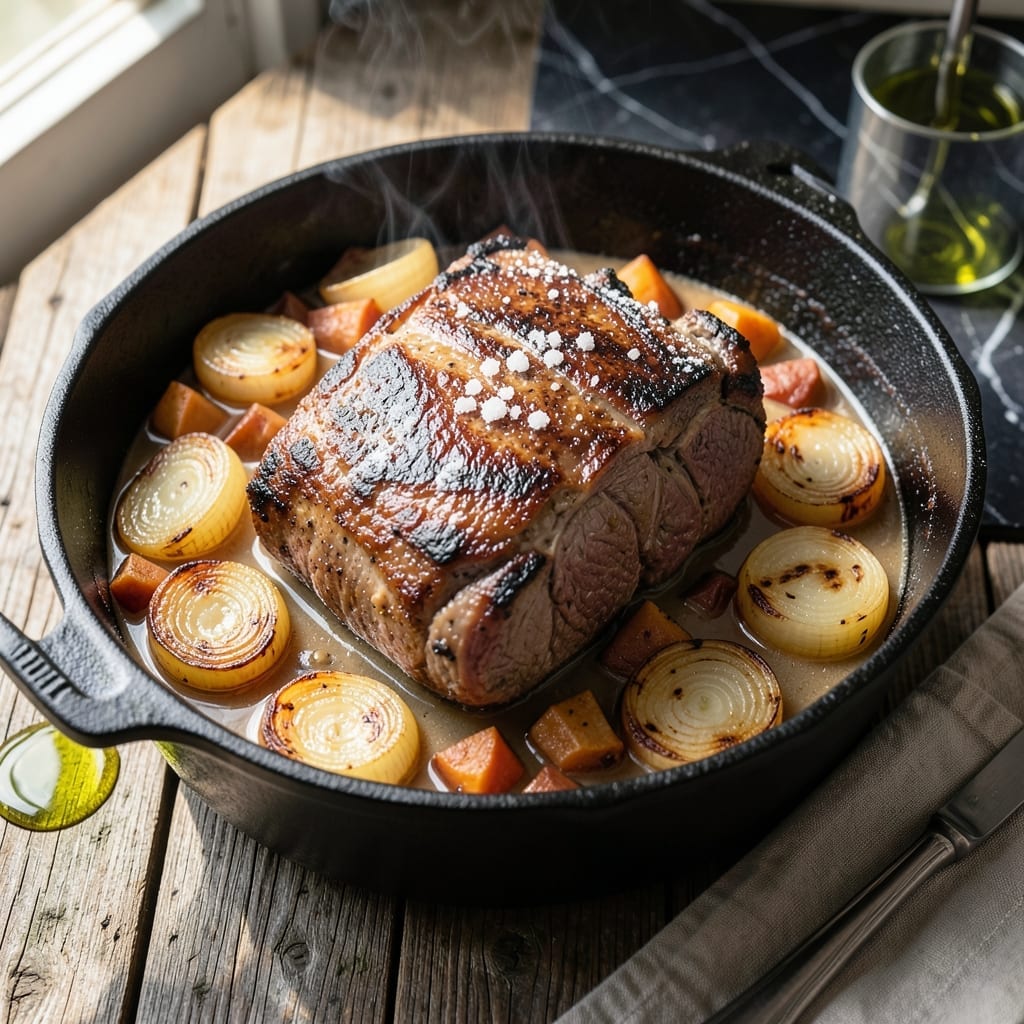
Few dishes deliver rustic comfort like a slow-cooked pot roast done the old-fashioned way. This method transforms tough cuts of beef into fall-apart tender meat with a rich, velvety gravy that soaks into every bite of potatoes and carrots.
The secret lies in the low and slow approach, letting the Dutch oven work its magic for hours. I’ve perfected this technique to ensure the meat stays juicy while the vegetables absorb deep, savory flavors from the beef and broth.
What you’ll get is a hearty meal that fills the kitchen with an irresistible aroma and satisfies with every forkful. The gravy thickens naturally, coating the meat and vegetables in a layer of rustic, home-style goodness.
Perfect for Sunday suppers or cold-weather meals, this dish brings tradition to your table with minimal effort and maximum reward.
Ingredients for Hillbilly Pot Roast
Rustic ingredients that transform into hearty, slow-cooked comfort in your Dutch oven.
| Ingredient | Amount | Notes |
|---|---|---|
| Beef Chuck Roast 🥩 | 3 lb | Well-marbled for tenderness |
| Kosher Salt 🧂 | 1 ½ tsp | Diamond Crystal preferred |
| Freshly Ground Black Pepper 🌶️ | 1 tsp | Coarse grind for texture |
| All-Purpose Flour 🌾 | ¼ cup | For dredging beef |
| Vegetable Oil 🫒 | 2 tbsp | Neutral flavor for searing |
| Yellow Onions 🧅 | 2 whole | Medium, quartered |
| Carrots 🥕 | 4 whole | Peeled, cut into chunks |
| Yukon Gold Potatoes 🥔 | 1 ½ lb | Peeled, halved if large |
| Beef Broth 🍲 | 2 cups | Low-sodium preferred |
| Tomato Paste 🍅 | 2 tbsp | For depth of flavor |
| Garlic Cloves 🧄 | 4 cloves | Smashed for robust flavor |
| Bay Leaves 🍃 | 2 pieces | Dried, for aroma |
| Fresh Thyme Sprigs 🌿 | 3 pieces | Or 1 tsp dried thyme |
| Worcestershire Sauce 💧 | 1 tbsp | Adds umami complexity |
The beef is everything here. Chuck roast with good marbling is non-negotiable—it breaks down into that fall-apart texture. Look for USDA Choice or Prime at your butcher or Whole Foods. The potatoes matter too: Yukon Golds hold their shape better than Russets. Avoid pre-cut veggies (they lose texture). Fresh thyme is ideal, but dried works in a pinch.
No chuck roast? Brisket or short ribs are solid substitutes (adjust cook time). Out of beef broth? Mushroom broth or water plus bouillon gets you close. Don’t have Worcestershire? Soy sauce plus a pinch of sugar mimics the depth. The flour coat on the beef isn’t just for thickening—it creates the gravy’s base (don’t skip it).
Leftovers taste even better the next day. Store in an airtight container for up to 4 days in the fridge or freeze for 3 months. The gravy will thicken as it cools—just reheat with a splash of water or broth to loosen.
Why You’ll Love This Recipe
- One Pot Wonder: I love that I can sear the chuck roast in the same pot I slow-cook it in—no extra dishes, just rich flavor building the whole time.
- Feeds a Crowd: Honestly, this recipe stretches one chuck roast into multiple meals—perfect for Sunday supper with leftovers for sandwiches.
- Budget Friendly: Between us, a tougher cut like chuck becomes buttery and delicious with slow cooking, saving me money without sacrificing taste.
Step-by-Step Instructions for Hillbilly Pot Roast
Here is the method. Tested, reliable, and designed for maximum flavor development.
Step 1: Season and Sear the Beef Chuck Roast
Pat the 3 lb Beef Chuck Roast dry with paper towels, then season all sides generously with the 1.5 tsp Kosher Salt and 1 tsp Freshly Ground Black Pepper. The salt should form a visible layer—this creates the foundation for a well-seasoned dish.
Dredge the roast in the 0.25 cup All-Purpose Flour, shaking off any excess. Heat the 2 tbsp Vegetable Oil in a Dutch oven over medium-high heat until shimmering. Sear the beef for 4-5 minutes per side until deeply browned. You want a dark, crusty exterior—this is where the flavor develops.
Step 2: Sauté Vegetables and Build the Braising Liquid
Remove the seared beef and set aside. In the same Dutch oven, add the 2 whole Yellow Onions, 4 whole Carrots, and 1.5 lb Yukon Gold Potatoes. Sauté for 5 minutes until the onions begin to soften and brown around the edges.
Stir in the 2 tbsp Tomato Paste and cook for 1-2 minutes until it darkens slightly. Add the 4 cloves Garlic Cloves, 2 pieces Bay Leaves, 3 pieces Fresh Thyme Sprigs, and 1 tbsp Worcestershire Sauce. Pour in the 2 cups Beef Broth, scraping the bottom to release all the browned bits.
Step 3: Braise Low and Slow
Return the beef to the Dutch oven, nestling it into the vegetables and liquid. The liquid should come about halfway up the roast—if it doesn’t, add a bit more broth. Bring to a gentle simmer, then reduce heat to low, cover, and let it braise for 3-3.5 hours.
Check occasionally to ensure the liquid is at a slow simmer, not a rolling boil. You’ll know it’s ready when the beef pulls apart easily with a fork and the vegetables are tender. The aroma should be rich and deeply savory, filling your kitchen with the promise of comfort.
Step 4: Rest and Serve
Once the beef is fork-tender, remove it from the Dutch oven and let it rest on a cutting board for 10-15 minutes. This allows the juices to redistribute, ensuring every bite is moist and flavorful.
Skim any excess fat from the surface of the braising liquid, then discard the bay leaves and thyme sprigs. Serve the beef with the vegetables and a generous spoonful of the rich, savory liquid ladled over the top. The potatoes should be buttery and tender, soaking up all the deep, rustic flavors.
Pro Tips For Making Hillbilly Pot Roast
- Sear it Hot: Crank the heat to medium-high when searing the chuck roast—about 2 tablespoons of vegetable oil should be shimmering but not smoking. I learned this the hard way after too many pale, soggy roasts that lacked that deep, caramelized crust.
- Season the Flour: Mix 1 teaspoon each of kosher salt and black pepper into your all-purpose flour before dredging the roast. Sounds weird, but it works: the seasoning sticks better and builds flavor in every bite.
- Skip the Overcrowding: Don’t toss all the vegetables in at once if your pot is small—steer clear of this common mistake. Crowding steams instead of browns, and you’ll end up with mushy potatoes and carrots instead of that rich, golden color.
- Use a Meat Thermometer: Pull the roast when it hits 195–200°F internally, not just when it “looks done.” After burning three batches by guessing, I finally figured out that’s the sweet spot for fall-apart tender beef.
Troubleshooting Perfect Results
Tough Meat Issues
If your beef turns out tough, it likely didn’t cook long enough. This dish requires 3-3.5 hours at a low simmer to break down the connective tissue. I check for doneness by piercing with a fork—it should slide in like butter.
Dry Roast Problem
A dry roast usually means there wasn’t enough liquid. Ensure the braising liquid covers at least halfway up the meat. If it reduces too much during cooking, add 1 cup hot water or broth to maintain moisture.
Thin Gravy Fix
For gravy that’s too thin, remove the meat and vegetables, then simmer the liquid uncovered for 10-15 minutes to reduce. Alternatively, mix 1 tbsp cornstarch with 1 tbsp cold water and stir into the gravy. 💡
Bland Flavor Boost
If the flavors seem flat, stir in 1 tbsp Worcestershire sauce or a splash of red wine vinegar at the end. Salt can also revive dull flavors—taste and adjust with ½ tsp Kosher Salt at a time.
Vegetable Troubles
Mushy vegetables often result from adding them too early. For firmer veggies, wait 1 hour before adding potatoes and carrots. If they’re undercooked, return them to the pot with extra broth for 20-30 minutes. 🥕
Burnt Bottom
Scorched bits at the bottom usually mean the heat was too high. Always maintain a gentle simmer, not a boil. If it happens, carefully scrape the burnt bits and transfer to a clean pot with fresh liquid.
Nutrition Facts
Frequently Asked Questions
Can I use a slow cooker instead of a Dutch oven?
Yes! Sear the beef first, then transfer to your slow cooker. Cook on low for 8-10 hours or high for 5-6 hours. The texture will be similar, though the gravy may be thinner.
What’s the best way to thicken the gravy?
Remove meat and veggies, then simmer the liquid uncovered for 10-15 minutes. For quicker results, mix 1 tbsp cornstarch with 1 tbsp cold water and stir in.
Can I add other vegetables to the pot?
Try parsnips, turnips, or mushrooms. Add root veggies at the start and delicate ones like peas 30 minutes before serving.
Why is my roast tough?
It likely needs more time. The connective tissue requires 3-3.5 hours at a gentle simmer to break down. Test with a fork—it should pull apart easily.

- 4C Bread Crumbs Meatballs Recipe: Crispy Crust and Juicy Centers - September 25, 2026
- 6 Oz Chocolate Chip Cookie Recipe: Perfectly Balanced Crispy Edges and Chewy Hearts - September 25, 2026
- 6-Inch Coffee Cake Recipe: Vanilla Bean Swirls and Buttery Streusel Topping - September 25, 2026