
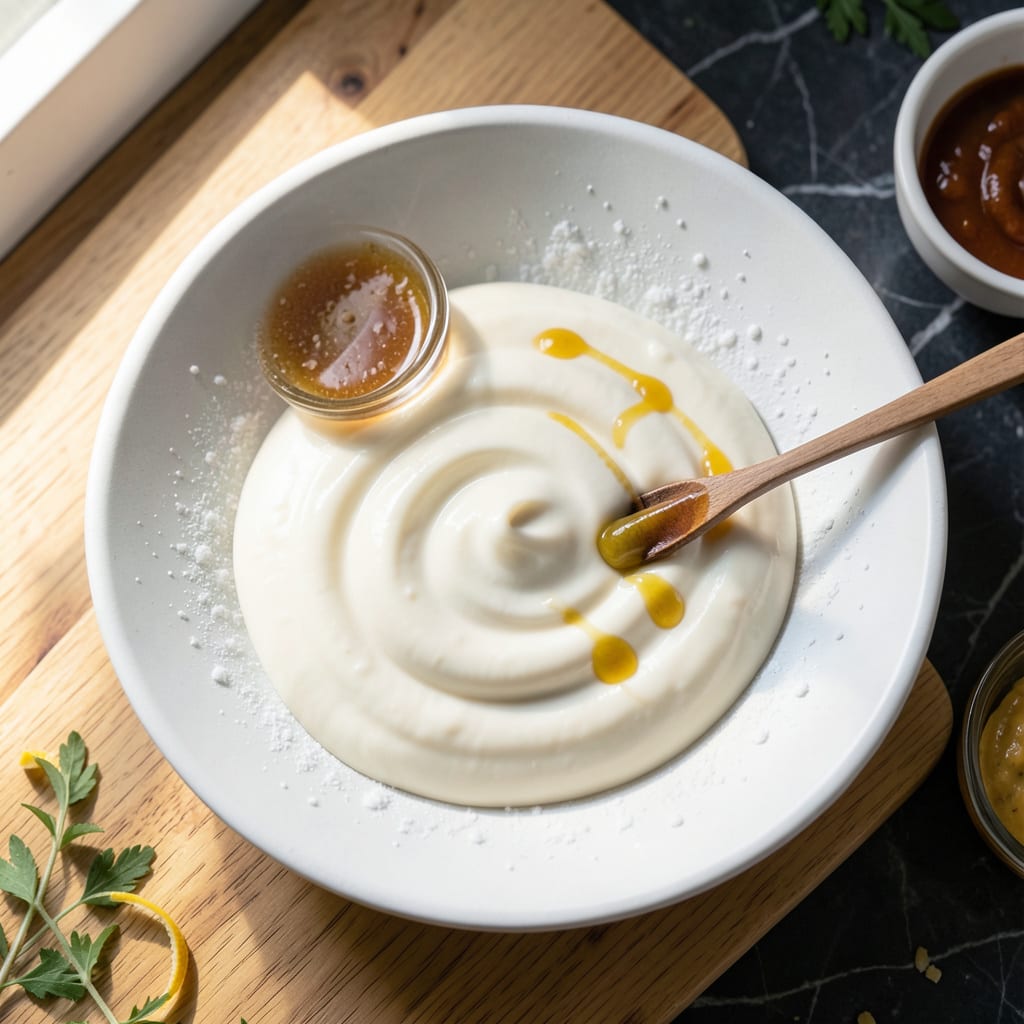
I developed this recipe to prove that creamy mayonnaise can exist without fat or eggs. Using aquafaba as a base, this method delivers the classic texture and tang you expect from traditional versions.
This homemade alternative comes together in minutes with simple ingredients. It stores well in the fridge for up to a week, making it perfect for sandwiches, salads, or as a dip.
Ingredients for Homemade Fat Free Mayonnaise
Eight simple ingredients transform aquafaba into creamy, tangy condiment perfection.
| Ingredient | Amount | Notes |
|---|---|---|
| Aquafaba 🥫 | ½ cup | Chickpea brine, unsalted |
| White Vinegar 🍶 | 1 tbsp | Or apple cider vinegar |
| Dijon Mustard 🟡 | 2 tsp | Smooth, no seeds |
| Garlic Powder 🧄 | ½ tsp | Optional for flavor depth |
| Onion Powder 🧅 | ½ tsp | Balances acidity |
| Salt 🧂 | ½ tsp | Fine sea salt preferred |
| Lemon Juice 🍋 | 1 ½ tbsp | Freshly squeezed |
| Agave Nectar 🍯 | ½ tsp | Adjusts sweetness |
Aquafaba is the magic ingredient here—use the liquid from canned chickpeas (unsalted is key, or your mayo will taste like brine). Goya or Progresso brands work well, but any store brand does the trick. The vinegar choice matters less, but avoid balsamic—it’s too dark and flavorful. For the mustard, Grey Poupon Dijon is my go-to for consistent tang without overpowering the blend.
No aquafaba? Reduced chickpea cooking liquid can work, but it’s less consistent—canned is better. Swap white vinegar for apple cider if you prefer a milder taste. Skip the agave if you like it less sweet. The garlic and onion powders are optional but add depth worth including. If you’re out of Dijon, yellow mustard works in a pinch (just use half the amount).
Store in an airtight container in the fridge for up to 1 week. The texture thickens as it chills. Give it a quick whisk before using if it separates. Do not freeze—it’ll break the emulsion.
Why You’ll Love This Recipe
- 5-Minute Whip: I can blend this together faster than it takes to run to the store for mayo.
- Tangy Kick: The Dijon and vinegar give it that sharp, creamy bite I crave in every sandwich.
- Endless Uses: Honestly, it’s my secret for dressings, dips, and even baking—no fat, all flavor.
- Pantry Staples: Aquafaba and spices I already have mean this costs pennies compared to store-bought.
Step-by-Step Instructions for Fat Free Mayonnaise
This method transforms simple ingredients into a smooth, rich condiment with perfect emulsification every time.
Step 1: Reduce the Aquafaba for Stability
Pour the 0.5 cup Aquafaba into a small saucepan and bring to a gentle simmer over medium heat. Cook for 5-7 minutes, stirring occasionally, until the liquid reduces by about half and becomes slightly syrupy.
This reduction step is crucial—it concentrates the natural starches and proteins in the aquafaba, which will help the emulsion hold together. You’ll notice the liquid thickens slightly and darkens in color. Remove from heat and let cool to room temperature before proceeding.
Step 2: Blend the Base Ingredients
In a small bowl or immersion blender cup, combine the reduced aquafaba with 1 tbsp White Vinegar, 2 tsp Dijon Mustard, 0.5 tsp Salt, 0.5 tsp Garlic Powder, and 0.5 tsp Onion Powder. Blend for 20-30 seconds until completely smooth and slightly thickened.
The vinegar and mustard act as emulsifiers, while the spices add depth to the flavor. I always use smooth Dijon mustard to avoid any seed texture in the final product. At this stage, the mixture should look slightly creamy but still liquid.
Step 3: Slowly Incorporate the Acid
With the blender running on low speed, very slowly drizzle in the 1.5 tbsp Lemon Juice. This gradual addition is key to creating a stable emulsion. You should see the mixture begin to thicken and turn opaque as the acid interacts with the aquafaba proteins.
If the mixture looks too thin, continue blending for another 10-15 seconds. The lemon juice provides the tangy brightness characteristic of mayonnaise while helping to set the emulsion. Don’t add all the acid at once or the mixture may separate.
Step 4: Sweeten and Adjust Consistency
Add the 0.5 tsp Agave Nectar to the emulsion and blend for another 5-10 seconds until fully incorporated. The sweetness balances the acidity from the vinegar and lemon, creating that classic mayonnaise flavor profile.
Taste and adjust seasoning if needed—you might want a pinch more salt or a drop more agave, depending on your preference. The finished mayonnaise should be thick but still pourable, with a glossy appearance and no visible separation.
Step 5: Chill for Optimal Texture
Transfer the mayonnaise to a clean jar and refrigerate for at least 1 hour before using. This chilling time allows the emulsion to fully set and the flavors to meld together.
As it cools, the mayonnaise will thicken further, reaching the perfect spreadable consistency. It will keep in the refrigerator for up to 5 days in an airtight container. Stir before each use, as some natural separation may occur over time.
Pro Tips For Making Homemade Fat Free Mayonnaise
- Chill the Aquafaba: I learned this the hard way—cold aquafaba whips up better and holds the emulsion longer. Just 10 minutes in the fridge makes a real difference.
- Stream Slowly: Add your vinegar a few drops at a time while blending. After burning three batches, I finally figured out that rushing this step breaks the emulsion.
- Skip the Salt: Sounds weird, but it works: salt can interfere with the aquafaba’s ability to emulsify, so leave it out until the very end.
- Use Fresh Vinegar: My grandmother swore by this, and she was right: old vinegar loses its acidity and won’t help the mayo thicken properly. Check the date.
Troubleshooting homemade fat free mayonnaise
Too Thin or Runny
If your mayo is too thin, the aquafaba likely wasn’t reduced enough. Return it to the saucepan and simmer for an additional 3-5 minutes until syrupy. You can also blend in ½ tsp cornstarch to thicken it instantly. 🔥
Mixture Separated
Separation happens when acid is added too quickly. Start over with reduced aquafaba and drizzle the acid in very slowly while blending continuously. If it’s just slightly separated, a quick 10-second blend often brings it back together.
Bitter or Harsh Flavor
This usually means too much vinegar or lemon juice. Balance it with ¼ tsp more agave nectar or a pinch of salt. Using fresh lemon juice instead of bottled also prevents bitterness.
Grainy Texture
Graininess occurs if the aquafaba isn’t fully smooth before adding acid. Strain it through a fine-mesh sieve first, then blend the base ingredients for a full 30 seconds before adding lemon juice.
Too Sweet or Too Tangy
Adjust the flavor balance carefully. If it’s too sweet, add ½ tsp more vinegar. If too tangy, add ¼ tsp agave. Taste as you go—this recipe is forgiving and easy to tweak. 💡
Won’t Thicken in Fridge
If it stays thin after chilling, your emulsion may have broken. Reblend with 1 tsp reduced aquafaba for 20 seconds. Also, ensure you’re using unsalted aquafaba—salted versions can interfere with the emulsion process.
Nutrition Facts
Frequently Asked Questions
Can I use a regular blender instead of an immersion blender?
Yes, a standard blender works fine. Use the lowest setting and add the lemon juice very slowly through the lid opening. This helps create a stable emulsion just like with an immersion blender.
Why does my mayo taste too tangy?
This usually means too much acid. Balance it with ¼ tsp agave nectar or a pinch of salt. Fresh lemon juice tastes milder than bottled, which can also help.
How do I fix separated mayo?
Start over with reduced aquafaba and drizzle in acid very slowly while blending. If it’s just slightly separated, a quick 10-second blend often saves it.
Can I make this without reducing the aquafaba?
Not recommended. Reducing concentrates the starches and proteins needed for a stable emulsion. Without this step, your mayo may stay thin or separate easily.

- 8 Bean Soup Recipe Crock Pot: Hearty Vegetable Medley in One Pot - September 25, 2026
- 4C Bread Crumbs Meatballs Recipe: Crispy Crust and Juicy Centers - September 25, 2026
- 6 Oz Chocolate Chip Cookie Recipe: Perfectly Balanced Crispy Edges and Chewy Hearts - September 25, 2026