
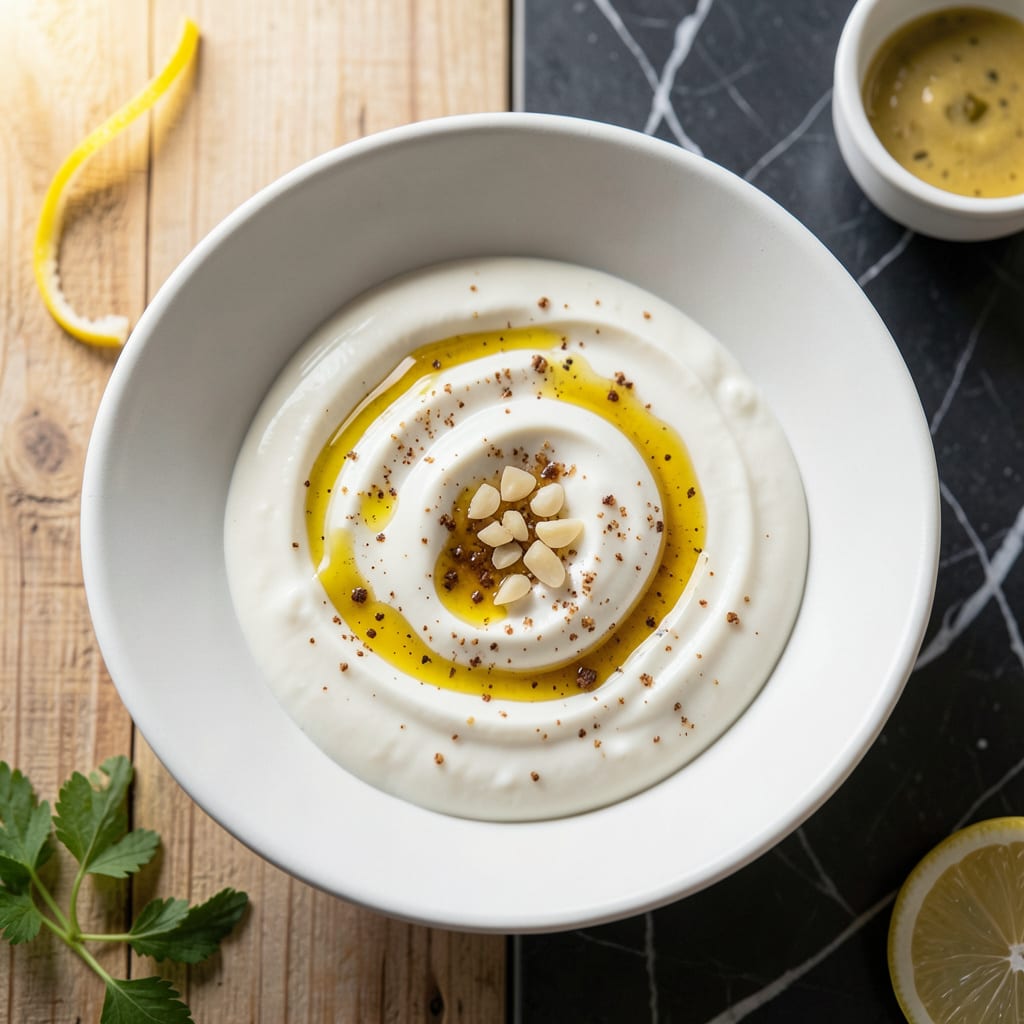
This light dressing delivers bold Mediterranean flavor without the guilt. A simple blend of Greek yogurt, fresh herbs, and bright citrus creates a creamy, tangy base that clings perfectly to greens.
With no artificial additives and a fraction of the fat, it keeps for 5 days in the fridge. The zesty profile works beautifully on everything from delicate lettuce to hearty grain bowls.
Ingredients for Homemade Low Fat Salad Dressing
Nine vibrant ingredients transform into a bright, creamy Mediterranean dressing with minimal fat.
| Ingredient | Amount | Notes |
|---|---|---|
| Plain Non-Fat Greek Yogurt 🥛 | 1 cup | Thick, strained variety preferred |
| Fresh Lemon Juice 🍋 | 3 tbsp | Newly squeezed for brightness |
| Extra-Virgin Olive Oil 🫒 | 1 tbsp | Cold-pressed for quality |
| Dijon Mustard 🟡 | 1 tsp | Smooth, not whole grain |
| Honey 🍯 | 1 tbsp | Raw or pure preferred |
| Garlic Cloves 🧄 | 2 cloves | Finely minced for even flavor |
| Fresh Dill 🌿 | 2 tbsp | Chopped fine, stems removed |
| Fresh Parsley 🍃 | 2 tbsp | Flat-leaf variety recommended |
| Dried Oregano 🌿 | ½ tsp | Mediterranean blend if available |
| Sea Salt 🧂 | ½ tsp | Fine grain for dissolution |
The Greek yogurt base is critical. Fage Total 0% or Chobani Non-Fat deliver the right thickness without added fat. Avoid sweetened yogurts—they’ll clash with the citrus. For the herbs, Whole Foods has the freshest dill and parsley, but any grocery store with high turnover works. Look for bright green leaves without wilting (the sad, yellowing bunches won’t cut it).
No honey? Pure maple syrup or agave at a one-to-one ratio keeps it vegetarian. Out of fresh herbs? Dried dill and parsley at one-third the amount work, though the flavor will be more concentrated. Need a tangier kick? Add 1 tsp apple cider vinegar. The olive oil can be reduced to 1 tsp if you’re watching fat closely, but don’t skip it entirely—it carries the flavors.
This dressing stays fresh for 5 days in an airtight container. The flavors meld and deepen over time, so it actually tastes better on day two. Give it a good stir before using (it’ll separate slightly). For longer storage, freeze in ice cube trays—thaws in minutes and retains its zing.
Why You’ll Love This Recipe
- 5-Minute Mix: I just dump the Greek yogurt, lemon juice, and mustard in a jar, shake, and it’s done—no blender, no fuss.
- Tangy Sweet Balance: The lemon and honey play off each other so well it tastes way more indulgent than it is.
- Drizzle on Everything: It’s my go-to for greens, grain bowls, even as a dip for roasted veggies. Honestly, I make double so I never run out.
- Fridge Stays Fresh: Between us, it keeps for a solid week, so I can prep it Sunday and forget about dressings all week.
Step-by-Step Instructions for Low Fat Salad Dressing
This method ensures a perfectly emulsified dressing with vibrant Mediterranean flavors every time.
Step 1: Prepare the Aromatic Base
Finely mince the 2 cloves Garlic Cloves until they resemble a paste—this releases the maximum flavor without overpowering the dressing. In a medium bowl, combine the minced garlic with the 1 tsp Dijon Mustard and 0.5 tsp Sea Salt.
The mustard acts as an emulsifier, helping to bind the fat and water-based ingredients, while the salt enhances the brightness of the other components. Press the garlic into the mustard with the back of a spoon to create a smooth, uniform base before adding the remaining ingredients.
Step 2: Incorporate the Acid and Sweetener
Add the 3 tbsp Fresh Lemon Juice and 1 tbsp Honey to the garlic-mustard mixture. Whisk vigorously for 20-30 seconds until the honey fully dissolves into the lemon juice. The acidity from the lemon will balance the sweetness of the honey, creating a harmonious base.
At this stage, the mixture should look slightly syrupy with no visible honey streaks. This step is critical—if the honey isn’t fully incorporated, it will settle at the bottom of your dressing.
Step 3: Add the Yogurt and Herbs
Measure out the 1 cup Plain Non-Fat Greek Yogurt and add it to the bowl. Using a whisk, blend the yogurt into the lemon-honey mixture until completely smooth. The yogurt’s thickness will begin to emulsify the dressing naturally.
Next, stir in the 2 tbsp Fresh Dill, 2 tbsp Fresh Parsley, and 0.5 tsp Dried Oregano. These herbs add the signature Mediterranean brightness. Ensure they’re evenly distributed—no clumps of dill or parsley should remain visible.
Step 4: Emulsify with Olive Oil
Slowly drizzle in the 1 tbsp Extra-Virgin Olive Oil while whisking continuously. This gradual incorporation is key to creating a stable emulsion. You’ll notice the dressing thicken slightly and take on a creamy, uniform appearance.
Whisk for an additional 15-20 seconds after adding the oil to fully bind all the ingredients. The final dressing should coat the back of a spoon with a smooth, velvety texture. If it looks too thick, add a teaspoon of water and whisk again.
Taste and adjust seasoning if needed, though the initial salt measurement should suffice. Transfer to a jar, seal tightly, and refrigerate for at least 30 minutes to allow the flavors to meld before serving.
Pro Tips For Making Homemade Low Fat Salad Dressing
- Whisk Vigorously First: Start by whisking the Greek yogurt and Dijon mustard together until completely smooth—I learned this the hard way after ending up with lumps in my dressing.
- Use Room-Temp Yogurt: Take the yogurt out of the fridge 15 minutes before mixing, or the oil will resist blending and separate faster than you can say “vinaigrette.”
- Skip Bottled Lemon: Fresh lemon juice actually changes the outcome here—bottled tastes flat and can make the dressing taste artificial, especially with such simple ingredients.
- Drizzle Oil Slowly: Add the olive oil in a thin stream while whisking, about 1 teaspoon at a time, to prevent it from pooling at the top and refusing to emulsify.
Perfect Pairings for This Recipe
Salad Pairings
This dressing shines on butter lettuce or baby spinach—their tender leaves soak up the creamy texture beautifully. I love it on a simple Greek salad with cucumber, tomatoes, and red onion for a fresh, crunchy contrast. 🥗
Protein Additions
For a heartier meal, drizzle over grilled chicken breast or shrimp. The lemon and garlic notes complement mediterranean-style proteins perfectly. Try it with chickpeas for a vegan protein boost that stays true to the flavor profile.
Grain Bowls
Use as a dressing for quinoa or farro bowls loaded with roasted veggies. The tangy yogurt base balances the earthiness of whole grains. I often add kalamata olives and feta cheese for extra Mediterranean flair.
Wrap and Sandwich Boost
Spread thinly on wraps or pita sandwiches instead of mayo for a lighter, brighter touch. It pairs especially well with turkey, avocado, and sprouts. The creaminess holds everything together without weighing it down.
Dip or Veggie Tray
Thin with 1-2 tbsp water to create a dip for raw veggies or pita chips. Carrots, bell peppers, and celery all taste amazing with this zesty, herby dip. It’s a hit at parties and keeps the fat content minimal. ✨
Nutrition Facts
Frequently Asked Questions
Can I use regular yogurt instead of Greek?
Regular yogurt works but will make a thinner dressing. Strain it through cheesecloth for 15 minutes to thicken it first. Greek yogurt’s higher protein content naturally creates that creamy texture.
How do I make it vegan?
Swap the honey for 1 tbsp maple syrup or agave. Use unsweetened coconut yogurt instead of Greek yogurt. The flavor remains bright and tangy with these simple changes.
Why did my dressing separate?
This is natural! Just shake or stir before using. For a more stable emulsion, whisk in the olive oil very slowly while adding it. The mustard helps bind everything together.

- 8 Bean Soup Recipe Crock Pot: Hearty Vegetable Medley in One Pot - September 25, 2026
- 4C Bread Crumbs Meatballs Recipe: Crispy Crust and Juicy Centers - September 25, 2026
- 6 Oz Chocolate Chip Cookie Recipe: Perfectly Balanced Crispy Edges and Chewy Hearts - September 25, 2026