
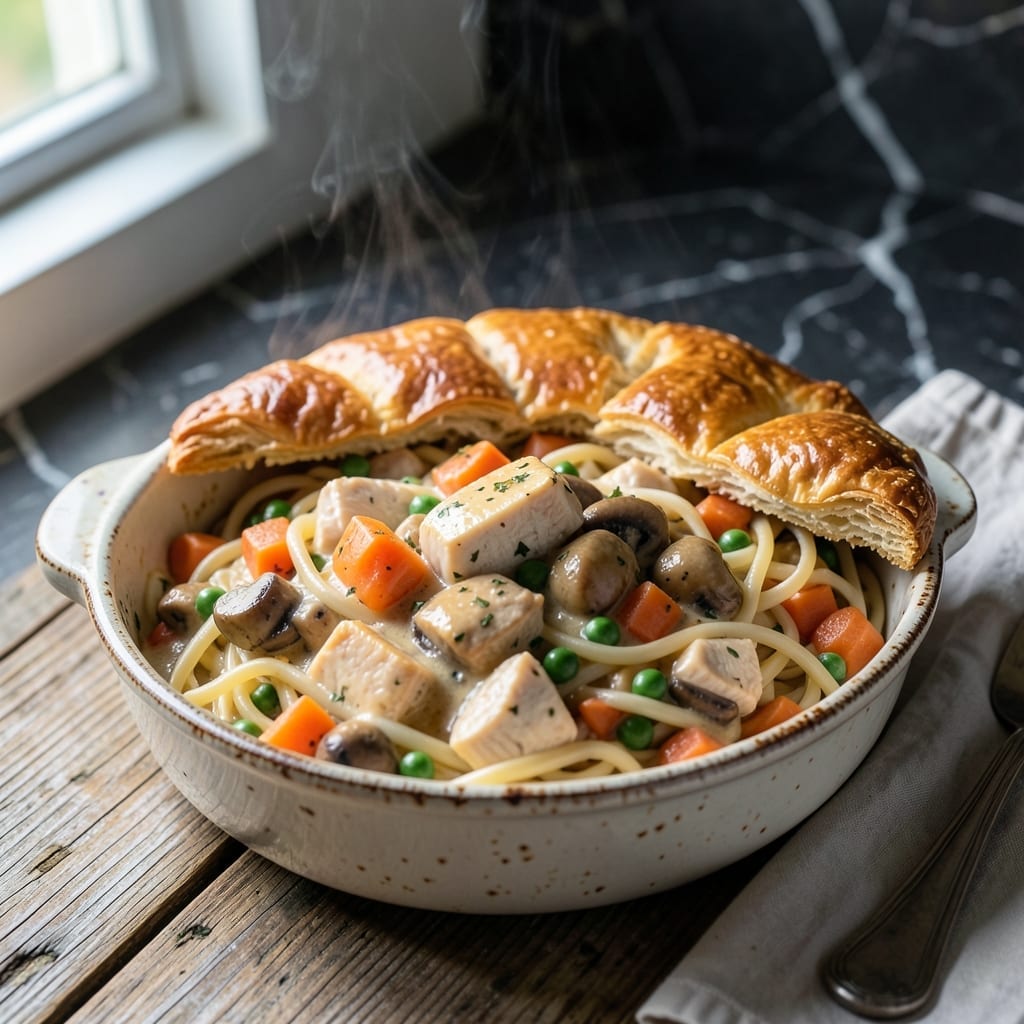
There’s something deeply satisfying about making homemade pot pie noodles from scratch. The process transforms simple ingredients into delicate, buttery layers that perfectly complement a rich, savory filling.
I’ve refined this method to ensure the noodles stay tender yet sturdy enough to hold up against hearty fillings. The key is rolling the dough thin and cutting it into uniform strips for even cooking.
Once assembled, the noodles create a flaky, golden crust that seals in every bite of the filling. The result is a dish that’s as comforting as it is impressive, with a texture that store-bought versions simply can’t match.
This recipe proves that homemade is always worth the effort. The aroma alone will have everyone gathering around the table before it’s even out of the oven.
Ingredients for Homemade Pot Pie Noodle
Buttery layers start with simple flour, cold butter, and a few pantry staples for the perfect pot pie base.
| Ingredient | Amount | Notes |
|---|---|---|
| All-Purpose Flour 🌾 | 2 ½ cups | Plus extra for dusting surfaces |
| Unsalted Butter 🧈 | ¾ cup | Chilled and cubed for flakiness |
| Ice Water 💧 | ⅓ cup | Plus 1 tbsp as needed |
| Kosher Salt 🧂 | 1 tsp | Diamond Crystal preferred for consistency |
| Large Egg 🥚 | 1 whole | For richness and binding |
| Egg Yolk 🥚 | 1 whole | Adds extra tenderness to dough |
| White Vinegar 🍶 | 1 tsp | Tenderizes the gluten slightly |
| Chicken Stock 🍲 | 3 cups | For the savory filling base |
| Chicken Breast 🍗 | 1 ½ lb | Boneless, skinless, diced small |
| Carrots 🥕 | 2 whole | Peeled and finely diced |
| Celery Stalks 🥬 | 2 whole | Finely diced for filling |
| Yellow Onion 🧅 | 1 whole | Finely chopped for flavor base |
| Frozen Peas 🌱 | 1 cup | No need to thaw first |
| Fresh Thyme Sprigs 🌿 | 4 whole | Leaves stripped from stems |
| Heavy Cream 🥛 | ½ cup | For creamy filling finish |
The butter must stay cold—Land O’Lakes or Plugrá are reliable brands. Use Gold Medal or King Arthur flour for consistent results. Ice water is non-negotiable; warm water toughens the dough. For the filling, organic chicken stock from Whole Foods or Trader Joe’s adds depth. The chicken should be high-quality, like Perdue or Bell & Evans, for the best texture in the finished dish.
No ice water? Chill tap water with ice cubes for 5 minutes first. Swap chicken for turkey or mushrooms if preferred. The thyme can be dried at one-third the amount. For the cream, half-and-half works too (just reduce slightly). Pre-made stock is fine, but homemade is ideal. The vinegar helps tenderize—apple cider vinegar is a good substitute if that’s what you have.
The dough can rest in the fridge for up to 2 days or freeze for 3 months. Cooked filling keeps 4 days refrigerated. Assemble the pie just before baking—no need to chill further. Leftovers reheat well, but the crust is best fresh from the oven.
Why You’ll Love This Recipe
- One Bowl Magic: I just dump flour, cold butter, and an egg in a bowl—no fancy tools, no mess.
- Buttery Layers: The flaky crust from that butter and ice water combo? Ridiculously good with every bite.
- Freezer Friendly: I double the batch, freeze half, and pull it out for last-minute dinners.
- Pantry Staples: All-purpose flour, butter, and salt—things I always have, so it’s a lifesaver when I’m in a pinch.
Step-by-Step Instructions for Homemade Pot Pie Noodles
This method ensures flaky, tender noodles that pair perfectly with a rich, savory filling.
Step 1: Prepare the Dough Base
In a food processor, pulse the 2.5 cups All-Purpose Flour and 1 tsp Kosher Salt to combine. Add the 0.75 cup Unsalted Butter (chilled and cubed) and pulse until the mixture resembles coarse crumbs with pea-sized butter pieces visible. This texture is crucial for flaky layers.
In a small bowl, whisk together the 1 whole Large Egg, 1 whole Egg Yolk, 1 tsp White Vinegar, and 0.33 cup Ice Water. With the processor running, slowly pour in the liquid mixture until the dough just comes together. It should look shaggy but hold when pressed.
Step 2: Chill and Rest the Dough
Turn the dough out onto a lightly floured surface and gently shape it into a disk. Wrap it tightly in plastic wrap and refrigerate for at least 1 hour. This resting period allows the gluten to relax, making the dough easier to roll out and preventing it from shrinking during baking.
If the dough feels too dry, add 1 tablespoon of the reserved ice water, but avoid overworking it. The White Vinegar helps tenderize the gluten, ensuring a delicate texture in the final noodles.
Step 3: Roll and Cut the Noodles
On a lightly floured surface, roll out the chilled dough to a thickness of about ⅛ inch. Use a sharp knife or pasta cutter to slice the dough into ¼-inch-wide strips for the noodles. For even cooking, keep the strips uniform in size.
Lightly dust the noodles with additional all-purpose flour to prevent sticking, then gather them into loose nests. This preparation ensures they cook evenly when added to the pot pie filling.
Step 4: Cook the Noodles in the Filling
While the filling simmers, add the fresh noodles directly to the pot. The 3 cups Chicken Stock, 1.5 lb Chicken Breast, 2 whole Carrots, 2 whole Celery Stalks, 1 whole Yellow Onion, and 4 whole Fresh Thyme Sprigs create a flavorful base. Stir gently to submerge the noodles.
Cook for 8-10 minutes until the noodles are tender and the filling has thickened slightly. Stir in the 1 cup Frozen Peas and 0.5 cup Heavy Cream during the last 2 minutes of cooking for a creamy finish. The noodles should be soft but still hold their shape, soaking up the savory flavors of the filling.
Pro Tips For Making Homemade Pot Pie Noodle
- Chill the Dough: After mixing the flour, butter, and ice water, wrap the dough in plastic and refrigerate for at least 30 minutes—this prevents the butter from melting too soon and ensures flaky layers.
- Use Ice-Cold Water: The colder the water, the better the texture; I learned this the hard way after ending up with tough noodles from lukewarm tap water.
- Skip Overworking: Mix the dough just until it comes together—overworking it develops gluten, which makes the noodles chewy instead of tender.
- Egg Wash Last: Brush the noodles with beaten egg just before baking for that golden finish; doing it earlier makes the dough soggy.
Common Mistakes When Making homemade pot pie noodle
Overworking the Dough
The moment you add liquid to flour, gluten starts forming. Overworking it develops too much, making noodles tough instead of tender. I pulse my food processor just until the dough comes together—about 10-12 quick pulses. 💪
Skipping the Chill
Resting the dough for at least 1 hour isn’t optional. This relaxes the gluten and lets the butter re-chill, preventing shrinking during baking. I’ve learned that rushing this step results in dense, chewy noodles rather than flaky layers.
Uneven Rolling
Roll the dough to an exact ⅛ inch thickness for consistent cooking. Use a ruler to check if needed. Thicker spots stay doughy while thin areas overcook. I recommend a French rolling pin without handles for better control.
Cutting Inconsistently
Noodles must be uniform—aim for ¼-inch-wide strips. Varying widths lead to some pieces being mushy while others remain undercooked. A pasta cutter ensures precision, but a sharp chef’s knife works too if you measure carefully.
Boiling the Noodles
Never pre-cook the noodles separately. Adding them directly to the simmering filling allows them to absorb flavors while cooking. They’ll need 8-10 minutes in the hot liquid to reach perfect tenderness without falling apart.
Overcrowding the Pot
Add noodles gradually and stir gently to submerge. Overcrowding leads to uneven cooking and sticky clumps. I use a 5-quart Dutch oven to give the noodles room to expand as they cook in the rich broth.
Nutrition Facts
Frequently Asked Questions
Can I make the dough ahead of time?
Yes, the dough can rest in the fridge for up to 2 days or freeze for 3 months. Wrap it tightly in plastic to prevent drying out.
Why do my noodles turn out tough?
Tough noodles usually mean overworked dough or insufficient resting time. Pulse the processor just until combined and chill for at least 1 hour.
Can I substitute egg whites for the yolk?
No, the extra yolk adds richness and tenderness. For dietary restrictions, use 1 whole egg plus 1 tablespoon of cold water as a substitute.
How do I prevent noodles from sticking together?
Dust them generously with flour and keep in loose nests. Add to simmering filling gradually while stirring to separate.

- 4C Bread Crumbs Meatballs Recipe: Crispy Crust and Juicy Centers - September 25, 2026
- 6 Oz Chocolate Chip Cookie Recipe: Perfectly Balanced Crispy Edges and Chewy Hearts - September 25, 2026
- 6-Inch Coffee Cake Recipe: Vanilla Bean Swirls and Buttery Streusel Topping - September 25, 2026