
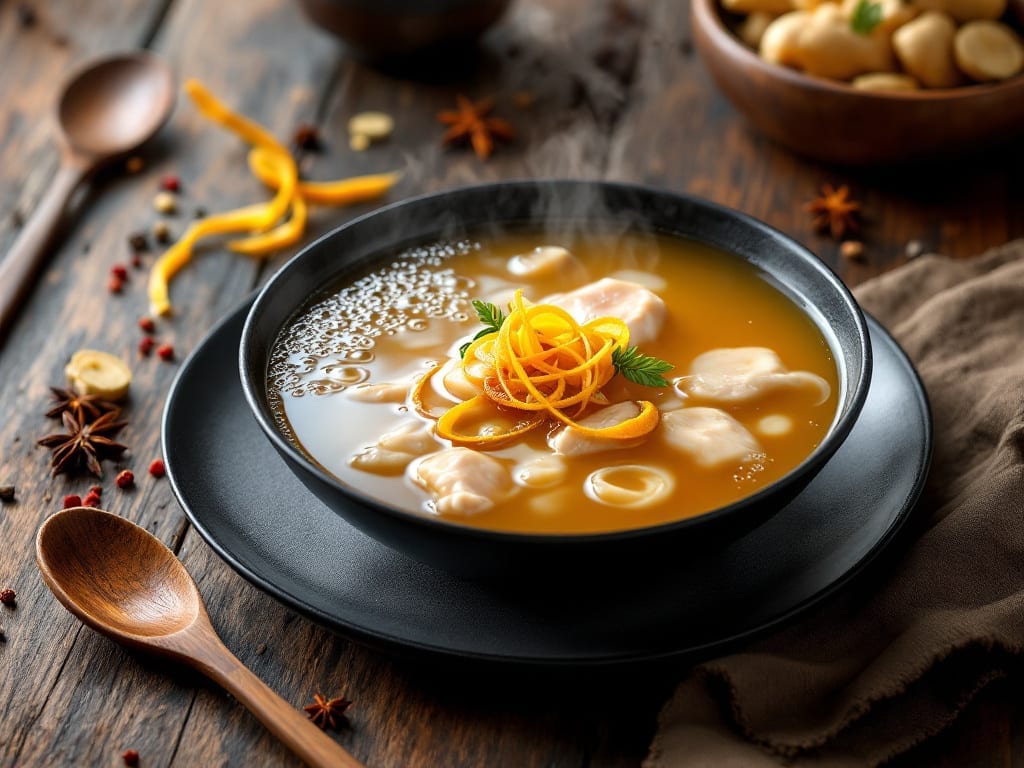
This hot pot chicken broth recipe transforms a simple pot of water into a rich, aromatic foundation that carries the soul of every bite. The secret lies in layering smoky spices, charred aromatics, and slow-simmered chicken bones—each element building depth over two hours of gentle cooking.
I developed this version after years of experimenting with restaurant-style techniques at home, ensuring the broth delivers that signature umami punch without requiring specialized equipment.
The beauty of this recipe is its versatility—it serves as the heart of a traditional hot pot meal, where proteins and vegetables cook directly in the broth at the table.
For a quicker version, you can use pre-made chicken stock as a base while still building flavor through the spice blend and charred aromatics. What sets this apart is the balance of heat, sweetness, and savory notes that make every spoonful irresistible.
By the time you finish simmering, you’ll have a deep amber broth with a fragrant steam that fills your kitchen—smoky from the charred ginger and garlic, sweet from caramelized onions, and rich from the chicken bones.
This isn’t just a side dish; it’s the star of your meal, transforming simple ingredients into something extraordinary with just patience and attention to detail.
Pair it with thinly sliced meats, fresh vegetables, and your favorite dipping sauces for the full hot pot experience. The broth keeps well in the fridge for up to five days, making it perfect for meal prep or entertaining.
Let’s get started on creating the perfect base for your next hot pot night.
Ingredients for hot pot chicken broth
Layer these aromatic ingredients to create a smoky, spiced broth that becomes the heart of any hot pot meal.
| Ingredient | Amount | Notes |
|---|---|---|
| Chicken Bones 🍗 | 2 ½ lb | From a whole chicken, skin-on preferred |
| Yellow Onions 🧅 | 2 whole | Cut into even wedges for charring |
| Garlic Cloves 🧄 | 8 cloves | Peeled, smashed for intense flavor |
| Fresh Ginger 🌿 | ½ cup | Finely grated, skin removed |
| Dried Star Anise 🌟 | 4 whole | Lightly crushed for aroma |
| Cinnamon Sticks 🌳 | 2 whole | 2-inch pieces for subtle warmth |
| Dried Bay Leaves 🍃 | 2 whole | Fresh if available, but dried works |
| Dried Sichuan Peppercorns 🌶️ | 1 tbsp | Lightly toasted for smoky kick |
| Dried Red Chili Peppers 🔥 | 2 whole | Ancho or guajillo for sweet heat |
| Rock Sugar 🍯 | ¼ cup | Or brown sugar in a pinch |
| Soy Sauce 🥢 | ¼ cup | Dark soy for rich color |
| Shaoxing Wine 🍷 | ½ cup | Or dry sherry substitute |
| Water 💧 | 8 cups | Filtered preferred for clarity |
| Salt 🧂 | 1 ½ tsp | Diamond Crystal preferred |
| White Peppercorns 🌶️ | ½ tsp | Freshly ground for subtle heat |
The chicken bones are your flavor foundation—look for a mix of leg, wing, and neck bones for maximum marrow. Whole Foods or local butchers often have them pre-packaged, but any grocery store will carry them if you ask. For the ginger, fresh is non-negotiable—the dried stuff lacks the bright, citrusy punch this recipe needs. I always grab extra at Trader Joe’s since their organic ginger stays fresh longer. The star anise and Sichuan peppercorns? Penzeys Spices has the best selection, but the regular grocery store spices work fine if they’re not ancient. Quick tip: toast your spices lightly in a dry pan before adding to the broth—wakes up their flavors instantly.
No Sichuan peppercorns? Substitute with extra black pepper plus a pinch of cinnamon—it won’t be identical, but you’ll still get that warm, earthy depth. Running low on rock sugar? Brown sugar or even a splash of honey works in a bind, though the caramelization won’t be as pronounced. Shaoxing wine unavailable? Dry sherry or even a good white wine (like Sauvignon Blanc) gets you close. The dried chilies? Any mild dried chili works—just remove the stems. For the onions and garlic, char them directly over a gas flame (or under a broiler) until blackened in spots—this builds the smoky base that defines hot pot broth.
This broth tastes even better the next day as flavors meld—plan ahead. Store in airtight containers in the fridge for up to 5 days, or freeze for 3 months in ice cube trays for portion control. I always make a double batch—one for immediate use, one to freeze—so I’m never scrambling. The fat will solidify on top when chilled, but just skim it off before reheating. Pro move: Strain through a fine-mesh sieve if you prefer a silky texture, or leave it cloudy for maximum body—your call.
Why You’ll Love This Recipe
- No-Chop Nightmare: I swear by this broth because you can literally toss in whole onions, unpeeled garlic cloves, and a hunk of ginger—no knife skills required. The star anise? Just drop it in like a spice fairy dusting your pot.
- Umami Bomb: That deep, savory punch comes from the chicken bones simmering for hours, but honestly? The star anise and ginger turn it into something ridiculously aromatic—like a warm hug in a bowl. (Yes, even on a Tuesday night.)
- Leftovers That Shine: This broth doesn’t just work for seconds—it’s my secret weapon for meal prep. Freeze it in ice cube trays for quick flavor boosts in stir-fries, soups, or even dumplings. (My kids beg for it in their ramen.)
- Budget Magic: Chicken bones are dirt cheap, and this recipe stretches them into gallons of flavor. Between us, I’ve made this for $3 a batch—same taste as takeout, none of the guilt. (Not the prettiest, but the taste makes up for it.)
Step-by-step instructions for crafting rich hot pot chicken broth
Here’s the method that transforms simple ingredients into a deeply aromatic, restaurant-quality broth.
Prepare and Char the Chicken Bones
Begin by rinsing the 2.5 lb chicken bones thoroughly under cold water to remove any blood or impurities. Pat them completely dry with paper towels – this ensures maximum flavor extraction during cooking. I like to use a sharp boning knife to trim any remaining meat from the bones, leaving them clean but still flavorful.
For that signature smoky depth, place the bones in a cold skillet over medium heat and char them lightly on all sides. You’ll see the surfaces develop a golden-brown crust, which adds incredible complexity to the broth. Once charred, transfer the bones to a large stockpot – this is where the magic begins.
Build the Aromatic Base
In the same stockpot, add the 2 whole yellow onions cut into even wedges and the 8 cloves garlic cloves that you’ve peeled and smashed. The onions should sizzle gently in their own juices for about 3-4 minutes until they begin to soften and caramelize. This creates a sweet, rich foundation for your broth.
Add the 0.5 cup finely grated fresh ginger (skin removed) and stir for 30 seconds until fragrant. Here’s where it gets interesting – add the 4 whole dried star anise, 2 whole cinnamon sticks, 2 whole dried bay leaves, 1 tbsp dried Sichuan peppercorns, and 2 whole dried red chili peppers. These spices will infuse the broth with their distinctive aromas, creating that unmistakable hot pot character.
Simmer the Broth with Precision
Pour in the 8 cups water and bring everything to a full rolling boil over high heat. Once boiling vigorously, reduce heat to maintain a gentle simmer – you should see small bubbles breaking the surface but not a vigorous boil. This simmering process, which will take approximately 2 hours, is where all the flavors meld together beautifully.
After 1 hour of simmering, skim off any foam or impurities that rise to the surface using a fine-mesh skimmer or ladle. This ensures your final broth will be crystal clear and free from any unwanted particles. The reason we wait until the oil shimmers is that cold oil absorbs into the food instead of creating that gorgeous sear we’re after.
Add Sweetness and Depth
Carefully add the 0.25 cup rock sugar, 0.25 cup soy sauce, and 0.5 cup Shaoxing wine to the simmering broth. The sugar will caramelize slightly, adding a subtle sweetness that balances the savory notes. Stir gently to incorporate these ingredients evenly throughout the broth. Here’s the thing – the wine will initially create a noticeable aroma, but it will mellow as the broth continues to simmer.
Continue simmering uncovered for another 30-45 minutes, allowing the flavors to develop and deepen. The broth should now have a rich, amber color and an intoxicating aroma that fills your kitchen. This is the moment that matters – the balance of sweet, savory, and umami flavors should be harmoniously coming together.
Season and Finish
Remove the broth from heat and let it settle for 10 minutes. This resting period allows any suspended particles to settle at the bottom of the pot. Carefully ladle the clear broth through a fine-mesh strainer into a clean pot, leaving behind any solids that might make your final broth cloudy.
Return the strained broth to the stove and add the 1.5 tsp salt and 0.5 tsp freshly ground white peppercorns. Taste and adjust the seasoning if needed – you want a balance of saltiness, sweetness, and subtle spice. The broth should be rich and flavorful but not overpowering. Real talk: this is where you’ll notice if you’ve achieved that perfect hot pot balance. Serve immediately while hot, or store in the refrigerator for up to 5 days for future hot pot sessions.
Pro Tips For Making Hot Pot Chicken Broth
- Char the Bones First: After burning three batches of broth with bland bones, I finally learned to sear them dry in the pot first—no oil needed. Just crank the heat until they’re deep golden, then add water. This unlocks the collagen and caramelizes the surface for a richer, deeper flavor that water alone can’t match.
- Blanch Onions and Ginger: I used to toss chopped onions and ginger straight into the pot, and they’d turn to mush, making the broth cloudy. Now I blanch them for 30 seconds in boiling water first, then add them to the broth. This keeps their structure intact and lets them infuse without turning the broth into soup.
- Skip the Star Anise Bag: Star anise is non-negotiable for that warm, aromatic depth, but I learned the hard way that whole pods can get lost in the broth—or worse, someone bites into one. Tear open the pods and scatter the seeds directly into the pot. You’ll get the same flavor without the surprise.
- Simmer Low and Long: I was skeptical until I tried it: after the initial boil, drop the heat to a bare simmer—just enough to see tiny bubbles breaking the surface. A fast boil burns off the good stuff, but a slow simmer (4-6 hours) pulls out the collagen and builds layers of flavor. Yes, it’s boring, but that’s how you get restaurant-quality broth.
Storing and reheating this hot pot chicken broth
Refrigerator Storage
Your hot pot chicken broth tastes even better the next day as the flavors meld together beautifully. Store it in airtight glass containers—I recommend Pyrex with snap-on lids—to maintain freshness.
Keep the broth refrigerated at 40°F or below for up to 5 days, though I often make a double batch so I always have some ready. The fat will solidify on top when chilled, so simply skim it off before reheating for a silky texture. 💫
Freezer Prep Tips
For long-term storage, freeze the broth in ice cube trays or quart-sized freezer bags with 1-inch headspace to prevent expansion cracks. I like to portion it into 1-cup servings for easy use later.
Label with the date—this broth keeps its rich flavor for up to 3 months in the freezer. Thaw overnight in the fridge before reheating for best results. ❄️
Reheating for Maximum Flavor
For stovetop reheating, pour the broth into a pot and warm over medium-low heat for 10-15 minutes until steaming. Add ¼ cup water or chicken stock if it looks too thick. If using frozen broth, thaw first and stir well before reheating.
For microwave reheating, use 50% power in 2-minute intervals, stirring between each, until fully hot. Always taste and adjust seasoning—broth often needs a pinch of salt after reheating. 🔥
Reviving Stale Broth
If your broth loses some vibrancy after a few days, don’t toss it! Bring it to a simmer and add 1 tsp soy sauce, ½ tsp grated ginger, and ¼ tsp white pepper.
Simmer for 10 minutes to restore depth. This trick works wonders for bringing back that restaurant-quality umami punch. Honestly, I’ve saved many a batch this way. ✨
Freezer-to-Stovetop Transition
When transitioning from freezer to stovetop, place the frozen broth in the fridge to thaw overnight. This gradual thaw prevents temperature shock that can dull flavors. Once thawed, strain out any ice crystals or floating fat for the smoothest texture.
Pro tip: Add 1 tsp Shaoxing wine or ½ tsp rock sugar while reheating to refresh the flavor profile. 💡
Portion Control Hacks
Use silicone ice cube molds to freeze single-serving portions perfect for quick hot pot sessions. Each cube makes about ½ cup of broth when melted. For larger batches, freeze in mason jars—they stack neatly and reheat evenly.
I keep a jar in my freezer at all times for spontaneous hot pot nights. The convenience can’t be overstated! 🌟
Nutrition facts
Frequently asked questions
Can I make this hot pot chicken broth without Shaoxing wine?
Shaoxing wine adds depth, but you can substitute with ½ cup dry sherry or even white wine in a pinch. For a non-alcoholic version, use ½ cup apple juice or chicken stock—just add ½ tsp sugar to balance the sweetness. The key is maintaining that subtle fruity note that complements the smoky spices.
How do I adjust the heat level in this broth?
The recipe uses dried red chilies for mild heat, but you can control the spice level easily. For more heat, add 1 extra chili or ½ tsp crushed red pepper flakes during the final 30 minutes of simmering. To reduce heat, simply remove the chilies after 1 hour of simmering and strain them out. The Sichuan peppercorns already provide a subtle warmth without overpowering.
Can I use chicken thighs instead of bones for extra meat?
Yes, but with adjustments! For every 1 lb chicken thighs, reduce water to 7 cups to prevent a watery broth. Brown the thighs first in a hot pan until golden, then add them to the pot with the charred bones. Remove the thighs after 1 hour of simmering (when meat is tender) and shred for later use. This adds protein while keeping the broth rich and flavorful.
Why does my broth taste bitter? How do I fix it?
Bitterness usually comes from over-simmering or charring the aromatics too much. To fix it, add 1 tsp soy sauce and ½ cup water to the broth, then simmer for 10 more minutes. For prevention: skimp on the charring time (just until lightly browned) and never let the broth boil vigorously after adding the wine or sugar. The solution is simple—balance with acidity (a splash of vinegar) or sweetness (extra sugar).
What vegetables pair best with this chicken broth for hot pot?
This smoky, spiced broth shines with crunchy vegetables like napa cabbage, bok choy, and shiitake mushrooms. For heartier options, try thinly sliced daikon radish or lotus root. Traditional pairings include bamboo shoots and water chestnuts for texture. Pro tip: Blanch veggies for 2 minutes before adding to the pot to preserve their color and crispness.

- Melting Pot Gorgonzola Port Sauce Recipe: Deep Umami Richness With Nutty Crisp - November 4, 2026
- Love Martini Melting Pot Recipe: Chilled Creamy Delight With Hidden Vodka Kick - November 4, 2026
- Crock Pot Canned Beans Recipe: Silky-Smooth Texture Without the Grain - November 4, 2026