
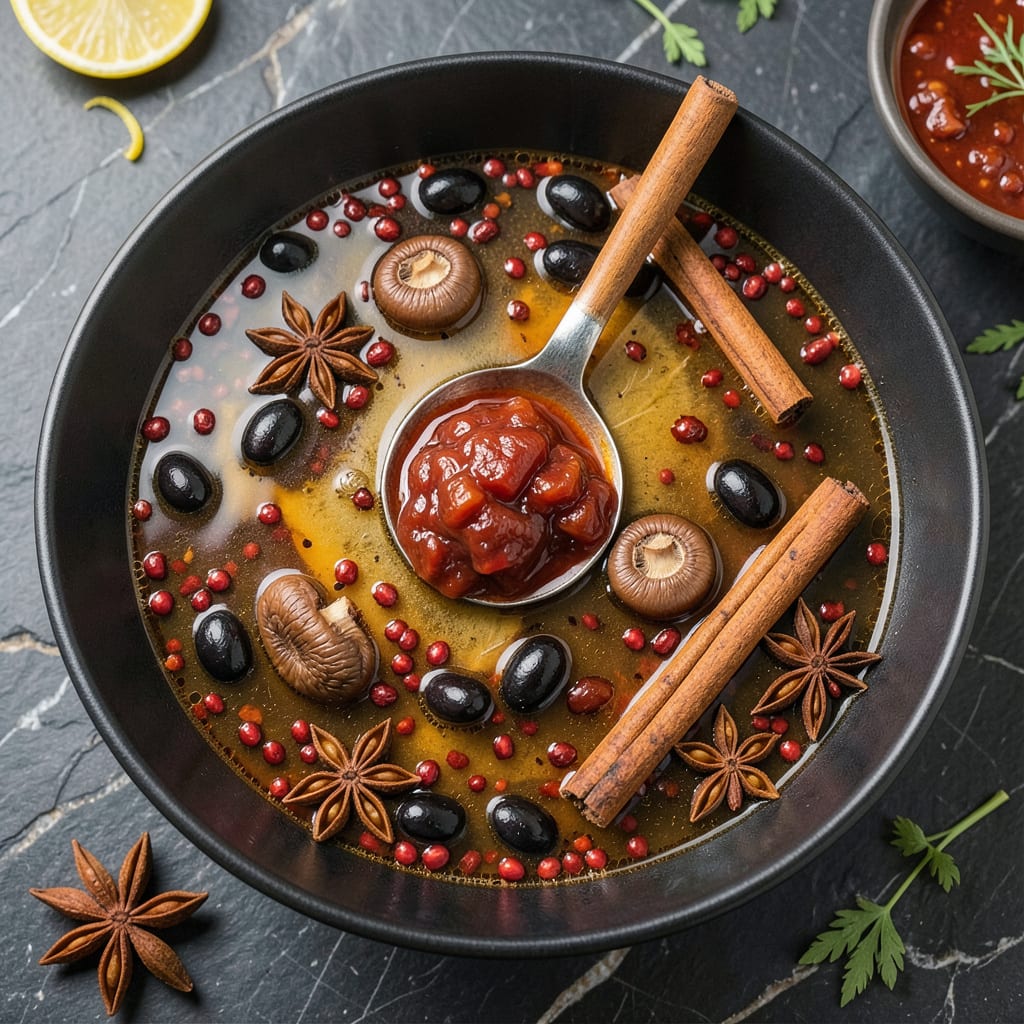
The foundation of any great hot pot experience starts with the broth, and this authentic soup base delivers the deep, complex flavors that define the dish. Developed through careful testing of traditional ingredients like Sichuan peppercorns, fermented bean paste, and aromatic spices, this recipe creates a concentrated paste that transforms simple water into a rich, fragrant cooking liquid.
What sets this base apart is its versatility—simmer it with water for an immediate broth or store the paste for up to three months. The balanced heat and umami work equally well with delicate seafood or hearty meats, while the clear instructions ensure professional results every time. Perfect for customizing spice levels or adapting to dietary preferences without sacrificing authenticity.
Ingredients for Hot Pot Soup Base
This concentrated paste transforms water into authentic hot pot broth using traditional Sichuan ingredients and aromatic spices.
| Ingredient | Amount | Notes |
|---|---|---|
| Sichuan peppercorns 🌶️ | 2 tbsp | Toasted and ground for numbing spice |
| Fermented black beans ⚫ | ¼ cup | Rinsed and roughly chopped |
| Doubanjiang (spicy fermented bean paste) 🟤 | ⅓ cup | Pixian variety preferred for depth |
| Dried shiitake mushrooms 🍄 | ½ oz | Rehydrated and finely minced |
| Star anise pods ✨ | 4 whole | Lightly toasted before grinding |
| Cinnamon stick 🌿 | 1 whole | 2-inch piece, lightly toasted |
| Fennel seeds 🌱 | 1 tsp | Lightly crushed for aromatic release |
| Ginger root 🌿 | 2 tbsp | Freshly grated with skin on |
| Garlic cloves 🧄 | 6 cloves | Minced to fine paste consistency |
| Soy sauce 🫙 | ⅓ cup | Low-sodium preferred for control |
| Shaoxing wine 🍶 | 2 tbsp | Dry sherry as acceptable substitute |
| Chinkiang black vinegar 🫒 | 1 tbsp | Essential for balanced acidity |
| Rock sugar 🍬 | 1 tbsp | Crushed for even dissolution |
| Vegetable oil 🫒 | ¼ cup | Neutral high-smoke-point variety |
The Sichuan peppercorns and doubanjiang are non-negotiable for authentic flavor. Optimal quality requires Pixian doubanjiang (available at Asian markets or online retailers like The Mala Market), while fresh Sichuan peppercorns should have vibrant red husks and strong aroma. Star anise and cinnamon must be toasted whole before grinding to maximize essential oil release. Professional kitchens use rock sugar for its clean sweetness—substitutes may alter the final balance.
For the fermented black beans, Lee Kum Kee brand provides consistent quality. Shaoxing wine can be replaced with dry sherry at equal volume, though the depth will differ slightly. If Chinkiang vinegar is unavailable, substitute with balsamic vinegar plus ½ tsp rice vinegar to approximate the complex acidity. The dried shiitake mushrooms must be rehydrated in hot water for 20 minutes—reserve the soaking liquid for additional umami in the broth.
Store the concentrated paste in an airtight container with a thin oil seal to prevent oxidation. Maintains optimal flavor for 3 months refrigerated or 6 months frozen. For immediate use, simmer 2 tbsp paste with 4 cups water for 15 minutes, then strain through fine-mesh sieve. The oil-infused solids can be repurposed as a marinade base for meats or tofu.
Why You’ll Love This Recipe
- One-Pot Magic: I toss everything—Sichuan peppercorns, star anise, even the dried shiitakes—into a single pot and let it simmer. No fancy techniques, just a lazy stir and time does the rest.
- That First Sip: Honestly, the moment the doubanjiang and fermented black beans melt together? It’s smoky, spicy, and so deeply savory I’ve caught myself sneaking spoonfuls straight from the pot.
- Hot Pot, Three Ways: Between us, I’ve used this base for quick weeknight dinners (just add noodles), fancy weekend spreads with friends, and even as a marinade for tofu. It’s my secret weapon for making one recipe feel like five.
- Freezer Gold: Here’s what sold me—the flavor actually gets better after freezing. I double the batch, stash half, and suddenly I’ve got a ridicuously good shortcut for those nights I’d rather not cook. (Yes, even on a Tuesday night.)
Step-by-Step Instructions for Hot Pot Soup Base
This method ensures a deeply aromatic broth with balanced heat and complex layers of flavor.
Step 1: Toast and Prepare the Spices and Aromatics
Begin by toasting the 2 tbsp Sichuan peppercorns, 4 whole star anise pods, and 1 whole cinnamon stick in a dry skillet over medium heat for 2-3 minutes until fragrant. Stir constantly to prevent burning—the peppercorns should become slightly darker and release their signature numbing aroma. Transfer to a mortar and grind to a coarse powder.
In the same skillet, lightly crush the 1 tsp fennel seeds with the flat side of a knife. Combine these toasted spices with the 0.5 oz dried shiitake mushrooms (rehydrated and finely minced) in a bowl. This foundational layer establishes the broth’s aromatic backbone.
Step 2: Build the Flavor Base with Fermented Ingredients
Heat the 0.25 cup vegetable oil in a heavy pot over medium-low heat. Add the 0.33 cup doubanjiang and stir for 3-4 minutes until the oil turns a deep red and the paste becomes fragrant. This slow cooking process removes the raw edge from the fermented bean paste while deepening its umami character.
Add the 0.25 cup fermented black beans (rinsed and chopped) and continue cooking for another 2 minutes. The beans should soften slightly and meld with the doubanjiang. This combination creates the signature funky, savory depth that defines authentic hot pot broth.
Step 3: Develop the Aromatic Foundation
To the pot, add the 2 tbsp ginger root (freshly grated) and 6 cloves garlic (minced to a fine paste). Sauté for 1-2 minutes until the raw aroma dissipates but before any browning occurs. The ginger and garlic should become translucent and release their essential oils into the oil.
Immediately add the toasted spice mixture from Step 1, stirring constantly for 30 seconds to bloom the spices. This quick toasting in the aromatic oil intensifies their flavors without risking bitterness. The kitchen should now be filled with the complex, intoxicating aroma that signals proper hot pot base development.
Step 4: Balance and Simmer the Broth
Pour in the 0.33 cup soy sauce, 2 tbsp Shaoxing wine, and 1 tbsp Chinkiang black vinegar. Add 6 cups of water (or light chicken stock for additional depth) and the 1 tbsp rock sugar. Bring to a gentle simmer over medium heat.
Reduce heat to low and maintain a bare simmer for 45-60 minutes. The broth should reduce slightly, with small bubbles breaking the surface occasionally. Skim any foam that rises during this process. The finished broth will have a deep mahogany color and a glossy sheen from the emulsified oils and fermented pastes.
Step 5: Strain and Prepare for Service
Remove from heat and let the broth settle for 5 minutes. Strain through a fine-mesh sieve lined with cheesecloth, pressing gently on the solids to extract maximum flavor. The strained broth should be smooth with a visible sheen of oil on the surface—a hallmark of proper hot pot base texture.
Taste and adjust seasoning if needed, though the initial balance should provide the characteristic ma-la (numbing-spicy) profile. For immediate use, return to a gentle simmer. For later use, cool completely before refrigerating for up to 3 days or freezing for 3 months. The flavors will continue to develop and meld during storage.
Health Benefits of This Dish
Digestive Health Boost
The fermented ingredients in this base—particularly the doubanjiang and fermented black beans—are packed with probiotics that support gut health. These beneficial bacteria help maintain a balanced microbiome, which can improve digestion and nutrient absorption. I notice my digestion feels smoother after enjoying hot pot with this authentic base. 💪
Immune System Support
Many of the spices here, like Sichuan peppercorns and star anise, contain natural antimicrobial and anti-inflammatory properties. The ginger and garlic are especially powerful—they’ve been used in traditional medicine for centuries to help fight infections and reduce inflammation during cold season.
Metabolism Activation
The combination of capsaicin from the chili elements and the warming spices like cinnamon and fennel can give your metabolism a gentle boost. These compounds increase thermogenesis, helping your body burn calories more efficiently. I always feel pleasantly warmed from the inside after enjoying this broth. 🔥
Rich in Antioxidants
Ingredients like shiitake mushrooms and fermented bean pastes are loaded with antioxidants that combat oxidative stress. The Chinkiang black vinegar also contains polyphenols that help protect cells from damage. This makes your hot pot experience not just delicious but potentially protective against chronic diseases.
Low-Calorie Flavor Bomb
When prepared as directed, this base creates incredibly flavorful broth with minimal calories—about 20-30 calories per cup of diluted broth. The intense flavors mean you can enjoy satisfying meals without excessive oil or salt. It’s my go-to when I want rich taste without heavy calories.
Mood Enhancement
The complex aromas from this broth do more than tantalize your taste buds—they can actually elevate your mood. The Sichuan peppercorns trigger endorphin release through their unique numbing sensation, while the warm spices create a comforting, almost therapeutic experience. Perfect for cozy gatherings! ✨
Nutrition Facts
Frequently Asked Questions
How long does homemade hot pot base last?
The concentrated paste stays fresh for 3 months refrigerated in an airtight container with an oil seal. For longer storage, freeze for up to 6 months in portioned ice cube trays. Always thaw overnight in the fridge before using.
Can I make this less spicy for kids?
Reduce the Sichuan peppercorns to 1 tsp and omit any additional chili oils. Increase rock sugar to 1.5 tbsp to balance flavors. The fermented beans still provide depth without overwhelming heat.
What’s the best ratio for diluting the paste?
Use 2 tbsp concentrated base per 4 cups water or light stock. Simmer for 15 minutes before adding ingredients. For stronger flavor, increase to 3 tbsp—just adjust saltiness with low-sodium soy sauce.
Where can I find specialty ingredients?
Check Asian grocery stores for doubanjiang and Chinkiang vinegar. Online retailers like The Mala Market or Amazon carry authentic Sichuan peppercorns. Substitute miso paste for fermented beans in a pinch.
Why does my broth look cloudy?
Cloudiness comes from emulsified oils and starches—it’s normal and indicates rich flavor! For clearer broth, strain through cheesecloth after simmering. Avoid boiling vigorously, which can break the emulsion. The texture won’t affect taste.

- 8 Bean Soup Recipe Crock Pot: Hearty Vegetable Medley in One Pot - September 25, 2026
- 4C Bread Crumbs Meatballs Recipe: Crispy Crust and Juicy Centers - September 25, 2026
- 6 Oz Chocolate Chip Cookie Recipe: Perfectly Balanced Crispy Edges and Chewy Hearts - September 25, 2026