
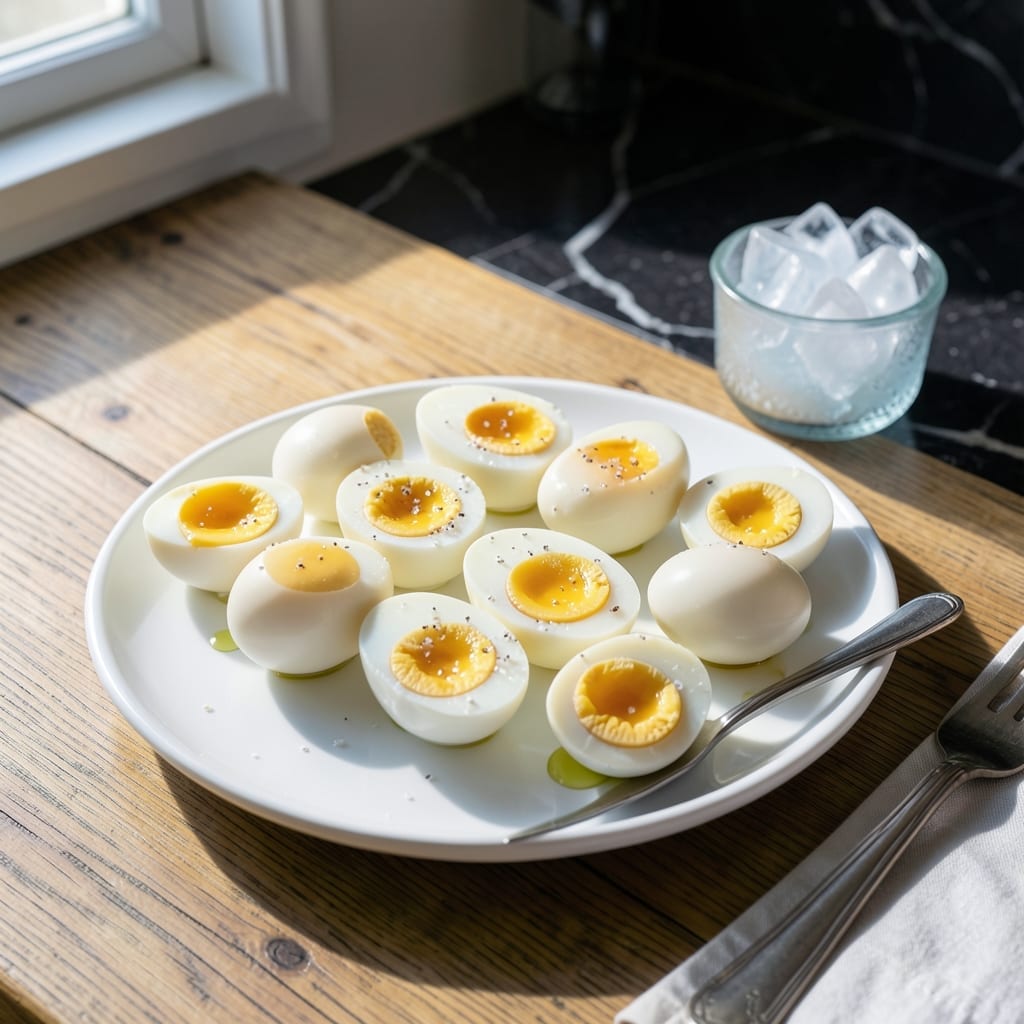
Making perfect boiled eggs in the Instant Pot is a game-changer for consistent results every time. The pressure cooker method eliminates the guesswork of stovetop boiling, delivering eggs with the exact doneness you want.
I’ve tested countless timing variations to nail the foolproof technique for easy peeling. Whether you prefer soft, medium, or hard-boiled, this method ensures the whites set properly while the yolks reach your ideal texture.
The secret lies in the precise pressure cooking time and immediate ice bath. This stops the cooking process instantly, preventing that unappetizing green ring around the yolk.
No more cracked shells or stubborn peeling. This approach works every single time, making it ideal for meal prep or quick breakfasts.
Ingredients for Instant Pot Boiled Eggs
Six simple ingredients deliver foolproof Instant Pot eggs with perfect peelability every time.
| Ingredient | Amount | Notes |
|---|---|---|
| Large Eggs 🥚 | 8 whole | Room temperature for even cooking |
| Cold Water 💧 | 1 cup | For pressure cooking |
| White Vinegar 🍶 | 1 tbsp | Helps prevent cracking |
| Ice Cubes ❄️ | 4 cups | For immediate ice bath |
| Table Salt 🧂 | 1 tsp | Optional, for easier peeling |
| Baking Soda 🧂 | ½ tsp | Optional, for easier peeling |
The eggs are the star here. Use large eggs for consistent results—extra-large can vary too much in size. Room temperature is key (it prevents cracking from thermal shock). I grab mine from Trader Joe’s or Costco—both have reliable sizing. If your eggs are straight from the fridge, let them sit in warm water for 10 minutes before cooking.
No white vinegar? Apple cider vinegar works too. Skip the salt and baking soda if you prefer—they’re optional but help with peeling. The ice bath is non-negotiable though—use plenty of ice to shock the eggs properly. If you’re making a big batch, prep a second bowl of ice water so you can transfer eggs immediately.
Store unpeeled eggs in the fridge for up to 1 week. They peel best fresh out of the ice bath, but you can keep them cold and peel later. Already peeled? Submerge in water in a sealed container to keep them fresh for 3-4 days.
Why You’ll Love This Recipe
- Set and Forget: I toss the eggs in with water and vinegar, seal the pot, and walk away—no babysitting the stove.
- Foolproof Peel: Honestly, the vinegar trick makes the shells slide off like magic every single time.
- Meal Prep Star: I hard-boil a dozen on Sunday for salads, snacks, and quick breakfasts all week.
- Budget Winner: A dozen eggs cost pennies, and my Instant Pot turns them into grab-and-go protein in minutes.
Step-by-Step Instructions for Instant Pot Boiled Eggs
This method guarantees perfectly cooked eggs with shells that slip right off.
Step 1: Prepare the Pressure Cooker and Eggs
Place the trivet in the bottom of your Instant Pot and add the 1 cup Cold Water. The water creates the steam needed for pressure cooking. I always use room temperature eggs for even cooking—cold eggs straight from the fridge are more prone to cracking under pressure.
Arrange the 8 whole Large Eggs on the trivet in a single layer, ensuring they don’t touch each other or the sides of the pot. This prevents them from bouncing around during cooking. For extra insurance against cracking, I add the 1 tbsp White Vinegar to the water.
Step 2: Pressure Cook for Perfect Doneness
Secure the lid and set the valve to sealing position. Select the manual or pressure cook function on high pressure for 5 minutes. The cook time is short because eggs continue cooking during the pressure release.
Once the cooking cycle completes, allow a 5-minute natural pressure release before manually releasing any remaining pressure. This gradual release prevents the eggs from developing that unappetizing green ring around the yolks while ensuring they’re fully cooked.
Step 3: Create the Ice Bath for Rapid Cooling
While the eggs cook, prepare an ice bath in a large bowl with the 4 cups Ice Cubes and enough cold water to cover the eggs completely. For even easier peeling, I add the 1 tsp Table Salt and 0.5 tsp Baking Soda to the ice water.
The baking soda raises the pH of the water, which helps break down the egg white proteins that stick to the shell. The salt aids in this process while also seasoning the eggs slightly if any water seeps through cracks.
Step 4: Cool and Peel the Eggs
Using tongs, immediately transfer the cooked eggs from the Instant Pot to the prepared ice bath. Let them cool for at least 10 minutes—this stops the cooking process completely and contracts the egg inside, pulling it away from the shell.
To peel, gently tap each egg on a hard surface to crack the shell all over. Then roll it between your palms to loosen the shell before peeling under a thin stream of running water. The water helps wash away any membrane bits that might still be clinging.
Pro Tips For Making Instant Pot Boiled Eggs
- Use Room Temp Eggs: Pull eggs from the fridge 15-20 minutes before cooking—cold eggs straight from the fridge are more likely to crack under pressure.
- Add Vinegar: A tablespoon of white vinegar in the water helps seal cracks instantly if they do form, and makes peeling easier later.
- Natural Release Only: I learned this the hard way—skip the quick release or you’ll get rubbery whites and gray yolks. Let the pressure drop naturally for 5 minutes, then transfer to ice water.
- Shock in Ice Water: Plunge eggs into a bowl of ice water with a handful of salt for at least 5 minutes—this stops the cooking instantly and makes peeling smoother.
Essential Equipment for Perfect Results
Instant Pot Must-Haves
Your 6-quart Instant Pot is the star here—this size accommodates 8 eggs perfectly on the trivet. I use my Duo Crisp model, but any pressure cooker with manual settings works. 🔥
Trivet Matters
The included metal trivet keeps eggs elevated above water. If yours is missing, a steamer basket works too. Just ensure water doesn’t touch the eggs—1 cup is the magic amount for pressure cooking.
Tongs for Safety
Heat-resistant silicone tongs are essential for transferring hot eggs to the ice bath. I keep a pair dedicated to my Instant Pot. Avoid metal tongs—they can scratch your pot’s non-stick coating.
Ice Bath Setup
A large mixing bowl holds 4 cups ice plus water to fully submerge eggs. I use a 2-quart Pyrex—it’s sturdy and won’t crack with temperature changes. Add the salt and baking soda directly to the ice water. ❄️
Optional Peeling Aids
While not required, a small strainer helps rinse peeled eggs. For stubborn shells, an egg slicer can create cracks to start the peeling process under running water.
Storage Containers
For meal prep, airtight glass containers keep peeled eggs fresh in water for 3-4 days. I prefer Ball jars—they’re leakproof and see-through for easy inventory checks.
Nutrition Facts
Frequently Asked Questions
What’s the ideal cook time for soft-boiled eggs?
For soft-boiled eggs with runny yolks, pressure cook on high for 3 minutes with a 5-minute natural release. This creates creamy centers while fully setting the whites.
Why do my eggs crack in the Instant Pot?
Cracking usually happens with cold eggs or insufficient water. Always use room temperature eggs and 1 cup water. Adding 1 tbsp vinegar helps strengthen shells during cooking.
How long should I cool the eggs in the ice bath?
Cooling for at least 10 minutes is crucial. This stops cooking completely and contracts the egg inside, making peeling effortless. Don’t skip this step!
Can I stack eggs in the Instant Pot?
No, always arrange eggs in a single layer on the trivet. Stacking can cause uneven cooking and increase cracking. For more eggs, use a second trivet or cook in batches.

- 6 Oz Chocolate Chip Cookie Recipe: Perfectly Balanced Crispy Edges and Chewy Hearts - September 25, 2026
- 6-Inch Coffee Cake Recipe: Vanilla Bean Swirls and Buttery Streusel Topping - September 25, 2026
- 1 Hour Soup Recipe: Velvety Richness Without the Wait - September 25, 2026