
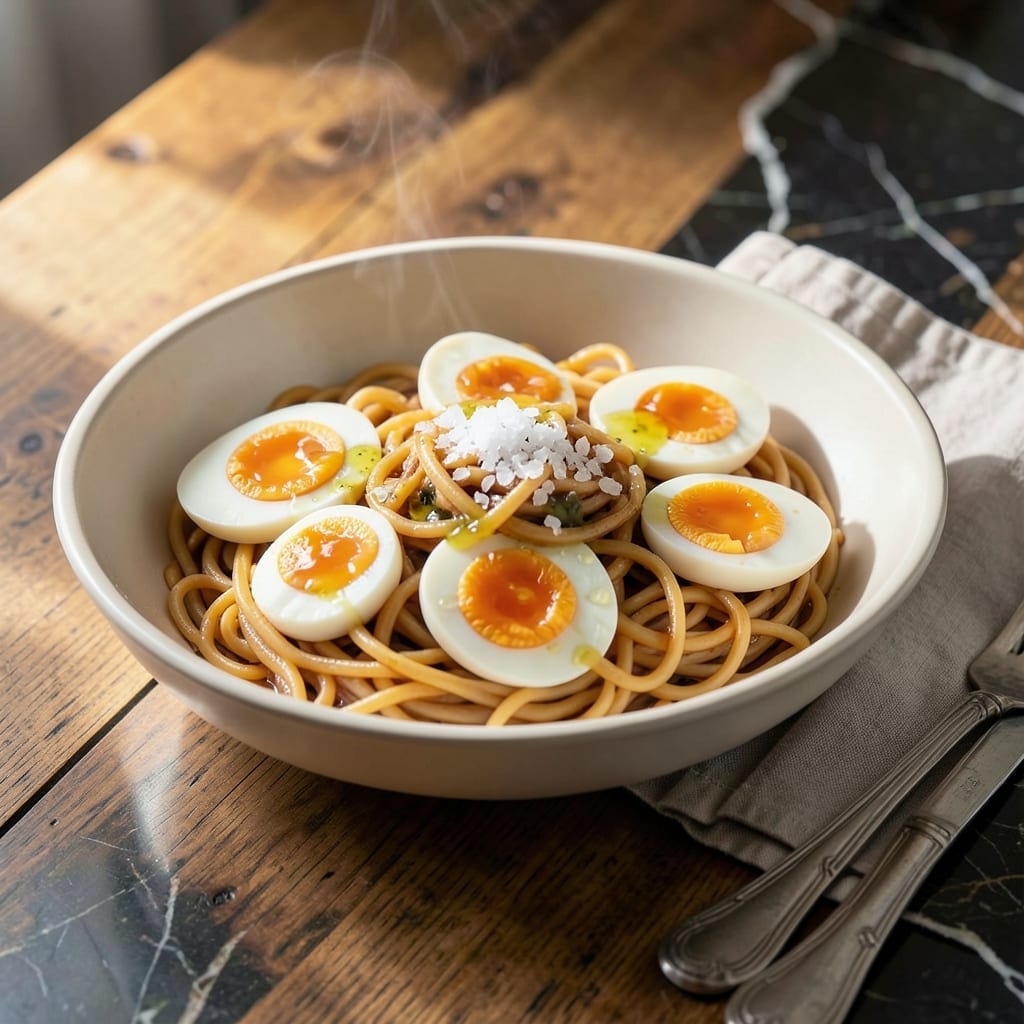
Pressure cooking transforms egg noodles into silky, perfectly tender strands in minutes. This method eliminates the need for constant stirring or watching the stove, delivering consistent results every time.
With just 10 minutes of cooking time, you’ll achieve noodles that are tender yet firm, never mushy or overcooked. The Instant Pot’s sealed environment ensures even heat distribution, cooking the noodles uniformly without hot spots.
The technique couldn’t be simpler: combine noodles with liquid, seal the pot, and let the pressure work its magic. No special skills required—just precise timing and the right water-to-noodle ratio.
What emerges is a foolproof batch of egg noodles ready for soups, casseroles, or as a base for your favorite sauces. The process is as reliable as it is efficient.
Ingredients for Instant Pot Egg Noodles
Just a handful of pantry staples for perfect noodles every time.
| Ingredient | Amount | Notes |
|---|---|---|
| Egg Noodles 🍜 | 8 oz | Wide or medium width preferred |
| Water 💧 | 4 cups | Or vegetable broth for extra flavor |
| Unsalted Butter 🧈 | 2 tbsp | For richness and shine |
| Kosher Salt 🧂 | 1 tsp | Diamond Crystal preferred for even seasoning |
| Olive Oil 🫒 | 1 tbsp | Prevents sticking, adds depth |
| Large Eggs 🥚 | 2 whole | Optional for enriched texture |
| Fresh Parsley 🌿 | ¼ cup | Chopped, for garnish |
| Garlic Powder 🧄 | ½ tsp | For subtle savory depth |
| Onion Powder 🧅 | ½ tsp | Balances the garlic |
| Black Pepper 🌶️ | ¼ tsp | Freshly ground preferred |
| Dried Thyme 🍃 | ¼ tsp | Optional for herbaceous notes |
| Parmesan Cheese 🧀 | ½ cup | Freshly grated for serving |
The egg noodles are the star here—Reames or No Yolk brands hold up best to pressure cooking. I grab mine from Walmart or Target in bulk since they’re shelf-stable. For the liquid, vegetable broth adds depth (I use Swanson), but water works fine in a pinch. The butter is non-negotiable for that silky texture—don’t substitute oil here (trust me, it’s worth the extra minute to soften it).
No fresh parsley? Dried at half the amount works, but fresh brightens everything up. If you’re skipping the eggs (for a quicker version), add an extra tablespoon of butter to compensate. Parmesan can be pre-grated if that’s what you’ve got, but freshly grated melts better. For a richer broth flavor, swap in chicken stock (if vegetarian isn’t a concern).
Cooked noodles keep 3-4 days in the fridge, but they’re best fresh. Store leftovers in a sealed container with a splash of water to prevent drying. Reheat in the microwave with a damp paper towel on top to revive the texture.
Why You’ll Love This Recipe
- Set It and Forget: I toss in the noodles, water, and butter, then walk away—the Instant Pot does all the work.
- Buttery Richness: The unsalted butter melts into the noodles, giving them a velvety finish that’s hard to resist.
- Weeknight Lifesaver: Between us, this is my go-to when I need a hot, filling side in under 15 minutes.
Step-by-Step Instructions for Instant Pot Egg Noodles
This method delivers perfectly tender noodles with minimal effort and maximum flavor.
Step 1: Prepare the Instant Pot and Noodles
Add the 4 cups Water, 1 tbsp Olive Oil, 1 tsp Kosher Salt, 0.5 tsp Garlic Powder, 0.5 tsp Onion Powder, 0.25 tsp Black Pepper, and 0.25 tsp Dried Thyme to the Instant Pot. Stir briefly to combine. I always use Diamond Crystal kosher salt for even seasoning—it dissolves beautifully.
Break the 8 oz Egg Noodles in half if they’re too long for your pot, then add them to the liquid. Press down gently to submerge them completely. The noodles will soften as they cook, so don’t worry if they’re stiff at first.
Step 2: Pressure Cook to Perfection
Secure the lid, set the valve to sealing, and cook on high pressure for 4 minutes. The Instant Pot will take about 5-7 minutes to come to pressure before the timer starts. You’ll see the float valve pop up when it’s ready.
Once the cooking time is complete, let the pressure release naturally for 2 minutes, then switch the valve to venting to release any remaining pressure. This short release time prevents the noodles from overcooking and turning mushy.
Step 3: Finish with Butter and Eggs
Open the lid and stir in the 2 tbsp Unsalted Butter until fully melted. The butter adds a rich, silky finish to the noodles. If you’re using the optional 2 whole Large Eggs for enriched texture, crack them directly into the pot now.
Stir vigorously for about 30 seconds until the eggs are fully incorporated and the mixture is creamy. The residual heat will cook the eggs gently, creating a light, custard-like sauce that coats the noodles beautifully.
Step 4: Garnish and Serve
Sprinkle the 0.5 cup Parmesan Cheese over the noodles and stir until melted and smooth. The cheese adds a salty, nutty depth that ties everything together. For a pop of freshness, top with the 0.25 cup Fresh Parsley just before serving.
Let the noodles sit for 1-2 minutes to allow the sauce to thicken slightly. The parsley should be bright green and vibrant—it adds a nice contrast to the creamy, golden noodles. Serve immediately while hot and enjoy the silky, flavorful strands.
Pro Tips For Making Instant Pot Egg Noodles
- Cut Noodles First: Break egg noodles in half before adding to the Instant Pot—this prevents clumping and ensures even cooking, especially with shorter cook times.
- Use Hot Water: I learned this the hard way—always start with hot water from the tap to jumpstart the cooking process and avoid mushy noodles.
- Salt the Water: More salt than you think, especially if using unsalted butter; egg noodles need well-seasoned water to absorb flavor properly.
- Add Butter Last: Stir in the butter after cooking to keep it from separating or burning—your noodles will taste richer and look smoother.
Common Mistakes When Making Perfect Results
Overfilling the Pot
Never exceed the ⅔ max fill line when cooking pasta in your Instant Pot. Noodles expand significantly during cooking, and overfilling can clog the steam release valve. I stick to 8 oz maximum for standard models to ensure proper pressure building.
Skipping the Liquid Ratio
The magic ratio is 1:2 noodles to liquid by volume. Using too little water causes uneven cooking and potential burn notices. For 8 oz noodles, always use 4 cups liquid—this accounts for absorption and steam creation. 💧
Ignoring the Release
Natural release for 2 full minutes is crucial. Immediate quick release can shock the noodles, making them gummy. I set a timer to avoid forgetting this step—it prevents mushy textures every time.
Forgetting to Stir
After cooking, stir the noodles immediately to separate strands and prevent clumping. The residual heat continues cooking, so this also stops them from over-softening. I use a silicone spatula to scrape the bottom gently.
Using Cold Liquid
Hot liquid helps the Instant Pot come to pressure faster. I always use hot tap water or pre-heated broth to reduce the pre-pressure time by about 2-3 minutes. This small step makes a noticeable difference in consistency.
wrong Noodle Type
Only use dried egg noodles—fresh or frozen varieties turn to mush under pressure. I prefer Reames or No Yolk brands as they hold their shape best. Avoid thin spaghetti-style noodles that can clump together. 🔥
Nutrition Facts
Frequently Asked Questions
Can I use chicken broth instead of water?
Swap water for 4 cups chicken broth to add deeper flavor. Vegetable broth works too for a meat-free version.
How do I prevent noodles from sticking?
Use 1 tbsp olive oil in the liquid and stir immediately after cooking. This keeps strands separated and prevents clumping.
Can I double the recipe?
No, never exceed ⅔ max fill line. For more servings, cook in batches to ensure even cooking and safety.
What if my noodles turn out mushy?
Reduce pressure time to 3 minutes and ensure you’re using dried egg noodles, not fresh. Quick-release too soon can also cause this.

- 6 Oz Chocolate Chip Cookie Recipe: Perfectly Balanced Crispy Edges and Chewy Hearts - September 25, 2026
- 6-Inch Coffee Cake Recipe: Vanilla Bean Swirls and Buttery Streusel Topping - September 25, 2026
- 1 Hour Soup Recipe: Velvety Richness Without the Wait - September 25, 2026