
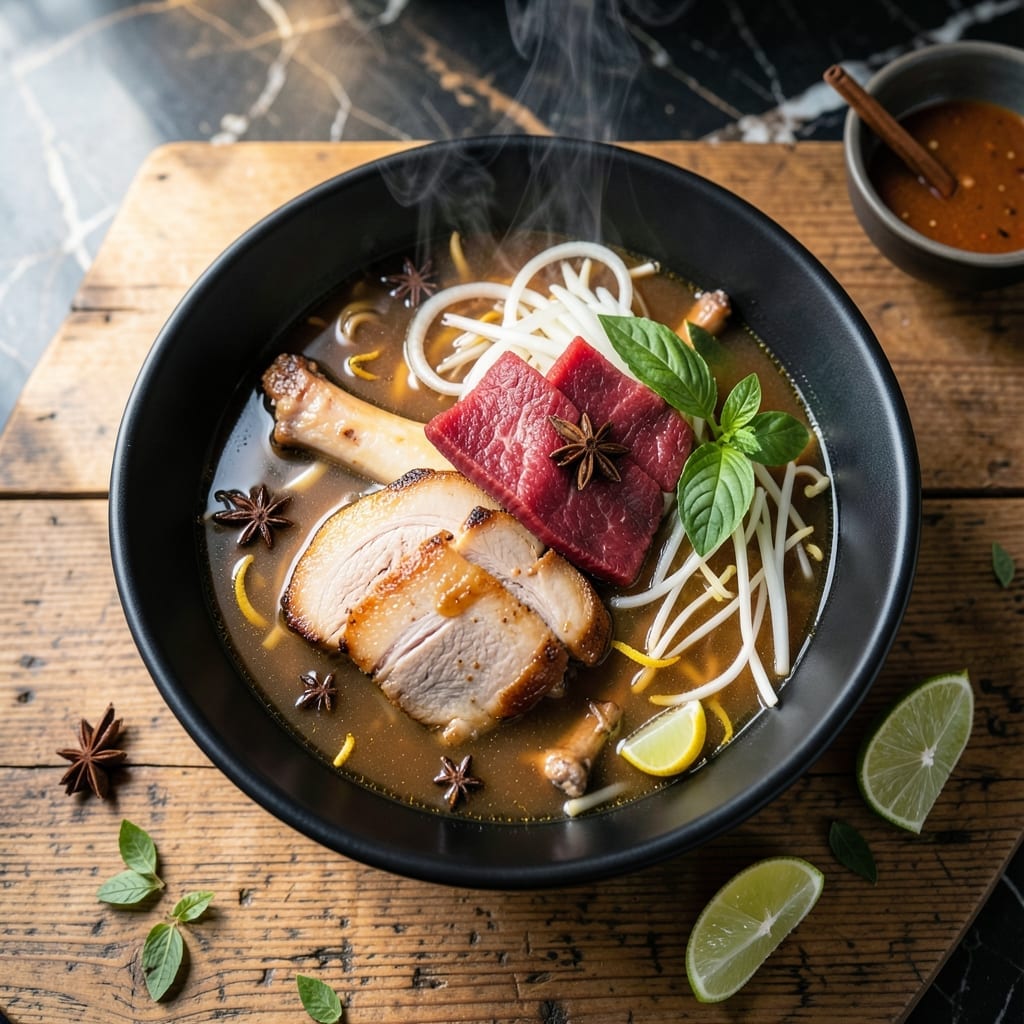
Traditional pork pho typically simmers for hours, but the Instant Pot delivers that same authentic depth of flavor in under an hour. The pressure cooker extracts rich bone broth essence from pork bones and spices with remarkable efficiency.
Charred onion and ginger form the aromatic base, while star anise, cinnamon, and cloves create the distinctive authentic Vietnamese profile. I’ve tested this method repeatedly to ensure it captures the soul of traditional pho without the long wait.
The result is a fragrant, complex broth with tender pork slices and rice noodles ready to absorb all that flavor. Each bowl delivers the comforting warmth and layered tastes you expect from a traditional Vietnamese kitchen.
This method respects the roots of pho while adapting to modern cooking needs. The Instant Pot makes it accessible without sacrificing the essential character of the dish.
Ingredients for Instant Pot Pork Pho
Traditional ingredients create authentic Vietnamese flavors without the long simmer time here.
| Ingredient | Amount | Notes |
|---|---|---|
| Pork Bones 🍖 | 2 lb | Beef bones work too |
| Pork Shoulder 🍖 | 1 lb | Thinly sliced for serving |
| Yellow Onion 🧅 | 1 whole | Halved and charred |
| Fresh Ginger 🌿 | 4 oz | Peeled and charred |
| Star Anise Pods ⭐ | 3 pieces | Whole for broth infusion |
| Cinnamon Stick 🌿 | 1 whole | 3-inch piece preferred |
| Whole Cloves 🌰 | 4 pieces | Lightly crushed |
| Fish Sauce 🐟 | 2 tbsp | Vietnamese variety preferred |
| Rock Sugar 🍚 | 1 tbsp | Or substitute granulated |
| Rice Noodles 🍜 | 8 oz | Dry, medium width |
| Fresh Thai Basil 🌿 | ½ cup | Loosely packed leaves |
| Bean Sprouts 🌱 | 2 cups | Optional garnish |
| Lime 🍈 | 1 whole | Cut into wedges |
| Jalapeño Pepper 🌶️ | 1 whole | Thinly sliced for garnish |
| Water 💧 | 8 cups | For pressure cooking |
The pork bones are non-negotiable for depth of flavor. Ask your butcher for marrow bones or pork neck bones—they release the most gelatin. Asian markets often have pre-cut pho bones. Char the onion and ginger directly over a gas flame or under the broiler (worth the extra minute). Star anise, cinnamon, and cloves should be fresh—check Penzeys or bulk spice bins for potency.
No pork bones? Beef bones work in a pinch, but the flavor profile changes. Fish sauce is essential—Red Boat or Three Crabs are top choices. Rock sugar can be swapped for white sugar (slightly less authentic). Rice noodles should be labeled banh pho—Thai Kitchen is a reliable grocery store brand. Thai basil is ideal, but Italian basil works (just less authentic).
Broth keeps 5 days refrigerated or 6 months frozen. Store noodles and garnishes separately—they absorb moisture. Reheat broth gently to preserve aromatics. Always slice pork thinly against the grain for maximum tenderness in the bowl.
Why You’ll Love This Recipe
- Set and Forget: The Instant Pot does all the work—just toss in the pork bones, shoulder, and spices, then walk away.
- Deep, Rich Broth: Star anise, ginger, and charred onion create a fragrant, complex base that tastes like it simmered for hours.
- Feeds a Crowd: I make a big batch on Sunday and portion it out for lunches all week. Honestly, it reheats like a dream.
- Budget Friendly: Pork bones and shoulder are cheap cuts, but they turn into something luxurious with almost no effort.
Step-by-Step Instructions for Instant Pot Pork Pho
Achieve authentic depth of flavor in a fraction of traditional cooking time with this method.
Step 1: Char Aromatics and Toast Spices
Heat a dry skillet over medium-high heat until very hot. Place the yellow onion halves cut-side down and the 4 oz fresh ginger pieces in the pan. Char for 8-10 minutes, turning occasionally, until deeply blackened in spots. This creates the signature smoky aroma of traditional pho.
While the aromatics char, lightly toast the 3 pieces star anise pods, cinnamon stick, and 4 pieces whole cloves in the same skillet for 1-2 minutes until fragrant. Be careful not to burn them—just warm enough to release their essential oils. Remove all from the pan and set aside.
Step 2: Pressure Cook the Broth Base
Add the 2 lb pork bones and 1 lb pork shoulder to the Instant Pot. Pour in the 8 cups water, ensuring it doesn’t exceed the maximum fill line. Add the charred yellow onion, fresh ginger, toasted spices, 2 tbsp fish sauce, and 1 tbsp rock sugar.
Seal the lid and set to high pressure for 45 minutes. The long cook time extracts maximum gelatin from the bones and develops the rich, collagen-heavy broth characteristic of authentic pho. Allow the pressure to release naturally for 15 minutes before quick-releasing any remaining pressure.
Step 3: Strain and Prepare Broth
Carefully remove the pork shoulder and set aside to cool slightly. Strain the broth through a fine-mesh sieve into a clean pot, discarding the solids. Skim any visible fat from the surface—this ensures a clean, clear broth. Taste and adjust seasoning with additional fish sauce if needed.
Once cool enough to handle, shred the pork shoulder into thin strips using two forks. The meat should be fall-apart tender from the pressure cooking. Keep the broth hot while you prepare the remaining components.
Step 4: Soak Noodles and Assemble Bowls
Place the 8 oz rice noodles in a large bowl and cover with hot water. Soak for 8-10 minutes until flexible but still slightly firm—they’ll finish cooking in the hot broth. Drain and rinse under cold water to stop the cooking process.
Divide the soaked rice noodles among four serving bowls. Top each with shredded pork shoulder. Ladle the hot broth over the noodles and meat, ensuring each bowl gets a generous portion. The broth should be steaming hot when served to properly cook the noodles through.
Step 5: Garnish and Serve Immediately
Arrange the garnishes on a separate plate: 0.5 cup fresh Thai basil, 2 cups bean sprouts, lime wedges, and thinly sliced jalapeño pepper. Each diner can customize their bowl with these fresh elements, adding texture and brightness to the rich broth.
Serve immediately while the broth is at its hottest. The noodles should be tender but not mushy, the broth deeply aromatic with layers of charred onion, warm spices, and meaty richness. This is pho as it’s meant to be—complex, comforting, and completely authentic.
Pro Tips For Making Instant Pot Pork Pho
- Char the Aromatics: Roast the onion and ginger directly in the Instant Pot using the sauté function until deeply charred—about 5-7 minutes. I learned this the hard way: skipping this step leaves the broth tasting flat and one-dimensional.
- Parboil the Bones: Rinse the pork bones, then boil them in a separate pot for 5-10 minutes to remove impurities. Sounds tedious, but it prevents a murky, bitter broth that no amount of simmering can fix.
- Skip the Overfilling: Never fill the Instant Pot past the 2/3 max line, especially with bones and liquid. After one too many “burn” notices, I now leave at least an inch of headspace to avoid pressure release disasters.
- Toast the Spices: Add the star anise pods (and any other whole spices) to the pot with a dry sauté for 1-2 minutes until fragrant. My grandmother swore by this, and she was right: it wakes up the flavors in a way raw spices just can’t.
Storing and Reheating This Recipe
Refrigerator Storage
Let the broth cool completely before storing—this prevents condensation. I use glass Mason jars or airtight containers to store the broth separately from noodles and garnishes. The broth stays fresh for up to 5 days at 40°F or below. ❄️
Freezer Storage
For longer storage, freeze the broth in quart-sized freezer bags laid flat to save space. It keeps well for up to 6 months without losing flavor. Leave 1 inch of headspace for expansion, and label with the date for easy tracking.
Reheating Broth
Gently reheat the broth on the stovetop over medium-low heat for 10-15 minutes. Avoid boiling to preserve the delicate aromatics. If using a microwave, heat in 1-minute intervals at 70% power to prevent overheating.
Noodle Storage
Store uncooked rice noodles in a cool, dry place in their original packaging. Once soaked or cooked, they’re best used immediately. If you must store them, keep them submerged in cold water in the fridge for up to 2 days to prevent drying out.
Reheating Leftovers
To revive leftovers, reheat the broth first, then add noodles and pork just before serving. This keeps the noodles from turning mushy. Garnishes like Thai basil and lime wedges should always be added fresh. 💡
Nutrition Facts
Frequently Asked Questions
Can I use beef bones instead of pork?
Yes, beef bones work as a substitute, though the flavor will be slightly different. Use the same 2 lb quantity and follow the same 45-minute pressure cooking time. The broth will be richer but less authentic to traditional pork pho.
Why do I need to char the onion and ginger?
Charring creates a deep, smoky aroma that’s essential to authentic flavor. It adds complexity to the broth that you can’t achieve with raw aromatics. Invest the 8-10 minutes—it’s worth it!
Can I make this ahead of time?
The broth keeps for 5 days refrigerated or 6 months frozen. Store noodles and garnishes separately to prevent sogginess. Reheat broth gently before assembling bowls.

- 6 Oz Chocolate Chip Cookie Recipe: Perfectly Balanced Crispy Edges and Chewy Hearts - September 25, 2026
- 6-Inch Coffee Cake Recipe: Vanilla Bean Swirls and Buttery Streusel Topping - September 25, 2026
- 1 Hour Soup Recipe: Velvety Richness Without the Wait - September 25, 2026