
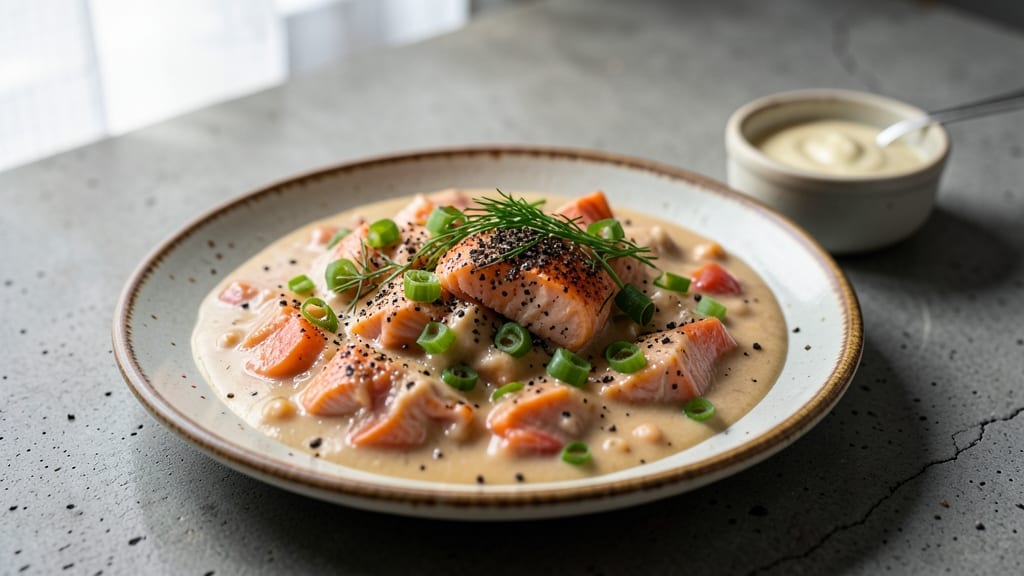
This Instant Pot salmon chowder recipe delivers all the comfort of a classic New England chowder—creamy, rich, and packed with flaky salmon—without the hours of simmering.
The secret lies in high-pressure cooking, which transforms tough salmon into tender, melt-in-your-mouth pieces while developing deep, savory flavors in just 30 minutes. I perfected this during a busy week when I needed a restaurant-quality meal without the fuss, and it’s been my go-to ever since.
The beauty of this method is how effortlessly it combines the best elements of chowder: velvety potatoes, tender carrots, and flaky salmon swimming in a creamy, slightly tangy broth.
No need for separate pots or long cooking times—the Instant Pot handles everything, including the perfect texture for the potatoes and the delicate flakiness of the salmon. The result is a bowl that’s hearty enough for a cold evening but light enough for a lunch.
What makes this recipe stand out is the balance of textures—flaky salmon that practically dissolves on your tongue, creamy potatoes that hold their shape, and a broth thickened just enough to coat every spoonful.
The salmon adds a delicate sweetness that pairs beautifully with the smoky depth of the broth, while a touch of lemon brightens the whole dish. It’s the kind of meal that feels indulgent yet comes together with minimal effort.
Best served with a sprinkle of fresh parsley and crusty bread to soak up every last drop, this chowder is perfect for pescatarians or anyone craving a comforting, protein-rich meal. Ready in 30 minutes, it’s ideal for weeknights or meal prep—just reheat and enjoy. Let’s get cooking!
Ingredients for instant pot salmon chowder
Salmon, potatoes, and rich cream—just 15 ingredients for chowder perfection in 30 minutes.
| Ingredient | Amount | Notes |
|---|---|---|
| Wild-Caught Salmon Fillets 🐟 | 1 lb | Skin-on for better texture |
| Russet Potatoes 🥔 | 1 ½ lb | Cut into 1-inch cubes |
| Carrots 🥕 | 1 lb | Peeled, sliced into rounds |
| Celery Stalks 🧅 | 2 whole | Chopped into 1-inch pieces |
| Yellow Onion 🧅 | 1 whole | Diced, medium size |
| Heavy Cream 🥛 | 1 cup | Full-fat for richness |
| Whole Milk 🥛 | 1 cup | Warmed for smoother blend |
| Chicken Broth 💧 | 2 cups | Low-sodium preferred |
| Lemon Juice 🍋 | 2 tbsp | Freshly squeezed |
| Dry White Wine 🍷 | ½ cup | Sauvignon Blanc works best |
| Fresh Dill 🌿 | ¼ cup | Chopped, stems removed |
| Fresh Parsley 🌿 | ¼ cup | Chopped for garnish |
| Salt 🧂 | 1 ½ tsp | Diamond Crystal preferred |
| Black Pepper 🌶️ | ½ tsp | Freshly ground preferred |
| Garlic Cloves 🧄 | 4 cloves | Minced for depth of flavor |
The salmon is the star, so wild-caught fillets make all the difference—look for bright pink flesh and minimal fishy odor. Trader Joe’s and Whole Foods carry excellent options, but any reputable seafood counter will do. For the potatoes, Russets are ideal—they hold their shape beautifully, but Yukon Golds add a touch of buttery sweetness if you prefer. The carrots should be firm and vibrant orange; organic works great if you’re worried about pesticide residue, but conventional is fine too. Prep all your veggies before starting—it saves time and keeps everything fresh while the Instant Pot does its magic.
No white wine? Substitute extra chicken broth with a splash of lemon juice—it keeps the tang without the alcohol. Fresh dill is a must for that bright, herby finish, but dried dill at one-third the amount works in a pinch. The cream and milk can be swapped for half-and-half if you’re watching calories, though the texture won’t be quite as luscious. For the broth, low-sodium is key—you’ll be adding salt later, and you don’t want to overdo it. The garlic? Freshly minced is non-negotiable here—jarred garlic just doesn’t cut it for the depth of flavor this dish needs.
This chowder reheats beautifully—just add a splash of milk or water to loosen it up if it’s too thick. Store leftovers in an airtight container for up to 4 days in the fridge, or freeze for 3 months. I like to portion it into individual containers before freezing so I can grab a bowl whenever I need a quick, comforting meal. The flavors actually improve overnight as everything melds together, so if you can make it ahead, do it! Serve with crusty bread and a sprinkle of fresh parsley for the full restaurant experience.
Why You’ll Love This Recipe
- One-Pot Magic: I swear by this recipe—dump everything in the Instant Pot, press start, and walk away. No chopping boards covered in potato peelings or stovetop babysitting. The salmon flakes right into the broth, and the potatoes get fork-tender without a single lid lift.
- Rich Without Effort: That first bite? Creamy, but not heavy—thanks to the salmon’s natural richness and just enough heavy cream to tie it all together. The carrots and celery add a sweet, earthy depth, while the onions caramelize right in the pot. Honestly, it tastes like I spent hours simmering, but I didn’t.
- Lunch or Dinner: Between us, this is my go-to for both. Pack it in jars for a hearty lunch the next day, or serve it steaming hot with crusty bread for a cozy weeknight dinner. The leftovers? Just as good cold, straight from the fridge—perfect for lazy mornings.
- Budget-Friendly Luxury: Wild-caught salmon feels fancy, but it stretches far in this recipe. A single fillet feeds four, and the potatoes, carrots, and celery bulk it up without breaking the bank. Plus, the Instant Pot does all the work, so I’m not tempted to order takeout when I’m tired. Win.
Step-by-step instructions for Instant Pot salmon chowder
Here’s how to transform fresh ingredients into velvety chowder with melt-in-your-mouth salmon in record time.
Sauté the Aromatic Base
Set your Instant Pot to sauté mode and add the chopped 1 whole yellow onion and 4 cloves minced garlic. Cook for 3-4 minutes until the onion becomes translucent and the garlic releases its fragrant aroma. This foundational step builds flavor that will infuse throughout the chowder.
Here’s the thing—don’t rush this part. You’ll know it’s ready when the garlic smells heavenly and the onions soften enough to pierce with a fork. Add the chopped 2 whole celery stalks and cook for another 2 minutes. The celery should soften slightly but maintain its structure—overcooking will make it mushy.
Build the Vegetable Foundation
Add the peeled 1 lb carrots sliced into rounds and the 1.5 lb russet potatoes cut into 1-inch cubes. Stir everything together and cook for 2 minutes, letting the vegetables begin to soften against the hot pot. This pre-cooking step ensures even cooking during the pressure phase.
Real talk: The potatoes should start to look slightly glossy from the steam building up. This is when you’ll add the 2 cups chicken broth and 0.5 cup dry white wine. Stir well to combine all ingredients, scraping up any browned bits from the bottom—those flavor packets are pure gold.
Pressure Cook Until Tender
Secure the lid on your Instant Pot and set the valve to sealing. Cook on high pressure for 8 minutes. This timing ensures the vegetables become fork-tender while preserving their texture. The reason we use high pressure here is to create that velvety texture we’re after—it breaks down the starches in the potatoes perfectly.
When the cooking time is complete, allow a natural release for 10 minutes before quick-releasing any remaining pressure. This gradual release prevents the chowder from becoming watery. You’ll know it’s ready when the float valve drops and the pressure indicator reads zero.
Incorporate the Salmon and Cream
Carefully remove the lid and stir in the 1 cup warmed whole milk and 1 cup heavy cream. Add the 1 lb skin-on wild-caught salmon fillets, gently placing them on top of the vegetable mixture. The salmon should be arranged in a single layer—don’t overlap them or they won’t cook evenly.
Here’s where it gets fun—cover the pot and let the salmon cook for 3-4 minutes on the sauté function. You’ll see the salmon turn opaque and flake easily with a fork. The skin should crisp slightly, which is exactly what we want for that perfect texture contrast in every bite.
Finish with Bright Flavors and Garnish
Remove the salmon and flake it into the chowder using two forks. Stir in the 2 tbsp freshly squeezed lemon juice, 1.5 tsp salt, and 0.5 tsp freshly ground black pepper. Taste and adjust seasoning—this is where you’ll appreciate using quality ingredients. The chowder should be creamy but not overly thick.
Finally, stir in the chopped 0.25 cup fresh dill and 0.25 cup fresh parsley. These herbs add a bright, fresh finish that cuts through the richness of the cream. Serve immediately, garnished with additional parsley if desired. The result is a chowder with luxurious creaminess, perfectly flaky salmon, and a balance of bright, savory flavors that will have everyone asking for seconds.
Pro Tips For Making Instant Pot Salmon Chowder
- Sear Salmon First: Wild-caught salmon stays moist and flavorful when you give it a quick sear in the Instant Pot before adding liquid. Hit “Sauté” and cook the fillets skin-side down for 2-3 minutes until golden—this adds depth the broth alone can’t match. (Yes, even if you’re impatient like me, resist the urge to skip this.)
- Dice Potatoes Evenly: I learned this the hard way—uneven potato chunks mean some turn to mush while others stay rock-hard. Cut them into 1-inch cubes, then soak in cold water for 10 minutes before adding to the pot. This evens out cooking and keeps texture consistent.
- Skip Frozen Veggies: Fresh carrots and celery hold their shape better in chowder, but if you’re short on time, blanch them for 2 minutes first. Frozen veggies release water and dilute the broth, so steer clear unless you’re okay with a thinner soup.
- Add Salmon Last: Salmon cooks in seconds once the broth is hot—if you add it too early, it’ll turn rubbery. Wait until the very end, then let it poach for 3-4 minutes. The residual heat finishes it perfectly without overcooking. (Your future self will thank you.)
Dietary considerations for this dish
Pescatarian-Friendly Base
This chowder is naturally pescatarian thanks to the salmon and creamy vegetable broth, but I’ve designed it to be easily adaptable for other dietary needs too. The salmon provides 26g of protein per serving while being rich in omega-3 fatty acids, making it a heart-healthy choice.
For extra nutrition, I recommend using wild-caught salmon—it has higher omega-3 levels than farmed varieties. 🐟
Gluten-Free Adaptation
The original recipe is already gluten-free since it relies on chicken broth and natural ingredients, but always double-check your broth label. If you’re sensitive to gluten, use a certified gluten-free chicken broth like Pacific Foods or Imagine Foods.
The wine and cream are also naturally gluten-free, so no substitutions are needed here. Just ensure your sea salt is certified gluten-free if you’re highly sensitive.
Dairy-Free Option
For a dairy-free version, replace the heavy cream and whole milk with full-fat coconut milk (about 1 ½ cups total). The coconut milk adds a subtle sweetness that complements the salmon beautifully.
I also recommend adding 1 tbsp nutritional yeast for a cheesy flavor without dairy. The texture will be slightly lighter but still creamy and satisfying.
Lower-Carb Version
To reduce carbs, swap the 1.5 lb russet potatoes for 1 lb cauliflower florets and ½ lb turnips. The cauliflower adds creaminess while keeping the dish lighter, and turnips provide a mild sweetness that balances the salmon.
You’ll still get that comforting texture, just with fewer carbs. This version works well for low-carb or keto diets while keeping the hearty feel of chowder.
Allergen Considerations
This recipe is free from common allergens like nuts, eggs, and soy, but always verify ingredient labels. For shellfish allergies, this is completely safe since the only protein comes from salmon. If you’re avoiding dairy, see the dairy-free option above.
For those with seafood allergies, substitute the salmon with firm white fish like cod or haddock—they cook similarly and work well in chowder.
Meal Prep Adjustments
When prepping ahead, the chowder reheats best if you store the salmon separately until serving. Cook the vegetable base as directed, then refrigerate it in an airtight container for up to 4 days.
When ready to serve, reheat the base on the stovetop with a splash of milk or broth, then add freshly cooked salmon to keep it flaky. This ensures you get that perfect texture every time, even after reheating. ✨
Nutrition facts
Frequently asked questions
Can I make this chowder without wine?
The white wine adds depth, but you can substitute ½ cup extra chicken broth + 1 tbsp lemon juice for the same tangy brightness. The dish will still be delicious—just slightly less complex. For a non-alcoholic alternative, try apple cider vinegar (1 tbsp) mixed with the broth.
Why does the salmon cook separately?
Salmon cooks quickly and can turn rubbery if overdone in the pressure cooker. Adding it after ensures perfect flakiness while keeping the potatoes and veggies tender. The 3-4 minute sauté finish on top seals in moisture and creates that crisp skin texture we love.
How do I fix chowder that’s too thick?
Stir in 2-3 tbsp warm milk or broth at a time until you reach your desired consistency. If it’s still too thick after reheating, a splash of cream (even 1 tbsp) will smooth it out. The key is gradual adjustments—adding too much liquid at once can make it watery.
Can I use frozen salmon instead of fresh?
Yes, but thaw it completely first in the fridge (never at room temperature). Pat the fillets dry before adding to the chowder. Frozen salmon works well, but fresh gives the best texture. If using frozen, add 1 extra minute to the final salmon cooking time to ensure it’s fully done.
What’s the best way to reheat leftovers?
Reheat only the vegetable base on the stovetop with a splash of milk or broth until warm. Add freshly cooked salmon just before serving to maintain its flakiness. Microwaving works in a pinch, but the stovetop method keeps the texture creamier. Store leftovers in an airtight container for up to 4 days.

- Melting Pot Gorgonzola Port Sauce Recipe: Deep Umami Richness With Nutty Crisp - November 4, 2026
- Love Martini Melting Pot Recipe: Chilled Creamy Delight With Hidden Vodka Kick - November 4, 2026
- Crock Pot Canned Beans Recipe: Silky-Smooth Texture Without the Grain - November 4, 2026