
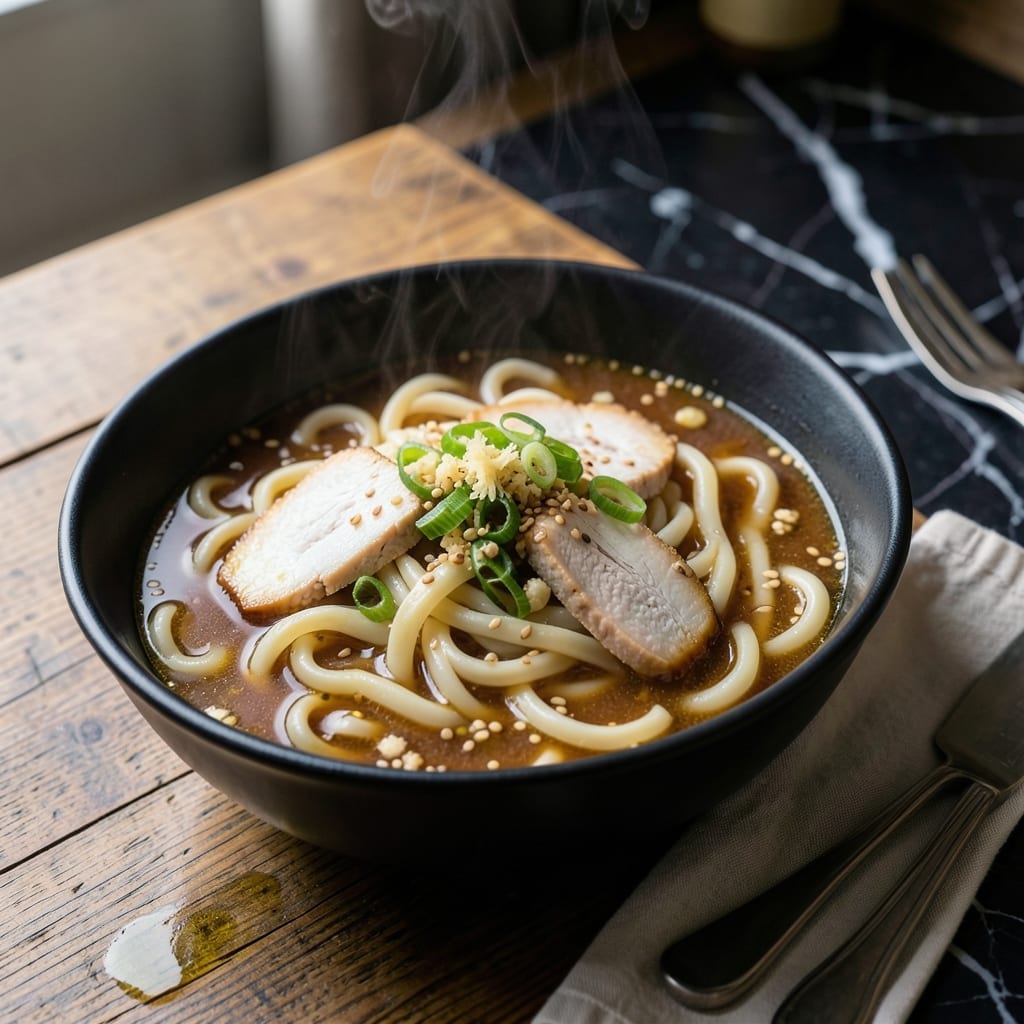
This recipe delivers restaurant-quality udon with minimal effort and maximum flavor.
Using the Instant Pot, you can achieve perfectly chewy noodles in a deeply savory broth in under 30 minutes. The pressure cooker infuses the broth with rich umami notes while keeping the noodles tender.
The beauty of this method is its simplicity—no need for separate pots or constant monitoring. Just layer the ingredients, set the timer, and let the Instant Pot work its magic.
What emerges is a comforting bowl of udon with a complex, aromatic broth that tastes like it simmered for hours. The noodles absorb just enough liquid to stay plump and satisfying.
Ingredients for Instant Pot Udon
Simple ingredients create rich, restaurant-style udon with minimal effort in the Instant Pot.
| Ingredient | Amount | Notes |
|---|---|---|
| Dried Udon Noodles 🍜 | 8 oz | Uncooked, about 2 nests |
| Chicken Broth 🥣 | 4 cups | Low-sodium preferred for control |
| Soy Sauce 🫒 | ¼ cup | Low-sodium or regular |
| Mirin 🍶 | 2 tbsp | Sweet rice cooking wine |
| Sake 🍶 | 2 tbsp | Dry Japanese rice wine |
| Garlic Cloves 🧄 | 4 cloves | Minced for depth of flavor |
| Fresh Ginger 🌿 | 1 tbsp | Grated or finely minced |
| Green Onions 🧅 | 4 whole | Thinly sliced, green parts only |
| Shiitake Mushrooms 🍄 | 4 oz | Fresh or dried, sliced |
| Soft Tofu 🧈 | 8 oz | Cubed, for protein |
| Sesame Oil 🫒 | 1 tsp | Toasted for aroma |
| Red Pepper Flakes 🌶️ | ½ tsp | Optional for heat |
| Nori Sheets 🌊 | 2 sheets | Cut into strips for garnish |
| Sesame Seeds 🌰 | 1 tsp | Toasted for garnish |
The broth base is critical. Kikkoman soy sauce and Mitsukan mirin are my go-to brands for authentic flavor—they’re widely available at Asian markets or the international aisle. Fresh shiitake mushrooms add depth, but dried work too (just rehydrate first). For the tofu, firm or soft both hold up well in the pressure cooker, but soft gives that classic silky texture.
No mirin? Substitute 1 tbsp sugar plus 1 tbsp rice vinegar. Missing sake? Dry white wine works in a pinch. Vegetarian? Swap chicken broth for vegetable broth and skip the tofu if preferred. The ginger and garlic are non-negotiable for that authentic umami punch, but powdered versions in a pinch can work at a quarter the amount.
Store dried udon in a cool, dark place for up to 6 months. Fresh tofu keeps in water for 5 days once opened. The broth actually improves overnight—make it ahead and reheat. Leftovers stay fresh in the fridge for 3-4 days.
Why You’ll Love This Recipe
- Set and Forget: I dump everything in the Instant Pot—udon, broth, soy, mirin—and walk away. 20 minutes later, dinner’s ready with zero babysitting.
- Umami Bomb: The combo of soy, mirin, and sake hits that deep, savory note I crave. It’s like a warm hug in a bowl.
- Weeknight Hero: Honestly, it’s my Tuesday lifesaver—fast enough for solo meals but impressive for last-minute guests.
- Budget Stretcher: Dried udon and pantry staples keep costs low, and leftovers taste even better the next day. I’ll be real: I make extra on purpose.
Step-by-Step Instructions for Instant Pot Udon
This pressure cooker method delivers perfectly chewy noodles submerged in a rich, aromatic broth.
Step 1: Sauté Aromatics for Depth
Set your Instant Pot to the Sauté function on Normal heat. Add the 1 tsp Sesame Oil and let it heat for 30 seconds until it shimmers. Add the minced 4 cloves Garlic Cloves and grated 1 tbsp Fresh Ginger, stirring constantly for 1 minute until fragrant.
The oil should coat the bottom of the pot evenly, and the garlic and ginger will release their aroma quickly. Be careful not to let the garlic burn—it should turn just lightly golden and smell incredibly fragrant. This base layer of flavor is essential for the rich broth.
Step 2: Build the Flavorful Broth Base
Pour in the 4 cups Chicken Broth, 0.25 cup Soy Sauce, 2 tbsp Mirin, and 2 tbsp Sake. Stir well to combine, scraping up any browned bits from the bottom of the pot. These browned bits contain concentrated flavor that will deepen the broth.
Add the sliced 4 oz Shiitake Mushrooms and 8 oz Soft Tofu cubes, then stir gently to distribute. The tofu should remain in large, intact cubes—it will break down slightly during cooking but should retain some texture. Add the 0.5 tsp Red Pepper Flakes if using.
Step 3: Pressure Cook to Perfection
Secure the lid on the Instant Pot, ensuring the valve is set to Sealing. Select the Pressure Cook function on High and set the timer for 3 minutes. The Instant Pot will take 8-10 minutes to come to pressure before the timer begins.
Once the cooking cycle is complete, allow the pressure to release naturally for 5 minutes, then carefully switch the valve to Venting to release any remaining pressure. This natural release prevents the noodles from overcooking and becoming mushy.
Step 4: Add Noodles and Finish
Open the lid and stir in the 8 oz Dried Udon Noodles, ensuring they are fully submerged in the broth. Secure the lid again and let the noodles soak for 4-5 minutes in the residual heat. The noodles should become tender and chewy, absorbing the rich flavors of the broth.
Check the texture of the noodles—they should be soft but still have a slight bite. If they are not fully cooked, let them soak for an additional 1-2 minutes with the lid on. Stir in half of the thinly sliced 4 whole Green Onions.
Step 5: Garnish and Serve
Ladle the udon into bowls, ensuring each serving has a generous amount of noodles, tofu, and mushrooms. Garnish with the remaining green onions, strips of 2 sheets Nori Sheets, and a sprinkle of 1 tsp Sesame Seeds. The nori adds a subtle oceanic flavor, while the sesame seeds provide a nutty crunch.
Serve immediately while hot. The broth should be deeply savory with a balance of umami from the soy sauce, mushrooms, and tofu, and a hint of sweetness from the mirin. The noodles should be chewy and the tofu tender and warm.
Pro Tips For Making Instant Pot Udon
- Soak the Noodles: I learned this the hard way—dried udon needs a 5-minute soak in warm water before pressure cooking, or it’ll stay stubbornly chewy no matter how long it cooks.
- Deglaze Thoroughly: After browning any proteins or aromatics, use a splash of sake to scrape up every browned bit; those little stuck pieces are pure flavor for your broth.
- Skip the Overfill: Resist the urge to cram in extra noodles or broth—the Instant Pot needs at least 1/3 empty space to build pressure safely, and udon expands more than you’d expect.
- Finish with Mirin: Stir in the mirin after pressure cooking instead of before—it keeps the sweetness bright and prevents it from turning cloyingly syrupy under high heat.
Storing and Reheating This Dish
Refrigerator Storage
Let your udon cool for no more than 2 hours at room temperature, then transfer to airtight containers. I use glass containers with snap-tight lids. This dish keeps beautifully in the fridge at 40°F or below for up to 4 days. ❄️
Freezer Storage
For longer storage, freeze in heavy-duty freezer bags for up to 3 months. Portion into single servings and lay flat to save space. Leave 1 inch of headspace for expansion and squeeze out excess air to prevent freezer burn.
Stovetop Reheating
This is my preferred method. Pour udon into a saucepan, add ¼ cup water or broth to prevent sticking, and heat over medium-low heat for 5-7 minutes. Stir occasionally and taste to adjust seasonings. 🔥
Microwave Reheating
For quick meals, microwave individual portions covered with a damp paper towel. Heat on 70% power for 2-3 minutes, stir, then continue in 30-second intervals until reaching 165°F. Add a splash of water if needed.
Nutrition Facts
Frequently Asked Questions
Can I use fresh udon noodles instead?
Yes, but adjust the timing. Fresh noodles cook faster—add them during the final 2 minutes of soaking instead of 4-5 minutes.
Why does the broth taste bland?
Sautéing the aromatics is key. Ensure you cook the garlic and ginger until fragrant before adding liquids. Boost flavor with an extra splash of soy sauce or mirin if needed.
Can I make this vegetarian?
Easily! Swap chicken broth for vegetable broth and use extra mushrooms or tofu for protein. The umami flavor remains rich and satisfying.
How do I prevent mushy noodles?
Don’t over-soak. After pressure cooking, add noodles and let them sit just until tender, about 4-5 minutes. Check frequently to avoid overcooking.

- 6 Oz Chocolate Chip Cookie Recipe: Perfectly Balanced Crispy Edges and Chewy Hearts - September 25, 2026
- 6-Inch Coffee Cake Recipe: Vanilla Bean Swirls and Buttery Streusel Topping - September 25, 2026
- 1 Hour Soup Recipe: Velvety Richness Without the Wait - September 25, 2026