
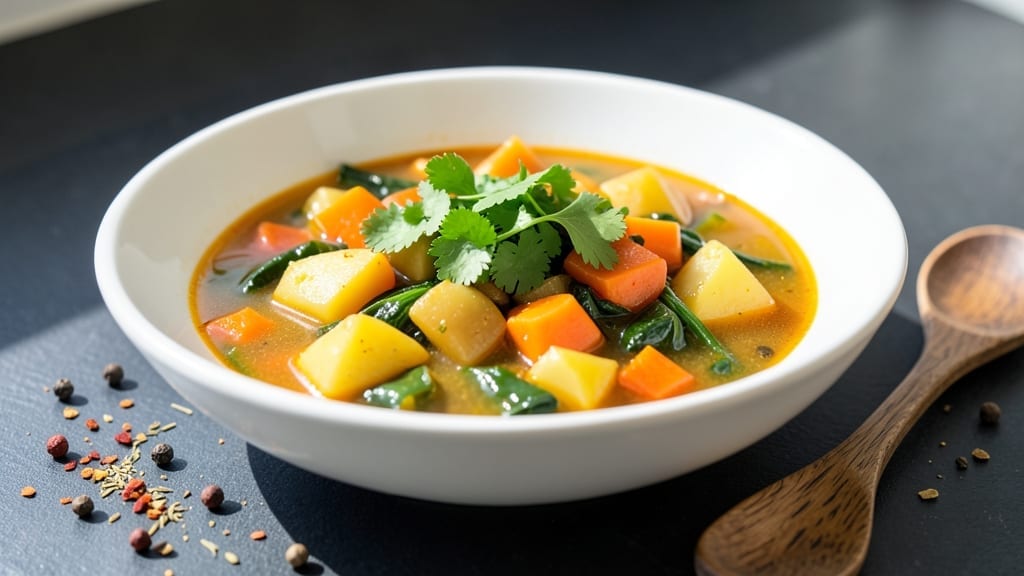
Transforming fresh vegetables into a hearty, umami-packed vegan soup in just 25 minutes is now possible with this Instant Pot recipe. The secret lies in pressure cooking—where flavors meld effortlessly while saving time. I’ve perfected this method to deliver restaurant-quality depth using simple pantry staples and seasonal produce.
This recipe leverages the Instant Pot’s multi-functionality to sauté aromatics, build layers of flavor, and cook vegetables to tender perfection—all in one pot. No chopping skills required; pre-cut veggies work just as well, making it ideal for busy weeknights.
The umami comes from mushrooms, soy sauce, and miso, while the broth base ensures richness without dairy.
What you’ll end up with is a savory, velvety soup with perfectly balanced textures—tender carrots, crisp celery, and hearty beans. The aroma alone will fill your kitchen with warmth, and every spoonful delivers that satisfying, comforting bite.
This is the kind of meal that feels indulgent yet stays light enough for any day.
Best of all, it’s foolproof—no risk of burning or overcooking, and leftovers reheat beautifully. Serve with crusty bread or a sprinkle of fresh herbs for an extra touch. Let’s get cooking!
Ingredients for instant pot veg soup
Simple pantry staples and seasonal vegetables create this restaurant-quality vegan soup.
| Ingredient | Amount | Notes |
|---|---|---|
| Vegetable Broth 💧 | 4 cups | Low-sodium preferred, homemade or store-bought |
| Carrots 🥕 | 1 ½ cups | Medium-sized, chopped into even pieces |
| Celery Stalks 🧅 | 3 whole | Diced, including leafy tops for extra flavor |
| Yellow Onion 🧅 | 1 whole | Medium-sized, diced |
| Garlic Cloves 🧄 | 4 cloves | Minced, fresh preferred |
| Creamy Coconut Milk 🥥 | 1 cup | Full-fat for richness, canned |
| Shiitake Mushrooms 🍄 | 8 oz | Fresh, sliced into 1/4-inch pieces |
| Dried Lentils 🌱 | 1 cup | Green or brown, rinsed well |
| Red Bell Pepper 🌶️ | 1 whole | Medium-sized, diced |
| Tomato Paste 🍅 | 2 tbsp | No-sugar-added preferred |
| White Miso Paste 🍶 | 1 tbsp | High-quality, unsweetened |
| Low-Sodium Soy Sauce 🥢 | 1 tbsp | Organic preferred |
| Fresh Ginger 🌿 | 1 tbsp | Grated, fresh preferred |
| Extra-Virgin Olive Oil 🫒 | 1 tbsp | For sautéing aromatics |
| Diamond Crystal Kosher Salt 🧂 | 1 tsp | Adjust to taste |
| Fresh Thyme Leaves 🌿 | ½ tsp | Dried works at 1/3 amount |
The quality of your broth and mushrooms forms the flavor foundation. Homemade vegetable broth delivers superior depth, but Pacific Foods or Imagine brands are excellent store-bought alternatives. For mushrooms, shiitake provides the most umami—Whole Foods or Trader Joe’s carry them fresh year-round. Opt for organic carrots and celery when possible, as their vibrant color indicates higher nutrient content. The lentils should be green or brown, as they hold their texture best during pressure cooking. Pre-cut vegetables save time without sacrificing quality, though chopping your own ensures no excess sodium from packaged mixes.
No shiitake mushrooms? Cremini or white mushrooms at half the quantity work well, though they’ll be slightly less earthy. Substitute the coconut milk with cashew cream for a nut-free option, though the texture will be slightly thinner. The miso paste can be swapped for white soy sauce at double the amount, but you’ll lose that deep savory complexity. For a smokier profile, add 1/2 tsp smoked paprika. The tomato paste is non-negotiable for that concentrated sweetness—Bertolli no-sugar-added is my go-to. Fresh ginger is ideal, but ground ginger at half the amount works in a pinch. Always taste before serving, as pantry staples vary in saltiness.
This soup reheats beautifully—simply add 2-3 tbsp water per serving and warm through. Store in an airtight container for 5 days in the refrigerator or 3 months in the freezer. For freezing, portion into individual containers to prevent a watery texture upon reheating. The flavor actually improves overnight as ingredients meld. For meal prep, double the recipe and freeze half immediately. Thaw overnight in the fridge before reheating. Serve with a drizzle of extra-virgin olive oil and a sprinkle of fresh thyme for an elevated touch.
Why You’ll Love This Recipe
- Garlic-Broth Magic: That first sip? The caramelized onion and garlic simmered right into the broth—it’s ridiculously good. The celery adds this subtle crunch that makes it feel fresh, even when reheated.
- Lunchbox Hero: Between us, this is my go-to for meal prep. Tastes just as good cold in a thermos the next day, and I can tweak it with whatever veggies I have (spinach, potatoes, even leftover roasted veggies).
Step-by-step instructions for Instant Pot vegetable soup
Aromatic, umami-rich vegetable soup comes together in minutes with this pressure cooker method.
Sauté the Aromatic Base
Set your Instant Pot to the “Sauté” function and add the 1 tablespoon extra-virgin olive oil. Once shimmering, add the 1 whole yellow onion and 3 whole celery stalks, both diced, along with the 1.5 cups carrots chopped into even pieces. Cook for 5 minutes until the vegetables begin to soften and release their fragrance.
Add the 4 cloves garlic cloves (minced) and 1 tablespoon fresh ginger (grated) to the pot. Stir continuously for 30 seconds until the garlic becomes fragrant—this prevents burning. The base should now smell deeply savory with notes of earthy celery, sweet onion, and spicy ginger.
Build Umami Layers with Miso and Tomato
Reduce heat to “Low” and stir in the 2 tablespoons tomato paste and 1 tablespoon white miso paste. Cook for 1 minute until the tomato paste loses its raw taste and blends smoothly with the aromatics. This step develops the soup’s rich, complex flavor foundation.
Next, add the 1 whole red bell pepper (diced) and 8 oz shiitake mushrooms (sliced into 1/4-inch pieces). Stir to coat everything evenly with the miso-tomato mixture. Cook for 2 minutes until the mushrooms begin to soften and release their meaty juices. The mushrooms should look slightly glossy, indicating they’re releasing their umami essence.
Add Lentils and Liquid for Pressure Cooking
Pour in the 4 cups vegetable broth and give everything a thorough stir. Add the 1 cup dried lentils (rinsed well) and 1 tablespoon low-sodium soy sauce. The liquid should nearly cover all ingredients, leaving just a small gap at the top.
Secure the lid and set the valve to “Sealing.” Cook on High Pressure for 10 minutes. This cooking time ensures the lentils become tender while maintaining their shape—perfect for a hearty soup texture. The pressure cooker will automatically switch to “Keep Warm” when done.
Finish with Creamy Coconut Milk and Fresh Herbs
Once the cooking cycle completes, allow the pressure to release naturally for 10 minutes, then quick-release any remaining pressure. Remove the lid and stir in the 1 cup creamy coconut milk and 0.5 teaspoon fresh thyme leaves. The coconut milk should blend smoothly, creating a velvety texture without separating.
Taste and adjust seasoning with the 1 teaspoon diamond crystal kosher salt if needed. The soup should be deeply flavorful with balanced umami from the miso and soy sauce, sweetness from the carrots and bell pepper, and earthy notes from the mushrooms and lentils.
Pro Tips For Making Instant Pot Veg Soup
- Sauté the Aromatics First: Skip the “dump-and-go” urge—sauté the onion, celery, and garlic in the Instant Pot for 2-3 minutes before adding broth. This builds flavor depth faster than just tossing everything in raw, and it keeps your carrots from turning to mush later.
- Cut Celery and Carrots Evenly: I used to eyeball it, but now I swear by ½-inch slices for celery and ¼-inch rounds for carrots. Uniform pieces cook at the same rate, so you won’t end up with rubbery chunks or undercooked centers—especially important when you’re short on time.
- Don’t Overfill the Pot: Fill the Instant Pot only halfway with broth—any more and the pressure build-up will be sluggish, or worse, trigger the float valve error. Trust me, a half-full pot makes for a smoother cook and fewer headaches when you’re mid-recipe.
- Add Acid at the End: Hold off on lemon juice, vinegar, or even a splash of wine until the very last minute. Adding it early can make the broth taste flat or even curdle slightly—wait until the soup’s done, and you’ll notice a brighter, more balanced flavor that actually pops.
Common mistakes when making this recipe
Overfilling the Pot
Filling your Instant Pot beyond the 1/2 to 2/3 capacity mark is a common mistake that leads to poor pressure buildup and uneven cooking. This soup recipe intentionally leaves room for expansion—never exceed 4 cups liquid for a 6-quart Instant Pot.
Overfilling causes the float valve to get stuck, triggering false pressure readings. I’ve seen soups turn mushy or even burn when this happens. Always leave at least 1-2 inches of headspace. 🌡️
Skipping the Natural Release
Rushing to quick-release the pressure immediately after cooking can result in undercooked lentils and a watery texture. The 10-minute natural release in this recipe allows residual heat to finish cooking the lentils gently while preventing the coconut milk from curdling.
I’ve made this mistake—skipping the release leaves you with gritty, uncooked lentils. If you’re in a hurry, wait at least 5 minutes before quick-releasing.
Using Low-Quality Broth
The broth is the flavor foundation, so using low-sodium store-bought brands with artificial ingredients can make your soup taste flat. I recommend Pacific Foods or Imagine vegetable broths—they’re rich and free from additives.
Even homemade broths benefit from reducing them by half to concentrate flavors. If you’re using a basic brand, add 1 extra teaspoon of miso paste to compensate for the lack of depth.
Burning the Aromatics
Leaving the onion, celery, and garlic unattended while sautéing leads to bitter flavors and stuck-on residue. Stir every 30-60 seconds until the vegetables soften—this takes about 5 minutes for this recipe. I’ve had to scrape burnt bits off my Instant Pot after forgetting to stir.
For extra insurance, set a timer and keep a spatula handy. The goal is a fragrant, golden base, not charred bits. 🔥
Ignoring the Miso Cooking Time
Adding miso paste directly to hot liquid causes it to curdle or separate, ruining the soup’s velvety texture. Always stir it into the sautéed aromatics on Low heat for 1 minute first—this activates its enzymes and blends it smoothly.
I’ve had to rescue soups by whisking in extra coconut milk to fix clumpy miso. For a foolproof approach, mix the miso with a splash of broth before adding it to the pot.
Underseasoning Before Serving
Tasting the soup before adding salt is a cardinal sin—by then, it’s often too late to fix. The miso, soy sauce, and broth already contain significant sodium, so adjust with ½ teaspoon salt while cooking, then taste again before serving.
I’ve had to add entire extra tablespoons of salt to “fix” a bland soup. For precise control, use Diamond Crystal kosher salt and taste as you go. The final adjustment should be minimal—just a pinch to brighten flavors. ✨
Nutrition facts
Frequently asked questions
Can I make this vegan soup without coconut milk?
Swap the coconut milk for 1 cup cashew cream (blend soaked cashews with water) or ½ cup silken tofu blended with ½ cup broth for a neutral, creamy texture. For a thinner consistency, simply reduce the coconut milk to ½ cup and add ½ cup extra broth instead. The soup will still be rich but lighter.
How do I adjust this recipe for a 3-quart Instant Pot?
Reduce all ingredients by 50%—use 2 cups broth, ½ cup lentils, 1 cup chopped veggies, and ½ cup coconut milk. Cook on High Pressure for 8 minutes instead of 10, as the smaller pot heats up faster. The natural release time remains the same. This version serves 2 instead of 4.
Why did my soup turn out too thick?
This usually happens from overcooking the lentils or not enough liquid. For a quicker fix, stir in ½ to 1 cup hot broth or water until creamy. If the texture is still too thick, blend 1 cup soup and mix back in. To prevent this, always use the 10-minute natural release and avoid quick-releasing. The coconut milk also thickens as it cools—serve slightly warm for the best consistency.
Can I add fresh spinach or kale at the end?
Yes! Stir in 2 cups chopped fresh greens during the final 2 minutes of natural release. They’ll wilt perfectly without turning mushy. For heartier greens like kale, add them 5 minutes before the natural release ends. Avoid adding them during pressure cooking—they’ll disintegrate. This keeps their vibrant color and nutrients intact.
Is this soup freezer-friendly?
Perfect for freezing! Let the soup cool completely, then portion into airtight containers (leave 1-inch headspace to prevent ice crystals). Freeze for up to 3 months. Thaw overnight in the fridge and reheat with 2-3 tbsp water per serving to restore creaminess. The flavors actually deepen after freezing. Label containers with the date for easy tracking.

- Braised Beef Short Ribs Recipe: Crock Pot Fall-Off-Bone Magic in 6 Hours - November 1, 2026
- Crock Pot Cocoa Recipe: Velvety Warmth With Hidden Spice Magic - November 1, 2026
- White Queso Crock Pot Recipe: Ultra-Smooth Melt Without the Grain - November 1, 2026