
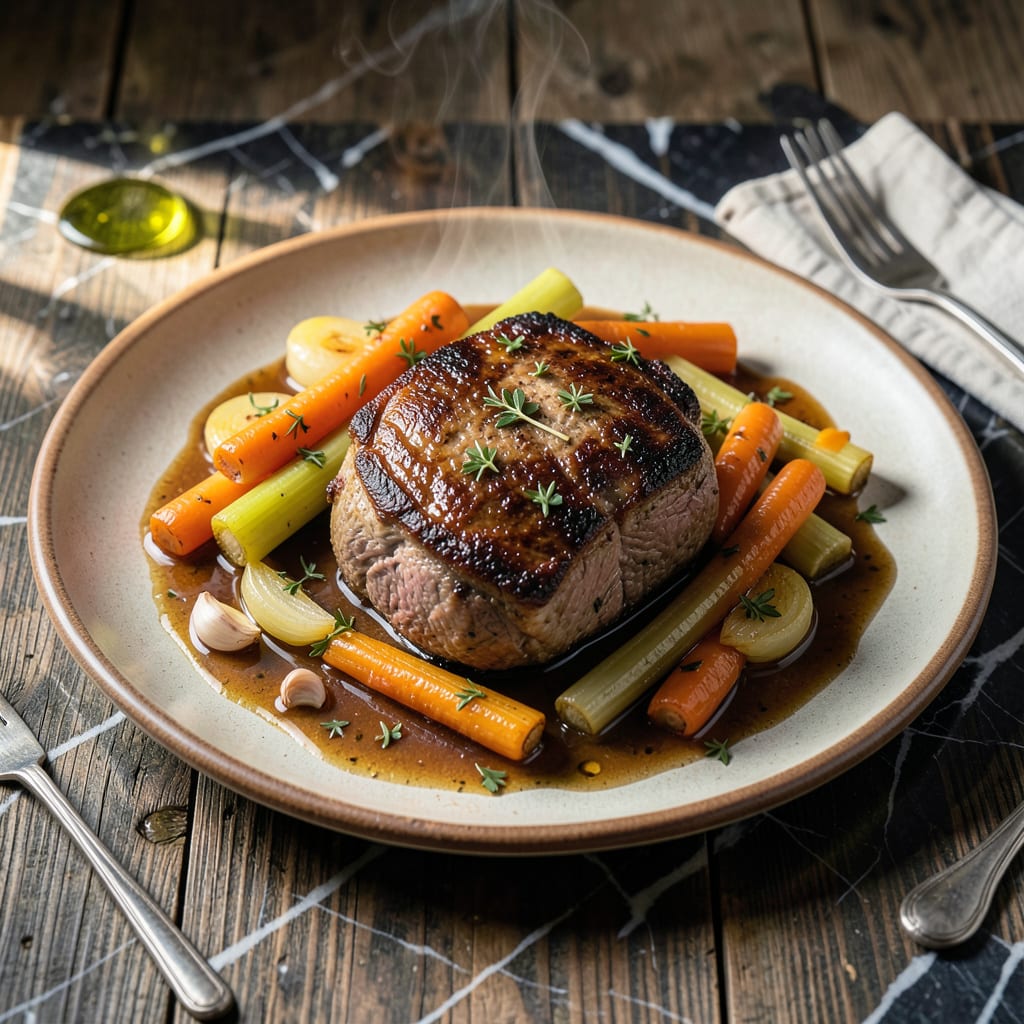
This slow-cooked pot roast delivers tender meat with rich Italian flavors, perfected through low and slow cooking.
Herbs and vegetables infuse every bite, creating a dish that falls apart beautifully and satisfies completely.
Ingredients for Italian Pot Roast
A well-marbled chuck roast and fresh herbs create this Italian-inspired slow-cooked classic.
| Ingredient | Amount | Notes |
|---|---|---|
| Chuck Roast 🥩 | 3 lb | Well-marbled, trimmed of excess fat |
| Olive Oil 🫒 | 2 tbsp | Divided for searing and cooking |
| Yellow Onion 🧅 | 1 whole | Large, diced into chunks |
| Carrots 🥕 | 3 whole | Peeled and cut into thick pieces |
| Celery Stalks 🌿 | 3 whole | Cut into large chunks |
| Garlic Cloves 🧄 | 6 cloves | Smashed or halved |
| Dry Red Wine 🍷 | 1 cup | Bold variety like Cabernet Sauvignon |
| Beef Broth 🥘 | 2 cups | Low-sodium preferred |
| Crushed Tomatoes 🍅 | 1 can | 28 oz can, with juices |
| Tomato Paste 🍅 | 2 tbsp | For depth of flavor |
| Fresh Rosemary 🌿 | 2 tbsp | Chopped, stems discarded |
| Fresh Thyme 🌿 | 2 tbsp | Chopped, stems discarded |
| Bay Leaves 🍃 | 2 whole | Dried or fresh |
| Kosher Salt 🧂 | 1 ½ tsp | Diamond Crystal preferred |
| Black Pepper 🌶️ | 1 tsp | Freshly ground |
[recipeingredientscaler]
The chuck roast is non-negotiable here—its marbling renders down during the long cook, creating that fall-apart texture. Whole Foods or Costco offer excellent quality, but most supermarkets carry well-marbled options. Look for pieces with visible fat streaks throughout. The fresh herbs should be vibrant green and aromatic; farmers markets often have the best selection in season.
No red wine? Substitute with an extra cup of beef broth plus 1 tbsp balsamic vinegar for acidity. Dried rosemary and thyme work at one-third the amount of fresh. If you can’t find chuck roast, brisket or short ribs also respond well to slow cooking. For the tomatoes, San Marzano canned tomatoes are ideal, but any good-quality crushed tomatoes will do.
The roast tastes even better the next day once flavors meld. Store leftovers in an airtight container in the fridge for up to 4 days, or freeze for 3 months. Reheat gently to maintain tenderness.
Why You’ll Love This Recipe
- One Pot Wonder: I toss everything in a single Dutch oven—chuck roast, onions, carrots, celery—and let the oven do the work.
- Fall-Apart Tender: The chuck roast slow-cooks into this melt-in-your-mouth texture that soaks up all the olive oil and veggie flavors.
- Sunday Dinner Hero: I serve it to guests, pack it for lunch, or freeze leftovers—it’s my go-to for any gathering.
- Budget Stretcher: A cheap cut of beef turns into a showstopper, and I always have enough for sandwiches the next day.
Step-by-Step Instructions for Italian Pot Roast
These tested steps ensure fall-apart tenderness with rich, herb-infused depth of flavor.
Step 1: Sear the Chuck Roast for Maximum Flavor
Pat the 3 lb chuck roast completely dry with paper towels to ensure a proper sear. Season all sides generously with the 1.5 tsp kosher salt and 1 tsp black pepper, pressing the seasoning into the meat so it adheres well.
Heat 1 tbsp olive oil in a heavy Dutch oven over medium-high heat until shimmering. Add the chuck roast and sear undisturbed for 4-5 minutes per side until deeply browned. You want a dark, crusty exterior—this builds the flavor foundation for the entire dish. Transfer the meat to a plate and set aside.
Step 2: Sauté Aromatics to Build the Base
In the same pot, add the remaining 1 tbsp olive oil if needed. Add the yellow onion, carrots, and celery stalks, cooking over medium heat for 6-8 minutes until the vegetables begin to soften and develop light golden edges.
Add the 6 cloves garlic cloves and cook for 1 minute until fragrant. Stir in the 2 tbsp tomato paste and cook for another 2 minutes, allowing it to caramelize slightly. This step intensifies the umami depth in your finished dish.
Step 3: Deglaze and Add Remaining Ingredients
Pour in the 1 cup dry red wine and scrape up all the browned bits from the bottom of the pot with a wooden spoon. Let it simmer for 3-4 minutes until the liquid reduces by about half. This deglazing step captures all the concentrated flavors from searing.
Add the 2 cups beef broth, 1 can crushed tomatoes, 2 tbsp fresh rosemary, 2 tbsp fresh thyme, and 2 whole bay leaves. Stir to combine, then return the chuck roast to the pot, along with any accumulated juices. The liquid should come about halfway up the meat.
Step 4: Slow Cook to Perfection
Bring the mixture to a gentle simmer, then reduce heat to low. Cover and cook for 3 to 3.5 hours, turning the chuck roast every 45 minutes to ensure even cooking. The meat is done when it shreds easily with a fork and reaches an internal temperature of 195-200°F.
Maintain a steady, gentle simmer throughout the cooking process. If the liquid reduces too much, add a small amount of water or additional beef broth. The long, slow cooking time transforms the tough cut into buttery tenderness while allowing the flavors to meld beautifully.
Step 5: Rest and Serve
Carefully transfer the chuck roast to a cutting board. Skim any excess fat from the surface of the cooking liquid, then adjust seasoning if needed. Return the meat to the pot and let it rest in the liquid for 10-15 minutes before serving.
Serve the pot roast with the vegetables and sauce, ensuring each portion gets a generous amount of the rich, herb-infused liquid. The meat should be so tender it nearly falls apart at the touch of a fork, with every bite infused with the deep, aromatic flavors of the slow-cooked herbs and wine.
Pro Tips For Making Italian Pot Roast
- Sear the Chuck: Use high heat and don’t move the meat for at least 3-4 minutes per side to get a deep brown crust on the chuck roast—this builds the rich foundation for the Italian flavors.
- Cut Veggies Evenly: Chop the onion, carrots, and celery into uniform 1-inch pieces so they soften at the same rate and melt into the sauce without turning mushy.
- Deglaze Thoroughly: I learned this the hard way—scrape up all those browned bits from the pot with a splash of wine or broth before slow cooking, or you’ll miss out on layers of flavor.
- Use Enough Liquid: Add at least 1-2 cups of liquid (broth, wine, or tomatoes) to cover the bottom of the pot—this keeps the roast moist and creates that silky gravy Italian pot roast is known for.
Serving Suggestions for Leftovers
Plating for Elegance
I love serving this dish on a large white platter with the meat arranged in the center, surrounded by the cooked vegetables. Spoon the rich sauce over the top and garnish with fresh rosemary sprigs for a pop of color and aroma. This simple presentation lets the dish shine. ✨
Starch Pairings
Creamy polenta is my top choice for soaking up the sauce—it’s like a warm hug on a plate. Garlic mashed potatoes work beautifully too, or try crusty Italian bread for a more rustic feel. Each starch option brings a different texture to the meal.
Vegetable Sides
A simple arugula salad with lemon and olive oil adds freshness to cut through the richness. Roasted broccolini with a sprinkle of red pepper flakes complements the Italian flavors perfectly. Both sides add brightness and balance to the hearty pot roast.
Wine Pairings
Since you used red wine in cooking, serve the same bottle at the table. A bold Chianti or Sangiovese pairs wonderfully with the deep, savory flavors of the dish. The wine’s acidity and tannins will cleanse your palate between bites. 🍷
Finishing Touches
Just before serving, sprinkle with freshly grated Parmesan cheese and a drizzle of high-quality olive oil. These small touches elevate the dish and add layers of flavor. I also like to add a pinch of flaky sea salt for contrast.
Nutrition Facts
Frequently Asked Questions
What’s the best cut of beef for this dish?
Chuck roast is ideal due to its marbling, which breaks down during slow cooking. For best results, choose a well-marbled 3 lb piece. Brisket or short ribs can work as alternatives.
Can I make this in a slow cooker?
Yes! Sear the meat first, then transfer everything to a slow cooker. Cook on low for 8-10 hours or high for 5-6 hours until fork-tender.
How do I know when it’s done?
The roast is ready when it shreds easily with a fork. Aim for an internal temperature of 195-200°F. If it resists, cook for another 30 minutes and check again.
Can I use dried herbs instead of fresh?
Yes, use 1/3 the amount of dried rosemary and thyme. Dried herbs are more concentrated, so a little goes a long way. Add them with the liquid for best flavor infusion.

- 4C Bread Crumbs Meatballs Recipe: Crispy Crust and Juicy Centers - September 25, 2026
- 6 Oz Chocolate Chip Cookie Recipe: Perfectly Balanced Crispy Edges and Chewy Hearts - September 25, 2026
- 6-Inch Coffee Cake Recipe: Vanilla Bean Swirls and Buttery Streusel Topping - September 25, 2026