
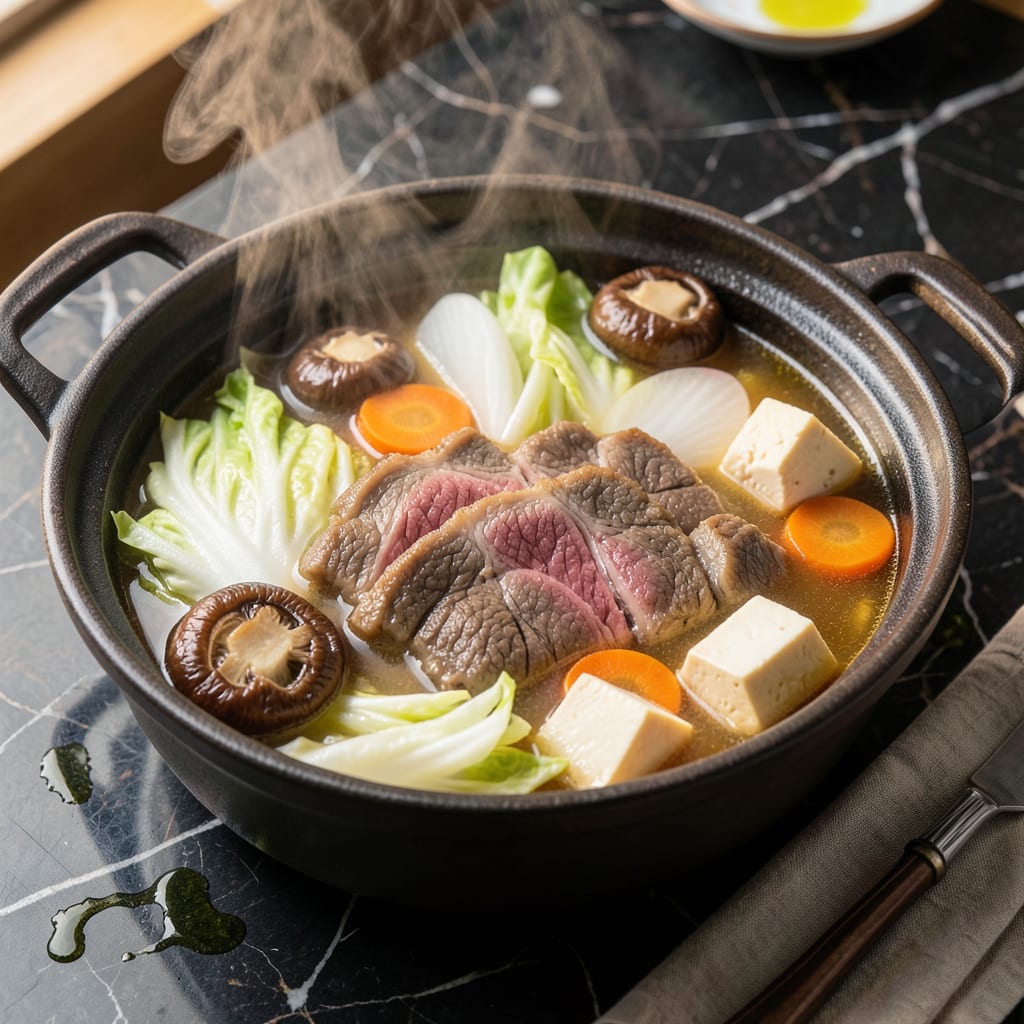
This traditional Japanese hot pot brings warmth and comfort to any table with its one-pot simplicity.
Layered with fresh vegetables, tender proteins, and a savory broth, the dish comes together effortlessly while delivering rich, authentic flavors in every bite.
Ingredients for Japanese Pot
Fresh vegetables, tender proteins, and savory broth create this one-pot traditional Japanese hot pot.
| Ingredient | Amount | Notes |
|---|---|---|
| Napa Cabbage 🥬 | 1 whole | Thinly sliced, about 8 cups |
| Shiitake Mushrooms 🍄 | 8 oz | Fresh, stems removed |
| Thinly Sliced Beef 🥩 | 1 lb | Ribeye or sirloin preferred |
| Firm Tofu 🧈 | 14 oz | Pressed and cubed |
| Daikon Radish 🥕 | 1 whole | Peeled and sliced |
| Carrots 🥕 | 2 whole | Peeled and sliced |
| Shungiku (Edible Chrysanthemum Greens) 🌿 | 1 bunch | Trimmed and cut into lengths |
| Dashi Stock 🍲 | 6 cups | Homemade or store-bought |
| Soy Sauce 🫒 | ⅓ cup | Low-sodium preferred |
| Mirin 🍶 | ¼ cup | Sweet cooking rice wine |
| Sake 🍶 | ¼ cup | Dry rice wine |
| Garlic Cloves 🧄 | 4 cloves | Minced |
| Fresh Ginger 🌿 | 1 tbsp | Grated |
| Green Onions 🧅 | 4 whole | Thinly sliced for garnish |
| Sesame Oil 🫒 | 1 tbsp | Toasted for finishing |
The broth base is critical here. Dashi stock provides the authentic foundation—look for Kombu and Bonito flakes at Asian markets or specialty stores like H Mart. For the beef, opt for well-marbled cuts like ribeye or sirloin from a trusted butcher. The tofu should be firm to hold its shape in the simmering broth, and Nasu brand (available at most Asian grocers) offers consistent quality.
No dashi? Vegetable broth with a piece of Kombu works in a pinch. Shiitake mushrooms can be swapped for oyster mushrooms if needed (one-to-one ratio). For a vegetarian version, simply omit the beef and double the tofu. Mirin and sake are irreplaceable for authentic flavor, but dry sherry can substitute for sake if absolutely necessary—though the depth won’t be quite the same.
Prepare all ingredients before starting as the cooking process moves quickly. Leftovers keep well in the fridge for 2-3 days, though the vegetables are best fresh. The broth actually improves overnight, so plan for leftovers. Freeze for up to 1 month if storing longer.
Why You’ll Love This Recipe
- One Pot Wonder: I just toss everything in and let it simmer—napa cabbage, shiitakes, and beef soak up the broth while I set the table.
- Umami Bomb: Honestly, the combo of shiitake and beef creates this deep, savory richness that makes me crave seconds every time.
- Feeds a Crowd: I make a big batch for Sunday dinner, and it’s just as good reheated for lunch the next day.
- Budget Friendly: Between us, a little beef goes a long way when stretched with tofu and daikon, so it’s light on the wallet but heavy on flavor.
Step-by-Step Instructions for Japanese Hot Pot
This one-pot method delivers authentic flavor with minimal cleanup and maximum depth.
Step 1: Prepare the Broth Base
In a large pot, combine the 6 cups dashi stock, 0.33 cup soy sauce, 0.25 cup mirin, and 0.25 cup sake. I always bring this to a gentle simmer over medium heat first to allow the flavors to meld before adding other ingredients.
Add the 4 cloves minced garlic and 1 tbsp grated fresh ginger to the warming broth. This creates an aromatic foundation that infuses every component of the dish. The broth should reach a temperature where small bubbles form at the edges but never come to a rolling boil.
Step 2: Add the Hearty Components
Once the broth is simmering, add the 1 lb thinly sliced beef in a single layer. The meat should cook through in 2-3 minutes, turning from red to a light brown color. Remove it with a slotted spoon and set aside to keep it tender.
Next, add the 14 oz cubed firm tofu, 1 whole peeled and sliced daikon radish, and 2 whole peeled and sliced carrots to the pot. These ingredients need 8-10 minutes to become fork-tender while soaking up the savory broth.
Step 3: Incorporate the Vegetables
Add the 8 oz shiitake mushrooms (stems removed) and 1 whole napa cabbage (thinly sliced) to the pot. The cabbage should wilt and soften in 5-7 minutes, while the mushrooms absorb the umami-rich liquid.
Finally, add the 1 bunch shungiku (trimmed and cut into lengths) and return the cooked beef to the pot. The shungiku needs only 2-3 minutes to cook through—overcooking will make it slimy.
Step 4: Finish and Serve
Turn off the heat and let the hot pot sit for 2 minutes to allow all ingredients to reach serving temperature. The vegetables should be tender-crisp, and the broth should have a deep, savory aroma with a balance of sweetness from the mirin.
Ladle the hot pot into bowls, ensuring each serving has a variety of ingredients. Drizzle each bowl with 1 tbsp toasted sesame oil and garnish with 4 whole thinly sliced green onions for a fresh, aromatic finish.
Pro Tips For Making Japanese Pot
- Blanch the Cabbage: I learned this the hard way—blanch Napa cabbage leaves for 30 seconds in boiling water before adding to the pot to prevent bitter flavors and speed up cooking.
- Sear the Beef First: Pat the thinly sliced beef dry and sear it quickly in the pot before adding broth—this locks in flavor and keeps the meat tender.
- Skip the Mushroom Crowding: After burning three batches, I finally figured out that shiitake mushrooms need space to release moisture, so add them in a single layer first.
- Use Cold Tofu: Sounds weird, but it works: add firm tofu straight from the fridge—it holds its shape better in the simmering broth.
Make-Ahead Tips for japanese pot
Prep Ahead Strategy
Chop all vegetables the night before and store in airtight containers with damp paper towels to maintain freshness. The napa cabbage and shiitake mushrooms hold up particularly well for 24 hours.
Broth Advancement
Make the broth base 1 day ahead—it actually tastes better after sitting overnight. Combine dashi stock, soy sauce, mirin, and sake in a pot, bring to a simmer, then cool and refrigerate. 💡
Tofu Treatment
Press your firm tofu the morning of cooking. Wrap in a clean kitchen towel, place a heavy pan on top for 30 minutes, then cube. This ensures it absorbs maximum broth flavor.
Protein Prep
Slice the thinly sliced beef just before cooking—this prevents it from drying out. If using ribeye, freeze for 20 minutes first for easier slicing. Store prepped beef in the fridge for up to 12 hours.
Reheating Method
Gently reheat leftovers on the stove over medium-low heat for 8-10 minutes. Add a splash of water if needed. Avoid microwaving, as it can make the vegetables mushy. 🔥
Garnish Ready
Slice green onions and measure sesame oil ahead of time. Keep them separate until serving to maintain freshness and vibrant color. This final touch takes 2 minutes when ready to eat.
Nutrition Facts
Frequently Asked Questions
What broth works best for authentic flavor?
Traditional dashi stock made from kombu and bonito flakes delivers the most authentic taste. For a shortcut, use store-bought dashi or vegetable broth with kombu.
Can I make this vegetarian?
Easily! Omit the beef and double the tofu. Use vegetable broth instead of dashi, and consider adding extra mushrooms or tofu skins for texture.
How do I keep the tofu from falling apart?
Press firm tofu for 30 minutes before cubing. Freezing it first also helps it hold its shape during cooking.
What’s the best way to reheat leftovers?
Gently warm on the stove over medium-low heat for 8-10 minutes. Avoid microwaving to prevent mushy vegetables.

- 4C Bread Crumbs Meatballs Recipe: Crispy Crust and Juicy Centers - September 25, 2026
- 6 Oz Chocolate Chip Cookie Recipe: Perfectly Balanced Crispy Edges and Chewy Hearts - September 25, 2026
- 6-Inch Coffee Cake Recipe: Vanilla Bean Swirls and Buttery Streusel Topping - September 25, 2026