
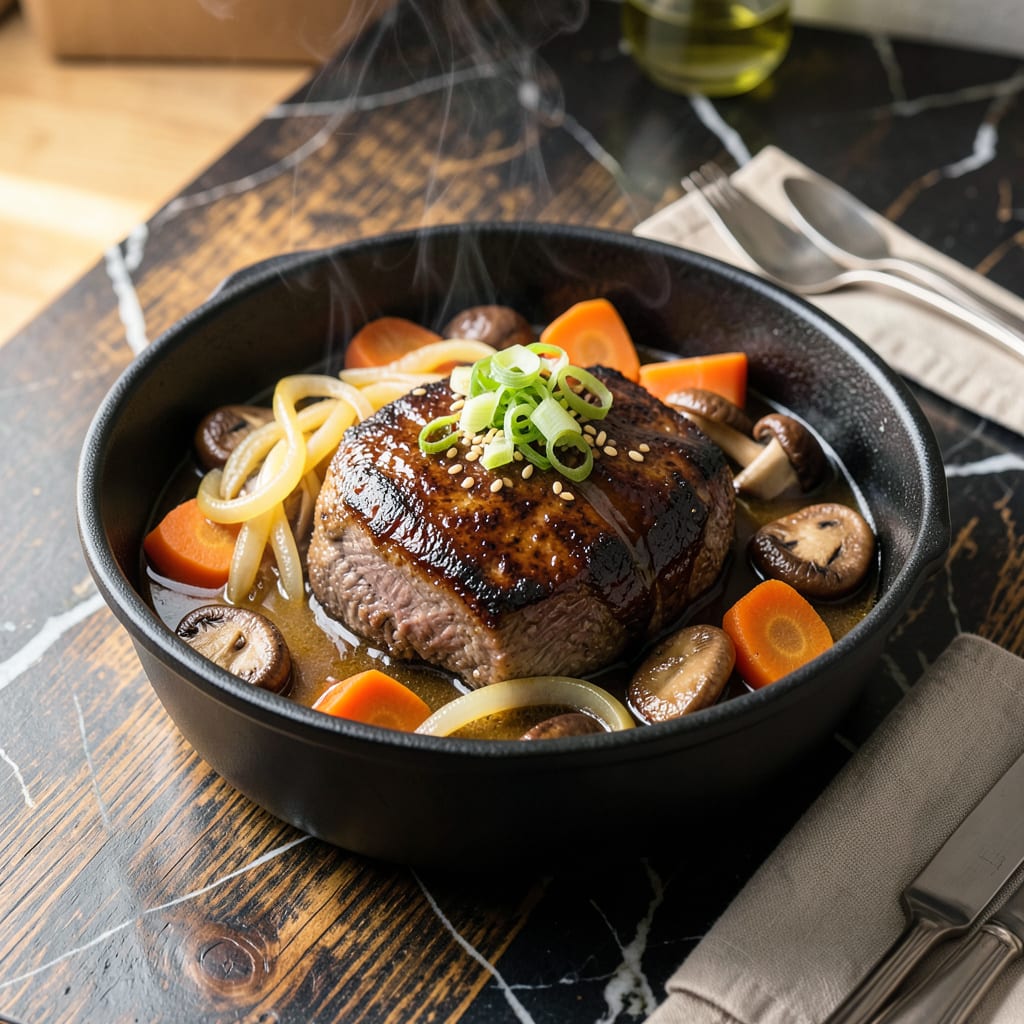
This Japanese-style pot roast delivers melt-in-your-mouth tenderness with every bite. The secret is slow-cooking tough cuts in a rich soy and dashi broth until they practically fall apart.
What you get is deeply flavorful meat that’s tender and juicy, with a sauce that’s savory, slightly sweet, and perfect for soaking up with rice. Simple ingredients, extraordinary results.
Ingredients for Japanese Pot Roast
Rich broth, tender beef, and a handful of aromatics create this deeply flavorful dish.
| Ingredient | Amount | Notes |
|---|---|---|
| Chuck Roast 🥩 | 2 lb | Well-marbled, cut into large chunks |
| Soy Sauce 🫒 | ¾ cup | Low-sodium preferred for balance |
| Dashi Stock 🍲 | 2 cups | Traditional Japanese broth base |
| Mirin 🍶 | ¼ cup | Sweet rice wine for depth |
| Sake 🍶 | ¼ cup | Dry Japanese rice wine |
| Brown Sugar 🫙 | 2 tbsp | Light or dark works |
| Fresh Ginger 🌿 | 1 whole | Peeled, sliced into coins |
| Garlic Cloves 🧄 | 6 cloves | Smashed, skin on for aroma |
| Green Onions 🧅 | 4 whole | Cut into 2-inch pieces |
| Carrots 🥕 | 3 whole | Peeled, cut into thick chunks |
| Daikon Radish 🥬 | 1 whole | Peeled, cut into large pieces |
| Vegetable Oil 🫒 | 1 tbsp | Neutral flavor for searing |
| Sesame Seeds 🌰 | 1 tsp | Toasted, for garnish |
| Cooked Rice 🍚 | 4 cups | For serving with the roast |
[recipeingredientscaler]
The beef is non-negotiable here. Chuck roast with good marbling breaks down beautifully during the long cook—avoid lean cuts like sirloin (they’ll turn dry). Whole Foods or Costco have great grass-fed options. For the dashi, instant granules from Kikkoman work in a pinch, but homemade is worth the effort if you’ve got bonito flakes and kombu on hand.
No mirin? 1 tbsp sugar plus 1 tbsp water per tablespoon of mirin gets you close. Sake can be swapped with dry white wine (or skip it entirely). Trader Joe’s carries affordable mirin and sake if you’re not stocked. Fresh ginger is key—dried loses that bright, zingy quality. If you’re missing daikon, turnips or parsnips work well (just cut them the same size so they cook evenly).
This tastes even better the next day. Cool, then refrigerate in its broth for up to 4 days. Freezes beautifully for 3 months—portion with some liquid to prevent drying. Reheat gently on the stove (microwave can make the meat tough).
Why You’ll Love This Recipe
- I’ll be real: the leftovers taste even better. The flavors meld overnight, so lunch the next day is something to look forward to.
- Set and Forget: I toss everything in the pot and let the slow cooker do the work—chuck roast, soy sauce, dashi, mirin, sake. No babysitting required.
- Umami Bomb: Honestly, the combination of soy sauce and dashi creates a depth of flavor that’s ridiculous. Rich, savory, and just a little sweet from the mirin.
- Feeds the Crew: This is my go-to for family dinners or meal prep. One pot, plenty of servings, and everyone gets their fill.
Step-by-Step Instructions for Japanese Pot Roast
Here’s the method I’ve perfected to achieve that signature melt-in-your-mouth texture with rich umami depth.
Step 1: Sear the Chuck Roast for Deep Flavor
Heat the 1 tbsp vegetable oil in a heavy Dutch oven over medium-high heat until shimmering. Pat the 2 lb chuck roast dry with paper towels—this is crucial for achieving a proper sear rather than steaming the meat.
Add the chuck roast to the pot and sear on all sides for 4-5 minutes per side until deeply browned. You’re looking for a rich, dark crust that signals the Maillard reaction has developed complex flavors. Don’t rush this step; the fond created here will form the base of your braising liquid.
Step 2: Build the Aromatic Braising Foundation
Remove the chuck roast and set aside. In the same pot, add the 1 whole fresh ginger (sliced into coins), 6 cloves garlic cloves (smashed with skin on), 4 whole green onions (cut into 2-inch pieces), 3 whole carrots (peeled and cut into thick chunks), and 1 whole daikon radish (peeled and cut into large pieces).
Cook these aromatics for 3-4 minutes, stirring occasionally, until they begin to soften and the garlic becomes fragrant. This step extracts their essential oils and creates a flavor base that will infuse the entire dish. Be careful not to burn the garlic—it should be golden, not dark brown.
Step 3: Deglaze and Begin the Braise
Pour in the 0.25 cup sake and scrape up all the browned bits from the bottom of the pot with a wooden spoon. Let it simmer for 2 minutes to cook off the alcohol. Then add the 0.75 cup soy sauce, 2 cups dashi stock, 0.25 cup mirin, and 2 tbsp brown sugar.
Return the chuck roast to the pot, ensuring it’s mostly submerged in the liquid. The liquid should come about three-quarters of the way up the meat. If needed, add a splash of water to reach this level. This ratio of liquid to meat ensures proper braising without diluting the flavors.
Step 4: Slow Cook to Tender Perfection
Bring the liquid to a gentle simmer, then reduce heat to low. Cover the pot and let it cook undisturbed for 2.5 to 3 hours. You’ll know it’s ready when the chuck roast shreds easily with a fork and the vegetables are tender.
Check occasionally and turn the chuck roast once or twice during cooking to ensure even exposure to the braising liquid. The meat should be fall-apart tender with a rich, deeply flavored sauce that coats the back of a spoon. If the liquid reduces too much, add a bit of water to maintain the level.
Step 5: Rest and Serve with Finishing Touches
Once the chuck roast is tender, remove it from the pot and let it rest for 10 minutes before slicing or shredding. This allows the juices to redistribute, ensuring every bite is moist and flavorful.
Serve the pot roast over 4 cups cooked rice, spooning the vegetables and plenty of the braising liquid on top. Garnish with 1 tsp sesame seeds for a nutty finish. The sauce should be rich and glossy, with layers of umami from the soy, dashi, and caramelized aromatics.
Pro Tips For Making Japanese Pot Roast
- Sear the Chuck: Brown the chuck roast in batches—2-3 minutes per side in a screaming-hot pan with a little oil. I learned this the hard way: skipping this step leaves the meat bland and the sauce thin.
- Use Fresh Dashi: Instant dashi works in a pinch, but fresh kombu and bonito flakes make a real difference in depth. Simmer the kombu for 10 minutes, then steep the bonito off-heat for 5 more.
- Deglaze Properly: After searing, pour in the sake and scrape up every browned bit with a wooden spoon—those stuck-on bits are pure umami. Sounds tedious, but it’s worth the 30 seconds.
- Low and Slow: Once the liquid simmers, drop the heat to low and cover. I used to rush this and ended up with tough meat; 2.5-3 hours on low guarantees fall-apart tenderness.
Storing and Reheating This Recipe
Refrigerator Storage
Let this dish cool completely before storing—I transfer mine to airtight glass containers. It keeps beautifully in the fridge at 40°F or below for up to 4 days. The flavors actually deepen as the meat continues to absorb the rich soy-dashi broth. ❄️
Freezer Method
For longer storage, freeze in portion-sized containers with some of the braising liquid. It maintains quality for 3 months at 0°F. I use quart-size freezer bags laid flat to save space—just leave 1 inch headspace for expansion.
Stovetop Reheating
This is my preferred method. Gently reheat covered over medium-low heat for 10-15 minutes, stirring occasionally. Add a splash of water or dashi if the sauce thickens too much. The meat stays tender this way. 🔥
Microwave Option
For quick meals, microwave individual portions covered with a damp paper towel. Use 50% power in 1-minute intervals, stirring between each, until reaching 165°F. This prevents the meat from drying out.
Make-Ahead Tip
The dish actually improves overnight as the flavors meld. I often make it a day ahead—just reheat gently before serving. The daikon and carrots will soften slightly more but retain their shape and flavor.
Nutrition Facts
Frequently Asked Questions
Can I use a different cut of beef?
Stick with well-marbled cuts like brisket or short ribs. Lean cuts like sirloin will dry out during the long cook. Chuck is ideal for its fat content and connective tissue that breaks down beautifully.
What can I substitute for dashi?
Use beef or chicken broth with a 1 tsp of fish sauce or a piece of kombu. The umami depth won’t be identical but still delicious. Avoid plain water—it’ll dilute the flavors.
How do I prevent the sauce from being too salty?
Use low-sodium soy sauce and taste before adding extra salt. The sauce reduces during cooking, concentrating flavors. You can always adjust with a splash of water or dashi at the end.
Can I make this in a slow cooker?
Yes! Sear the meat first, then transfer everything to the slow cooker. Cook on low for 7-8 hours or high for 4-5 hours. The texture will be slightly different but still tender.

- 4C Bread Crumbs Meatballs Recipe: Crispy Crust and Juicy Centers - September 25, 2026
- 6 Oz Chocolate Chip Cookie Recipe: Perfectly Balanced Crispy Edges and Chewy Hearts - September 25, 2026
- 6-Inch Coffee Cake Recipe: Vanilla Bean Swirls and Buttery Streusel Topping - September 25, 2026