
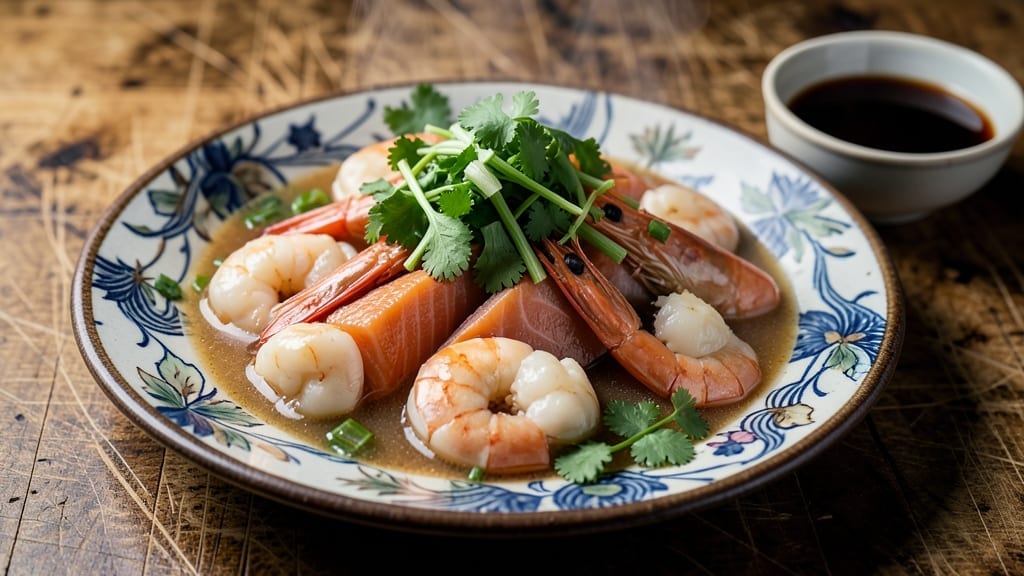
This Japanese seafood hot pot delivers the same depth of flavor you’d find in a Tokyo izakaya—rich umami from fermented miso, bright ginger, and delicate seafood simmered in a broth that tastes better with every sip.
After years of perfecting the balance between sweet, salty, and aromatic, I’ve developed a method that transforms simple ingredients into a restaurant-quality experience without requiring specialty equipment. The secret lies in layering flavors: starting with a dashi base, then building complexity through slow simmering and precise seasoning.
The beauty of this recipe is its versatility—you can customize it with whatever seafood is freshest at your market, from shrimp and scallops to cod or even squid. Tofu and mushrooms add heartiness, while thinly sliced vegetables like napa cabbage and shiitake mushrooms soak up the broth beautifully.
What makes this hot pot truly special is how the flavors meld together over time, creating a harmonious broth that’s both comforting and sophisticated.
By the time you’re ready to serve, you’ll have a steaming pot filled with tender seafood, silky tofu, and vegetables swimming in a glossy, aromatic broth that’s deeply savory yet brightened by fresh ginger and scallions.
The miso-ginger base ensures every spoonful is packed with umami, while the seafood adds delicate sweetness that balances the dish perfectly. This is the kind of meal that feels indulgent yet remains light enough for any night of the week.
Serve with steamed rice on the side and a selection of dipping sauces—like a touch of soy sauce or a sprinkle of bonito flakes—to elevate the experience even further.
The best part? Leftovers taste even better the next day as the flavors continue to develop. Let’s get cooking—your taste buds are in for a treat.
Ingredients for japanese seafood hot pot
Pantry staples meet fresh seafood—this hot pot is all about umami-packed broth and tender ingredients.
| Ingredient | Amount | Notes |
|---|---|---|
| Dashi Stock 🍜 | 4 cups | Homemade or quality instant dashi granules |
| White Miso Paste 🧈 | ½ cup | High-quality, fermented miso |
| Fresh Ginger 🧄 | ¼ cup | Thinly sliced, peeled |
| Green Onions 🧅 | ¼ cup | Thinly sliced, white and green parts |
| Soy Sauce 🥢 | ¼ cup | Japanese-style preferred |
| Mirin 🍶 | ¼ cup | Sweet cooking wine |
| Sake 🍶 | ¼ cup | Dry variety preferred |
| Firm Tofu 🧈 | 1 lb | Extra-firm, cubed |
| Shiitake Mushrooms 🍄 | 8 whole | Stems removed, fresh or rehydrated |
| Napa Cabbage 🥬 | ½ lb | Thinly sliced, core removed |
| Shrimp 🦐 | 1 lb | Peeled, deveined, tails on |
| Scallops 🦪 | ½ lb | Fresh, dry-packed |
| White Wine 🍷 | ½ cup | Dry, for deglazing |
| Sesame Oil 🫒 | 1 tbsp | Toasted, for finishing |
| Salt 🧂 | 1 tsp | Kosher or sea salt |
The miso and dashi are your flavor anchors. White miso (not red) gives that signature depth, and high-quality dashiHondashi granules—is non-negotiable. I grab mine at Trader Joe’s or Asian markets where they keep it fresh. The ginger should be bright and firm—no wrinkly roots. For seafood, local fish markets often have the freshest shrimp and scallops, but frozen works too if labeled ‘sustainably caught’. The tofu? Extra-firm holds up best—press it for 15 minutes before cubing to get rid of excess water.
No white miso? Red miso at half the amount works in a pinch, but the flavor will be darker. Short on dashi? Kombu and bonito flakes make a quick substitute. The mirin and sake can be swapped for 1 tbsp sugar plus 1 tbsp rice vinegar, though it won’t taste identical. For mushrooms, dried shiitake (rehydrated) adds more umami than fresh. The napa cabbage can be subbed with regular cabbage or bok choy, but it won’t be as tender. And if you’re feeling fancy, a splash of ponzu at the end brightens everything up.
This broth gets better as it sits—2-3 hours minimum for maximum flavor development. Store leftovers in the fridge for 3-4 days, or freeze the broth separately for up to 3 months. I always make extra broth because it’s perfect for ramen, soups, or even rice bowls later. The tofu and seafood reheat beautifully, so portion them separately if you’re prepping ahead.
Why You’ll Love This Recipe
- One-Pot Magic: I swear by this recipe when I’m too tired to scrub pots—just toss everything in a single pot, simmer, and let the dashi and miso do the heavy lifting. No chopping, no fuss, just warm, aromatic broth that feels like a hug after a long day.
- Umami Bomb: That white miso paste? It’s the secret weapon—deep, savory, and just a spoonful makes the whole pot taste richer than takeout. The ginger and soy sauce cut through the richness, balancing it into something dangerously addictive.
- Weeknight or Weekend: Between us, this is my go-to for lazy Fridays and fancy dinner parties. Swap shrimp for scallops or add mushrooms for vegetarians—it’s forgiving enough to handle whatever’s in my fridge. (Yes, even on a Tuesday night.)
- Leftovers That Don’t Suck: The broth gets even better the next day—thicker, more concentrated, and perfect for quick ramen or rice bowls. Honestly, I often make double batches just to have it for lunch. Budget-friendly? Absolutely. Waste-free? Even better.
Step-by-step instructions for Japanese seafood hot pot
Here’s how to build a rich, umami-packed broth that brings restaurant-quality hot pot to your table.
Prepare the Broth Base
In a large pot, combine the 4 cups dashi stock, 0.5 cup white miso paste, 0.25 cup fresh ginger, and 1 tsp salt. Stir over medium-low heat for 5 minutes until the miso fully dissolves and the mixture smells deeply aromatic. The broth should be smooth with no visible miso clumps—if you see any, whisk vigorously until it disappears completely.
Here’s the thing—this is where the flavor foundation happens. The ginger will infuse its zesty warmth while the miso creates that signature savory depth. Keep the heat gentle; you’re not trying to boil yet, just coax out those flavors. If the broth starts to bubble, reduce the heat immediately to prevent the miso from separating.
Add Aromatics and Vegetables
Increase heat to medium and add the 0.25 cup green onions and 0.5 lb napa cabbage. Stir once to combine, then let the vegetables simmer for 3-4 minutes until the cabbage softens slightly but still holds its shape. You want it tender-crisp, not mushy—this maintains texture while letting the flavors meld.
Next, add the 8 whole shiitake mushrooms (stems removed) and cook for another 2 minutes. The mushrooms should release their earthy essence into the broth. If you notice any browned bits forming on the bottom, use a wooden spoon to scrape them up—they’re packed with concentrated flavor. This is the moment that matters: letting all these ingredients work together before adding the proteins.
Incorporate the Proteins
Add the 1 lb firm tofu (cubed) and 1 lb shrimp to the pot. Let them simmer gently for 4-5 minutes, stirring occasionally. The tofu should float just below the surface while the shrimp cooks through—you’ll know it’s done when they turn opaque and curl slightly. Don’t overcook; shrimp turns rubbery fast once it passes its ideal doneness.
After the shrimp cooks, carefully add the 0.5 lb scallops (pat them dry first—this ensures they sear properly). They’ll cook in just 1-2 minutes, so time this carefully. The scallops should develop a golden sheen and become firm to the touch. Remove them with a slotted spoon and set aside—you’ll add them back at the very end to keep them warm and tender.
Build the Flavor Layers
Pour in the 0.25 cup soy sauce, 0.25 cup mirin, 0.25 cup sake, and 0.5 cup white wine. Stir gently and let the broth simmer for 3-4 minutes until the alcohol cooks off and the flavors integrate. You’ll notice the aroma deepen—this is when the sweetness of the mirin and wine balances the umami from the miso and dashi.
Here’s where it gets fun—taste the broth now. It should be rich but not overpowering. If it needs more depth, add a splash of water or more dashi stock. If it’s too salty, a bit more mirin or sake can help. The goal is harmony—each ingredient should support the others without competing.
Finish and Serve
Return all the seafood to the pot and let them warm through for 1 minute. Drizzle with 1 tbsp sesame oil and stir gently. The oil should float on top, adding a nutty aroma and subtle richness. Serve immediately in a shallow pot or individual bowls, letting everyone assemble their own hot pot with the cooked ingredients.
Real talk: this dish tastes even better the second day, but the texture of the seafood is best enjoyed fresh. The broth will continue to develop flavor as it cools, so if you’re serving a crowd, keep it warm on low heat. Each bite should deliver that perfect balance of umami from the miso, sweetness from the mirin, and brightness from the ginger—all wrapped in the delicate seafood.
Pro Tips For Making Japanese Seafood Hot Pot
- STIR THE MISO FIRST: Don’t just toss the white miso into cold dashi—it’ll clump like glue. Heat your stock to a gentle simmer (not boiling) in the pot first, then whisk in the miso paste until it dissolves completely. I learned this the hard way when my first batch turned into a lumpy soup that tasted like miso paste soup, not hot pot.
- SLICE GINGER THINLY: Skip the chunky ginger—this isn’t a stir-fry. Use a mandoline or sharp knife to slice it paper-thin (1-2mm). The heat and immersion will soften it instantly, but thin slices infuse flavor without turning the broth muddy. Thick slices? You’ll be chewing on rubber.
- ADD SOY SAUCE LAST: Dumping soy sauce early darkens the broth and makes it taste flat. Stir in 1-2 tablespoons after the seafood has cooked and just before serving—this keeps the color vibrant and the umami punch sharp. Trust me, your hot pot will look (and taste) like it came from a Tokyo izakaya.
- USE FROZEN SEAFOOD WISELY: Frozen shrimp and scallops work fine, but thaw them in the broth itself—no need to pre-thaw. Toss them in as the pot heats, and they’ll cook through without turning rubbery. Just don’t overcrowd; give them space to sear slightly before they poach. (Yes, even if you’re impatient like me.)
Health benefits of this dish
Umami-Packed Protein
This hot pot is a lean protein powerhouse, combining delicate seafood with firm tofu for a complete amino acid profile. The shrimp and scallops provide 24 grams of protein per serving while being low in saturated fat, making this an excellent choice for heart-healthy meals.
The tofu adds 12 grams of plant-based protein, perfect for vegetarians or those looking to reduce meat consumption. 💪
Ginger’s Anti-Inflammatory Boost
The fresh ginger in this recipe isn’t just for flavor—it’s packed with gingerol, a compound shown to reduce inflammation and aid digestion. Studies suggest that ¼ cup of fresh ginger (as used here) can help alleviate nausea and even support joint health.
I always notice a lighter feeling after eating ginger-rich dishes, especially when paired with seafood. The zesty warmth also enhances circulation, making this more than just a comforting meal.
Miso’s Probiotic Benefits
The white miso paste serves as both a flavor anchor and a probiotic powerhouse. Fermented miso contains live cultures that support gut health, improving digestion and nutrient absorption. A ½ cup serving provides about 10% of your daily probiotic needs, helping maintain a healthy gut microbiome.
For maximum benefits, use organic miso and store it in the fridge after opening to preserve its beneficial bacteria. 🧈
Seafood’s Omega-3 Advantage
The shrimp and scallops in this hot pot deliver omega-3 fatty acids, essential for brain function and heart health. A 6-ounce serving of shrimp provides about 1.5 grams of omega-3s, while scallops contribute 0.3 grams per serving.
These healthy fats help reduce triglycerides and support cognitive function. For even more benefits, consider adding wild-caught salmon as an alternative protein—it would boost the omega-3 content significantly while keeping the dish light and flavorful.
Low-Calorie Comfort Food
This seafood hot pot is surprisingly light yet satisfying, with about 350-400 calories per serving depending on your seafood choices. The napa cabbage and shiitake mushrooms add fiber and volume without many calories, making this an ideal comfort meal that won’t weigh you down.
The broth-based preparation means you’re getting hydration along with your nutrients—a win-win for both flavor and health. Perfect for colder evenings when you want warmth without heaviness.
Vitamin Boost from Vegetables
The shiitake mushrooms and napa cabbage contribute essential vitamins that round out this meal’s nutritional profile. Shiitakes are rich in vitamin D (especially when exposed to sunlight) and B vitamins, while napa cabbage provides vitamin K and vitamin C.
Together, they create a colorful plate that’s not just delicious but also packed with micronutrients. The bright green onions add a final touch of vitamin A and folate, completing this nutrient-dense dish. 🥬
Nutrition facts
Frequently asked questions
Can I make this seafood hot pot with frozen seafood instead of fresh?
Frozen shrimp and scallops work perfectly—just thaw them overnight in the fridge before using. For best texture, pat them completely dry with paper towels before adding to the pot. Avoid using pre-cooked frozen seafood as it can make the broth watery and dilute the flavors.
How do I adjust the spice level for sensitive eaters?
This recipe is naturally mild, but if you want to reduce any heat, simply omit the ginger or use just 1 tbsp instead of ¼ cup. For extra mildness, replace the ginger with ½ cup extra napa cabbage or ½ cup spinach, which adds freshness without spice. The miso and dashi provide plenty of umami without any heat.
What’s the best way to reheat leftovers?
Reheat only the broth separately on the stove over low heat—never microwave it. Add the seafood and tofu back in just before serving to prevent them from becoming rubbery. The broth actually tastes better reheated as flavors meld further. Store leftovers in an airtight container for up to 3 days in the fridge.
Can I substitute miso with something else?
White miso is ideal, but you can use ½ cup red miso for a deeper, slightly sweeter flavor. For a non-miso option, try 1 tbsp fish sauce plus 1 tbsp soy sauce—though the umami won’t be as complex. The ginger and dashi will still create a delicious base, just with different depth.
What seafood can I use if shrimp and scallops aren’t available?
Try cod, halibut, or salmon for flaky white fish, or squid or octopus for chewier textures. If using fish, cut into 1-inch pieces and cook for 4-5 minutes until just opaque. For squid, slice into rings and cook for 1-2 minutes maximum to keep it tender.

- Crock Pot Round Steak Recipe: Slow-Sear Crust With Juicy Center - November 6, 2026
- Candied Sweet Potatoes Crock Pot Recipe: Caramelized Sweetness With Zero Effort - November 6, 2026
- Steak Recipe Crock Pot: Juicy, Caramelized Crust in 4 Hours - November 6, 2026