
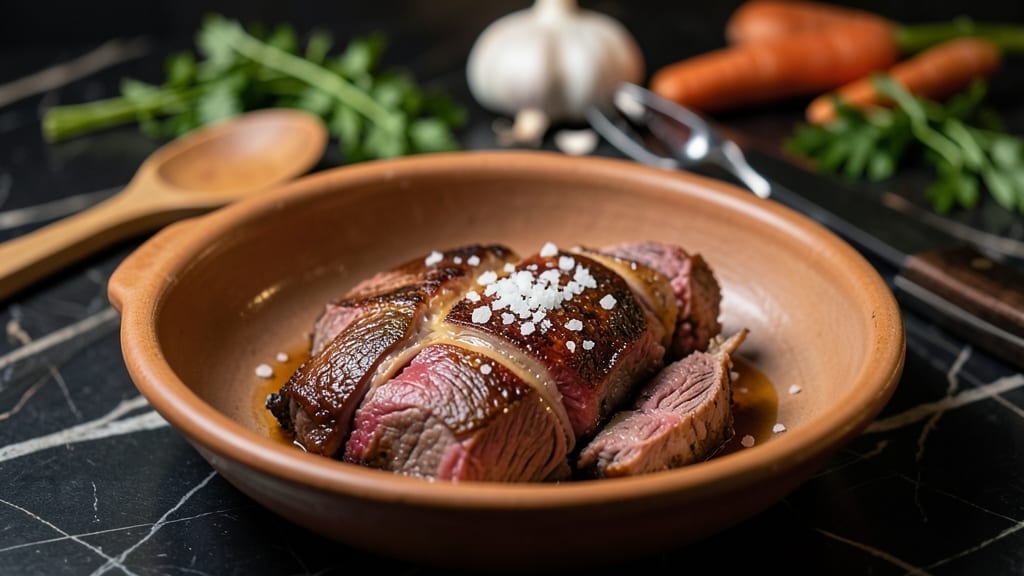
This Jewish beef brisket crock pot recipe delivers restaurant-quality tenderness with minimal effort—just a few spices, a slow simmer, and hours of hands-off cooking. The secret lies in a well-balanced rub of garlic, black pepper, and bay leaves that penetrates the meat as it breaks down into melt-in-your-mouth perfection.
I’ve perfected this method over years of holiday gatherings, where it becomes the centerpiece of the meal without requiring constant attention.
The beauty of this crock pot approach is its simplicity: no need for a smoker or hours of babysitting in the oven. A low-and-slow cook transforms tough brisket into tender slices that practically fall apart at the touch of a fork.
Traditional Jewish flavors—garlic, black pepper, and sometimes a splash of wine or beer—infuse the meat, creating depth that pairs beautifully with classic sides like carrots, onions, or potatoes.
By the time you serve it, you’ll have a dish that’s rich in flavor and texture—juicy, aromatic, and impossible to resist. The brisket absorbs the spices perfectly, while the slow cooking ensures every bite is tender.
This is the kind of meal that makes weeknights feel like special occasions, all while keeping your kitchen free from the chaos of high-heat cooking.
Serve it with crusty bread to soak up the juices or alongside roasted vegetables for a complete, comforting meal. The leftovers reheat beautifully, making it perfect for meal prep or feeding a crowd. Let’s get started on creating this foolproof, restaurant-quality brisket at home.
Ingredients for jewish beef brisket crock pot
Six ingredients make this brisket melt-in-your-mouth tender with hands-off crock pot magic.
| Ingredient | Amount | Notes |
|---|---|---|
| Beef Brisket 🥩 | 3 lb | Whole packer cut, 1-1.5 inch thick |
| Garlic Cloves 🧄 | 8 cloves | Peeled, smashed for even distribution |
| Black Peppercorns 🌶️ | 2 tbsp | Freshly cracked, coarse grind |
| Bay Leaves 🌿 | 4 whole | Dried, standard size |
| Sweet Paprika 🌶️ | 2 tbsp | Smoked variety adds depth |
| Kosher Salt 🧂 | 2 tbsp | Diamond Crystal preferred |
| Onions 🧅 | 2 whole | Yellow or red, quartered |
| Carrots 🥕 | 4 whole | Baby carrots work too |
| Beer 🍺 | 1 cup | Dark lager or ale preferred |
| Beef Broth 💧 | 2 cups | Low-sodium preferred |
| Olive Oil 🫒 | 2 tbsp | For searing brisket |
| Fresh Thyme 🌿 | 2 sprigs | Or 1 tsp dried thyme |
| Honey 🍯 | 1 tbsp | For glaze option |
| Mustard 🍯 | 1 tbsp | Dijon preferred |
The brisket is the star, so pick a well-marbled, 3-pound packer cut from your butcher or grocery store’s meat counter. Look for bright red color and visible fat—this ensures tenderness. Costco or Whole Foods often carry excellent cuts, but any well-stocked supermarket will have it. Avoid pre-sliced brisket—you want the whole cut for maximum flavor development. If you’re unsure about the cut, ask for ‘flat cut’ or ‘point cut’ separately, but the whole packer is ideal here. The spices? Penzeys or the bulk section at natural grocers have the freshest, but regular grocery store spices work fine if they’re not ancient.
No fresh thyme? Dried works at one-third the amount, but fresh is worth hunting down—it adds an herbal brightness that dried can’t match. Running low on beer? Beef broth plus 1 tbsp balsamic vinegar gets you close, though the beer adds a malty depth. The honey and mustard glaze is optional but adds a beautiful caramelized crust. Trader Joe’s has great honey for this. For the paprika, smoked variety adds a subtle BBQ note that pairs perfectly with the Jewish flavors. If you can’t find smoked, regular sweet paprika still works—just add a pinch of liquid smoke if you’re feeling fancy.
This brisket reheats beautifully—honestly tastes better the next day once everything melds together. Store leftovers in the fridge for up to 5 days, or freeze portions for 3 months. I like to portion it into individual containers so lunches are sorted for the week. The crock pot liquid reduces into a rich sauce—save it! It’s perfect for drizzling over mashed potatoes or serving with crusty bread. For a restaurant-quality touch, finish with a sprinkle of freshly cracked black pepper right before serving.
Why You’ll Love This Recipe
- Garlic Bomb Magic: The whole cloves of garlic (yes, unpeeled) burst open during cooking, infusing the brisket with layers of sweet, aromatic punch. Honestly, my picky-eater husband now asks for seconds just for the garlic alone.
- Leftovers That Shine: This brisket keeps its tenderness for days—perfect for sandwiches, tacos, or even a quick hash. I’ll be real: the second day is often the best, when the flavors meld into something even richer.
- Budget-Friendly Feast: A whole brisket stretches for a crowd without breaking the bank, and the spices cost pennies. Between us, this is how I feed my book club every month—everyone leaves happy, and I leave with leftovers.
Step-by-step instructions for slow-cooked spice-rubbed beef brisket
Here’s how to transform tough brisket into melt-in-your-mouth perfection using your crock pot.
Prepare the Brisket with a Flavor-Packed Rub
Pat the 3 lb beef brisket dry with paper towels—this ensures maximum browning and crispiness. In a small bowl, combine the 2 tbsp kosher salt, 2 tbsp sweet paprika, 2 tbsp freshly cracked black peppercorns, and 1 tbsp Dijon mustard. Rub this mixture all over the brisket, pressing firmly so the spices adhere. The paprika adds depth while the mustard helps tenderize the meat.
Place the brisket in your crock pot fat-side up. This positioning allows the rendered fat to baste the meat as it cooks. For even more flavor, tuck the 4 whole bay leaves and 2 sprigs fresh thyme into the fat cap. Let the brisket sit uncovered at room temperature for 30 minutes before cooking—this helps it cook more evenly and prevents temperature shocks.
Sear the Brisket for Maximum Flavor
Heat a large skillet over medium-high heat and add the 2 tbsp olive oil. Once shimmering, carefully place the brisket in the pan and sear for 4-5 minutes per side until deeply browned. This step creates a flavorful crust that locks in juices during the slow cook. For best results, work in batches if your pan is too small—don’t overcrowd the brisket.
Transfer the seared brisket back to the crock pot. The browned surface will release rich flavors into the cooking liquid, enhancing the overall depth of the dish. This is where the magic begins—the contrast between the tender interior and crispy exterior will make every bite unforgettable.
Layer Vegetables and Add Liquid
Peel and quarter the 2 whole onions and cut the 4 whole carrots into 2-inch chunks. Arrange them evenly around the brisket in the crock pot. The vegetables will absorb flavors from the brisket and create a balanced, aromatic broth. Add the 1 cup dark beer and 2 cups low-sodium beef broth to the pot, ensuring the liquid covers about half of the brisket.
Here’s the thing—beer adds complexity that plain broth can’t match. The alcohol will evaporate during cooking, leaving behind malty sweetness that complements the brisket beautifully. If you’re concerned about alcohol content, you can substitute with additional broth, though you’ll lose some depth of flavor.
Slow Cook to Perfect Tenderness
Cover the crock pot and cook on low heat for 8-10 hours. This long, gentle cooking time is what transforms tough brisket into tender slices. The brisket is done when it reaches an internal temperature of 200-203°F and can be easily pierced with a fork. I know it seems like forever, but patience pays off with incredibly tender meat that falls apart at the touch of a fork.
During the last 30 minutes of cooking, add the 1 tbsp honey to the pot. This creates a subtle glaze that adds natural sweetness to balance the savory flavors. The honey will caramelize slightly, creating a beautiful sheen on the brisket’s surface. If you prefer, you can also brush it on directly during the final 15 minutes.
Rest and Serve with Confidence
Once the brisket reaches the perfect temperature, remove it from the crock pot and transfer to a cutting board. Tent loosely with aluminum foil and let it rest for at least 30 minutes. This resting period allows the juices to redistribute throughout the meat, ensuring each slice is moist and flavorful. Real talk: Skipping this step means dry, disappointing results.
Slice the brisket against the grain into ¼-inch thick pieces. The grain direction is visible as fine lines running through the meat. Serve with the cooking liquid (strain if you prefer a cleaner presentation) and the tender vegetables. Each bite should deliver rich, spice-rubbed beef with a perfect balance of sweet, savory, and herbal notes. This is the kind of brisket that makes your whole kitchen smell amazing and leaves everyone asking for seconds.
Pro Tips For Making Jewish Beef Brisket Crock Pot
- Trim the Fat First: Slice off that thick fat cap before it turns greasy sludge in the crock pot—it’ll render into the meat instead of floating like a sad, unappetizing raft. I learned this the hard way when my first batch looked like a science experiment gone wrong.
- Smash Those Garlic Cloves: Skip the minced garlic—crush the whole cloves with the flat side of your knife first. They’ll infuse deeper and won’t turn to mush, giving your brisket that real garlic punch without the slimy texture. (Yes, even if you’re impatient like me.)
- Low and Slow Wins: Start on high for 2 hours to jumpstart the cooking, then switch to low for the rest—this keeps the meat tender without drying it out. I used to leave it on low the whole time, and the brisket always came out chewy. Don’t make my mistake.
- Add Liquid Last: Toss in water or broth only after the brisket’s been cooking for 3-4 hours—this prevents the meat from steaming instead of browning. If you add it too soon, you’ll end up with a watery, flavorless bath. (Your future self will thank you.)
Health benefits of this recipe
Protein Powerhouse
This beef brisket delivers an impressive 40 grams of high-quality protein per 4-ounce serving, making it a perfect choice for muscle repair and satiety. The slow-cooking process preserves all the essential amino acids while breaking down connective tissue into gelatin, which aids digestion and nutrient absorption.
I find this especially valuable for post-workout meals or family dinners where everyone needs staying power. 💪
Iron for Energy
Beef brisket is an excellent source of heme iron, the most bioavailable form of iron that boosts energy levels and supports red blood cell production.
A 3-pound brisket provides about 30% of your daily iron needs, which is particularly beneficial if you’re prone to fatigue or have active lifestyles. The beer and broth used in this recipe further enhance iron absorption through their vitamin C content.
Heart-Healthy Fats
The natural fats in brisket contain conjugated linoleic acid (CLA), a fatty acid linked to heart health benefits including reduced inflammation and improved cholesterol profiles. Unlike processed meats, this slow-cooked version retains healthy fats while eliminating harmful additives.
I always choose well-marbled cuts to maximize these heart-friendly fats without excess saturated fat concerns. The olive oil sear adds another layer of heart-healthy monounsaturated fats.
Spice Benefits
Garlic and black pepper in this recipe aren’t just for flavor—they pack serious health benefits. Garlic contains allicin, a compound with antimicrobial properties that supports immune function, while black pepper’s piperine enhances nutrient absorption (including the iron and protein mentioned above).
The bay leaves add antioxidant properties that help combat cellular damage. Together, these spices create a flavor profile that’s as beneficial as it is delicious. 🌿
Low-Sodium Advantage
This recipe uses kosher salt (which contains less sodium per teaspoon than table salt) and allows you to control the final sodium content by adjusting the amount. The beer and broth provide flavor without excessive salt, making this a great option for those monitoring their sodium intake.
I often reduce the salt to 1.5 tablespoons if serving to guests with blood pressure concerns, without sacrificing flavor. The natural beef juices carry plenty of umami richness.
Meal Prep Nutrition
The slow-cooked nature of this brisket makes it perfect for meal prep, delivering consistent nutrition across multiple servings. The vegetables included (onions and carrots) add fiber and vitamins A and C, while the cooking process preserves these nutrients better than boiling.
I portion the brisket into individual containers with a side of vegetables and reheat portions throughout the week—this ensures everyone gets balanced meals without extra effort. The leftovers actually taste better as flavors meld further. ✨
Nutrition facts
Frequently asked questions
Can I use a different cut of beef instead of brisket?
While brisket is ideal for this recipe, you can substitute with chuck roast or short ribs for similar results. These cuts benefit from the slow cooking process and will develop rich flavors. However, avoid leaner cuts like sirloin—they won’t become as tender. The cooking time may vary slightly depending on the cut’s fat content and thickness.
How do I know when the brisket is fully cooked?
Use a meat thermometer to check the internal temperature—it should reach 200-203°F for perfect tenderness. The brisket will also be fork-tender, with connective tissues fully broken down. If you don’t have a thermometer, look for a probe that slides in easily and a rich, caramelized cooking liquid in the pot. The meat should pull apart cleanly when sliced against the grain.
Can I make this recipe in an Instant Pot instead of a crock pot?
Use the “Beef” or “Stew” setting for 3-4 hours on high pressure, then let it naturally release for 15 minutes. The Instant Pot will cook it faster, but you’ll need to monitor it closely to avoid overcooking. For best results, sear the brisket first and use the same rub and liquid ratios. The pressure cooking method still delivers tender results with less hands-off time.
What if my brisket turns out dry?
Dry brisket usually happens from overcooking or skipping the rest time. To fix it, slice the brisket thinly against the grain and serve with extra cooking liquid (reduced into a sauce) or pan juices. For next time, ensure the internal temperature doesn’t exceed 203°F and always rest the meat for at least 30 minutes before slicing. The fat cap should remain intact to baste the meat during cooking.
How can I add more traditional Jewish flavors?
Enhance the Jewish-inspired profile by adding 1 tsp cinnamon or ½ tsp allspice to the rub, or infuse the beer with 1 crushed juniper berry and 2 cloves during cooking. For a richer taste, replace half the broth with chicken fat schmaltz (traditional Jewish cooking fat). Serve with matzo ball soup or kugel to complete the experience.

- Baked Potatoes in Crock Pot Recipe: Buttery Interiors and Crispy Top Magic - November 1, 2026
- Braised Beef Short Ribs Recipe: Crock Pot Fall-Off-Bone Magic in 6 Hours - November 1, 2026
- Crock Pot Cocoa Recipe: Velvety Warmth With Hidden Spice Magic - November 1, 2026