
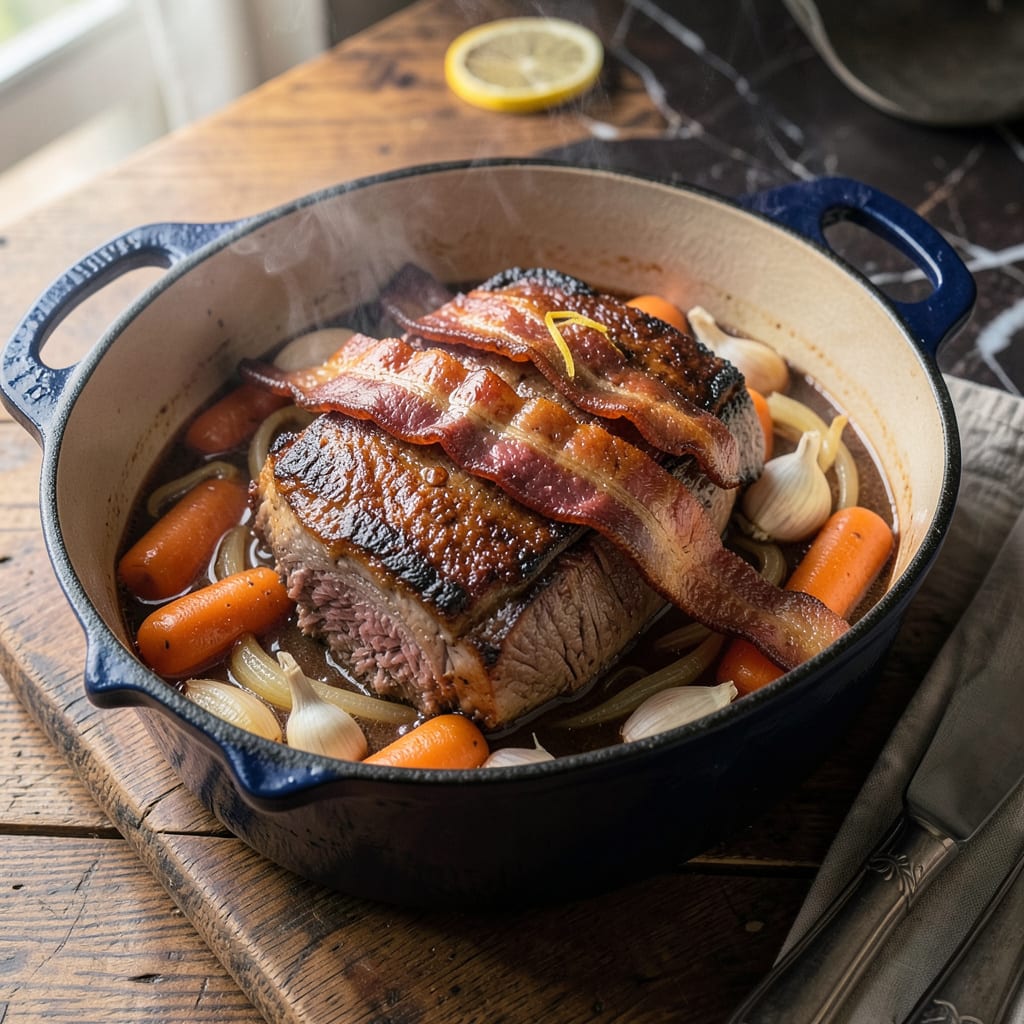
There’s something magical about Julia Child’s pot roast—it turns a simple piece of beef into the most comforting, fall-apart tender meal you’ll ever make. I’ve cooked this recipe more times than I can count, and it never fails to impress with its rich, deep flavors and melt-in-your-mouth texture.
The secret is in the slow braising process, where tough meat transforms into something extraordinary. With just a few hours in the oven, you’ll have a dish that tastes like it simmered all day. Serve it with mashed potatoes or crusty bread to soak up every drop of that incredible sauce.
Ingredients for Julia Child Pot Roast
This is where tender beef meets rich wine and aromatics for Julia’s legendary comfort dish.
| Ingredient | Amount | Notes |
|---|---|---|
| Beef Chuck Roast 🥩 | 4 lb | Well-marbled, boneless preferred |
| Bacon 🥓 | 6 oz | Thick-cut, diced for rendering |
| Carrots 🥕 | 4 whole | Peeled, cut into 2-inch chunks |
| Yellow Onions 🧅 | 2 whole | Peeled, quartered through root |
| Garlic Cloves 🧄 | 6 cloves | Smashed, peeled, left whole |
| Dry Red Wine 🍷 | 2 cups | Full-bodied like Cabernet Sauvignon |
| Beef Stock 🥩 | 2 cups | Low-sodium preferred for control |
| Tomato Paste 🍅 | 2 tbsp | Double-concentrated for depth |
| Fresh Thyme 🌿 | 4 sprigs | Tied with kitchen twine |
| Bay Leaves 🌿 | 2 whole | Dried, removed before serving |
| Kosher Salt 🧂 | 2 tsp | Diamond Crystal preferred for seasoning |
| Black Pepper 🌶️ | 1 tsp | Freshly cracked for best flavor |
| Olive Oil 🫒 | 2 tbsp | For searing beef and vegetables |
| Unsalted Butter 🧈 | 2 tbsp | For finishing sauce richness |
| Fresh Parsley 🌿 | ¼ cup | Chopped, for garnish at serving |
The beef is everything here. Chuck roast with good marbling is non-negotiable—it’s the fat that renders down to create that unctuous sauce. I get mine from Whole Foods when I want guaranteed quality, but a well-stocked supermarket works too (look for USDA Choice grade). The bacon? Thick-cut from the butcher counter if possible—it adds a smoky depth that regular bacon can’t match. And don’t skip the wine; a bold Cabernet Sauvignon (even a $10 bottle) makes all the difference in the sauce’s complexity (worth the splurge).
No red wine? Extra beef stock plus 1 tbsp balsamic vinegar gets you 80% there. Out of fresh thyme? Dried thyme at half the amount works, though fresh is ideal. The tomato paste can be swapped for 1 tbsp ketchup in a pinch (Julia would frown, but it’s fine). If you’re missing bay leaves, add 1/4 tsp ground allspice instead. And while the recipe calls for butter, vegan butter or a splash of olive oil works if you’re avoiding dairy—just stir it in at the end.
This tastes even better the next day after the flavors meld. Store leftovers in the fridge for up to 5 days or freeze for 3 months (the sauce thickens when frozen—just thin with a little stock when reheating). I like to make extra and portion it into containers for easy weeknight dinners. The parsley garnish is best added fresh, so keep that separate until serving.
Why You’ll Love This Recipe
- I’ll be real: this feels fancy enough for company but unfussy enough for a weeknight. The leftovers? Even better—piled on mashed potatoes, stuffed into sandwiches, or tossed with egg noodles. It’s my secret weapon for three meals in one go.
- One-Pot Magic: Honestly, I love that this starts with bacon in the same Dutch oven where everything else cooks. The onions caramelize right in the bacon fat, the beef browns in those same flavors, and the carrots soak it all up—no extra pans, no fuss.
- That Bacon-Garlic Punch: Here’s what sold me—the way crispy bacon and whole garlic cloves melt into the beef as it slow-cooks. You get this deep, savory richness in every bite, and the garlic turns buttery soft. (My kid still picks out the cloves, but fights for the sauce.)
- Sunday or Tuesday: I’ll be real: this feels fancy enough for company but unfussy enough for a weeknight. The leftovers? Even better—piled on mashed potatoes, stuffed into sandwiches, or tossed with egg noodles. It’s my secret weapon for three meals in one go.
Step-by-Step Instructions for Julia Child’s Pot Roast
This classic French technique transforms tough beef into melt-in-your-mouth perfection with just a little patience.
Step 1: Sear the Beef and Render the Bacon
Pat the 4 lb Beef Chuck Roast completely dry with paper towels. This ensures a proper sear rather than steaming the meat. Season all sides generously with the 2 tsp Kosher Salt and 1 tsp Black Pepper, pressing the seasoning into the surface.
In a large Dutch oven over medium-high heat, cook the 6 oz Bacon until crispy and the fat has rendered, about 5-6 minutes. Remove the bacon with a slotted spoon and set aside, leaving the fat in the pot. Add the 2 tbsp Olive Oil to the bacon fat and heat until shimmering.
Carefully place the beef in the pot and sear undisturbed for 4-5 minutes per side until deeply browned. You’re looking for a rich, caramelized crust that will add incredible depth to your final dish. Transfer the beef to a plate and set aside.
Step 2: Build the Aromatic Foundation
In the same pot, add the 4 whole Carrots and 2 whole Yellow Onions. Cook over medium heat for 8-10 minutes, stirring occasionally, until the vegetables begin to caramelize and develop golden brown edges. This sweetness will balance the rich beef flavors.
Add the 6 cloves Garlic Cloves and cook for 1 minute until fragrant. Stir in the 2 tbsp Tomato Paste and cook for another 2 minutes, allowing it to deepen in color. This step develops the paste’s natural sweetness and eliminates any raw flavor.
Pour in the 2 cups Dry Red Wine, scraping up all the browned bits from the bottom of the pot. These fond bits are packed with flavor. Let the wine reduce by half, about 5-7 minutes, until it’s slightly syrupy and concentrated.
Step 3: Slow Cook to Tender Perfection
Return the beef to the pot along with any accumulated juices. Add the 2 cups Beef Stock, 4 sprigs Fresh Thyme, and 2 whole Bay Leaves. The liquid should come about halfway up the beef. Bring to a gentle simmer, then reduce heat to low.
Cover the pot and let it cook for 2½ to 3 hours, turning the beef occasionally, until it’s fork-tender. You’ll know it’s ready when a fork slides in and out with absolutely no resistance. The meat should be falling apart at the edges.
About 30 minutes before serving, transfer the beef to a cutting board. Skim any excess fat from the surface of the cooking liquid, then simmer uncovered for 15-20 minutes to concentrate the flavors into a rich, velvety sauce.
Step 4: Finish and Serve with French Flair
While the sauce reduces, shred the beef into large chunks using two forks. Return the beef to the pot along with the reserved crispy bacon. Stir in the 2 tbsp Unsalted Butter to add a final layer of richness and shine to the sauce.
Taste and adjust seasoning if needed, though you likely won’t need more salt. The flavors should be deep and balanced, with the wine and beef stock creating a complex, savory base. Remove the thyme sprigs and bay leaves before serving.
Transfer to a warm serving platter and sprinkle with the 0.25 cup Fresh Parsley. The parsley adds a fresh contrast to the rich, slow-cooked flavors. Serve with crusty bread or buttery mashed potatoes to soak up every bit of the incredible sauce.
Pro Cooking Tips for Great julia child pot roast
Perfect Searing Technique
Don’t rush the searing step—this is where you build the foundation of flavor. I use my Le Creuset Dutch oven because it holds heat beautifully. Make sure your beef is bone-dry before it hits the pan, and don’t overcrowd. You should hear a loud sizzle when the meat touches the oil; if not, wait until the pan is hotter. 🔥
Let the beef develop a deep, mahogany crust—about 4-5 minutes per side—before turning. Resist the urge to peek! That crust is pure flavor waiting to infuse your sauce. I learned the hard way that moving the meat too soon creates a steamed surface instead of a proper sear.
Wine Reduction Mastery
When deglazing with 2 cups of red wine, use a wooden spoon to scrape up every browned bit from the pot. These fond particles are flavor bombs. Let the wine reduce by half—this takes about 5-7 minutes—until it’s syrupy and concentrated. A good test: run your finger through the sauce on the spoon; it should leave a clean trail.
I always use a bold Cabernet Sauvignon here. The tannins break down during cooking, leaving behind a rich, complex base for your sauce. If you’re using a lighter wine, add 1 tsp of balsamic vinegar to deepen the flavor.
Low and Slow Cooking
The magic happens during the 2½ to 3 hour braise. Keep the heat at a gentle simmer—you should see just a few bubbles breaking the surface. I check the temperature with an instant-read thermometer; it should stay around 180-200°F. This slow cooking transforms tough connective tissue into gelatin, creating that unctuous mouthfeel.
Turn the beef every 45 minutes for even cooking. If the liquid reduces too quickly, add ½ cup hot water to maintain the level. The meat is done when it yields easily to a fork but still holds its shape when lifted.
Sauce Concentration Trick
After removing the beef, skim the fat using a fat separator or a large spoon. Then simmer the sauce uncovered for 15-20 minutes to concentrate the flavors. I like to tilt the pot slightly so one side reduces faster—I can control the thickness better this way.
The sauce should coat the back of a spoon but still be pourable. If it’s too thin, make a quick slurry with 1 tsp cornstarch and 1 tbsp cold water, then whisk it in during the last minute of reduction.
Resting for Maximum Tenderness
Before serving, let the shredded beef rest in the warm sauce for 10-15 minutes. This allows the meat to reabsorb some of the liquid, making every bite juicier. I cover the pot with a lid during this time to keep everything warm without over-reducing the sauce.
This resting period also lets the flavors marry. The difference between resting and not resting is like night and day—the meat becomes even more tender and the sauce clings better to each piece. ✨
Butter Finishing Touch
The final 2 tbsp of butter isn’t just for richness—it’s called monter au beurre in French cuisine. Whisk it in off-heat so it emulsifies into the sauce, creating a silky texture. I use European-style butter for its higher fat content, which gives a more luxurious mouthfeel.
Add the butter in small pieces, whisking constantly until fully incorporated. This technique gives the sauce that beautiful sheen and rounds out any sharp edges in the flavor profile. It’s Julia’s secret for that restaurant-quality finish.
Nutrition Facts
Frequently Asked Questions
Can I use a different cut of beef?
Julia’s recipe calls for chuck roast because its marbling breaks down beautifully during slow cooking. For substitutes, brisket or short ribs work well, though they may need 30-45 minutes extra cooking time. Avoid lean cuts like sirloin—they’ll dry out.
What if I don’t have red wine?
Use 2 cups beef stock + 1 tbsp balsamic vinegar for similar depth. The vinegar mimics wine’s acidity. For non-alcoholic options, grape juice + 1 tsp lemon juice works in a pinch, though the flavor won’t be as complex.
How do I know when it’s done?
The beef should pull apart easily with forks after 2½-3 hours. Check by inserting a fork—it should slide in like butter. If unsure, use a meat thermometer: 195-205°F guarantees perfect tenderness.
Can I make this in a slow cooker?
Yes! Sear the beef and cook aromatics first, then transfer everything to the slow cooker. Cook on low for 8 hours or high for 5-6 hours. The sauce won’t reduce as much, so simmer it on the stovetop afterward.

- 4C Bread Crumbs Meatballs Recipe: Crispy Crust and Juicy Centers - September 25, 2026
- 6 Oz Chocolate Chip Cookie Recipe: Perfectly Balanced Crispy Edges and Chewy Hearts - September 25, 2026
- 6-Inch Coffee Cake Recipe: Vanilla Bean Swirls and Buttery Streusel Topping - September 25, 2026