
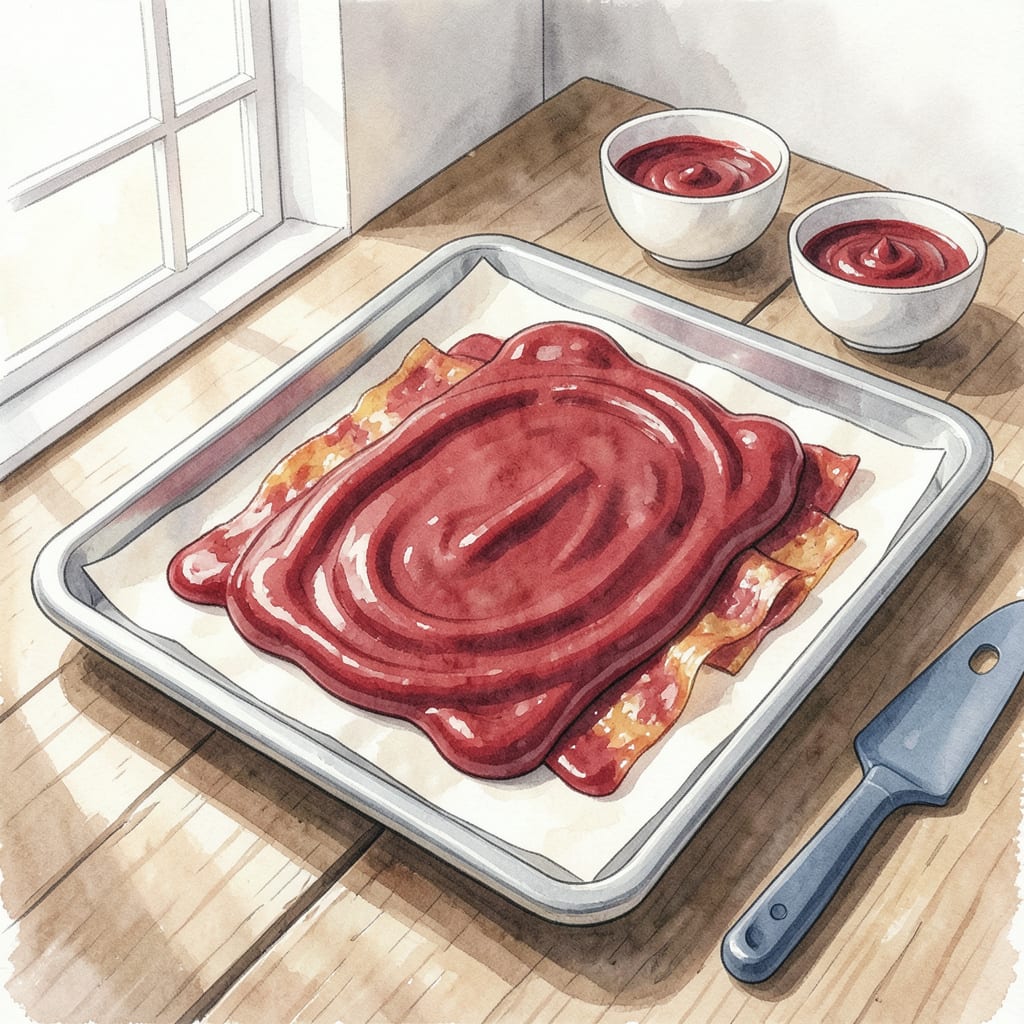
I’ve perfected a homemade ketchup leather recipe that’s both delicious and versatile. This fruit leather delight is made with simple ingredients and is perfect for snacking or as a topping for various dishes.
The result is a tangy, sweet, and chewy condiment that’s sure to become a favorite. With this recipe, you’ll have a tasty and healthy alternative to store-bought options, ready in just a few hours.
Ingredients for Ketchup Leather
Simple, healthy ingredients come together to create this versatile homemade ketchup leather.
| Ingredient | Amount | Notes |
|---|---|---|
| Ketchup 🍅 | 2 cups | Homemade or quality store-bought |
| Apple Cider Vinegar 🍎 | 2 tbsp | For tanginess and preservation |
| Honey 🍯 | 1 tbsp | Or maple syrup for sweetness |
| Water 💧 | ¼ cup | For consistency adjustment |
| Salt 🧂 | ¼ tsp | Kosher or sea salt preferred |
| Pectin 🌿 | 1 tbsp | Optional, for thicker leather |
The ketchup quality matters here. Homemade ketchup gives you control over sugar content, but organic store-bought works too. I like using ketchup with no high-fructose corn syrup. If you’re using homemade, make sure it’s not too runny. The apple cider vinegar is non-negotiable—it helps preserve the leather and adds tanginess.
No apple cider vinegar? White wine vinegar or lemon juice can substitute, but start with half the amount. The honey is optional if you’re watching sugar, but it helps with the chewy texture. For a spicier version, add a pinch of cayenne pepper. If you’re in a humid climate, you might need to adjust the drying time.
This leather keeps for 2-3 weeks rolled in parchment in an airtight container. If it develops condensation, just let it air out for a bit. You can also cut it into portions and freeze for 3 months—thaw in the fridge overnight.
Step-by-Step Instructions for Ketchup Leather
Now that we have our ingredients ready, let’s create this delightful homemade ketchup leather.
Step 1: Combine the Ketchup Mixture
In a medium saucepan, combine the 2 cups Ketchup, 2 tbsp Apple Cider Vinegar, and 1 tbsp Honey. Whisk until smooth, ensuring the honey is fully incorporated into the ketchup. I like to use a silicone spatula for this task as it helps to scrape the sides of the pan.
As you whisk, you’ll notice the mixture becoming more uniform in texture and color. This step is crucial for achieving a consistent flavor throughout your ketchup leather.
Step 2: Add Water, Salt, and Pectin
Add the 0.25 cup Water and 0.25 tsp Salt to the saucepan. Whisk until the salt is fully dissolved. If you’re using 1 tbsp Pectin, add it now and whisk vigorously to prevent lumps from forming. The pectin helps to thicken the mixture, resulting in a more pliable leather.
As you continue whisking, the mixture will start to look more homogeneous. Be patient and ensure all ingredients are well incorporated.
Step 3: Simmer the Mixture
Place the saucepan over medium heat and bring the mixture to a gentle simmer. Stir occasionally to prevent scorching. Once it reaches a simmer, reduce the heat to low and let it cook for 10-15 minutes, or until the mixture has thickened slightly. You’ll know it’s ready when it coats the back of a spoon.
Keep an eye on the heat and adjust as necessary. You want to maintain a gentle simmer throughout this process.
Step 4: Prepare the Baking Sheet
While the mixture is simmering, prepare your baking sheet by lining it with a silicone mat or parchment paper. This step is crucial for easy removal of the leather once it’s set. Ensure the liner is flat and smooth to prevent any wrinkles in your ketchup leather.
A smooth surface will result in a more even texture and appearance of the final product.
Step 5: Dehydrate the Ketchup Mixture
Pour the simmered ketchup mixture onto the prepared baking sheet. Use a spatula to spread it evenly into a thin layer. The thickness should be relatively uniform to ensure even drying.
Place the baking sheet in a 150°F oven or a food dehydrator set to 150°F. If using an oven, prop the door open slightly to allow moisture to escape. Dehydrate for 3-4 hours, or until the mixture has reached a leather-like consistency. It should be dry to the touch but still slightly tacky.
Check on the leather periodically towards the end of the dehydration time. The exact time may vary depending on your oven or dehydrator’s temperature accuracy and the thickness of the mixture.
Storing and Reheating This ketchup leather
Refrigerator Storage Tips
Store your ketchup leather in an airtight container with parchment paper between layers to prevent sticking. It will keep in the refrigerator for up to 2-3 weeks. The cold temperature helps maintain its texture and flavor. ❄️
Freezing for Longer Storage
For longer storage, you can freeze the ketchup leather. Cut it into manageable portions and wrap each piece in plastic wrap or aluminum foil. Place the wrapped portions in a freezer-safe bag or container. Frozen ketchup leather will keep for up to 3 months. When you’re ready to use it, simply thaw it in the refrigerator overnight.
Reheating Your Ketchup Leather
To reheat ketchup leather, you can simply let it come to room temperature or gently warm it in the microwave. If you’re using it as a topping, you can rehydrate it slightly by wrapping it in a damp paper towel and microwaving for 10-15 seconds. Be cautious not to overheat, as this can make the leather too soft or sticky. 🔥
Tips for Maintaining Quality
To keep your ketchup leather fresh and flavorful, avoid exposing it to direct sunlight or high temperatures. If you notice any signs of mold or an off smell, discard the leather immediately. Proper storage is key to maintaining its quality and extending its shelf life.
Nutrition Facts
120kcal

- 8 Bean Soup Recipe Crock Pot: Hearty Vegetable Medley in One Pot - September 25, 2026
- 4C Bread Crumbs Meatballs Recipe: Crispy Crust and Juicy Centers - September 25, 2026
- 6 Oz Chocolate Chip Cookie Recipe: Perfectly Balanced Crispy Edges and Chewy Hearts - September 25, 2026