
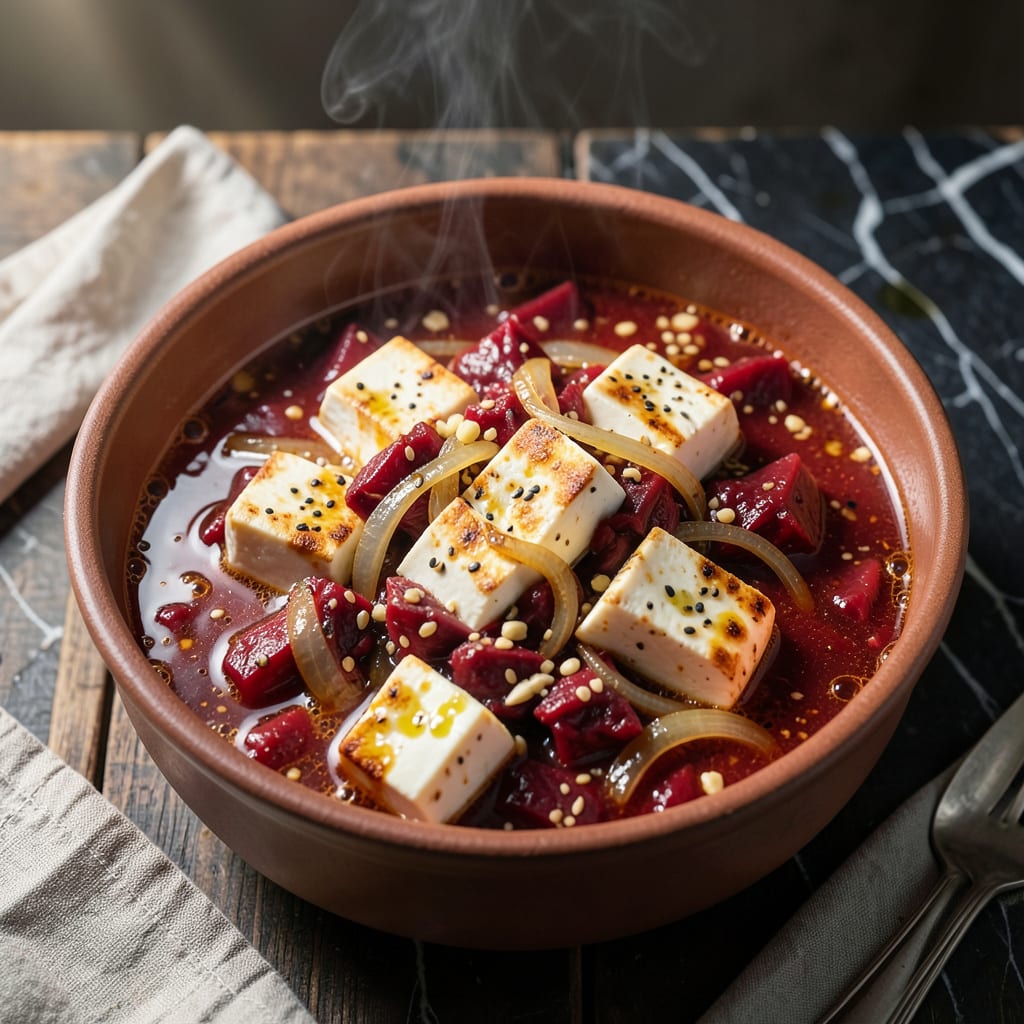
This kimchi pot transforms bold fermentation into a deeply satisfying stew that warms from the first bite. The process balances tangy kimchi with rich broth and tender ingredients for a dish that tastes even better the next day.
The secret is letting the flavors meld slowly, creating a hearty meal that’s both comforting and complex. With simple preparation and traditional techniques, this creation delivers restaurant-quality results at home.
Ingredients for Kimchi Pot
Bold fermented kimchi meets tender vegetables in this deeply satisfying stew.
| Ingredient | Amount | Notes |
|---|---|---|
| Kimchi 🥬 | 2 cups | Vegan, well-fermented, chopped |
| Firm Tofu 🧈 | 14 oz | Pressed, cubed, extra-firm |
| Vegetable Broth 🥣 | 4 cups | Low-sodium preferred |
| Onion 🧅 | 1 whole | Medium, thinly sliced |
| Garlic Cloves 🧄 | 5 cloves | Minced finely |
| Ginger Root 🌿 | 1 tbsp | Fresh, grated |
| Soy Sauce 🫒 | 2 tbsp | Tamari for gluten-free |
| Gochujang 🌶️ | 1 tbsp | Korean chili paste |
| Sesame Oil 🫒 | 1 tbsp | Toasted for depth |
| Green Onions 🧅 | 4 whole | Thinly sliced for garnish |
| Mushrooms 🍄 | 8 oz | Shiitake or cremini, sliced |
| Carrot 🥕 | 1 whole | Medium, julienned |
| Zucchini 🥒 | 1 whole | Medium, sliced into half-moons |
| Sesame Seeds 🌰 | 1 tsp | Toasted for garnish |
| Salt 🧂 | ½ tsp | Sea salt preferred |
The kimchi is non-negotiable here—look for vegan varieties without fish sauce or seafood at H Mart or Whole Foods. Well-fermented kimchi (sour, tangy, bubbly) adds complexity. The tofu should be extra-firm and pressed to absorb the broth. For mushrooms, shiitake brings umami depth, but cremini works in a pinch (just avoid pre-sliced—they lose moisture).
No gochujang? Sriracha plus a pinch of sugar mimics the sweet-spicy balance. Out of sesame oil? Toasted peanut oil adds a similar nutty richness. For a gluten-free version, tamari replaces soy sauce without sacrificing depth. The vegetables are flexible—add bell peppers or spinach if that’s what you’ve got. Just keep the total volume similar.
This stew improves overnight as flavors meld. Refrigerate in an airtight container for up to 4 days. Freeze portions for 3 months—thaw in the fridge before reheating. The kimchi’s tang will intensify over time, which is a good thing here.
Why You’ll Love This Recipe
- One-Pot Wonder: I toss everything in a single pot—kimchi, tofu, broth—and dinner’s ready in 20 minutes flat.
- Funky Umami Bomb: The garlic and aged kimchi give this dish a deep, tangy kick that’s ridiculously good.
- Meal Prep Hero: I make a big batch on Sunday and it tastes even better by Wednesday’s lunch.
- Stretches Far: Between us, this fills my family of four for two meals on a seriously modest budget.
Step-by-Step Instructions for Kimchi Stew
This method ensures deep flavor development and perfect texture balance in every bowl.
Step 1: Sauté Aromatics and Build the Base
Heat the sesame oil in a large pot over medium heat. Add the thinly sliced onion and cook for 4-5 minutes until translucent and just beginning to soften at the edges. This develops the sweetness that will balance the kimchi’s tang.
Add the minced garlic and grated ginger root, stirring constantly for 30-45 seconds until the aromatics become fragrant. Be careful not to let them brown—this would introduce bitterness. The mixture should smell pungent and fresh, indicating the flavors are blooming.
Step 2: Develop the Stew Foundation
Stir in the 2 cups kimchi (with its juices) and the 1 tbsp gochujang. Cook for 3-4 minutes, pressing down on the kimchi with your spoon to extract maximum flavor. The mixture should sizzle and turn a deeper red as the gochujang melts into the kimchi.
Pour in the 4 cups vegetable broth and add the 2 tbsp soy sauce. Bring to a gentle boil, then reduce heat to medium-low. The liquid should maintain a steady simmer, with small bubbles breaking the surface occasionally. This is when the broth begins absorbing all those complex flavors.
Step 3: Add Vegetables and Tofu
Add the julienned carrot, sliced mushrooms, and zucchini sliced into half-moons. Simmer for 5 minutes until the vegetables begin to soften but still retain some bite. The carrots should be just tender when pierced with a fork.
Gently stir in the 14 oz firm tofu cubes, being careful not to break them. The tofu should warm through without falling apart, absorbing the rich broth. At this stage, add the 0.5 tsp salt to enhance all the flavors developing in the pot.
Step 4: Finish and Serve
Let the stew simmer for an additional 3-4 minutes to allow all components to meld together. The vegetables should be tender but not mushy, and the broth should have developed a rich, umami-packed depth with a slight sheen from the sesame oil.
Ladle into bowls and garnish with the thinly sliced green onions and 1 tsp sesame seeds. The green onions add a fresh, crisp contrast to the hearty stew, while the sesame seeds provide a nutty finish. Serve immediately while hot, as the flavors continue to develop even after plating.
Pro Tips For Making Kimchi Pot
- Use Aged Kimchi: The older, sourer kimchi works best here—fresh kimchi lacks the depth of flavor that makes this dish sing. I learned this the hard way after my first batch tasted flat.
- Press the Tofu: Press your firm tofu for at least 20 minutes under a weighted plate to remove excess water, so it actually soaks up the broth instead of watering it down.
- Sauté the Onion: Cook the onion until translucent before adding other ingredients—this builds a solid flavor base that prevents the pot from tasting one-dimensional.
- Simmer Low and Slow: Once everything’s in the pot, keep it at a gentle simmer for 15-20 minutes. Boiling too hard turns the tofu rubbery and mutes the kimchi’s tang.
Make-Ahead Tips for This kimchi pot
Prep Ahead Strategy
I always chop all my vegetables the night before—onion, carrot, mushrooms, and zucchini—and store them in separate containers. This saves 15-20 minutes on cooking day. The tofu can also be pressed and cubed ahead, then kept in water in the fridge. 💡
Flavor Development
This stew tastes even better the next day as the kimchi continues to ferment slightly in the broth. I recommend making it 12-24 hours before serving. The tang becomes more pronounced and the tofu absorbs more of that rich, spicy liquid.
Broth Prep Tip
You can mix the vegetable broth, soy sauce, and gochujang the night before and refrigerate. This creates a flavor base that’s ready to go when you start cooking. The gochujang will dissolve more easily when warmed slightly first.
Tofu Treatment
For best texture, press your tofu for at least 30 minutes before cubing. I use a tofu press, but wrapping it in a clean towel with heavy books works too. The firmer the tofu, the better it holds up in the stew.
Garnish Prep
Slice your green onions and toast your sesame seeds in advance. Store them in small containers at room temperature. This makes serving quick and ensures your garnishes are fresh and crisp when added to the finished dish.
Storage Before Cooking
If prepping ingredients more than 12 hours ahead, store the chopped vegetables in water to maintain crispness. Keep the kimchi in its original container until ready to use—exposure to air can make it overly sour. ✨
Nutrition Facts
Frequently Asked Questions
Can I use fresh kimchi instead of fermented?
Fresh kimchi lacks the tangy depth needed for this stew. Use well-fermented kimchi that’s sour and bubbly for the best flavor.
How do I know when the tofu is done?
The tofu is ready when it’s heated through and has absorbed some broth, about 3-4 minutes after adding. It should be warm but still firm.
Can I make this ahead of time?
The stew tastes even better the next day. Store in an airtight container in the fridge for up to 4 days.
What if I don’t have gochujang?
Mix 1 tbsp sriracha with a pinch of sugar as a substitute. It won’t be identical but adds similar spicy-sweet notes.

- 4C Bread Crumbs Meatballs Recipe: Crispy Crust and Juicy Centers - September 25, 2026
- 6 Oz Chocolate Chip Cookie Recipe: Perfectly Balanced Crispy Edges and Chewy Hearts - September 25, 2026
- 6-Inch Coffee Cake Recipe: Vanilla Bean Swirls and Buttery Streusel Topping - September 25, 2026