
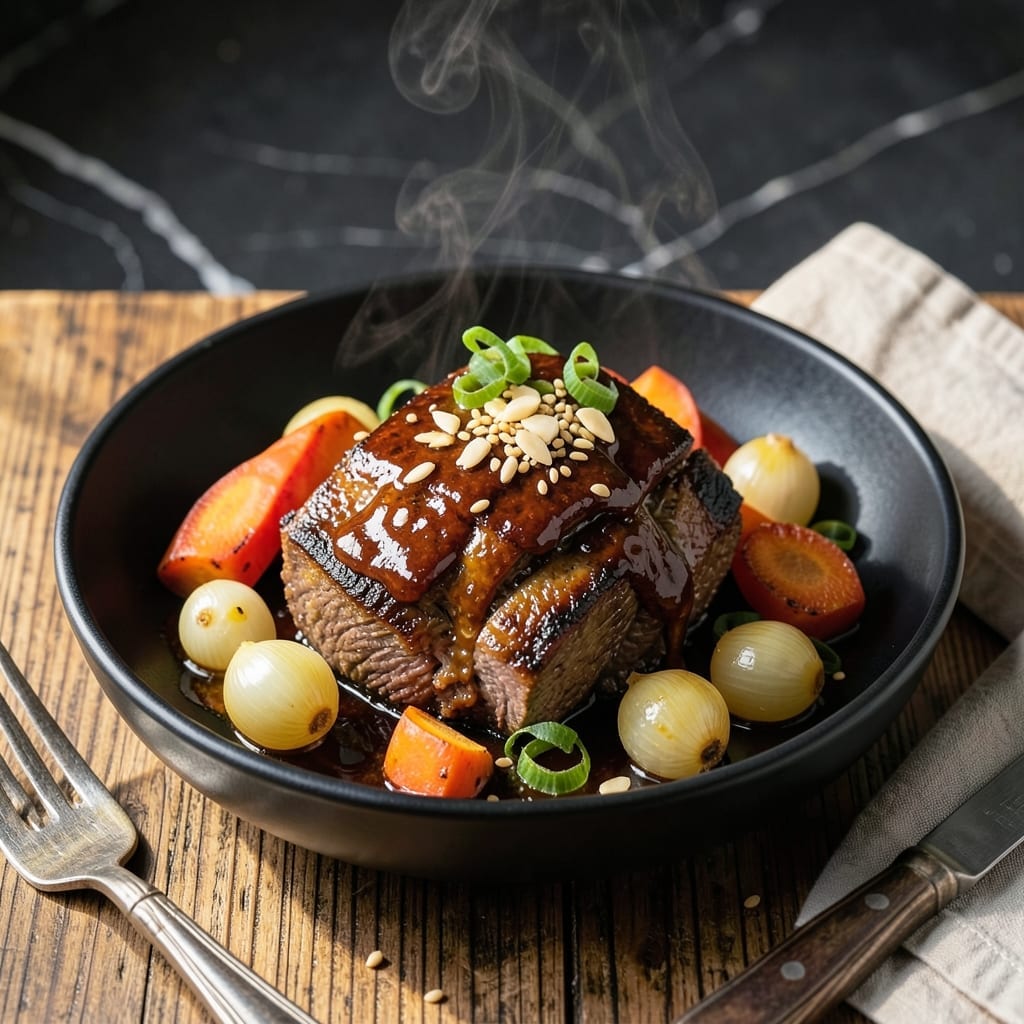
This Korean-inspired pot roast transforms tough cuts into tender, fall-apart beef with minimal effort. The secret lies in a gochujang-based marinade that infuses every bite with deep, savory-spicy flavor.
The slow braising process ensures the meat becomes incredibly tender while absorbing the rich, aromatic sauce. A blend of soy sauce, brown sugar, and garlic complements the gochujang, creating a complex, umami-packed glaze.
What emerges is a dish with melt-in-your-mouth texture and a glossy, finger-licking sauce. The beef soaks up all the flavors during cooking, resulting in a hearty, restaurant-quality meal.
Serve with steamed rice to soak up every last drop of the sauce. This recipe delivers consistent, impressive results every time.
Ingredients for Korean Beef Pot Roast
Transform tough beef into melt-in-your-mouth perfection with these bold, aromatic ingredients.
| Ingredient | Amount | Notes |
|---|---|---|
| Chuck Roast 🥩 | 3 lb | Well-marbled, cut into large chunks |
| Gochujang 🌶️ | ½ cup | Korean fermented chili paste |
| Soy Sauce 🫒 | ½ cup | Low-sodium preferred |
| Brown Sugar 🍚 | ¼ cup | Light or dark variety |
| Garlic Cloves 🧄 | 8 cloves | Minced for maximum flavor |
| Fresh Ginger 🌿 | 2 tbsp | Peeled and grated |
| Onion 🧅 | 1 whole | Yellow or white, sliced |
| Carrots 🥕 | 3 whole | Peeled and cut into chunks |
| Beef Broth 💧 | 2 cups | Low-sodium for balance |
| Sesame Oil 🫒 | 1 tbsp | Toasted for depth |
| Rice Vinegar 🍯 | 2 tbsp | Balances sweet and spicy |
| Green Onions 🧅 | 4 whole | Thinly sliced for garnish |
| Sesame Seeds 🌾 | 1 tbsp | Toasted, for garnish |
| Vegetable Oil 🫒 | 2 tbsp | For searing beef |
| Salt 🧂 | 1 tsp | Kosher or sea salt |
The beef is non-negotiable here. Chuck roast with visible marbling breaks down beautifully during the long braise—Costco or Whole Foods have reliable options. Look for pieces that are at least 2 inches thick to prevent drying out. The gochujang is the soul of this dish; H Mart or Korean markets carry authentic brands like Sempio or CJ. Avoid versions with added sugar—they muddy the flavor.
No gochujang? Miso paste plus a dash of chili garlic sauce gets you surprisingly close. Brown sugar can be swapped for coconut sugar or maple syrup—just adjust sweetness to taste. If you’re out of rice vinegar, apple cider vinegar works at the same ratio. For the broth, homemade is ideal, but a quality store-bought version (like Kettle & Fire) is a solid backup.
The braised beef tastes even better the next day—store leftovers in the fridge for up to 4 days or freeze for 3 months. Reheat gently on the stove with a splash of broth to revive the sauce. Always bring the beef to room temperature before reheating to keep it tender.
Why You’ll Love This Recipe
- Set It and Forget: I toss everything into the slow cooker before work and come home to fall-apart beef.
- Sweet-Spicy Magic: The gochujang and brown sugar caramelize into this sticky, finger-licking glaze on the chuck roast.
- Feeds My Crew Twice: One batch gives us dinner and enough for next-day rice bowls or tacos.
- Budget Hero: Chuck roast stays cheap, and a little gochujang goes a long way for big flavor.
Step-by-Step Instructions for Korean Beef Pot Roast
Master this technique for fall-apart tender beef with deep, complex Korean flavors.
Step 1: Sear and Develop Flavor Base
Heat 2 tbsp Vegetable Oil in a Dutch oven over medium-high heat until shimmering. Pat the 3 lb Chuck Roast dry and season generously with 1 tsp Salt. Sear the beef on all sides for 4-5 minutes per side until deeply browned.
This creates the Maillard reaction that builds rich, meaty depth. Remove the beef and set aside. In the same pot, add 1 whole Onion, 3 whole Carrots, 8 cloves Garlic Cloves, and 2 tbsp Fresh Ginger. Sauté for 3-4 minutes until the aromatics become fragrant and the onion softens.
Step 2: Build the Gochujang Braising Liquid
Pour in 0.5 cup Gochujang, 0.5 cup Soy Sauce, 0.25 cup Brown Sugar, 2 tbsp Rice Vinegar, 1 tbsp Sesame Oil, and 2 cups Beef Broth. Stir vigorously to dissolve the sugar and fully incorporate the gochujang paste into the liquid.
Bring the mixture to a gentle simmer, then reduce the heat to medium-low. The sauce should thicken slightly and develop a glossy sheen. Taste and adjust balance if needed—the vinegar should brighten the rich, spicy-sweet base without overpowering it.
Step 3: Braise to Tender Perfection
Return the seared chuck roast to the Dutch oven, spooning some of the braising liquid over the top. The liquid should come about halfway up the beef. Cover tightly and transfer to a preheated 325°F oven.
Braise for 3 to 3.5 hours, turning the beef halfway through, until the meat yields easily to a fork and the internal temperature reaches 195-200°F. This extended cooking time at low temperature breaks down the connective tissue, transforming tough chuck roast into buttery tenderness.
Step 4: Rest, Shred, and Finish
Carefully transfer the beef to a cutting board and tent with foil. Let it rest for 15 minutes—this allows the juices to redistribute for maximum moisture. Meanwhile, skim excess fat from the braising liquid and reduce over medium heat for 5-7 minutes until slightly thickened.
Shred the beef into large chunks using two forks and return it to the pot. Stir to coat the meat in the rich, reduced sauce. This step ensures every bite is saturated with the bold Korean-inspired flavors.
Step 5: Garnish and Serve
Just before serving, stir in 4 whole Green Onions and 1 tbsp Sesame Seeds. The green onions add a fresh, sharp contrast to the deep, caramelized sauce, while the sesame seeds provide a nutty crunch and visual appeal.
Serve the pot roast hot, with plenty of the braising liquid spooned over the top. The sauce should be thick enough to cling to the beef but still fluid. Each serving should showcase the melt-in-your-mouth texture that defines a perfectly executed braise.
Pro Tips For Making Korean Beef Pot Roast
- Sear the Chuck First: Brown the chuck roast well in a hot pan before braising—I learned this the hard way, skipping it once and the meat lacked that deep, caramelized flavor base.
- Bloom the Gochujang: Cook the gochujang in a little oil for 1-2 minutes before adding liquids to wake up its spicy, umami richness. Sounds weird, but it works.
- Don’t Drown the Pot: Use just enough liquid to come halfway up the meat—too much and your sauce will be thin, not the thick, sticky glaze you want clinging to the beef.
- Rest Before Slicing: Give it a solid 10 minutes under foil after cooking, even if you’re starving. My grandmother swore by this, and she was right: it keeps the juices inside where they belong.
Troubleshooting This Recipe
Sauce Too Thin
If your braising liquid is watery, simmer uncovered over medium heat for 10-15 minutes after removing the beef. Stir in a cornstarch slurry (1 tbsp cornstarch + 1 tbsp water) if needed. The sauce should coat the back of a spoon.
Beef Not Tender
Tough meat usually means insufficient cooking time. Return the pot to the 325°F oven and braise for another 30-45 minutes. Ensure the liquid covers at least half the beef. Patience is key with chuck roast.
Bitterness in Flavor
Gochujang can sometimes taste bitter if scorched. Lower your heat and add 1 tsp honey or 1 tbsp brown sugar to balance. Stir well and taste before adjusting further. 💡
Sauce Overpowering
If the gochujang flavor is too intense, dilute with ½ cup additional beef broth and 1 tbsp rice vinegar. This balances the spice while maintaining depth. Simmer for 5 minutes to meld flavors.
Burnt Bottom
Prevent sticking by using a heavy-bottomed Dutch oven and ensuring the heat isn’t too high. If it happens, carefully transfer the beef and sauce to a new pot. Deglaze with ¼ cup water if needed.
Uneven Cooking
Cut larger chuck roast pieces into 2-3 inch chunks before braising for even doneness. Turn the beef halfway through cooking. This ensures all pieces reach that perfect 195-200°F internal temperature. 🔥
Nutrition Facts
Frequently Asked Questions
Can I use a different cut of beef?
While chuck roast is ideal, brisket or short ribs work too. These cuts have similar marbling and connective tissue that break down beautifully during the 3-3.5 hour braise. Avoid lean cuts like sirloin—they’ll dry out.
How do I adjust the spice level?
Start with ¼ cup gochujang for mild heat, then add more to taste. For extra spice, include 1 tbsp gochugaru (Korean chili flakes). Balance heat with 1 extra tbsp brown sugar if needed.
Can I make this in a slow cooker?
Yes! Sear the beef first, then transfer everything to a slow cooker. Cook on low for 7-8 hours or high for 4-5 hours. The result will be just as tender, though the sauce may need reducing afterward.
What if my sauce is too salty?
Dilute with ½ cup water or low-sodium broth and simmer for 10 minutes. Stir in 1 tbsp rice vinegar to brighten the flavors. Avoid adding more sugar, as it won’t fix the saltiness.

- 4C Bread Crumbs Meatballs Recipe: Crispy Crust and Juicy Centers - September 25, 2026
- 6 Oz Chocolate Chip Cookie Recipe: Perfectly Balanced Crispy Edges and Chewy Hearts - September 25, 2026
- 6-Inch Coffee Cake Recipe: Vanilla Bean Swirls and Buttery Streusel Topping - September 25, 2026