
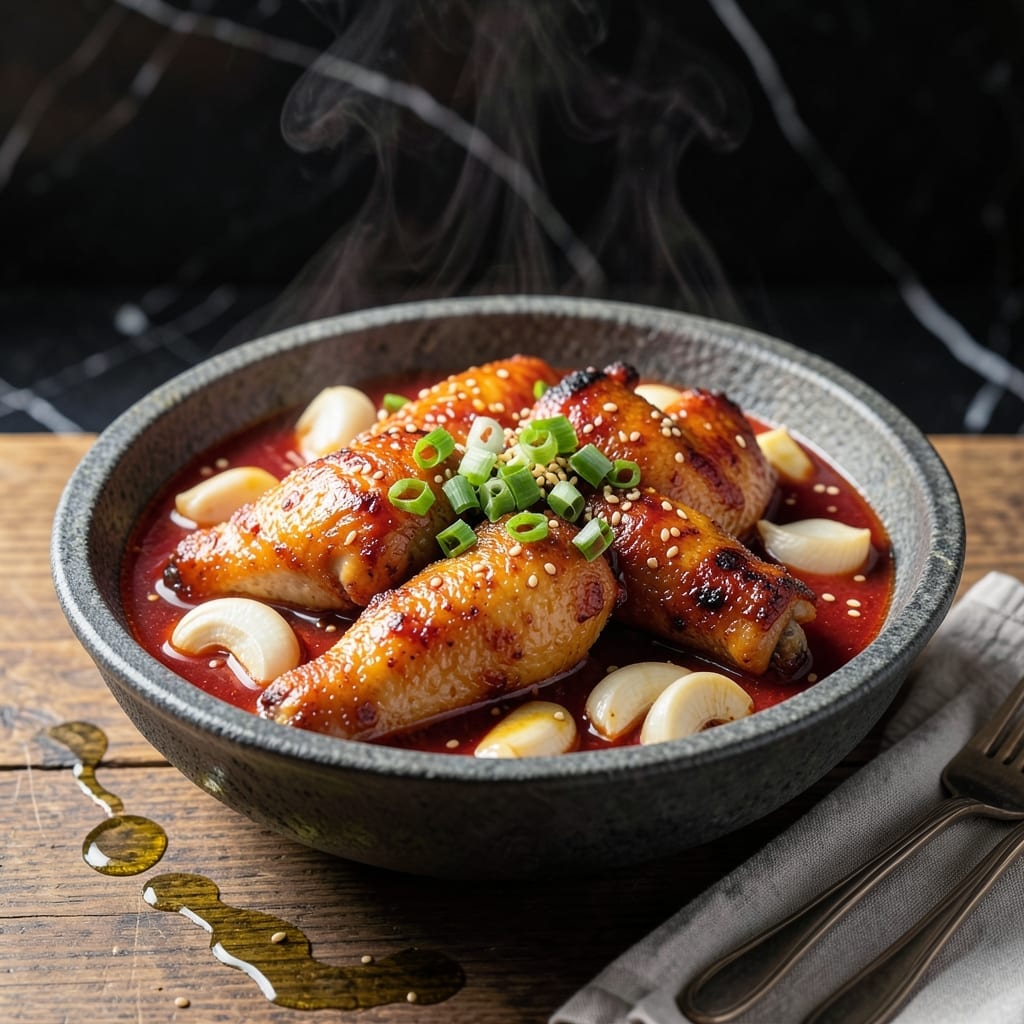
There’s something deeply satisfying about gathering around a bubbling pot of spicy Korean chicken hot pot, where tender morsels of meat and fresh vegetables simmer in a rich, aromatic broth. This dish transforms a simple meal into an interactive experience.
I’ve refined this recipe to balance bold Korean flavors with a broth that’s both fiery and deeply savory. The chicken cooks directly in the spiced broth, absorbing every bit of warmth and complexity. It’s a method that guarantees tender, juicy results every time.
The beauty of this hot pot lies in its versatility. You can customize the ingredients to suit any preference, from extra vegetables to different levels of heat. The broth, infused with gochujang and garlic, is the star of the show.
Perfect for sharing with family or friends, this dish brings warmth and connection to the table. Here’s how to make it.
Ingredients for Korean Chicken Hot Pot
Rich broth, tender chicken, and bold Korean flavors combine effortlessly in this hot pot.
| Ingredient | Amount | Notes |
|---|---|---|
| Boneless Chicken Thighs 🍗 | 1 ½ lb | Skin-on, cut into bite-sized pieces |
| Gochujang 🌶️ | ¼ cup | Korean red pepper paste, essential for heat |
| Soy Sauce 🫒 | ¼ cup | Low-sodium for controlled seasoning |
| Sesame Oil 🫒 | 2 tbsp | Toasted for nutty aroma |
| Garlic Cloves 🧄 | 6 cloves | Minced for maximum infusion |
| Fresh Ginger 🌿 | 1 tbsp | Grated, peeled before use |
| Chicken Stock 💧 | 4 cups | Low-sodium preferred for balance |
| Napa Cabbage 🥬 | 4 cups | Thinly sliced for quick cooking |
| Carrots 🥕 | 2 whole | Julienned for even cooking |
| Shiitake Mushrooms 🍄 | 1 cup | Fresh, sliced thin |
| Green Onions 🧅 | 4 whole | Sliced on diagonal for garnish |
| Gochugaru 🌶️ | 2 tbsp | Korean red pepper flakes, adjust for heat |
| Sugar 🧂 | 1 tbsp | Balances spice and acidity |
| Rice Vinegar 🍯 | 2 tbsp | Adds brightness to broth |
| Sesame Seeds 🌾 | 2 tbsp | Toasted for garnish |
The chicken thighs are non-negotiable—bone-in, skin-on delivers the most succulent results. Source from Whole Foods or a trusted butcher for organic, air-chilled options. Gochujang and gochugaru are the soul of the dish; H-Mart or Korean markets offer authentic brands like Sempio. Fresh ginger and garlic should be firm and aromatic—avoid shriveled or soft pieces.
No gochujang? Sriracha plus miso paste provides a similar depth (use 2 tbsp each). Missing gochugaru? Crushed red pepper flakes work in a pinch, though the flavor profile is slightly different. For a less spicy version, reduce gochugaru by half. Vegetables can be swapped—try bok choy or spinach for a milder green.
Broth can be prepped 1 day ahead—flavors deepen overnight. Leftovers keep for 4 days refrigerated or freeze for 3 months. Reheat gently to maintain the chicken’s tender texture. Always garnish with fresh green onions and sesame seeds just before serving.
Why You’ll Love This Recipe
- One Pot Wonder: I toss everything—the chicken, gochujang, soy sauce—in a single pot and let it simmer. No fancy techniques, just big flavor.
- Umami Bomb: The garlic cloves and sesame oil hit the spot with that deep, savory kick I crave. Honestly, it’s the kind of rich taste that lingers.
- Weeknight Hero: Between us, it’s my go-to for busy evenings—ready before the kids start asking what’s for dinner.
- Stretches Far: Leftovers? They taste even better the next day, and the chicken thighs keep it budget-friendly for feeding a crowd.
Step-by-Step Instructions for Korean Chicken Hot Pot
Master the technique for fall-off-the-bone chicken and a deeply flavorful, spicy broth.
Step 1: Sear the Chicken and Build the Broth Base
Heat the sesame oil in a large pot or Dutch oven over medium-high heat. Add the bite-sized boneless chicken thighs and sear for 5-6 minutes until golden brown on all sides. This step develops a rich fond that will deepen the broth’s complexity.
Push the chicken to one side and add the minced garlic cloves and grated fresh ginger. Sauté for 30-45 seconds until fragrant—be careful not to let the garlic burn, as it will turn bitter. The aromatics should be just golden at the edges.
Step 2: Create the Spicy-Savory Broth
Pour in the chicken stock, then stir in the gochujang, soy sauce, gochugaru, sugar, and rice vinegar. Use a wooden spoon to scrape up any browned bits from the bottom of the pot—this ensures every bit of flavor is incorporated into the broth.
Bring the mixture to a gentle boil, then reduce the heat to medium-low. Let it simmer uncovered for 10 minutes to allow the flavors to meld and the broth to take on a deep red hue. The surface should be lightly bubbling, not vigorously boiling.
Step 3: Add Vegetables and Finish the Chicken
Add the julienned carrots and sliced shiitake mushrooms to the pot. These will soften slightly but retain a satisfying bite. Return the chicken to the broth and simmer for an additional 8-10 minutes until the chicken is fully cooked through and tender.
The chicken is done when it reaches an internal temperature of 165°F and pulls apart easily with a fork. The carrots should be tender-crisp, and the mushrooms should have absorbed some of the spicy broth.
Step 4: Incorporate the Napa Cabbage and Garnish
Stir in the thinly sliced napa cabbage and cook for 3-4 minutes until the leaves are just wilted but still vibrant green. Napa cabbage cooks quickly, so keep an eye on it to avoid overcooking into a mushy texture.
Ladle the hot pot into serving bowls and garnish with sliced green onions and toasted sesame seeds. The green onions add a fresh, sharp contrast to the rich broth, while the sesame seeds provide a nutty crunch. Serve immediately with steamed rice on the side to soak up the spicy, savory liquid.
Pro Tips For Making Korean Chicken Hot Pot
- Brown the Chicken: Sear the boneless thighs in sesame oil until golden before adding liquids—this builds a deep, savory base that gochujang can’t provide on its own.
- Bloom the Gochujang: Cook the gochujang with minced garlic for 2-3 minutes in the pot first; raw paste tastes harsh, but this step mellows it into rich, complex heat.
- Skip the Overcrowding: I learned this the hard way—cooking all the chicken at once steams it instead of browning. Do it in batches if needed.
- Finish with Sesame: Stir in that last drizzle of sesame oil at the end, not the start. It adds a bright, nutty aroma that disappears if cooked too long.
Dietary Considerations for These Flavors
Gluten-Free Option
This dish can easily be made gluten-free by swapping regular soy sauce for tamari or a certified gluten-free soy sauce like San-J. Verify all other ingredients, especially gochujang, as some brands contain wheat. I always check labels to be safe. 💡
Lower Sodium Version
Use low-sodium chicken stock and low-sodium soy sauce to reduce the salt content. You can also cut the soy sauce by half and supplement with a splash of coconut aminos for depth without extra sodium.
Dairy-Free Adaptation
This recipe is naturally dairy-free, but always double-check your gochujang and chicken stock for hidden dairy derivatives. Most Korean brands are safe, but I’ve found Sempio to be reliably dairy-free.
Vegetable Swaps
For a lower-carb option, replace napa cabbage with bok choy or spinach. These cook quickly and soak up the broth beautifully. You can also add zucchini or bell peppers for extra nutrients.
Protein Alternatives
Swap chicken for tofu or shrimp for a lighter protein option. For tofu, press and cube extra-firm tofu before adding to the broth. Shrimp cooks in just 2-3 minutes—add it at the very end. 🌱
Spice Level Control
Adjust the heat by reducing or omitting gochugaru. For a milder version, use just 1 tbsp or replace it with paprika for color without spice. I often make a separate small pot for kids with no added heat.
Nutrition Facts
Frequently Asked Questions
Can I use chicken breast instead of thighs?
Thighs stay juicier in hot pot, but breasts work if sliced thin. Cook them for just 5-6 minutes to prevent drying out.
How do I make it less spicy for kids?
Reduce gochugaru to 1 tbsp or omit it entirely. Replace with paprika for color without heat.
What’s the best pot for this recipe?
A heavy Dutch oven or deep skillet works best. Avoid nonstick—it won’t develop the fond for rich broth flavor.
Can I prep the broth ahead of time?
Yes! The broth actually improves after 24 hours in the fridge. Just reheat gently before adding fresh ingredients.

- 4C Bread Crumbs Meatballs Recipe: Crispy Crust and Juicy Centers - September 25, 2026
- 6 Oz Chocolate Chip Cookie Recipe: Perfectly Balanced Crispy Edges and Chewy Hearts - September 25, 2026
- 6-Inch Coffee Cake Recipe: Vanilla Bean Swirls and Buttery Streusel Topping - September 25, 2026