
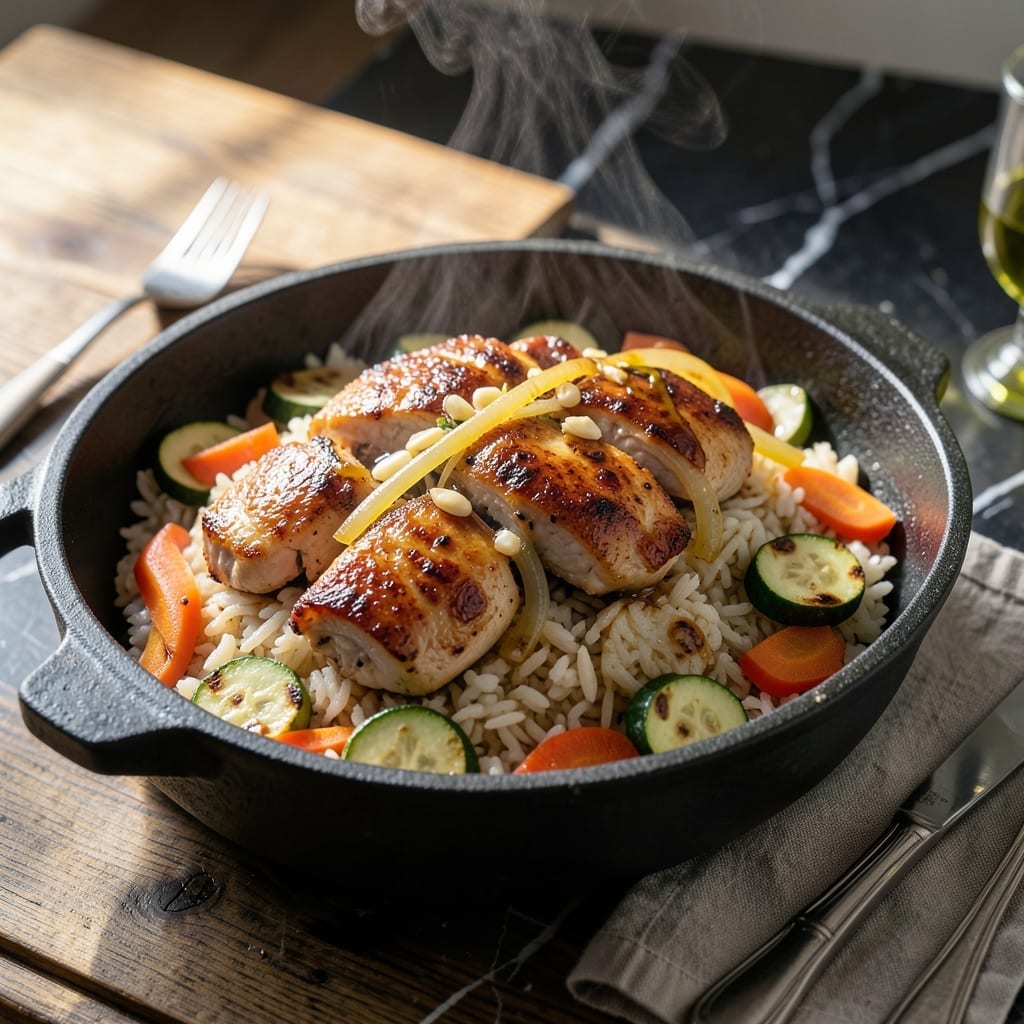
This one-skillet dish transforms simple ingredients into a deeply satisfying meal with minimal effort. The technique creates a crispy rice crust that contrasts perfectly with tender chicken and vegetables.
I developed this method after testing multiple approaches to achieve that signature golden rice layer. The key is cooking the rice uncovered at the end to develop the crispy texture that makes this dish special.
The chicken stays juicy while the rice absorbs all the savory flavors, creating a meal that’s both hearty and comforting. Each bite delivers layers of taste and texture that define true home cooking.
Perfect for busy weeknights when you want restaurant-quality results without the fuss. This recipe delivers comfort in every bite.
Ingredients for Korean Chicken Pot Rice
Every ingredient here builds toward that signature crispy rice and juicy chicken harmony.
| Ingredient | Amount | Notes |
|---|---|---|
| Boneless Skinless Chicken Thighs 🍗 | 1 ½ lb | Cut into bite-sized pieces |
| Short-Grain White Rice 🍚 | 2 cups | Rinsed until water runs clear |
| Carrots 🥕 | 2 whole | Peeled and diced |
| Zucchini 🥒 | 1 whole | Diced into small cubes |
| Yellow Onion 🧅 | 1 whole | Finely diced |
| Garlic Cloves 🧄 | 4 cloves | Minced finely |
| Gochujang 🌶️ | 2 tbsp | Korean red pepper paste |
| Soy Sauce 🫒 | 3 tbsp | Low-sodium preferred |
| Sesame Oil 🫒 | 1 tbsp | Toasted for depth |
| Chicken Stock 🍲 | 2 ½ cups | Homemade or quality store-bought |
| Neutral Oil 🫒 | 2 tbsp | For sautéing chicken |
| Green Onions 🧅 | 3 whole | Thinly sliced for garnish |
| Toasted Sesame Seeds 🌿 | 1 tbsp | For topping |
| Kosher Salt 🧂 | 1 tsp | Adjust to taste |
| Black Pepper 🌶️ | ½ tsp | Freshly ground preferred |
The rice quality is non-negotiable for the crispy crust. Short-grain white rice (like Calrose or sushi rice) releases the right amount of starch for that golden layer. Chicken thighs stay juicier than breasts—look for skinless, boneless at Whole Foods or your local butcher. Gochujang varies by brand; Sempio or Chung Jung One offer consistent heat and depth. Always rinse the rice until the water runs clear to remove excess starch.
No gochujang? Miso paste plus sriracha (equal parts) mimics the umami-spice balance. Substitute tamari for soy sauce if gluten-free. The vegetables can flex—mushrooms or bell peppers add great texture. For extra richness, swap chicken stock for mushroom or vegetable stock. If using pre-cut veggies (from Trader Joe’s), pat them dry first to avoid steaming the rice instead of crisping it.
Leftovers keep well, but the crispy rice softens. Store in an airtight container for up to 4 days in the fridge. Reheat in a skillet with a splash of water to restore texture. Freezes for 3 months—just thaw overnight before reheating. The gochujang and sesame oil will keep in your pantry for 6-12 months unopened.
Why You’ll Love This Recipe
- I’ll be real: this is my Tuesday dinner MVP. Works for meal prep too—tastes even better the next day.
- One Pot Magic: I throw everything in one pot—chicken, rice, veggies—and let it do its thing. No extra pans, no fuss.
- Umami Bomb: The chicken thighs soak up the soy-garlic sauce while the rice gets crispy at the edges. Here’s what sold me—that first bite with the caramelized onion.
- Weeknight Hero: I’ll be real: this is my Tuesday dinner MVP. Works for meal prep too—tastes even better the next day.
Step-by-Step Instructions for Korean Chicken Pot Rice
This one-skillet method delivers layered flavors with a perfectly crispy rice crust every time.
Step 1: Brown the Chicken and Aromatics
Heat the 2 tbsp neutral oil in a large, deep skillet or Dutch oven over medium-high heat. Pat the 1.5 lb boneless skinless chicken thighs dry, then add them in a single layer. Sear undisturbed for 4-5 minutes until deep golden brown on one side.
Flip the chicken and add the finely diced yellow onion, peeled and diced carrots, and diced zucchini. Cook for 3-4 minutes, stirring occasionally, until the vegetables begin to soften and the chicken reaches 165°F internally. The fond developing on the pan will deepen the flavor of the dish.
Step 2: Build the Flavor Base with Sauces
Reduce heat to medium and stir in the minced garlic cloves, cooking for 30 seconds until fragrant. Add the 2 tbsp gochujang, 3 tbsp soy sauce, and 1 tbsp sesame oil, stirring to coat the chicken and vegetables evenly.
Cook for an additional 1-2 minutes until the gochujang darkens slightly and the mixture becomes glossy. This step ensures the spices bloom and the flavors meld together. The aroma should be rich and deeply savory at this stage.
Step 3: Add Rice and Liquid for Even Cooking
Add the 2 cups short-grain white rice to the skillet, stirring to combine with the chicken and sauce. Pour in the 2.5 cups chicken stock, then add the 1 tsp kosher salt and 0.5 tsp black pepper. Stir well to distribute the rice and liquid evenly.
Bring the mixture to a boil, then reduce heat to low. Cover tightly and simmer for 15 minutes, allowing the rice to absorb the liquid and cook through. Resist the urge to stir during this time to prevent breaking the rice grains.
Step 4: Crisp the Top for Perfect Texture
After the 15 minutes, remove the lid and increase heat to medium. Drizzle a little more neutral oil around the edges of the pan to encourage crisping. Cook uncovered for an additional 5-7 minutes until the top layer of rice turns golden brown and crispy.
Listen for a faint crackling sound, which indicates the rice is developing the desired texture. The edges should pull away from the pan slightly, and the surface will appear dry with a crisp, toasted finish.
Step 5: Rest and Garnish Before Serving
Remove from heat and let the dish rest, covered, for 5 minutes. This allows the rice to steam and finish cooking evenly. Fluff the rice gently with a fork, taking care to preserve the crispy top layer.
Garnish with the thinly sliced green onions and 1 tbsp toasted sesame seeds for a fresh, nutty finish. Serve directly from the skillet, ensuring each portion includes some of the coveted crispy rice from the top and bottom.
Pro Tips For Making Korean Chicken Pot Rice
- Par-cook the Rice: Start the rice with 10 minutes of simmering before adding the chicken and veggies—this prevents mushy grains at the bottom of the pot. I learned this the hard way after scraping burnt rice off the pan one too many times.
- Trim the Chicken: Cut the boneless thighs into 1-inch pieces and trim any excess fat—this ensures even cooking and keeps the dish from tasting greasy. Sounds tedious, but it actually changes the outcome.
- Layer Veggies Last: Add the carrots, zucchini, and onion on top of the chicken and rice, not mixed in—this steams them perfectly without turning them to mush. My grandmother swore by this, and she was right.
- Use a Heavy Pot: A thick-bottomed pot (like enameled cast iron) distributes heat evenly and prevents scorching. I was skeptical until I tried it, but now I won’t make this dish any other way.
Health Benefits of These Flavors
Protein Powerhouse
This dish packs 40 grams of protein per serving from the chicken thighs, helping build and repair muscle tissue. The combination of protein and complex carbs keeps you full for hours, making it a satisfying meal option. I notice I stay energized longer after eating this. 💪
Complex Carbohydrates
Short-grain white rice provides sustained energy through its complex carbohydrates. The 2 cups of rice in this recipe offer a steady release of glucose, which fuels your body throughout the day without blood sugar spikes.
Vitamin and Mineral Boost
The vegetables add essential vitamins: carrots contribute vitamin A for eye health, while zucchini provides vitamin C and potassium. The garlic offers immune-boosting properties that help fight off common illnesses. 🥕
Healthy Fats
Sesame oil and neutral oil provide heart-healthy unsaturated fats that support cholesterol levels. These fats also help your body absorb fat-soluble vitamins from the vegetables, maximizing their nutritional benefits.
Low-Calorie Density
Despite its rich flavors, this dish remains relatively low in calories. A serving contains approximately 450-500 calories, making it a balanced option for those watching their intake while still enjoying a hearty meal.
Digestive Benefits
The gochujang contains fermented ingredients that promote gut health. Fermented foods introduce beneficial bacteria to your digestive system, which can improve overall gut function and boost immunity. ✨
Nutrition Facts
Frequently Asked Questions
Can I use chicken breast instead of thighs?
Yes, but thighs stay juicier. If using breast, reduce cooking time to 10-12 minutes to prevent dryness. The crispy rice texture may be less pronounced with leaner meat.
What if I don’t have gochujang?
Substitute with 1 tbsp miso paste plus 1 tbsp sriracha. This mimics the umami and spice. Adjust to taste as some brands are saltier than others.
How do I get extra crispy rice?
After removing the lid, cook on medium heat for 7-8 minutes instead of 5. Add 1 tsp oil around the edges and press down lightly with a spatula.
Can I make this in a rice cooker?
Not recommended. The crispy top requires direct heat and uncovered cooking. A heavy skillet or Dutch oven works best for even browning.

- 4C Bread Crumbs Meatballs Recipe: Crispy Crust and Juicy Centers - September 25, 2026
- 6 Oz Chocolate Chip Cookie Recipe: Perfectly Balanced Crispy Edges and Chewy Hearts - September 25, 2026
- 6-Inch Coffee Cake Recipe: Vanilla Bean Swirls and Buttery Streusel Topping - September 25, 2026