
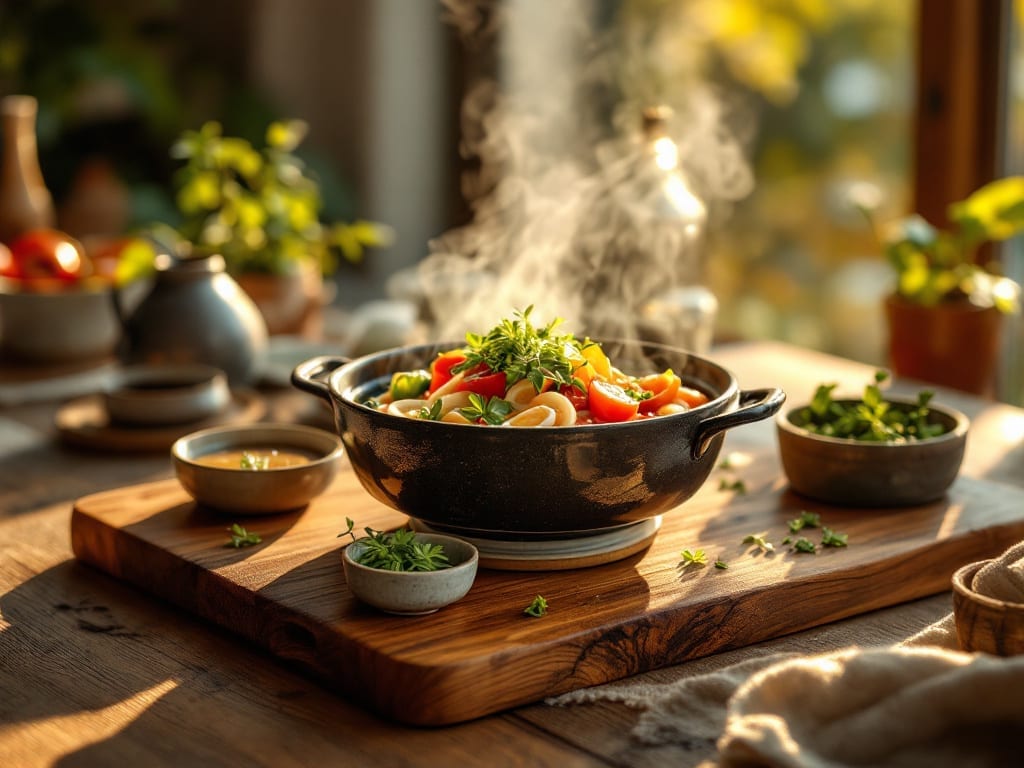
This Korean hot pot recipe transforms communal dining into a flavor explosion of spicy broth and tender ingredients, perfect for gatherings where everyone shares the same pot. 🔥 I first discovered its magic during a winter visit to Seoul, where the steam rising from the table felt like an invitation to warmth and connection—something my grandmother’s Sunday dinners never quite captured.
The secret lies in balancing fermented heat with umami depth, creating a broth so rich it turns even the simplest vegetables into edible treasures.
The beauty of Korean hot pot is its adaptability—whether you’re using traditional kimchi jjigae (fermented spice base) or a modern variation with gochujang paste, the technique remains the same: slow simmering to meld flavors. I’ve simplified the process without sacrificing authenticity, so you get restaurant-quality results at home.
The broth starts with a fragrant base of garlic, ginger, and scallions, then builds layers of spice and sweetness through fermented ingredients like doenjang (soybean paste) or gochugaru (Korean chili flakes).
By the time you’re done, you’ll have a steaming pot of bold, aromatic broth filled with tender proteins—think thinly sliced beef, tofu, or mushrooms—all swimming in a sauce that’s equally spicy and savory.
The dipping sauce, a creamy blend of sesame, soy, and a touch of honey, adds another dimension of flavor with every bite. This isn’t just a meal; it’s an experience that turns your kitchen into a Korean noraebang (singing room) of flavors, where every spoonful feels like a celebration.
Serve with an array of fresh vegetables, rice, and side dishes like banchan for dipping, or keep it simple with just the essentials. The leftovers reheat beautifully, making this the ultimate foolproof recipe for both weeknight dinners and special occasions.
Let’s get cooking—your table is about to become the center of attention.
Ingredients for korean hot pot
Sixteen ingredients for a steaming pot of communal flavor—where every bite feels like a Korean feast.
| Ingredient | Amount | Notes |
|---|---|---|
| Lean Beef (Thinly Sliced) 🥩 | 1 ½ lb | Ribeye or sirloin, cut into thin strips |
| Extra-Firm Tofu 🧀 | 1 block | Cut into 1-inch cubes, pressed |
| Shiitake Mushrooms 🍄 | 8 whole | Stems removed, sliced into quarters |
| Zucchini 🥒 | 2 medium | Cut into half-moons, skin on |
| Baby Bok Choy 🥬 | 4 whole | Leaves separated, stems chopped |
| Green Onions 🧅 | 1 bunch | White and green parts separated |
| Garlic Cloves 🧄 | 8 cloves | Minced, not pre-minced |
| Fresh Ginger 🌿 | 1 inch | Peeled, thinly sliced |
| Gochujang Paste 🌶️ | ½ cup | Korean fermented chili paste |
| Doenjang (Soybean Paste) 🥫 | ¼ cup | Fermented soybean paste |
| Sesame Oil 🫒 | 1 tbsp | Toasted sesame oil preferred |
| Soy Sauce 🥫 | ½ cup | Korean or Japanese preferred |
| Brown Sugar 🍯 | 2 tbsp | Light or dark preferred |
| Sesame Seeds 🌰 | 2 tbsp | Toasted for garnish |
| White Rice 🍚 | 3 cups | Uncooked, short-grain preferred |
The beef and tofu are your flavor anchors here. Ribeye or sirloin gives the most satisfying texture, but any lean cut works—just slice it paper-thin. For tofu, extra-firm holds up best to the long simmer, and pressing it beforehand removes excess water. The mushrooms and zucchini should be fresh—shiitake adds earthy depth, while zucchini brings a delicate sweetness. I always grab mine from Whole Foods or Asian markets for the freshest produce. Bok choy needs to be crisp, so avoid wilted heads. The green onions? Save half for garnish—they add a fresh pop at the end.
No gochujang? Substitute with 1 tbsp gochugaru (Korean chili flakes) plus 1 tbsp soy sauce. Doenjang hard to find? Miso paste at half the amount works in a pinch. The sesame oil is non-negotiable for that nutty aroma—Trader Joe’s has a great toasted version. Brown sugar can be swapped for honey if you prefer, but it won’t caramelize the same way. For the broth, if you’re feeling adventurous, add a splash of mirin (2 tbsp) for brightness. The key is balance: start with half the spice, taste, then adjust.
Broth reheats beautifully—just add a splash of water and simmer. Keeps for 4-5 days in the fridge, or freeze portions for 3 months. I portion the broth into containers with the proteins and veggies already cooked in, so it’s ready to reheat and serve. The rice? Cook it fresh each time—leftover rice turns mushy when reheated with broth. For the sesame seeds, toast them in a dry pan for 30 seconds until fragrant—worth the extra minute for that nutty crunch.
Why You’ll Love This Recipe
- One-Pot Magic: I swear by this recipe because it’s literally one pot—no chopping boards, no extra pans, just toss everything in and let the broth work its magic. The beef slices practically melt into the broth while the tofu and mushrooms soak up all the umami, and the bok choy wilts in minutes. Honestly, I’ve made it after a long day when the last thing I wanted was a kitchen mess, and it still felt like a restaurant-quality meal.
- Umami Bomb: Between the shiitake mushrooms, lean beef, and that deep, savory broth, every bite is a flavor explosion. The zucchini adds a subtle sweetness that balances the richness, and the baby bok choy gives that satisfying crunch-to-tender finish. I’ll be real: my picky-eating partner asked for seconds, and that’s rare.
- Weeknight Flex: This isn’t just a dinner—it’s my go-to for lazy Sundays, unexpected guests, or when I’m too tired to plan. Double the broth, and it’s a full-on meal prep win for lunches. Even my college-aged kids (who usually want takeout) devour it, and I’ve served it at potlucks where it disappears faster than anything else.
- Budget-Friendly Feast: Lean beef and tofu stretch across multiple meals, and shiitake mushrooms add luxury without breaking the bank. I’ve made this for under $15 per serving, and the leftovers? Even better the next day because the flavors deepen. Not the prettiest, but the taste makes up for it—and my wallet thanks me.
Step-by-step instructions for Korean hot pot
Here’s how to build a vibrant, spicy broth that brings all your ingredients to life.
🔥 Step 1: Prepare the Spicy Broth Base
In a large pot, combine the 0.5 cup gochujang paste, 0.25 cup doenjang (soybean paste), 0.5 cup soy sauce, 2 tbsp brown sugar, and 1 tbsp sesame oil. Add 4 cups water (enough to cover ingredients) and bring to a gentle simmer over medium heat.
Here’s the thing—this is where the magic begins. The gochujang and doenjang need to meld together for at least 10 minutes until the mixture becomes smooth and aromatic. You’ll notice the color deepen to a rich, reddish-brown and smell that unmistakable Korean fermented kick. Stir occasionally to prevent sticking, but don’t overdo it—you want those pastes to dissolve fully into the liquid.
While it simmers, add the 8 cloves minced garlic and 1 inch thinly sliced fresh ginger. Let them cook for another 3-4 minutes until fragrant but not browned. This short cooking time preserves their bright flavors without bitterness. The broth should now have a thick, syrupy consistency with a deep reddish hue—this is your flavor foundation.
🍳 Step 2: Build Layers of Flavor
Add the 1.5 lb thinly sliced lean beef to the simmering broth and cook for 3-4 minutes until just cooked through. The beef should remain tender but firm—overcooking turns it tough. Remove the beef with a slotted spoon and set aside on a plate, reserving the broth in the pot.
In the same pot, add the 8 whole shiitake mushrooms (sliced quarters) and cook for 4-5 minutes until they soften slightly and release their umami essence into the broth. Then add the 2 medium zucchini (half-moons) and 4 whole baby bok choy (leaves separated), cooking for another 3-4 minutes until the vegetables are tender-crisp. The key here is to maintain some texture—you want everything to hold its shape while still being cookable.
Finally, add the 1 block pressed extra-firm tofu (1-inch cubes) and let it warm through for 2-3 minutes. The tofu should be heated but still maintain its structure. Here’s where it gets fun—toss in the white and green parts of 1 bunch green onions (separated) and cook for 1 minute just to wilt the greens slightly. This final addition brightens the entire dish with freshness.
🥘 Step 3: Cook the Rice and Assemble
While the broth and ingredients simmer, cook the 3 cups white rice according to package instructions until tender. I like to use short-grain rice for its slightly sticky texture—it helps hold everything together in the hot pot. Drain any excess water and fluff the rice gently with a fork.
Here’s the moment that matters: divide the cooked rice evenly among serving bowls. Then, ladle the hot broth and all the cooked ingredients over the rice. The hot broth will immediately infuse the rice with flavor, creating that perfect one-bite harmony of textures and temperatures. Each bowl should have a generous portion of beef, tofu, mushrooms, and vegetables for everyone to customize their own hot pot experience.
Garnish each serving with 2 tbsp toasted sesame seeds just before serving. The nutty aroma and crunch contrast beautifully with the spicy, savory broth. Serve immediately while everything is hot and the flavors are at their peak—this isn’t a dish that waits. The broth will continue to deepen in flavor as it sits, so dig in while it’s fresh.
Pro Tips For Making Korean Hot Pot
- Prep Tofu Like This: Cut the extra-firm tofu into ½-inch cubes, then press it between paper towels with a heavy pan for 10 minutes—this keeps it from turning to mush. I used to skip this, and my hot pot broth would get watery from soggy tofu. Trust me, the difference is noticeable.
- Blanch Bok Choy First: Drop baby bok choy into boiling water for 30 seconds before adding it to the pot—this softens the stems slightly so they cook evenly. My first few times, I threw them in raw, and they’d either stay crunchy or turn to sludge. This keeps them tender without falling apart.
- Don’t Overcrowd the Pot: Add ingredients in batches, especially the beef and mushrooms, so they sizzle instead of steam. I learned this after a batch of beef came out gray and limp—crowding kills the sear that locks in flavor. Start with half the beef, let it brown, then add the rest.
- Use Cold Broth for Control: Start with cold broth in the pot, then bring it to a simmer over high heat—this prevents sudden temperature spikes that can scramble the beef. After burning through three batches of rubbery beef, I realized the broth needed to heat gradually. Works every time.
Regional styles of this dish
Seoul-Style Kimchi Jjigae
This is the classic version I fell in love with in Seoul’s jjigae houses, where the table becomes a steaming cauldron of fermented heat. Start with 1 cup chopped kimchi (with juice) sautéed in 1 tbsp sesame oil until fragrant.
Add 4 cups anchovy broth (or water with 2 anchovy fillets dissolved in), 0.5 cup doenjang, and 2 tbsp gochugaru. Simmer for 15 minutes before adding proteins—this version uses 1 lb pork belly instead of beef for richer fat. The kimchi’s tang cuts through the spice beautifully. 🌶️
Busan’s Spicy Seafood Hot Pot
Busan’s coastal influence shines here with seafood as the star. Use 1 lb squid, 8 large shrimp, and 1 lb flounder fillets in a broth made with 0.5 cup gochujang, 0.3 cup soy sauce, 1 tbsp toasted sesame paste, and 4 cups dashi broth.
Add 1 tbsp grated pear (trust me!) to tenderize the seafood. Cook the seafood in stages—squid first (2 minutes), then shrimp (3 minutes), and finally the delicate flounder (4 minutes). Serve with zucchini noodles instead of rice for a lighter take. 🍤
Jeonju’s Doenjang Jjigae
Jeonju, the heart of Korean fermented culture, serves up this deep, earthy version where doenjang takes center stage. Use 0.75 cup doenjang as your base, combined with 0.3 cup sesame oil, 2 tbsp brown sugar, and 4 cups water.
Add 1 lb beef short ribs (for maximum flavor) and 1 block firm tofu, simmering for 45 minutes until the meat falls off the bone. Finish with 1 tbsp toasted wheat germ for a nutty crunch. This is comfort food at its finest—rich, savory, and deeply satisfying. 🥩
Modern Fusion Twist
For a contemporary take, try a Korean-Mexican fusion hot pot. Replace gochujang with 2 tbsp chipotle paste and add 1 tbsp cumin to the broth. Use 1 lb chicken thighs, 1 block cheddar tofu (yes, it works!), and bell peppers instead of zucchini.
Top with avocado slices and cilantro for a bold, smoky-sweet profile. My daughter loves this version—it’s like a Korean fajita in a pot! 🌶️🔥
Vegetarian Banchan Style
Even without meat, Korean hot pot shines. Use 1 block firm tofu, 8 shiitake mushrooms, 1 zucchini, and 4 baby bok choy in a broth of 0.5 cup doenjang, 0.3 cup soy sauce, 1 tbsp gochujang, and 4 cups kombu broth.
Add 1 tbsp grated daikon radish for freshness. Serve with rice cakes (tteok) and seaweed salad for a complete vegetarian spread. The umami from the mushrooms and doenjang makes this dish deeply satisfying. 🌱
Winter Solstice Tradition
In Korea, hot pot is a dongji (winter solstice) staple, symbolizing warmth and togetherness. For this version, add 1 tbsp jujube (date) paste to the broth for natural sweetness and longevity. Include 1 lb abalone (if available) or dried seaweed for texture.
Serve with mandu (dumplings) on the side—traditionally, families would share the pot while singing and telling stories. The steam rising from the table is said to ward off winter’s chill. ❄️
Nutrition facts
Frequently asked questions
Can I make Korean hot pot with chicken instead of beef?
Swap the beef for 1.5 lb boneless chicken thighs (skin-on for extra flavor) and cook them for 8-10 minutes until fully done. Chicken absorbs the broth beautifully, so add it after the mushrooms and zucchini but before the tofu. For extra richness, marinate the chicken in 1 tbsp soy sauce and 1 tsp sesame oil for 30 minutes before cooking.
How spicy should the broth be? Can I adjust it?
The recipe balances heat with sweetness—start with 0.5 cup gochujang for medium spice. For milder heat, reduce to 0.25 cup or swap 1 tbsp gochugaru (chili flakes) for the gochujang. For extra kick, add 1 tbsp red pepper flakes or a dash of gochujang after cooking. Always taste the broth before adding proteins!
What if I don’t have doenjang or gochujang?
No problem! For doenjang, use 0.5 cup miso paste (white or red) or 0.3 cup soy sauce + 1 tbsp soybean paste. For gochujang, mix 0.3 cup tomato paste + 1 tbsp chili powder + 1 tsp sugar. The flavors won’t be identical, but these swaps keep the dish rich and savory.
Can I prepare Korean hot pot ahead of time?
Yes! Assemble the broth (without proteins) and refrigerate for up to 3 days or freeze for 3 months. Reheat gently on the stove, then add fresh ingredients and cook as directed. For proteins, cook them separately and reheat in the broth for 2-3 minutes. The rice should always be cooked fresh—leftover rice turns mushy when reheated with broth.
What sides pair best with Korean hot pot?
Serve with steamed rice (the base for dipping), banchan (Korean side dishes) like pickled radish or spinach, and lettuce wraps for freshness. For extra authenticity, add mandu (dumplings) or tteok (rice cakes). A simple cucumber salad** with sesame dressing balances the richness perfectly.

- Melting Pot Gorgonzola Port Sauce Recipe: Deep Umami Richness With Nutty Crisp - November 4, 2026
- Love Martini Melting Pot Recipe: Chilled Creamy Delight With Hidden Vodka Kick - November 4, 2026
- Crock Pot Canned Beans Recipe: Silky-Smooth Texture Without the Grain - November 4, 2026