
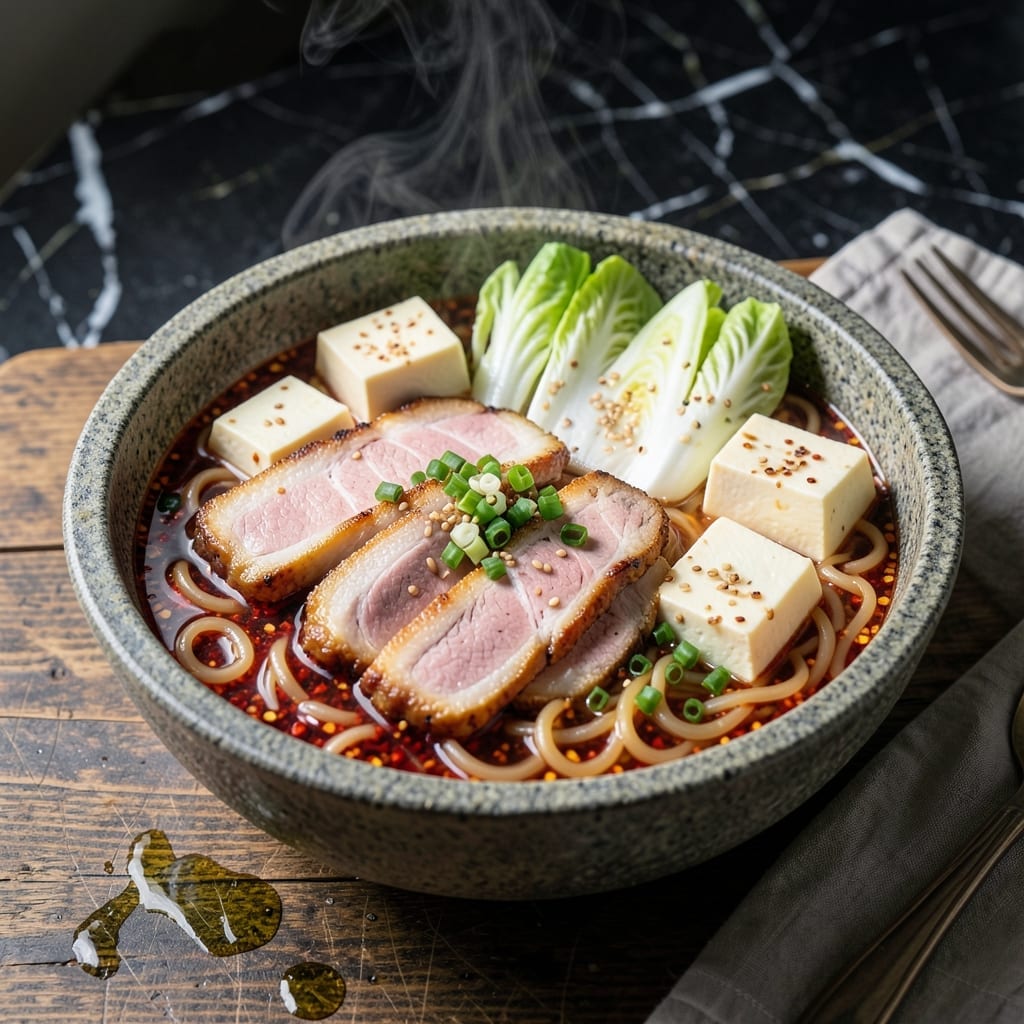
This Korean pork hot pot delivers tender meat and vibrant vegetables in a deeply flavorful, spicy broth. The dish combines traditional Korean ingredients with a straightforward cooking method that ensures perfect results every time.
The secret lies in thinly sliced pork that cooks quickly in the simmering broth, absorbing all the bold seasonings. Fresh vegetables add color and texture, while the broth develops rich, complex flavors as it cooks.
You’ll end up with a comforting, aromatic meal that’s ideal for sharing. The pork stays tender and juicy, and the vegetables retain just the right amount of crunch.
Serve with rice and side dishes for a complete, authentic experience. This recipe brings the warmth of Korean cuisine to your table.
Ingredients for Korean Pork Hot Pot
Traditional Korean ingredients deliver bold, spicy flavors in this comforting hot pot with tender pork and fresh vegetables.
| Ingredient | Amount | Notes |
|---|---|---|
| Pork Shoulder 🥩 | 1 ½ lb | Thinly sliced, about 1/8-inch thick |
| Korean Red Pepper Flakes 🌶️ | ½ cup | Gochugaru, adjust for spice preference |
| Soy Sauce 🫒 | ⅓ cup | Low-sodium preferred for control |
| Gochujang 🔥 | 3 tbsp | Korean fermented chili paste |
| Garlic Cloves 🧄 | 6 cloves | Minced for maximum flavor |
| Fresh Ginger 🌿 | 2 tbsp | Peeled and finely grated |
| Onion 🧅 | 1 whole | Thinly sliced, yellow or white |
| Napa Cabbage 🥬 | 4 cups | Chopped into bite-sized pieces |
| Carrots 🥕 | 2 whole | Julienned or thinly sliced |
| Shiitake Mushrooms 🍄 | 8 oz | Fresh, stems removed and sliced |
| Green Onions 🧅 | 4 whole | Cut into 2-inch pieces |
| Chicken Broth 🍲 | 6 cups | Low-sodium preferred |
| Sesame Oil 🫒 | 2 tbsp | Toasted for finishing |
| Brown Sugar 🍚 | 2 tbsp | Balances the spice and salt |
| Rice Vinegar 🍯 | 2 tbsp | Adds brightness to the broth |
The pork is everything here. Pork shoulder yields the most tender slices—ask your butcher to thinly slice it, or freeze it for 30 minutes first for easier cutting at home. For authentic flavor, Korean markets are ideal for gochugaru and gochujang, but H Mart or well-stocked Asian aisles at major supermarkets carry these too. Look for vibrant, deep red gochugaru without additives.
No gochugaru? Substitute with 1/4 cup cayenne plus 2 tbsp paprika (less authentic but works). Out of gochujang? Miso paste plus sriracha gets you close. For the broth, vegetable broth can replace chicken broth if needed. The vegetables are flexible—zucchini, spinach, or tofu make great additions. Always slice veggies thin so they cook quickly in the hot broth.
The broth tastes even better the next day after flavors meld. Store in the fridge for up to 3 days, or freeze for 2 months. Reheat gently on the stove—microwaving can make the pork tough. Prep all ingredients before starting; this comes together fast once the cooking begins.
Why You’ll Love This Recipe
- I’ll be real: pork shoulder is cheap, and this makes enough for two meals, so my wallet and my taste buds both win.
- One Pot Wonder: I dump everything in, let it simmer, and the pork shoulder turns fall-apart tender while the gochujang and garlic do all the flavor work.
- Flavor Bomb: Honestly, the mix of Korean red pepper flakes with the deep umami from soy sauce and gochujang hits that sweet-spicy-savory spot every time.
- Crowd Pleaser: Between us, it’s the dish I make when friends come over—everyone dives in, piling pork into their bowls with rice and veggies.
Step-by-Step Instructions for Korean Pork Hot Pot
Master this method for fall-off-the-bone tender meat and a deeply flavorful, spicy broth.
Step 1: Prepare the Pork and Aromatics
Thinly slice the 1.5 lb Pork Shoulder into 1/8-inch thick pieces, ensuring uniform thickness for even cooking. I recommend partially freezing the pork for 20 minutes first—this firms it up for safer, more precise slicing.
Mince the 6 cloves Garlic Cloves and finely grate the 2 tbsp Fresh Ginger. Thinly slice the 1 whole Onion, as these aromatics will form the flavor foundation. The finer the mincing and grating, the more surface area releases its essence into the broth.
Step 2: Build the Spicy Broth Base
In a large pot, combine the 6 cups Chicken Broth, 0.5 cup Korean Red Pepper Flakes, 0.33 cup Soy Sauce, 3 tbsp Gochujang, 2 tbsp Brown Sugar, and 2 tbsp Rice Vinegar. Whisk thoroughly until the gochujang and sugar fully dissolve—this prevents clumping later.
Add the minced garlic, grated ginger, and sliced onion to the pot. Bring to a gentle simmer over medium heat, then reduce to low heat. Let it infuse for 10 minutes until the broth turns a rich, fiery red and the aromatics soften. This slow infusion extracts maximum flavor without bitterness.
Step 3: Cook the Pork and Vegetables
Add the sliced pork shoulder to the simmering broth. Cook for 15-20 minutes until the pork is tender and no longer pink. Skim off any foam that rises to the surface during the first 5 minutes—this keeps the broth clean and clear.
Stir in the 4 cups Napa Cabbage, 2 whole Carrots (julienned), and 8 oz Shiitake Mushrooms. Simmer for an additional 8-10 minutes until the vegetables are tender-crisp and the carrots retain a slight bite. Avoid overcooking; the vegetables should still offer resistance when pierced.
Step 4: Finish and Serve
Remove from heat and stir in the 4 whole Green Onions (cut into 2-inch pieces). Drizzle with 2 tbsp Sesame Oil and let it sit for 2 minutes to allow the flavors to meld. The sesame oil adds a nutty aroma that complements the spicy, umami-rich broth.
Ladle the hot pot into serving bowls, ensuring each portion has an equal distribution of pork, vegetables, and broth. The pork should be melt-in-your-mouth tender, while the broth delivers a perfect balance of heat, sweetness, and depth. Serve immediately with steamed rice to soak up the flavorful liquid.
Pro Tips For Making Korean Pork Hot Pot
- Sear the Pork First: Brown the pork shoulder in batches over medium-high heat before adding liquid—this builds deep flavor and prevents a watery broth. I learned this the hard way after making too many bland pots.
- Bloom the Pepper Flakes: Toast the Korean red pepper flakes in a dry pan for 30 seconds until fragrant before adding liquids. Sounds weird, but it wakes up the flavor and removes any raw bitterness.
- Thinly Slice the Pork: Cut the pork shoulder into paper-thin slices against the grain—about 1/8 inch thick—so it cooks through in minutes and soaks up the sauce. My grandmother swore by this, and she was right.
- Balance the Gochujang: Mix the gochujang with soy sauce and a teaspoon of sugar before adding to the pot to mellow its intensity. After burning my tongue on overly spicy batches, I finally figured out this simple fix.
Perfect Pairings for These Flavors
Side Dish Pairings
Steamed jasmine rice is essential—its mild flavor soaks up the spicy broth beautifully. I use 2 cups of uncooked rice for this recipe, which perfectly balances the meal. For extra texture, try kimchi on the side for a tangy, fermented contrast. 🥗
Fresh Accompaniments
A crisp Asian cucumber salad with rice vinegar and sesame seeds refreshes your palate between bites. Thinly slice 1 English cucumber and toss with 1 tbsp rice vinegar and ½ tsp sesame seeds. The cool crunch is a perfect counterpoint.
Beverage Matches
For drinks, a chilled Korean lager like Hite or OB Beer cuts through the heat. Non-alcoholic? Soju mixed with a touch of honey and lime makes a traditional pairing. I also enjoy green tea served hot or iced. 🍺
Dipping Sauces
Create a quick dipping sauce with 2 tbsp soy sauce, 1 tbsp sesame oil, and 1 tsp gochujang. This adds another layer of flavor to the pork and vegetables. Adjust the gochujang amount to control the heat level to your preference.
Garnish Ideas
Top individual bowls with extra green onions and a sprinkle of toasted sesame seeds. For a special touch, add a soft-boiled egg to each serving—it enriches the broth and adds protein. The egg yolk creates a silky texture when mixed in.
Nutrition Facts
Frequently Asked Questions
What can I use if I don’t have gochugaru?
Substitute with 1/4 cup cayenne plus 2 tbsp paprika for similar heat. It won’t be identical but delivers spice.
How do I keep the pork tender?
Slice it 1/8-inch thick and simmer for 15-20 minutes. Freezing for 20 minutes first makes slicing easier.
Can I make this in a slow cooker?
Yes! Cook on low for 4-6 hours or high for 2-3 hours. Add veggies in the last 30 minutes.
How spicy is this dish?
Adjust heat by reducing gochugaru or gochujang. Start with half the amounts if sensitive to spice.

- 4C Bread Crumbs Meatballs Recipe: Crispy Crust and Juicy Centers - September 25, 2026
- 6 Oz Chocolate Chip Cookie Recipe: Perfectly Balanced Crispy Edges and Chewy Hearts - September 25, 2026
- 6-Inch Coffee Cake Recipe: Vanilla Bean Swirls and Buttery Streusel Topping - September 25, 2026