
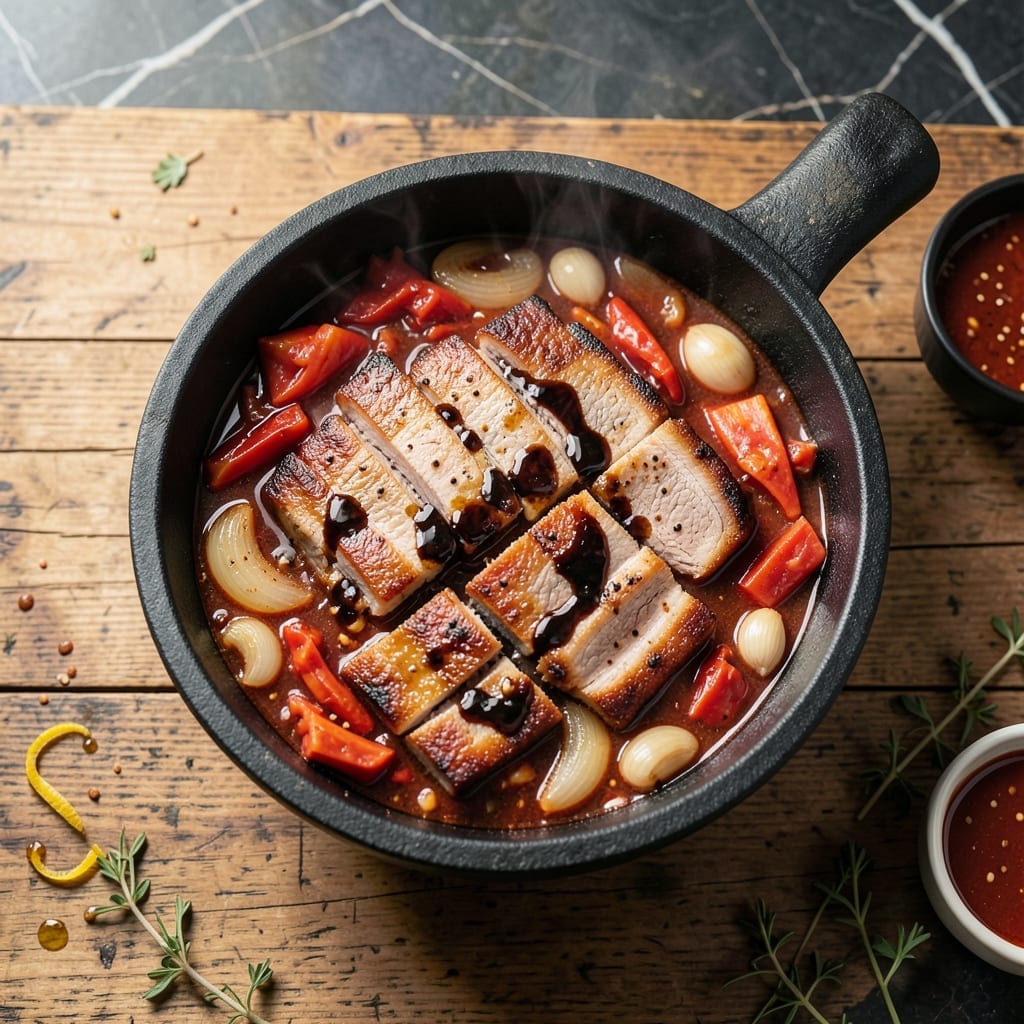
This traditional Korean stew brings bold, comforting flavors to your table with minimal effort. The one-pot method simplifies the process while delivering authentic taste and texture.
I’ve refined this recipe to balance spicy, savory, and umami notes, using classic ingredients like gochujang and kimchi. The long simmer allows the flavors to meld beautifully, creating a rich, deeply satisfying broth.
You’ll end up with tender meat, soft vegetables, and a sauce so flavorful it demands to be soaked up with rice. It’s hearty, warming, and perfect for sharing.
Serve it steaming hot for a meal that feels like a hug in a bowl. Here’s how to make it.
Ingredients for Korean Stew Pot
Pantry raid plus a quick stop at the Asian market. Big flavors, simple list.
| Ingredient | Amount | Notes |
|---|---|---|
| Pork Belly 🥩 | 1 lb | Thinly sliced, or use pork shoulder |
| Kimchi 🥬 | 2 cups | Aged, well-fermented preferred |
| Gochujang 🌶️ | 3 tbsp | Korean red pepper paste |
| Gochugaru 🌶️ | 1 tbsp | Korean red pepper flakes |
| Soy Sauce 🫒 | 2 tbsp | Low-sodium recommended |
| Sesame Oil 🫒 | 1 tbsp | Toasted for best flavor |
| Garlic Cloves 🧄 | 6 cloves | Minced for depth of flavor |
| Fresh Ginger 🌿 | 1 tbsp | Grated, peeled first |
| Onion 🧅 | 1 whole | Thinly sliced, yellow or white |
| Carrots 🥕 | 2 whole | Peeled, cut into chunks |
| Potatoes 🥔 | 2 whole | Peeled, cubed for texture |
| Green Onions 🧅 | 4 whole | Chopped, for garnish |
| Mushrooms 🍄 | 8 oz | Shiitake or cremini preferred |
| Water or Broth 💧 | 4 cups | Beef or vegetable broth works |
| Sesame Seeds 🌰 | 1 tsp | Toasted for garnish |
The kimchi is non-negotiable here. Look for aged, sour kimchi—it adds depth that fresh doesn’t. I grab mine from H Mart or a well-stocked Asian market. The gochujang should be thick, sticky, and deeply red. Sempio or Kochukaru brands are reliable. Pork belly gives the richest texture, but shoulder works in a pinch (just trim the fat). If you’re using pre-sliced pork, ask for it cut thinly—it cooks faster and absorbs more flavor.
No gochujang? Miso paste plus extra gochugaru can fake it, but the flavor won’t be the same. Substitute pork with chicken thighs or tofu for a lighter version. Fresh ginger is ideal, but ground ginger at half the amount works. The mushrooms can be any variety—shiitake for umami, cremini for earthiness. If you’re skipping the meat entirely, add extra mushrooms or korean radish for heartiness.
Leftovers taste even better the next day once everything melds. Stores 4-5 days in the fridge, freezes for 3 months. Reheat gently—too much heat can make the kimchi bitter. Always serve with rice to soak up that incredible broth (trust me on this part).
Why You’ll Love This Recipe
- One Pot Magic: I just dump pork belly, kimchi, and the sauces in and let it simmer—no fancy techniques required.
- Flavor Bomb: The gochujang and gochugaru give that deep, spicy-sweet kick that hits all the right spots.
- Meal Prep Hero: Honestly, it tastes even better the next day, so I always make a big batch for leftovers.
- Budget Stretch: Pork belly and kimchi go a long way, feeding my family for days without breaking the bank.
Step-by-Step Instructions for Korean Stew Pot
This one-pot method delivers deep, complex flavors with minimal cleanup and maximum impact.
Step 1: Sear the Pork Belly for Rich Depth
Heat a large, heavy pot or Dutch oven over medium-high heat. Add the 1 lb Pork Belly and sear until golden brown on all sides, about 5-6 minutes. This step builds a flavorful foundation and renders out some fat for cooking.
Don’t rush this process—let each piece develop a deep crust before turning. The pork belly should release easily from the pot when it’s ready to flip. Transfer the seared pork to a plate and set aside temporarily.
Step 2: Sauté Aromatics for a Fragrant Base
In the same pot, reduce heat to medium and add the 1 whole Onion, 6 cloves Garlic Cloves, and 1 tbsp Fresh Ginger. Sauté for 2-3 minutes until the onion softens and the garlic and ginger become fragrant.
Next, stir in the 2 cups Kimchi and cook for another 2 minutes to meld the flavors. The kimchi should start to soften and release its tangy, spicy juices, which will form the backbone of the stew’s broth.
Step 3: Build the Stew with Layers of Flavor
Return the seared pork belly to the pot. Add the 3 tbsp Gochujang, 1 tbsp Gochugaru, 2 tbsp Soy Sauce, and 1 tbsp Sesame Oil. Stir well to coat everything evenly with the paste, allowing the spices to bloom for 1-2 minutes.
Pour in the 4 cups Water or Broth, then add the 2 whole Carrots, 2 whole Potatoes, and 8 oz Mushrooms. Bring the mixture to a boil, then reduce heat to medium-low and let it simmer gently for 30-40 minutes.
Step 4: Simmer to Perfection and Garnish
Cover the pot and let the stew simmer until the pork belly is tender and the potatoes and carrots are fork-tender. Skim off any excess fat that rises to the surface during cooking to keep the broth clean and flavorful.
Once the stew is ready, taste and adjust seasoning if needed. Ladle into bowls and garnish with the 4 whole Green Onions and 1 tsp Sesame Seeds. The green onions add a fresh contrast, while the sesame seeds provide a nutty finish.
Pro Tips For Making Korean Stew Pot
- Render the Fat First: Start by cooking the pork belly on medium heat until the fat renders out—about 5-7 minutes. This builds a rich base for the stew and prevents greasy texture later.
- Drain the Kimchi: Squeeze excess liquid from the kimchi before adding it to the pot. I learned this the hard way—too much juice makes the stew watery instead of thick and flavorful.
- Bloom the Paste: Cook the gochujang and gochugaru in the rendered pork fat for 1-2 minutes before adding liquids. This deepens their flavor and removes any raw, bitter edge.
- Simmer Low and Slow: Once everything’s in, keep it at a gentle simmer for at least 45 minutes. Sounds tedious, but it’s the only way to get the pork belly tender without falling apart.
Essential Equipment for This Dish
Heavy-Duty Pot
A 5-6 quart Dutch oven is my go-to for this stew. The heavy cast iron distributes heat evenly and maintains consistent temperatures during the long simmer. I prefer Lodge or Le Creuset for their durability and heat retention. 💪
Wooden Spoon
Stirring with a wooden spoon prevents scratching your pot while handling the thick, sticky ingredients like gochujang. The spoon’s flat surface also helps scrape up any browned bits from the bottom of the pot, adding more flavor to your stew.
Sharp Chef’s Knife
A 8-inch chef’s knife makes quick work of slicing the pork belly, onions, and vegetables. I use my Wüsthof for precision cuts. Keep it sharp to ensure clean slices through the pork and vegetables without crushing them.
Cutting Board
A large, stable cutting board gives you plenty of space for prepping all your ingredients at once. I prefer bamboo for its gentle surface on knives and natural antimicrobial properties. It’s also easy to clean and maintain.
Measuring Spoons
Accurate measurements of the gochujang, gochugaru, and soy sauce are crucial for balanced flavors. I keep a set of magnetic measuring spoons handy for quick access. This ensures you get the right 3 tbsp and 1 tbsp measurements every time.
Ladle for Serving
A sturdy stainless steel ladle makes serving this hearty stew effortless. I like one with a long handle to avoid burns from the steaming pot. It also helps portion out the broth and solids evenly into bowls. 🥘
Nutrition Facts
Frequently Asked Questions
What kind of pot works best for this stew?
A heavy 5-6 quart Dutch oven is ideal. Its even heat distribution prevents burning during the long simmer. Avoid thin pots that can’t maintain steady medium-low heat.
Can I make this vegetarian?
Yes! Replace pork with tofu or extra mushrooms. Use vegetable broth and ensure your gochujang is vegan. The flavors will still be rich and satisfying.
How do I adjust the spice level?
Reduce or omit the gochugaru for milder heat. For extra spice, add 1 tsp more or a pinch of chili flakes. Taste and adjust gradually.
How long can I store leftovers?
Leftovers keep well in the fridge for 4-5 days or frozen for 3 months. Reheat gently to preserve the kimchi’s texture and flavor.

- 6 Oz Chocolate Chip Cookie Recipe: Perfectly Balanced Crispy Edges and Chewy Hearts - September 25, 2026
- 6-Inch Coffee Cake Recipe: Vanilla Bean Swirls and Buttery Streusel Topping - September 25, 2026
- 1 Hour Soup Recipe: Velvety Richness Without the Wait - September 25, 2026