
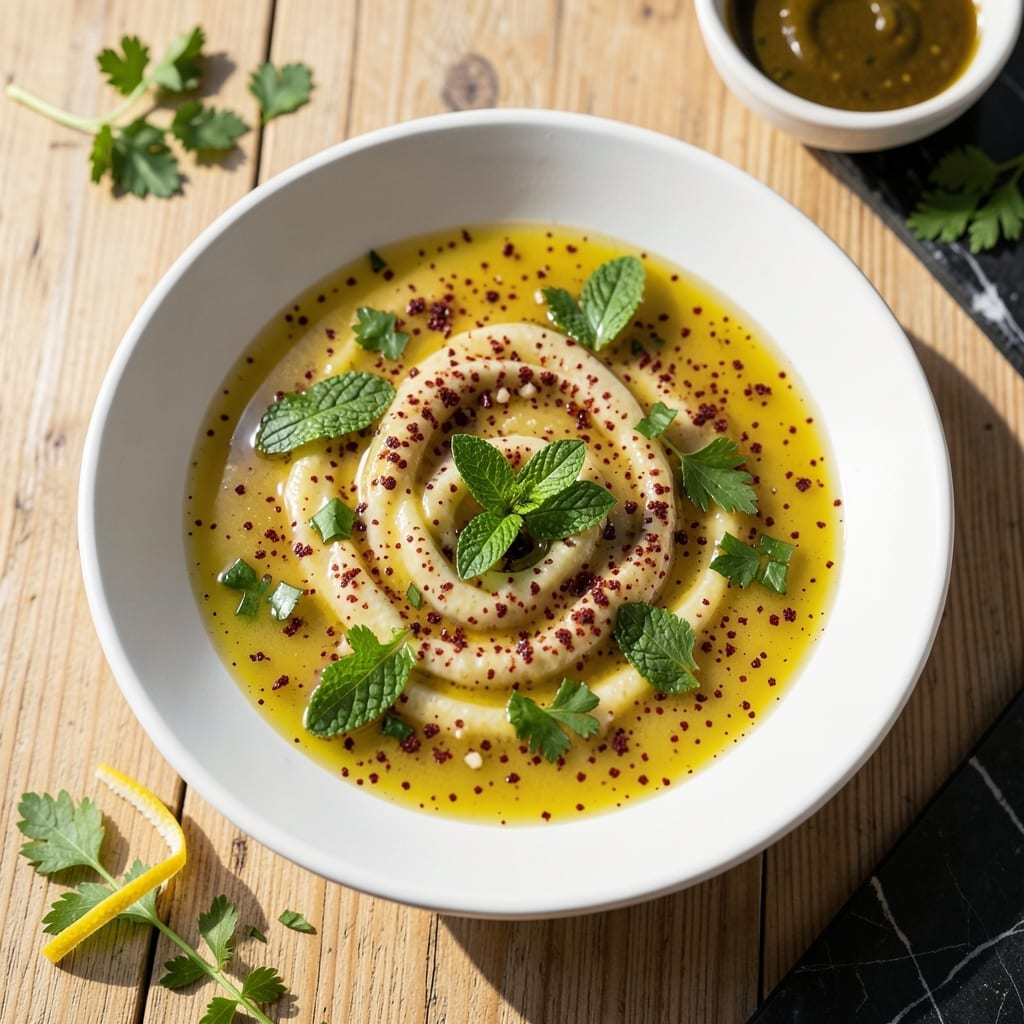
This dressing transforms fresh vegetables into an authentic Middle Eastern experience with its bright, tangy profile. The combination of sumac, lemon, and fresh herbs creates a flavor that’s both complex and refreshing.
Simple to prepare with 5 ingredients, this infusion stays fresh in the fridge for up to 5 days. It’s the perfect complement to crisp lettuce, cucumbers, and toasted pita.
Ingredients for Lebanese Fattoush Salad Dressing
Five ingredients deliver bold Middle Eastern brightness to any fresh salad.
| Ingredient | Amount | Notes |
|---|---|---|
| Extra-Virgin Olive Oil 🫒 | ½ cup | High-quality, fruity preferred |
| Fresh Lemon Juice 🍋 | ¼ cup | Newly squeezed for brightness |
| Sumac 🌶️ | 1 ½ tbsp | Ground, for tangy depth |
| Fresh Mint Leaves 🌿 | ¼ cup | Finely chopped, stems removed |
| Fresh Flat-Leaf Parsley 🍃 | ¼ cup | Finely chopped, stems removed |
| Garlic Cloves 🧄 | 2 cloves | Minced to fine paste |
| Sea Salt 🧂 | ½ tsp | Fine grain, adjust to taste |
The sumac is non-negotiable for authentic flavor—Middle Eastern markets or Penzeys carry the best quality. Look for deep red, aromatic ground sumac, not the dull brown kind. Extra-virgin olive oil should be fruity and peppery; California Olive Ranch or Cobram Estate are reliable brands. Fresh herbs are essential (the dried versions won’t give the same vibrant punch).
No sumac? Lemon zest plus a pinch of salt gets you close but isn’t the same. Swap mint for fresh dill if that’s what you’ve got growing. The garlic can be substituted with 1 tsp garlic powder in a pinch (though fresh is ideal). For a smoother dressing, blend all ingredients—immersion blender works perfectly.
Keeps beautifully in the fridge for 5 days—the flavors actually deepen over time. Store in a glass jar to preserve freshness. Shake well before each use, as the sumac tends to settle at the bottom.
Why You’ll Love This Recipe
- 5-Minute Whisk: I can make this while the bread toasts—just shake the olive oil, lemon, sumac, and herbs in a jar.
- Zingy Sumac Pop: That tangy sumac with fresh mint and parsley gives it a bright, herby kick that’s ridiculously addictive.
- Dressing & Dip: I use it on fattoush, drizzle it over grilled chicken, or serve as a dip with warm pita. Honestly, it’s my secret weapon.
- Budget-Friendly Staples: No fancy ingredients—just pantry olive oil, a lemon, and herbs I already grow. Saves me a trip to the store.
Step-by-Step Instructions for Lebanese Fattoush Salad Dressing
Master this technique to create a vibrant, herb-infused dressing that elevates any salad.
Step 1: Mince the Aromatics
Begin by finely mincing the 2 cloves garlic cloves to a paste-like consistency. This ensures the garlic distributes evenly throughout the dressing without overpowering any single bite.
Next, finely chop the 0.25 cup fresh mint leaves and 0.25 cup fresh flat-leaf parsley, removing all stems for a smooth texture. The herbs should be small enough to suspend in the liquid rather than settle at the bottom.
Step 2: Combine the Liquid Base
In a medium bowl, whisk together the 0.5 cup extra-virgin olive oil and 0.25 cup fresh lemon juice until the mixture begins to emulsify slightly. Use a high-quality, fruity olive oil for the best flavor profile.
The acidity of the lemon juice will balance the richness of the oil, creating a harmonious base for the other ingredients. Whisk vigorously for at least 30 seconds to ensure proper integration.
Step 3: Incorporate Seasonings
Add the 1.5 tbsp sumac to the oil-lemon mixture. Sumac provides the signature tangy depth characteristic of authentic fattoush dressing. Stir well to dissolve any clumps.
Next, add the minced garlic, chopped herbs, and 0.5 tsp sea salt. The sea salt enhances all the flavors while allowing you to adjust the seasoning to taste later if needed.
Step 4: Rest and Infuse
Let the dressing sit at room temperature for at least 10-15 minutes to allow the flavors to meld together. This resting period is crucial for the herbs to infuse the oil and for the sumac to fully hydrate.
You’ll notice the dressing becomes more fragrant and the colors deepen as it rests. Taste and adjust the seasoning if necessary, though the initial measurements should provide perfect balance.
Step 5: Whisk and Serve
Just before serving, give the dressing a final vigorous whisk to re-emulsify any separated components. The dressing should appear slightly thickened with herbs suspended throughout.
Drizzle generously over your fattoush salad, ensuring each component gets coated. The dressing keeps in the refrigerator for up to 3 days, though it’s best used fresh when the herb flavors are most vibrant.
Pro Tips For Making Lebanese Fattoush Salad Dressing
- Whisk Vigorously: I learned this the hard way—give the olive oil and lemon juice a good 30 seconds of brisk whisking to emulsify properly, or the dressing will separate within minutes.
- Bloom the Sumac: Toast the sumac in a dry pan for 10-15 seconds before adding it to the dressing. Sounds weird, but it wakes up the flavor.
- Skip the Dried Herbs: Fresh mint and parsley are non-negotiable here. Dried versions taste flat and gritty no matter how much you crush them.
- Rest 10 Minutes: Let the dressing sit for at least 10 minutes before using—this gives the sumac and herbs time to infuse the oil and lemon juice.
Dietary Considerations for lebanese fattoush salad dressing
Naturally Vegan
This dressing is inherently vegan with no animal products—just plant-based ingredients delivering bold Middle Eastern flavors. The extra-virgin olive oil and fresh herbs provide richness without dairy or eggs.
Gluten-Free Friendly
All ingredients—sumac, lemon juice, olive oil—are naturally gluten-free. Just ensure your sumac is pure and free from additives, as some brands may include anti-caking agents.
Low-Carb & Keto
With only 2g net carbs per serving (about 2 tbsp), this fits perfectly into keto or low-carb diets. The healthy fats from olive oil provide sustained energy without spiking blood sugar. 💪
Allergen Information
This dressing is free from common allergens like dairy, nuts, and soy. However, always check your sumac label for potential cross-contamination if you have severe allergies.
Sodium Control
You control the salt content here. Start with the recipe’s 0.5 tsp sea salt, then adjust to taste. Using low-sodium sumac (available at specialty stores) reduces sodium further.
Nut-Free
No nuts are used in this traditional recipe, making it safe for those with nut allergies. Just verify your olive oil and sumac are processed in nut-free facilities if allergies are severe. 🌿
Nutrition Facts
Frequently Asked Questions
Can I use dried herbs instead of fresh?
Fresh herbs are ideal for vibrant flavor, but you can use dried in a pinch. Reduce to 1 tbsp each of mint and parsley, as dried are more concentrated. The taste won’t be as bright, but it’ll still work.
Why does the dressing need to rest?
Resting for 10-15 minutes lets the sumac hydrate and the herbs infuse the oil. This step ensures the flavors blend properly for that authentic tangy depth.
Can I make this ahead?
It stays fresh in the fridge for up to 5 days. Store in a glass jar and shake well before using, as the sumac may settle. The flavors actually improve over time.
What if I don’t have sumac?
Use 1 tbsp lemon zest plus a pinch of salt for a similar tang. It won’t be identical, but it’s a decent substitute in emergencies.

- 4C Bread Crumbs Meatballs Recipe: Crispy Crust and Juicy Centers - September 25, 2026
- 6 Oz Chocolate Chip Cookie Recipe: Perfectly Balanced Crispy Edges and Chewy Hearts - September 25, 2026
- 6-Inch Coffee Cake Recipe: Vanilla Bean Swirls and Buttery Streusel Topping - September 25, 2026