
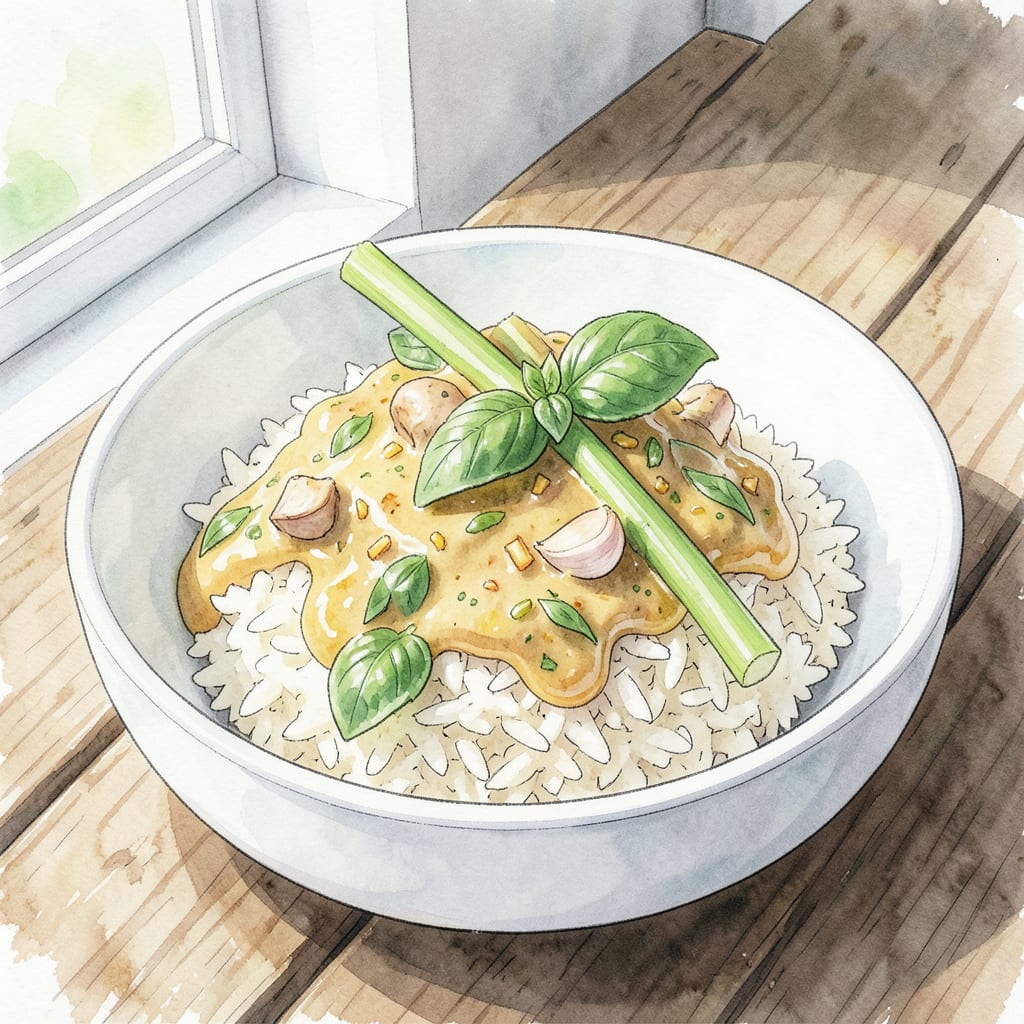
I’ve perfected a lemongrass basil sauce that captures the essence of Thai cuisine. This versatile condiment combines the brightness of fresh basil with the citrusy zing of lemongrass, creating a flavor profile that’s both aromatic and refreshing.
Use this sauce to elevate your dishes – it’s perfect for drizzling over grilled meats, seafood, or vegetables. The sauce stores well in the refrigerator, allowing you to enjoy its vibrant flavors throughout the week.
Ingredients for Lemongrass Basil Sauce
Simple ingredients, big flavor – that’s the magic of this Thai-inspired sauce.
| Ingredient | Amount | Notes |
|---|---|---|
| Fresh Basil Leaves 🌿 | 1 ½ cups | Packed, stems removed |
| Lemongrass Stalks 🌱 | 3 whole | Trimmed, bruised |
| Garlic Cloves 🧄 | 4 cloves | Peeled, minced |
| Ginger Root �根 | 2 tbsp | Fresh, grated |
| Fish Sauce 🐟 | 2 tbsp | Or vegan alternative |
| Lime Juice 🍋 | ¼ cup | Freshly squeezed |
| Rice Vinegar 🥘 | 2 tbsp | Or white wine vinegar |
| Olive Oil 🫒 | ½ cup | Neutral-tasting oil |
| Salt 🧂 | ½ tsp | Kosher or sea salt |
| Black Pepper 🌶️ | ¼ tsp | Freshly ground |
The quality of your basil and lemongrass matters. Farmers markets often have the best selection – look for vibrant green leaves and firm stalks. If you’re using grocery store herbs, make sure they’re fresh. I like to grab extra basil so I can use some in the sauce and sprinkle some on top as a garnish.
No lemongrass? You can substitute with a combination of lemon zest and fresh ginger – it won’t be the same, but it’ll get you close. For a vegan version, swap the fish sauce for nam pla or coconut aminos. If you’re using Trader Joe’s pre-minced ginger, that’s a huge time-saver.
This sauce keeps for 1 week in the fridge – the flavors meld together beautifully over time. Store it in an airtight container with a thin layer of oil on top to keep it fresh. You can also freeze it for 3 months – just thaw and give it a good stir before using.
Step-by-Step Instructions for Lemongrass Basil Sauce
Creating this aromatic sauce is straightforward and rewarding, with layers of flavor that come together beautifully.
Step 1: Prepare the Aromatic Ingredients
Start by preparing the aromatic ingredients that form the foundation of this sauce. Take the 3 whole Lemongrass Stalks and bruise them using the back of a knife or a meat mallet to release their essential oils. This process helps to infuse the sauce with that characteristic lemongrass flavor and aroma. Next, peel and mince the 4 cloves Garlic Cloves, making sure they’re finely chopped to distribute their flavor evenly throughout the sauce.
Grate the 2 tbsp Ginger Root using a microplane or fine grater, being careful to avoid grating your fingers in the process. The freshness of the ginger is crucial here, as it adds a warm, spicy depth to the sauce that complements the other ingredients beautifully.
Step 2: Blend the Flavor Base
In a blender or food processor, combine the bruised 3 whole Lemongrass Stalks, minced 4 cloves Garlic Cloves, and grated 2 tbsp Ginger Root. Add the 2 tbsp Fish Sauce and 0.25 cup Lime Juice to the blender. Blend these ingredients on high speed until you achieve a smooth, well-emulsified mixture. You’ll know it’s ready when the mixture is vibrant green and has a uniform consistency.
Stop the blender occasionally to scrape down the sides with a spatula, ensuring that all the ingredients are fully incorporated. This step is crucial for developing the complex flavor profile that this sauce is known for.
Step 3: Emulsify with Oil and Season
With the blender running on low speed, slowly pour in the 0.5 cup Olive Oil in a thin, steady stream. This slow addition is key to creating a stable emulsion that won’t separate later. Continue blending until the sauce is smooth and creamy, stopping to scrape down the sides as needed.
Once the sauce is emulsified, add the 1.5 cups Fresh Basil Leaves, 2 tbsp Rice Vinegar, 0.5 tsp Salt, and 0.25 tsp Black Pepper. Blend just until the basil is finely chopped and the sauce is vibrant green. Be careful not to over-blend, as this can cause the sauce to become too thin or the basil to become bitter.
Step 4: Taste and Adjust
Taste the sauce and adjust the seasoning as needed. If it needs more acidity, add a bit more Lime Juice. If it needs more depth, add a bit more Fish Sauce. The key is to balance the flavors so that no single ingredient dominates the others.
Transfer the sauce to an airtight container and refrigerate for at least 30 minutes to allow the flavors to meld together. Before serving, give the sauce a good stir and adjust the seasoning again if necessary.
Troubleshooting lemongrass basil sauce
Common Blending Issues
Sometimes the sauce doesn’t emulsify properly, leaving you with a separated mess. This usually happens when the oil is added too quickly or the blender isn’t powerful enough. To fix this, try re-blending the sauce with a bit more lime juice and slowly drizzling in some additional olive oil while blending. 🔄
Fixing Flavor Imbalances
If your sauce tastes too fishy from the fish sauce, balance it out with a squeeze of fresh lime juice and a bit more basil. Too bland? Add a pinch of salt to bring out the flavors. Remember, the flavors will meld together as it chills, so give it at least 30 minutes before serving.
Preventing Basil Bitterness
Over-blending can make the basil taste bitter. To avoid this, add the basil at the end and pulse just until it’s chopped. If you notice bitterness, try adding a tiny bit more olive oil or lime juice to balance it out. Some people prefer adding basil leaves right before serving for maximum freshness.
Storage Troubleshooting
If your sauce separates in the fridge, don’t worry! Simply give it a vigorous stir or a quick blend to re-emulsify. If it’s too thick, thin it out with a bit more lime juice or olive oil. Store it in an airtight container with plastic wrap pressed directly on the surface to prevent oxidation.
Adjusting Consistency
Too thick? Thin it with a bit more lime juice or olive oil. Too thin? Refrigerate for 30 minutes to allow it to thicken. You can also add a tiny bit more rice vinegar to help thicken without changing the flavor profile much. 🌟
Reviving Old Sauce
If your sauce has been in the fridge for a few days and lost some vibrancy, revive it with a squeeze of fresh lime juice and a sprinkle of fresh basil leaves. This usually brings back the brightness and freshness. If it’s developed off-flavors, it’s best to make a fresh batch.
Nutrition Facts

- 8 Bean Soup Recipe Crock Pot: Hearty Vegetable Medley in One Pot - September 25, 2026
- 4C Bread Crumbs Meatballs Recipe: Crispy Crust and Juicy Centers - September 25, 2026
- 6 Oz Chocolate Chip Cookie Recipe: Perfectly Balanced Crispy Edges and Chewy Hearts - September 25, 2026