
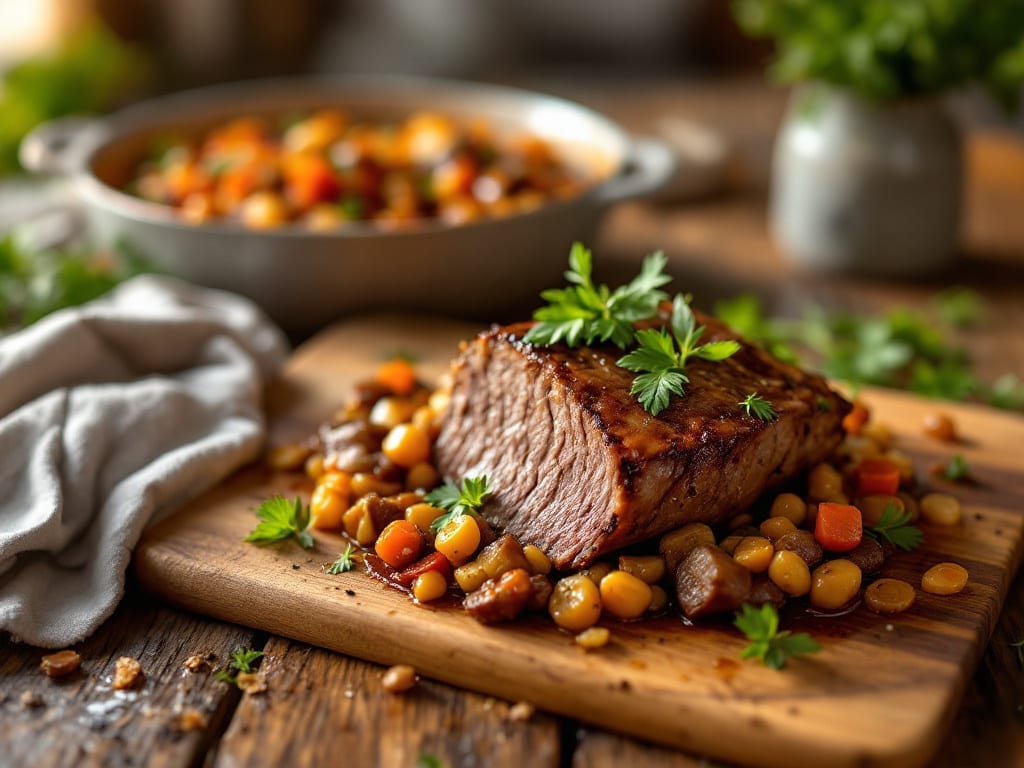
Transforming a simple pot roast into a restaurant-worthy centerpiece starts with this Lipton Onion Soup Mix pot roast recipe, where slow-cooked beef meets deep umami flavors.
The secret lies in using the soup mix as a dry rub—its savory, caramelized notes penetrate the meat as it tenderizes, creating layers of complexity that elevate humble beef cuts.
I perfected this method after years of testing, balancing traditional slow-cooking techniques with modern shortcuts like the Instant Pot or Dutch oven for foolproof results.
The beauty of this recipe is its versatility—whether you’re using a chuck roast or bottom round, the onion soup mix infuses the meat with a rich, caramelized depth that rivals hours of marinating.
The slow cook transforms tough cuts into melt-in-your-mouth perfection, while the mix’s natural sugars and spices create a crust that locks in moisture. This isn’t just comfort food; it’s a professional-quality dish that delivers restaurant-style satisfaction at home.
By the time your roast emerges from the slow cooker or Dutch oven, it will be fork-tender with a caramelized exterior that promises every bite is bursting with flavor. The aroma alone—warm, savory, and slightly sweet—will have everyone gathering around the table.
Serve it with classic sides like mashed potatoes and roasted carrots to complete the meal. The combination of techniques and ingredients ensures this pot roast becomes a weekly staple.
This recipe works equally well for weeknight dinners or holiday gatherings, scaling effortlessly for crowds. The key is patience—letting the meat cook low and slow while the onion soup mix works its magic.
Whether you’re using a traditional oven, slow cooker, or Instant Pot, the result is the same: deep, umami-rich beef that tastes like it simmered all day. Let’s get started on this crowd-pleasing masterpiece.
Ingredients for lipton onion soup mix pot roast
Fourteen ingredients transform humble beef into restaurant-quality pot roast with deep umami richness.
| Ingredient | Amount | Notes |
|---|---|---|
| Beef Chuck Roast 🥩 | 3 lb | Center-cut for even cooking |
| Lipton Onion Soup Mix 🧅 | 4 tbsp | Original flavor preferred |
| Extra-Virgin Olive Oil 🫒 | 2 tbsp | For searing beef |
| Yellow Onion 🧅 | 1 whole | Thinly sliced for caramelization |
| Garlic Cloves 🧄 | 6 cloves | Minced for aromatic base |
| Beef Broth 💧 | 2 cups | Low-sodium preferred |
| Red Wine 🍷 | 1 cup | Dry Cabernet Sauvignon |
| Tomato Paste 🍅 | 2 tbsp | Smooth consistency |
| Diamond Crystal Kosher Salt 🧂 | 1 ½ tsp | Adjust to taste |
| Fresh Thyme 🌿 | ½ tsp | Dried thyme substitute |
| Black Peppercorns 🌶️ | ½ tsp | Freshly cracked |
| Carrots 🥕 | 4 whole | Whole for easy handling |
| Celery Stalks 🥬 | 3 whole | Trimmed and chopped |
| Potatoes 🥔 | 2 lb | Russet or Yukon Gold |
The beef cut is non-negotiable—chuck roast delivers that melt-in-your-mouth texture when cooked low and slow. Costco or local butcher shops consistently carry high-quality chuck, often at better prices than grocery stores. Look for cuts with good marbling; this fat renders during cooking, basting the meat and ensuring moisture. The Lipton Onion Soup Mix serves as both seasoning and flavor catalyst—its umami profile develops during the slow cook, creating a caramelized crust. Original flavor is essential; onion soup varieties with added herbs won’t deliver the same depth. For the wine, Cabernet Sauvignon provides the right balance of acidity and tannins to cut through the richness without overpowering the onion notes. The tomato paste adds body and a subtle sweetness that rounds out the flavor profile.
No red wine? Substitute with beef broth plus 1 tbsp balsamic vinegar—the acidity remains, though the tannins will differ slightly. Fresh thyme is ideal, but dried at one-third the amount works in a pinch. The Diamond Crystal kosher salt is recommended because its larger granules dissolve more evenly, allowing for precise seasoning adjustments. For the vegetables, baby carrots or pre-cut celery from Trader Joe’s save time without sacrificing quality. The potatoes can be swapped for sweet potatoes if preferred, though they’ll absorb more of the rich cooking liquid. If using frozen vegetables, thaw and pat dry to prevent excess moisture in the Dutch oven or slow cooker.
This dish tastes even better the next day as flavors meld further. Store in an airtight container in the refrigerator for up to 5 days, or freeze portions for 3 months—the slow-cooked beef reheats beautifully. For holiday gatherings, double the recipe; a 6-quart Dutch oven handles 6 servings comfortably. The vegetables can be added raw or parboiled—parboiling ensures they’re tender but still hold their shape. Leftovers reheat well in the microwave or oven; add a splash of beef broth to prevent drying. The caramelized crust is best preserved by letting the roast rest for 10 minutes before slicing, allowing juices to redistribute.
Why You’ll Love This Recipe
- Pantry Magic: The second I grab that Lipton mix from the cupboard, I’m already halfway to dinner. No fancy prep—just a quick sear in olive oil, a sprinkle of seasoning, and the slow cooker does the rest while I sip wine or fold laundry.
- Deep Umami Bomb: That onion soup mix? It’s like a flavor bomb—caramelized onions, garlic, and herbs clinging to the beef until it’s fall-apart tender. Honestly, I’ve never met a pot roast that hits harder for the effort.
- Game Day Hero: Between us, this is my go-to for game days or unexpected company. Serve it over mashed potatoes or crusty bread, and suddenly you’re the host who actually fed everyone. (Yes, even on a Tuesday night.)
- Budget Stretch: A chuck roast feeds six for under $20, and leftovers? They’re even better the next day. I’ll be real: this is how I got through grad school without eating ramen every night.
Step-by-step instructions for slow-cooked pot roast with umami depth
This method transforms simple ingredients into a deeply flavorful pot roast using slow cooking techniques.
Sear the Beef Chuck Roast for Maximum Flavor
Pat the 3 lb beef chuck roast dry with paper towels to remove any surface moisture. Heat a Dutch oven over medium-high heat and add 2 tablespoons extra-virgin olive oil. Once the oil shimmers, place the roast in the pan and sear on all sides until deeply browned, about 4-5 minutes per side. This step develops a rich crust that locks in moisture and intensifies the flavor.
While the roast sears, prepare the vegetables: Peel and trim the 3 whole celery stalks and 4 whole carrots into 2-inch pieces. Thinly slice the 1 whole yellow onion into ¼-inch rounds. Set these aside—they’ll form the aromatic base for your roast.
Real talk: Don’t rush this searing step. You want that beautiful mahogany crust that signals deep flavor development. If your pan gets too crowded, work in batches to maintain proper heat.
Build the Umami-Packed Base
Remove the seared roast from the Dutch oven and set it aside. In the same pot, add the sliced yellow onion, chopped celery, and carrots. Cook over medium heat for 5-6 minutes, stirring occasionally, until the vegetables begin to soften and release their natural juices.
Add the 6 minced garlic cloves and cook for 30 seconds until fragrant. This quick cooking prevents the garlic from burning while maximizing its aromatic potential. Stir in the 2 tablespoons tomato paste and cook for another 1 minute, allowing it to caramelize slightly and deepen its flavor.
Here’s where the magic happens: Sprinkle the 4 tablespoons Lipton onion soup mix evenly over the vegetables. This isn’t just seasoning—it’s the umami foundation that will infuse the entire dish. Stir everything together and let it cook for 2 minutes to toast the soup mix and release its flavors.
Deglaze and Combine All Ingredients
Pour in the 1 cup red wine and scrape up any browned bits from the bottom of the pot with a wooden spoon. This deglazing step captures all the flavor compounds that would otherwise burn. Let the wine simmer for 3-4 minutes until it reduces by half and the alcohol content cooks off.
Add the 2 cups beef broth, 1.5 teaspoons diamond crystal kosher salt, 0.5 teaspoon fresh thyme, and 0.5 teaspoon black peppercorns. Return the seared roast to the pot, placing it on top of the vegetables. The roast should be mostly submerged in the liquid—if not, add a splash of water or broth.
Bring the mixture to a gentle simmer, then reduce heat to low. The liquid should bubble softly but not vigorously. Cover the pot with a tight-fitting lid and transfer it to a 300°F oven or place it on a stovetop burner set to low heat. This gentle cooking method ensures tender meat without toughening the vegetables.
Cook Until Fork-Tender
Let the pot roast cook for 3-4 hours until the beef is fork-tender. You’ll know it’s ready when a meat thermometer inserted into the thickest part reads 203°F—this is the “probe-tender” stage where the meat practically falls apart. The vegetables should also be tender but still hold their shape.
About 30 minutes before the roast is done, peel and cut the 2 lb potatoes into 1-inch chunks. Add them to the pot and stir gently to distribute them among the other vegetables. The potatoes will absorb the rich flavors of the cooking liquid and become creamy from the residual heat.
Don’t skip this resting period. Once the roast reaches the proper internal temperature, remove it from the heat and let it rest for 15 minutes before serving. This allows the juices to redistribute throughout the meat, preventing them from running out when you slice. The vegetables will also continue to absorb flavors during this time.
Serve with Pan Sauce
After resting, carefully transfer the roast to a cutting board and slice it against the grain into ¼-inch thick pieces. The meat should be incredibly tender, practically melting in your mouth. Return the sliced roast to the pot with the vegetables and potatoes.
To serve, ladle the cooking liquid over the top, creating a rich pan sauce. The vegetables should be tender-crisp with a deep golden color, and the potatoes should be creamy from soaking up the flavorful juices. This dish delivers maximum umami flavor through the Lipton onion soup mix while maintaining the classic comfort of a well-executed pot roast.
Each bite should offer a perfect balance of tender beef, caramelized vegetables, and the deep, savory notes from the slow-cooked broth. The potatoes act as a natural thickener for the sauce, creating a cohesive eating experience without needing additional cornstarch or flour.
Pro Tips For Making Lipton Onion Soup Mix Pot Roast
- SEAR THE ROAST FIRST: That dry, golden crust isn’t just for looks—it’s what locks in flavor and moisture. Hit the beef with high heat in olive oil for 4-5 minutes per side until deep brown, then pull it out and let it rest while you build the soup base. I used to skip this, and the meat always ended up tougher—don’t make my mistake.
- BLOOM THE ONION SOUP MIX: Toss the Lipton mix with a splash of cold water (about 2 tablespoons) and let it sit for 30 seconds before adding it to the pot. This wakes up the spices so they release their aroma instead of just dissolving into the broth. Sounds weird, but it works—your soup will taste richer from the first bite.
- DON’T SKIP THE BROWNING: The onion and garlic need to go from raw to golden, not just soft. Cook them low and slow for 8-10 minutes, stirring often, until they’re caramelized—not just translucent. Rushed onions = bland soup. (Yes, I know, you’re impatient like me, but trust the process.)
- USE BEEF BROTH, NOT WATER: The recipe might call for water, but swap it for 2 cups of beef broth instead. It adds depth the Lipton mix can’t match, and you won’t need to adjust seasoning later. I was skeptical until I tried it—the difference is noticeable, especially if you’re serving this with crusty bread.
Troubleshooting this dish
Undercooked Roast?
If your pot roast isn’t tender enough after 3-4 hours, check your internal temperature—it needs to reach 203°F for true fork-tenderness. I’ve found that using a meat thermometer (like the Thermoworks Smoke) is non-negotiable for accuracy.
If your roast is still firm, return it to the oven at 300°F for another 30-60 minutes, basting with pan juices every 15 minutes. The Lipton Onion Soup Mix contains natural sugars that help tenderize, but patience is key—don’t rush this process. 🌡️
Dry or Tough Meat?
Overcooking is the usual culprit for dry pot roast. Once your beef reaches 203°F, remove it immediately and let it rest for 15 minutes before slicing—this redistributes juices.
If your roast was cooked too long, try this recovery trick: Slice it thinly against the grain and serve with extra pan sauce or a white wine reduction (simmer ½ cup white wine with 1 tbsp butter for 3 minutes).
The onion soup mix’s moisture content helps prevent dryness, but timing is everything. ⏰
Vegetables Too Soft?
If your carrots and celery turn to mush, they were likely overcooked. Add potatoes 30 minutes before the roast finishes—they absorb liquid quickly. For firmer veggies, parboil them for 5 minutes before adding to the pot.
The Lipton Onion Soup Mix caramelizes beautifully, so don’t skip its 2-minute toasting step—this adds depth without overpowering the vegetables. 🥕
Weak Flavor Profile?
The onion soup mix is your flavor anchor, but if the dish tastes bland, boost it with these fixes: Add 1 tsp smoked paprika when searing the beef, or deglaze with ½ cup beef broth + 1 tbsp Worcestershire sauce instead of wine.
For extra umami, stir in 1 tbsp soy sauce during the final 30 minutes of cooking. The mix’s caramelization needs time—don’t rush the slow cook. 💡
Sauce Too Thin?
A watery sauce usually means the roast wasn’t submerged enough. For future attempts, add ¼ cup less liquid initially and reduce uncovered for 10 minutes before adding the roast.
If your sauce is already thin, thicken it by mixing 1 tbsp cornstarch with 2 tbsp cold water, then whisking into the pot and simmering for 3-5 minutes. The potatoes help thicken naturally, but this backup ensures perfect consistency. 🍲
Potatoes Not Creamy?
For ultra-creamy potatoes, parboil them for 8 minutes before adding to the pot. The residual starch from the parboiling creates a silky texture. If they’re still firm, mash them separately with some of the pan juices and butter—this gives you restaurant-quality mashed potatoes without extra effort.
The onion soup mix’s caramelized notes pair perfectly with creamy potatoes. 🥔
Nutrition facts
Frequently asked questions
Can I use a different cut of beef for this recipe?
While chuck roast is ideal for its marbling and tenderness, you can substitute with bottom round or short ribs. For round cuts, increase cooking time by 30-45 minutes to reach 203°F. Short ribs will be ready in about 2.5-3 hours—their natural collagen makes them extra tender. The Lipton Onion Soup Mix works beautifully with all these cuts, enhancing their beefy flavor.
How do I make this in an Instant Pot?
Sear the roast as directed, then add all ingredients except potatoes to your Instant Pot. Cook on high pressure for 60 minutes, then quick-release. Add potatoes and cook on low pressure for 10 minutes. The onion soup mix caramelizes differently in pressure cooking, so reduce the amount to 3 tablespoons and add 1 extra tablespoon tomato paste for depth. Always check for doneness with a thermometer.
Can I prepare this ahead of time?
This dish tastes even better the next day! Cook the roast completely, then refrigerate in an airtight container for up to 5 days. Reheat in the oven at 325°F for 20-30 minutes with a splash of beef broth to restore moisture. The flavors deepen overnight as the onion soup mix continues to meld with the beef. For freezing, portion and freeze for up to 3 months—thaw overnight in the fridge before reheating.
What if I don’t have red wine?
No problem! Replace the wine with 1 cup beef broth + 1 tablespoon balsamic vinegar for acidity. For extra depth, add 1 teaspoon soy sauce to the mix. The onion soup mix’s umami will still shine, though wine adds complexity. If using broth only, reduce it by ¼ cup since it lacks alcohol’s evaporative properties. The dish will still be rich and satisfying.
How can I make this dish healthier?
Swap regular beef for leaner cuts like sirloin tip roast and reduce the onion soup mix to 3 tablespoons. Use low-sodium beef broth and skip the wine, replacing with extra broth. Add 1 cup cauliflower florets with the potatoes for a lighter veggie mix. The dish retains its savory depth while cutting calories by about 20%. The onion mix still provides great flavor without excess salt.

- Baked Potatoes in Crock Pot Recipe: Buttery Interiors and Crispy Top Magic - November 1, 2026
- Braised Beef Short Ribs Recipe: Crock Pot Fall-Off-Bone Magic in 6 Hours - November 1, 2026
- Crock Pot Cocoa Recipe: Velvety Warmth With Hidden Spice Magic - November 1, 2026