
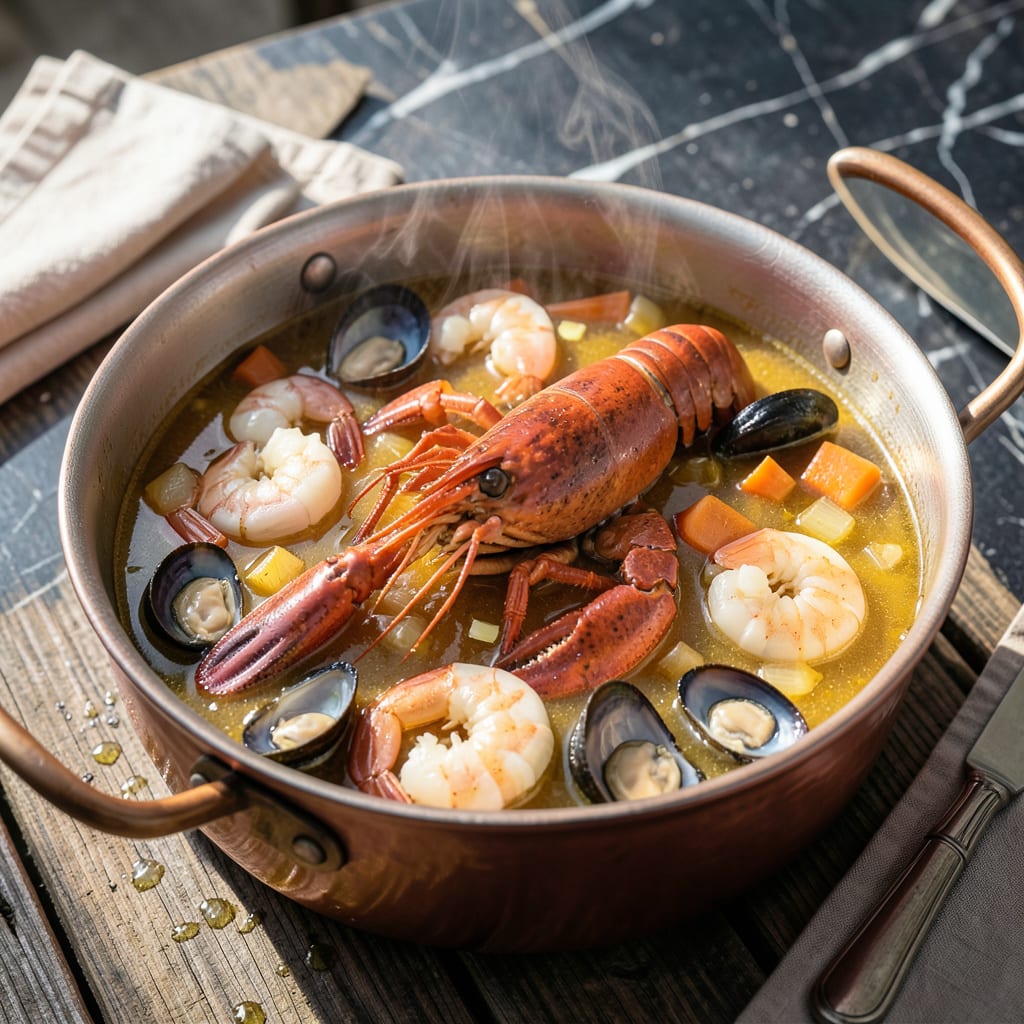
This New England classic brings the coast to your table with a rich, buttery broth brimming with fresh seafood. The secret lies in layering flavors from the ocean—lobster, clams, and shrimp—with aromatic vegetables and herbs.
In under an hour, you’ll have a restaurant-quality feast that captures the essence of a seaside boil. Serve with crusty bread to soak up every drop of the savory broth.
Ingredients for Lobster Pot
Fresh seafood and aromatic vegetables build the foundation for this coastal classic.
| Ingredient | Amount | Notes |
|---|---|---|
| Live Lobster 🦞 | 4 whole | 1.5 lb each, fresh |
| Littleneck Clams 🦪 | 24 whole | Scrubbed clean before cooking |
| Large Shrimp 🍤 | 1 lb | Peeled and deveined, tails on |
| Unsalted Butter 🧈 | 1 cup | Divided for broth and serving |
| Yellow Onion 🧅 | 1 whole | Medium, roughly chopped |
| Carrots 🥕 | 2 whole | Peeled and sliced into rounds |
| Celery Stalks 🌿 | 2 whole | Sliced into chunks |
| Garlic Cloves 🧄 | 4 cloves | Smashed for bold flavor |
| Fresh Thyme 🌿 | 4 sprigs | Plus extra for garnish |
| Fresh Bay Leaves 🍃 | 2 whole | Removed before serving |
| White Wine 🍷 | 1 cup | Dry variety like Sauvignon Blanc |
| Seafood Stock 💧 | 4 cups | Or substitute fish stock |
| Old Bay Seasoning 🌶️ | 1 tbsp | Classic seafood spice blend |
| Kosher Salt 🧂 | 1 tbsp | Adjust to taste |
| Freshly Ground Black Pepper 🌶️ | 1 tsp | To taste |
| Fresh Parsley 🌿 | ¼ cup | Chopped, for garnish |
The lobster is the star—1.5 lb live lobsters are ideal. Whole Foods or a trusted fishmonger will have them fresh. Look for active lobsters (they should move when handled). The clams need a good scrub under cold water, and discard any that don’t close when tapped. For shrimp, large or jumbo hold up best. The butter should be unsalted so you control the seasoning.
No live lobster? Frozen lobster tails work (thaw first). Out of clams? Mussels at a 1:1 swap. The wine can be any dry white—Pinot Grigio or Chardonnay if you don’t have Sauvignon Blanc. No seafood stock? Chicken stock plus a splash of clam juice gets you close. Old Bay is non-negotiable for that New England flavor (find it in the spice aisle at any grocery store).
The broth is even better the next day—store in the fridge for up to 2 days. Freeze the seafood separately from the broth for up to 3 months. Reheat gently to keep the lobster tender (don’t boil). Always serve with crusty bread—it’s mandatory for soaking up that buttery broth.
Why You’ll Love This Recipe
- One Pot Wonder: I just dump everything in—lobster, clams, shrimp, onion, butter—and let the pot do the work.
- Buttery Heaven: The butter soaks into every bite, and the seafood tastes like it came from a high-end restaurant.
- Impresses Every Time: I serve this at dinner parties and everyone thinks I slaved for hours.
- Next-Day Magic: Honestly, the leftovers taste even better the next day in a buttery seafood roll.
Step-by-Step Instructions for New England-Style Seafood Feast
This method ensures every bite is packed with briny, buttery flavor from the ocean.
Step 1: Prepare the Aromatic Base
In a large stockpot, melt ½ cup of the unsalted butter over medium heat. Add the roughly chopped yellow onion, sliced carrots, and chunked celery stalks. Sauté for 5-7 minutes until the vegetables soften and the onions turn translucent.
Stir in the smashed garlic cloves, fresh thyme, and fresh bay leaves. Cook for another 2 minutes until the garlic becomes fragrant. This builds a rich, aromatic foundation that infuses every component of your seafood pot.
Step 2: Add Liquids and Seasonings
Pour in the white wine and seafood stock. Increase the heat to medium-high and bring the mixture to a gentle boil. Stir in the Old Bay seasoning, kosher salt, and freshly ground black pepper.
Let this simmer for 10 minutes to allow the flavors to meld together. The liquid should be fragrant and slightly reduced, creating a flavorful broth that will cook the seafood perfectly.
Step 3: Cook the Seafood in Stages
Add the littleneck clams first, covering the pot with a lid. Cook for 5-7 minutes until the clams begin to open. Discard any clams that do not open—this is a safety must.
Next, add the large shrimp and the remaining ½ cup unsalted butter. Cook for 3-4 minutes until the shrimp turn pink and opaque. Finally, add the live lobster, covering the pot again. Cook for 8-10 minutes until the lobster shells turn bright red and the meat is cooked through.
Step 4: Finish and Serve
Remove the pot from heat. Discard the bay leaves and any remaining thyme sprigs. Taste the broth and adjust the seasoning with additional kosher salt or freshly ground black pepper if needed.
Ladle the seafood and broth into large bowls, making sure each serving gets a generous portion of lobster, clams, and shrimp. Garnish with the chopped fresh parsley for a bright, fresh finish. Serve immediately with crusty bread to soak up the delicious broth.
Pro Tips For Making Lobster Pot
- Shock the Lobster: Plunge live lobster into boiling water headfirst for exactly 8 minutes per pound—I learned this the hard way after ending up with rubbery meat more than once.
- Purge the Clams: Soak littleneck clams in salted water with a splash of cornmeal for 30 minutes before cooking; it forces them to spit out grit, and yes, it actually changes the outcome.
- Skip Overcrowding: Cook shrimp and clams in batches if needed—steaming too many at once drops the temperature and leaves you with tough seafood.
- Use the Shells: After removing lobster meat, toss the shells into the pot with onions and butter for 10 minutes to build a richer broth—sounds weird, but it works.
Pro Cooking Tips for Great lobster pot
Pot Selection Matters
A heavy-bottomed stockpot with a tight-fitting lid is essential. I use my 8-quart Le Creuset Dutch oven—it distributes heat evenly and has enough capacity for all the seafood. The lid must seal tightly to trap steam and cook everything efficiently. 🔥
Layer Flavors Properly
Don’t rush the aromatic base. Sauté the onion, carrots, and celery until they’re truly soft—this builds the sweet, savory foundation. I add the garlic last to prevent burning, as it can turn bitter in 30 seconds over direct heat.
Seafood Timing
Cooking in stages prevents overcooking. Start with the clams, as they take the longest. The shrimp go in next—they’re done in 3-4 minutes. Finally, add the lobster last. If your lobsters are larger than 1.5 lbs, add 1-2 minutes per extra pound.
Broth Control
Keep the broth at a gentle simmer, not a rolling boil. A boil can make the lobster meat tough. I maintain medium-low heat once the seafood goes in. If the broth reduces too much, add ½ cup hot water to maintain volume.
Butter Distribution
Add the remaining ½ cup butter just before the shrimp. This creates a rich, emulsified broth that coats every piece of seafood. For extra luxury, I stir in 2 tbsp heavy cream at the end—this is my little secret for restaurant-style richness. 💛
Rest Before Serving
Let the seafood rest in the broth for 5 minutes off heat before serving. This allows the flavors to meld and the lobster meat to relax, making it easier to remove from the shell. Always discard any unopened clams for safety.
Nutrition Facts
Frequently Asked Questions
What size pot do I need?
An 8-quart stockpot is ideal for 4 servings. It provides enough space for all seafood to cook evenly. A heavy-bottomed pot helps maintain steady heat.
Can I use frozen instead of live lobster?
Yes, thaw frozen lobster tails first. Add 1-2 minutes extra cooking time per tail. Fresh is best, but frozen works in a pinch.
How do I know when the clams are done?
Clams are done when their shells open, usually after 5-7 minutes. Discard any that stay closed after cooking for safety.
What if my broth is too salty?
Add ½ cup hot water to dilute. Avoid adding more stock, as it may contain additional salt. Taste and adjust gradually.

- 4C Bread Crumbs Meatballs Recipe: Crispy Crust and Juicy Centers - September 25, 2026
- 6 Oz Chocolate Chip Cookie Recipe: Perfectly Balanced Crispy Edges and Chewy Hearts - September 25, 2026
- 6-Inch Coffee Cake Recipe: Vanilla Bean Swirls and Buttery Streusel Topping - September 25, 2026