
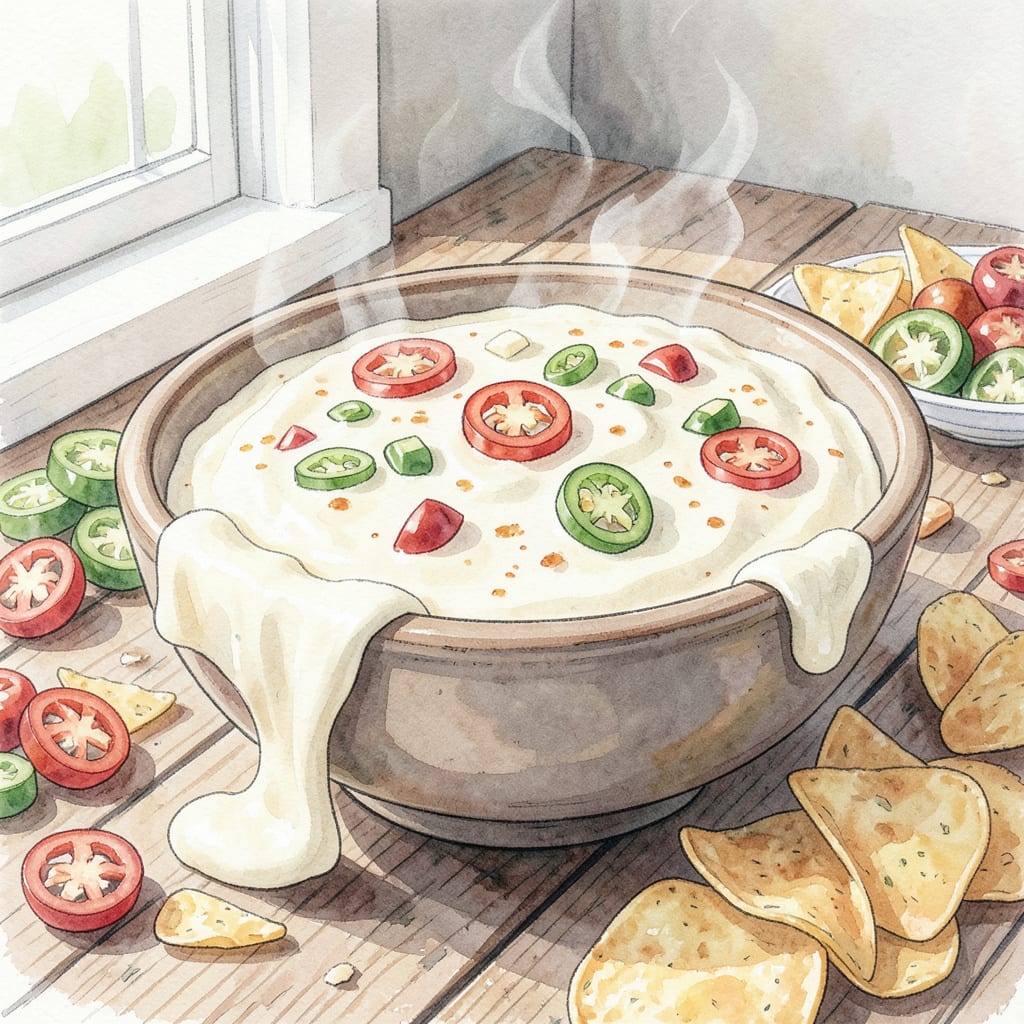
I’ve perfected a creamy Lone Star Queso recipe that’s become a Texas-sized favorite. This perfect blend of cheeses and spices creates a rich, velvety sauce that’s ideal for dipping.
What makes this queso stand out is its smooth texture and deep flavor, achieved by carefully melting premium cheeses with just the right amount of seasoning. The result is a deliciously creamy dip that’s sure to be a hit at any gathering.
Ingredients for Lone Star Queso
These premium ingredients create a rich, velvety queso that’s perfect for any gathering.
| Ingredient | Amount | Notes |
|---|---|---|
| White Cheddar Cheese 🧀 | 1 cup | Freshly shredded for best melt |
| Monterey Jack Cheese 🧀 | 1 cup | Shredded, with some texture |
| Half-and-Half 🥛 | ½ cup | For creaminess |
| Unsalted Butter 🧈 | 2 tbsp | Adds richness |
| Green Chilies 🌶️ | 4 oz | Canned, diced |
| Jalapeño Peppers 🔥 | 2 whole | Diced, for heat |
| Garlic Cloves 🧄 | 2 cloves | Minced for flavor |
| Paprika 🌿 | ½ tsp | Smoked or sweet |
| Cumin 🌶️ | ¼ tsp | Ground, for depth |
| Salt 🧂 | ¼ tsp | Kosher or sea salt |
The cheese makes or breaks this queso. Pre-shredded works in a pinch, but grating your own white cheddar and Monterey Jack gives the best melt. Look for high-quality cheese at the grocery store—you can taste the difference. I like using a mix of sharp and mild cheddar for depth.
No green chilies? Roasted poblanos are a great substitute—just peel and chop. For extra heat, throw in some diced serrano peppers. The half-and-half is key for that creamy texture, but you can experiment with different milks if needed. Don’t skip the smoked paprika if you want that authentic Texas flavor.
This queso keeps for 5 days in the fridge. Reheat gently on the stove or in the microwave, adding a splash of milk if it thickens too much. Freezing works too—just thaw overnight and reheat. I like to make a big batch and portion it out for easy snacking throughout the week.
Step-by-Step Instructions for Lone Star Queso
Here’s the method to create that perfect, creamy queso every time.
Step 1: Prepare the Aromatics and Chilies
Start by dicing the 2 whole Jalapeño Peppers and mincing the 2 cloves Garlic Cloves. I like to use a mix of red and green jalapeños for a bit of visual appeal and varied heat. Make sure to remove the seeds and membranes from the jalapeños if you prefer a milder queso, or leave them in for an extra kick. The aroma of fresh garlic and chilies will fill your kitchen as you chop—this is where the magic begins.
Next, measure out the 4 oz Green Chilies. I use canned green chilies for convenience, but you can substitute with roasted fresh chilies if you prefer a deeper flavor. Having all your aromatics prepped before you start cooking is key to a smooth process.
Step 2: Create the Cheese Base
In a medium saucepan, melt the 2 tbsp Unsalted Butter over medium heat. Once melted, add the minced 2 cloves Garlic Cloves and cook for 1 minute until fragrant. Be careful not to let the garlic burn—it can go from perfect to bitter quickly. You’ll know it’s ready when the kitchen is filled with that irresistible garlic aroma.
Pour in the 0.5 cup Half-and-Half and stir to combine with the garlic and butter. Bring the mixture to a gentle simmer, then reduce the heat to low. This creamy base is what gives your queso its luxurious texture, so don’t rush this step.
Step 3: Melt the Cheese to Perfection
Gradually add the 1 cup White Cheddar Cheese and 1 cup Monterey Jack Cheese to the saucepan, stirring constantly. I like to add the cheese in batches, about ½ cup at a time, to prevent lumps from forming. Make sure each batch is fully melted before adding the next. The mixture should be smooth and creamy.
As you stir, you’ll notice the queso coming together. If it’s too thick, you can add a splash more Half-and-Half to reach your desired consistency. The final texture should be smooth and creamy, coating the back of a spoon.
Step 4: Add the Final Flavors
Once the cheese is fully melted and smooth, stir in the 4 oz Green Chilies, diced Jalapeño Peppers, 0.5 tsp Paprika, 0.25 tsp Cumin, and 0.25 tsp Salt. These ingredients will add depth and a bit of heat to your queso. Taste as you go and adjust the seasoning to your liking.
Transfer the queso to a serving dish or keep it warm in a slow cooker. Serve immediately with tortilla chips, crackers, or your favorite dippers. The queso should be warm, creamy, and full of flavor.
Common Mistakes When Making Perfect Results
Temperature Control Mistakes
One of the most common mistakes when making queso is improper temperature control. Heating the cheese too quickly can cause it to separate or become grainy. I recommend using low heat and stirring constantly to maintain a smooth texture. Keep your queso between 145°F and 165°F for optimal creaminess.
Cheese Selection Errors
Using the wrong type of cheese can make or break your queso. Avoid pre-shredded cheese with additives that prevent clumping, as they can affect melting. Instead, grate your own white cheddar and Monterey Jack for the best results. I find that a mix of sharp and mild cheddar creates the perfect balance of flavors.
Ingredient Ratio Mistakes
Getting the ingredient ratios wrong can lead to queso that’s too thick or too thin. Too much half-and-half can make it runny, while too little can make it thick and clumpy. I recommend starting with ½ cup half-and-half and adjusting as needed to achieve your desired consistency. Remember, you can always add more liquid, but it’s harder to remove excess.
Spice Timing Errors
Adding spices too early can cause them to lose their potency. I like to stir in my paprika, cumin, and salt towards the end of the cooking process to preserve their flavors. This ensures that your queso has a vibrant, well-balanced taste.
Reheating Mistakes
Reheating queso improperly can cause it to become grainy or separated. To avoid this, reheat your queso gently over low heat, stirring constantly. If it’s too thick, add a splash of milk or cream to thin it out. I find that reheating in short intervals with frequent stirring helps maintain the queso’s creamy texture.
Serving Mistakes
Serving queso at the wrong temperature can affect its enjoyment. Queso that’s too cold can be clumpy, while queso that’s too hot can be too runny. I recommend serving it warm, around 120°F to 140°F, for the best experience. Using a slow cooker can help keep it at the perfect temperature throughout your gathering.
Nutrition Facts
220kcal

- 8 Bean Soup Recipe Crock Pot: Hearty Vegetable Medley in One Pot - September 25, 2026
- 4C Bread Crumbs Meatballs Recipe: Crispy Crust and Juicy Centers - September 25, 2026
- 6 Oz Chocolate Chip Cookie Recipe: Perfectly Balanced Crispy Edges and Chewy Hearts - September 25, 2026