
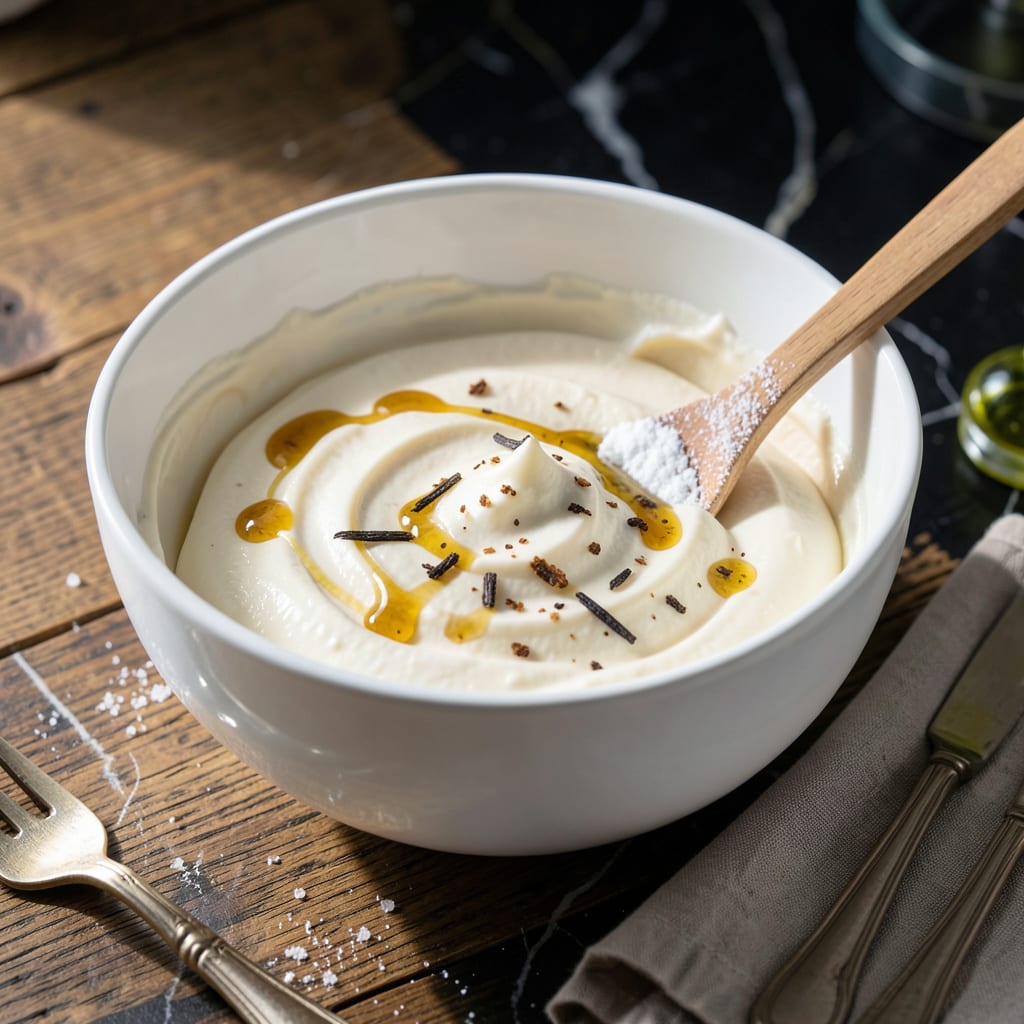
This lightened buttercream delivers the same silky smoothness as traditional versions but with significantly less fat. The secret lies in a balanced ratio of ingredients that maintain texture without excess calories.
Perfect for cakes, cupcakes, or cookies, this icing whips up light and fluffy while holding its shape. You’ll achieve professional results with a fraction of the guilt, making it ideal for everyday baking.
Ingredients for Low Fat Buttercream Icing
Nine ingredients create a light yet luxurious icing that defies expectations.
| Ingredient | Amount | Notes |
|---|---|---|
| Unsalted Butter 🧈 | ½ cup | Room temperature, softened |
| Powdered Sugar 🍚 | 3 ½ cups | Sifted for smooth texture |
| Non-Fat Greek Yogurt 🥛 | ½ cup | Plain, full-fat free |
| Whole Milk 🥛 | 2 tbsp | Or 2% for lighter option |
| Vanilla Extract 🌿 | 1 tsp | Pure vanilla recommended |
| Almond Extract 🌰 | ¼ tsp | Optional for depth |
| Salt 🧂 | ¼ tsp | Fine grain preferred |
| Cornstarch 🌾 | 1 tbsp | Stabilizes texture |
| Lemon Juice 🍋 | ½ tsp | Freshly squeezed for brightness |
The butter is the foundation—Land O’Lakes or Challenge unsalted blocks yield the best texture. Powdered sugar quality matters; Domino or C&H dissolve smoothly without grittiness. For the Greek yogurt, Fage or Chobani non-fat versions provide the necessary body without added fat. Ensure all dairy is fresh, as this icing relies on precise ratios for its signature consistency.
Need a dairy-free version? Swap butter for Miyoko’s vegan butter and use coconut yogurt at one-third less volume. No Greek yogurt? Low-fat sour cream works in a pinch. For sweeter results, add 1-2 tbsp more powdered sugar. The cornstarch is key—don’t skip it, as it prevents separation during whipping.
Store in an airtight container with plastic wrap pressed directly on the surface. Keeps in the fridge for 5 days or freezes for 3 months. Bring to room temperature and re-whip before using to restore the fluffy texture.
Why You’ll Love This Recipe
- 5-Minute Mix: I toss everything in one bowl and beat it—no fancy steps, just creamy icing ready before the cake cools.
- Silky Sweetness: The Greek yogurt keeps it light but still rich, with that pure vanilla punch cutting through the sugar.
- Cupcake Savior: I pipe it on everything from birthday cupcakes to weeknight muffins, and it holds its shape like a dream.
- Fridge Friendly: Honestly, it lasts a week covered in the fridge, so I make a double batch and forget about it until I need a quick decorating fix.
Step-by-Step Instructions for Low Fat Buttercream Icing
Achieve professional-quality frosting with this refined technique for a lighter yet indulgent finish.
Step 1: Cream the Butter and Incorporate Yogurt
In a stand mixer fitted with the paddle attachment, beat the 0.5 cup unsalted butter on medium speed for 2-3 minutes until smooth and pale. This step ensures proper aeration, which is critical for a light, fluffy texture despite the reduced fat content.
Add the 0.5 cup non-fat Greek yogurt and continue mixing on medium-low speed for 1-2 minutes until fully emulsified. The mixture will appear slightly curdled at first—this is normal. Watch for a smooth, homogeneous consistency before proceeding.
Step 2: Gradually Incorporate Powdered Sugar and Cornstarch
Reduce the mixer speed to low and gradually add the 3.5 cups powdered sugar, about 1 cup at a time. Allow each addition to fully incorporate before adding more. This prevents a sugar dust cloud and ensures even distribution.
After adding all the powdered sugar, sprinkle in the 1 tbsp cornstarch. This stabilizes the structure, compensating for the lower fat content. Mix on low speed for an additional 1 minute to fully combine. The frosting should now be thick but slightly dense.
Step 3: Add Liquids and Flavorings
With the mixer still on low speed, pour in the 2 tbsp whole milk, 1 tsp vanilla extract, 0.25 tsp almond extract, 0.25 tsp salt, and 0.5 tsp lemon juice. The lemon juice brightens the flavor, while the salt enhances the sweetness of the powdered sugar.
Increase the speed to medium-high and beat for 3-4 minutes until the frosting is light, fluffy, and holds soft peaks. Stop the mixer occasionally to scrape down the sides and bottom of the bowl with a silicone spatula to ensure even mixing.
Step 4: Adjust Consistency and Finalize
Assess the texture. If the frosting is too thick, add additional whole milk 1 tsp at a time, mixing well after each addition. If it’s too thin, add powdered sugar 2 tbsp at a time until the desired consistency is reached. The ideal texture should be spreadable yet hold its shape when piped.
Once the consistency is perfect, beat on medium-high speed for a final 1-2 minutes to incorporate air and achieve a silky-smooth finish. The frosting should appear glossy and light, with no graininess from the sugar. Use immediately for best results, or store in an airtight container at room temperature for up to 2 days.
Pro Tips For Making Low Fat Buttercream Icing
- Soften the Butter: Let the butter sit at room temperature for 30-45 minutes before mixing—it should dent when pressed, not melt. Cold butter makes lumpy icing, and no one wants that.
- Strain the Yogurt: Drain the non-fat Greek yogurt in a fine-mesh strainer for 10 minutes to remove excess liquid. This keeps the icing thick instead of runny.
- Sift the Sugar: Always sift the powdered sugar first, or you’ll end up with those annoying little lumps no matter how long you beat it. I learned this the hard way.
- Add Milk Slowly: Start with 1 tablespoon of whole milk, then add more as needed—about 1 teaspoon at a time. It’s easier to thin it out than to thicken it back up.
Creative Variations of low fat buttercream icing
Cream Cheese Swirl
Replace 0.5 cup non-fat Greek yogurt with 4 oz reduced-fat cream cheese for a tangier version. Beat the cream cheese with butter first until smooth, then proceed with the recipe. This adds richness while keeping fat content modest. 💛
Coconut Flour Boost
For a gluten-free thickener, substitute 1 tbsp cornstarch with 2 tbsp coconut flour. It absorbs moisture differently, so add 1-2 tbsp extra milk to achieve the right consistency. The result has a subtle coconut aroma.
Use coconut milk instead of whole milk for a dairy-free twist. The tropical notes pair beautifully with vanilla and lemon juice, creating a unique flavor profile ideal for tropical-themed desserts.
Coffee Lovers
Dissolve 1 tsp instant espresso powder in the 2 tbsp milk before adding to the mix. This enhances the chocolate notes in your baked goods and adds depth to the icing’s flavor. Perfect for mocha cupcakes or coffee cakes.
Citrus Zing
Swap the 0.5 tsp lemon juice for zest of 1 orange plus 1 tbsp fresh orange juice. This brightens the frosting and pairs wonderfully with chocolate or spice cakes. I love this variation in summer for a refreshing twist.
Nutrition Facts
Frequently Asked Questions
Can I use regular yogurt instead of Greek?
Regular yogurt has more water, which can thin the icing. If it’s all you have, strain it first in a cheesecloth for 30 minutes to remove excess liquid.
Why does my icing look grainy?
Your powdered sugar may not be sifted well. Always sift first to remove lumps, and ensure the butter is fully softened to room temperature before mixing.
How do I make it stiffer for piping?
Add powdered sugar 1-2 tbsp at a time until it holds peaks. Chilling the bowl and beaters for 10 minutes beforehand also helps.
Can I make this ahead of time?
Yes! Store in an airtight container at room temperature for up to 2 days, or refrigerate for 5 days. Re-whip before using.

- 8 Bean Soup Recipe Crock Pot: Hearty Vegetable Medley in One Pot - September 25, 2026
- 4C Bread Crumbs Meatballs Recipe: Crispy Crust and Juicy Centers - September 25, 2026
- 6 Oz Chocolate Chip Cookie Recipe: Perfectly Balanced Crispy Edges and Chewy Hearts - September 25, 2026