
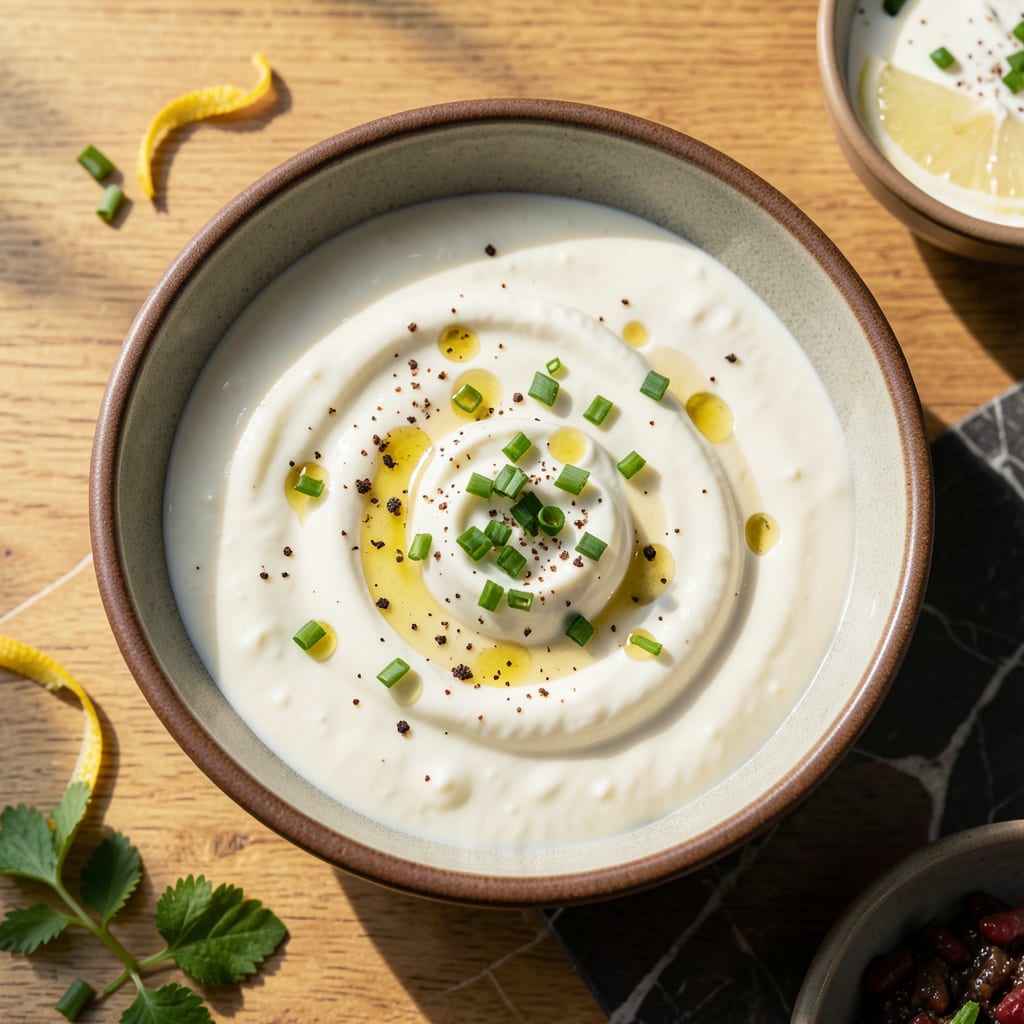
I developed this dressing to capture that classic creamy tang without the heavy oil of traditional recipes. The secret lies in using low-fat buttermilk as the base, enhanced with a touch of Greek yogurt for body.
What results is a creamy dressing with bright, tangy flavor that coats greens perfectly. It keeps for up to a week in the refrigerator, making it ideal for meal prep.
Ingredients for Low Fat Buttermilk Salad Dressing
Just a handful of ingredients for a tangy, creamy dressing that clings perfectly to greens.
| Ingredient | Amount | Notes |
|---|---|---|
| Low-Fat Buttermilk 🥛 | 1 cup | Shake well before measuring |
| Plain Greek Yogurt 🥛 | ½ cup | Full-fat works too for extra richness |
| Fresh Lemon Juice 🍋 | 2 tbsp | About 1 medium lemon |
| White Wine Vinegar 🍷 | 1 tbsp | Apple cider vinegar works too |
| Dijon Mustard 🟡 | 1 tsp | Smooth or whole grain |
| Garlic Clove 🧄 | 1 clove | Minced or pressed |
| Dried Dill 🌿 | 1 tsp | Or 1 tbsp fresh dill |
| Dried Parsley 🌿 | 1 tsp | Fresh parsley works too |
| Onion Powder 🧅 | ½ tsp | Not onion salt |
| Salt 🧂 | ½ tsp | Adjust to taste |
| Black Pepper 🌶️ | ¼ tsp | Freshly ground preferred |
The buttermilk is the star here—look for low-fat at any major grocery store. Greek yogurt adds body without the oil; I grab Fage or Chobani for consistency. Fresh lemon juice brightens everything up, and if you’re using bottled, Santa Cruz Organic is my go-to (no weird aftertaste). The Dijon mustard ties it all together, and Grey Poupon is the classic choice for a reason.
No buttermilk? Thin plain yogurt with a splash of milk and vinegar. Swap the dill for tarragon or thyme if you prefer. Apple cider vinegar can replace the white wine vinegar at a 1:1 ratio. Out of Greek yogurt? Sour cream works in a pinch (though it’ll be slightly thicker). The garlic can be skipped if you’re not a fan, but I’d keep the onion powder for depth.
This keeps beautifully—stir before using as it’ll thicken in the fridge. Stays fresh for 7-10 days in an airtight jar. Don’t freeze it though; the texture separates. Perfect for meal prep, so make a double batch if you’re into salads all week.
Why You’ll Love This Recipe
- 5-Minute Whisk: I just dump everything in a bowl—no cooking, no chopping, just whisk and go.
- Tangy Zing: The lemon and vinegar cut through the creaminess of the yogurt and buttermilk for that bright, bold bite I crave.
- Dressing for Days: I use it on salads, as a dip for veggies, even drizzled over grilled chicken—it never gets old.
Step-by-Step Instructions for Low Fat Buttermilk Salad Dressing
Here’s the method. Simple, quick, and delivers that tangy creaminess without the oil.
Step 1: Combine the Buttermilk and Yogurt Base
In a medium bowl, pour in the 1 cup Low-Fat Buttermilk. Shake the carton well before measuring—this ensures the milk and solids are perfectly blended. Then add the 0.5 cup Plain Greek Yogurt, which gives this dressing its rich, creamy texture without heavy fat.
Whisk these two together until completely smooth. You’re looking for a uniform, slightly thick liquid with no streaks of yogurt remaining. This base provides the body for the entire dressing, so take your time here to get it just right.
Step 2: Add the Acidic Components
Next, pour in the 2 tbsp Fresh Lemon Juice and 1 tbsp White Wine Vinegar. The lemon adds bright, citrusy notes while the vinegar brings a sharper tang that balances the creaminess. Whisk again for 30 seconds to fully incorporate these liquids.
You’ll notice the mixture starts to thicken slightly as the acids react with the dairy. This is exactly what you want—it means the flavors are beginning to meld. If you prefer a stronger citrus punch, you can add a bit more lemon juice later.
Step 3: Incorporate the Flavor Boosters
Now add the 1 tsp Dijon Mustard, 1 clove minced Garlic Clove, 1 tsp Dried Dill, and 1 tsp Dried Parsley. The mustard acts as an emulsifier, keeping everything blended, while the garlic and herbs add depth and complexity.
Whisk vigorously for 1 minute until all the ingredients are fully distributed. The dressing should look slightly frothy at this point, with tiny bubbles forming on the surface. This indicates the mustard is doing its job to stabilize the mixture.
Step 4: Season and Finish
Finally, add the 0.5 tsp Salt and 0.25 tsp Black Pepper. Start with the measured amounts, then taste and adjust. I often find I need a pinch more salt to bring all the flavors into balance, especially if using low-sodium ingredients.
Whisk one last time to ensure the seasonings are evenly distributed. The finished dressing should be smooth, slightly thick, and have a pale, creamy appearance. Let it sit for 10 minutes before using to allow the flavors to fully develop.
This makes enough for 4 servings, and it keeps beautifully in the fridge for up to 5 days in an airtight container. Give it a quick stir before each use, as it may separate slightly over time.
Pro Tips For Making Low Fat Buttermilk Salad Dressing
- Whisk Vigorously First: Start by whisking the Greek yogurt and buttermilk together until completely smooth—I learned this the hard way after ending up with lumpy dressing that no amount of stirring could fix.
- Strain the Yogurt: If your Greek yogurt is thin, strain it for 10 minutes in a fine-mesh sieve to thicken it up; sounds fussy, but it prevents a watery dressing.
- Balance the Acids: Taste before adding all the lemon juice and vinegar—sometimes the buttermilk is tangy enough, and adding too much makes the dressing harsh instead of bright.
- Let It Rest: After mixing, give it 15-20 minutes in the fridge—this lets the flavors meld and the mustard work its magic to bind everything together.
Pro Cooking Tips for Perfect Results
Emulsion Mastery
The Dijon mustard is your secret weapon for keeping this dressing smooth and creamy. Whisk vigorously for at least 1 minute during Step 3 to fully activate its emulsifying properties. I use Grey Poupon for consistent results. 💡
Temperature Matters
Always use room temperature buttermilk and Greek yogurt—cold dairy can cause the dressing to curdle. Take ingredients out of the fridge 30 minutes before mixing. This small step makes a noticeable difference in texture.
Acid Balance
Taste after adding the lemon juice and vinegar. If it needs more brightness, add ½ tsp more lemon juice at a time. The acidity should be tangy but not overpowering. A pinch of sugar can balance if it’s too sharp.
Thickness Control
If your dressing is too thin, add 1-2 tsp more Greek yogurt. Too thick? Thin with 1 tsp water or milk at a time. The ideal consistency should coat the back of a spoon but still drizzle easily.
Flavor Development
Let the finished dressing rest for 10-15 minutes before using. This allows the garlic and herbs to infuse fully. I notice the dill flavor really shines after this waiting period. 🌟
Storage Tip
Use a glass jar with a tight lid for storage. The dressing will thicken in the fridge—just stir in 1 tsp cold water if needed before serving. Always smell before using; if it smells off, discard it.
Nutrition Facts
Frequently Asked Questions
Can I use regular buttermilk instead of low-fat?
Yes, but it will add more calories and fat. The flavor will be slightly richer. For best results, stick with low-fat buttermilk to keep it light while maintaining that tangy taste.
How long does this dressing last in the fridge?
It stays fresh for 7-10 days in an airtight container. Stir before each use, as natural separation may occur. Discard if you notice any off smells or textures.
Can I make this dressing vegan?
Yes! Substitute dairy-free yogurt for Greek yogurt and use a plant-based milk mixed with 1 tbsp vinegar to mimic buttermilk. The texture may vary slightly but the flavor will still shine.
Why did my dressing turn out too thin?
This usually happens if the yogurt wasn’t thick enough. Fix it by whisking in 1-2 tsp more Greek yogurt. For immediate use, a pinch of xanthan gum can help thicken it.

- 8 Bean Soup Recipe Crock Pot: Hearty Vegetable Medley in One Pot - September 25, 2026
- 4C Bread Crumbs Meatballs Recipe: Crispy Crust and Juicy Centers - September 25, 2026
- 6 Oz Chocolate Chip Cookie Recipe: Perfectly Balanced Crispy Edges and Chewy Hearts - September 25, 2026