
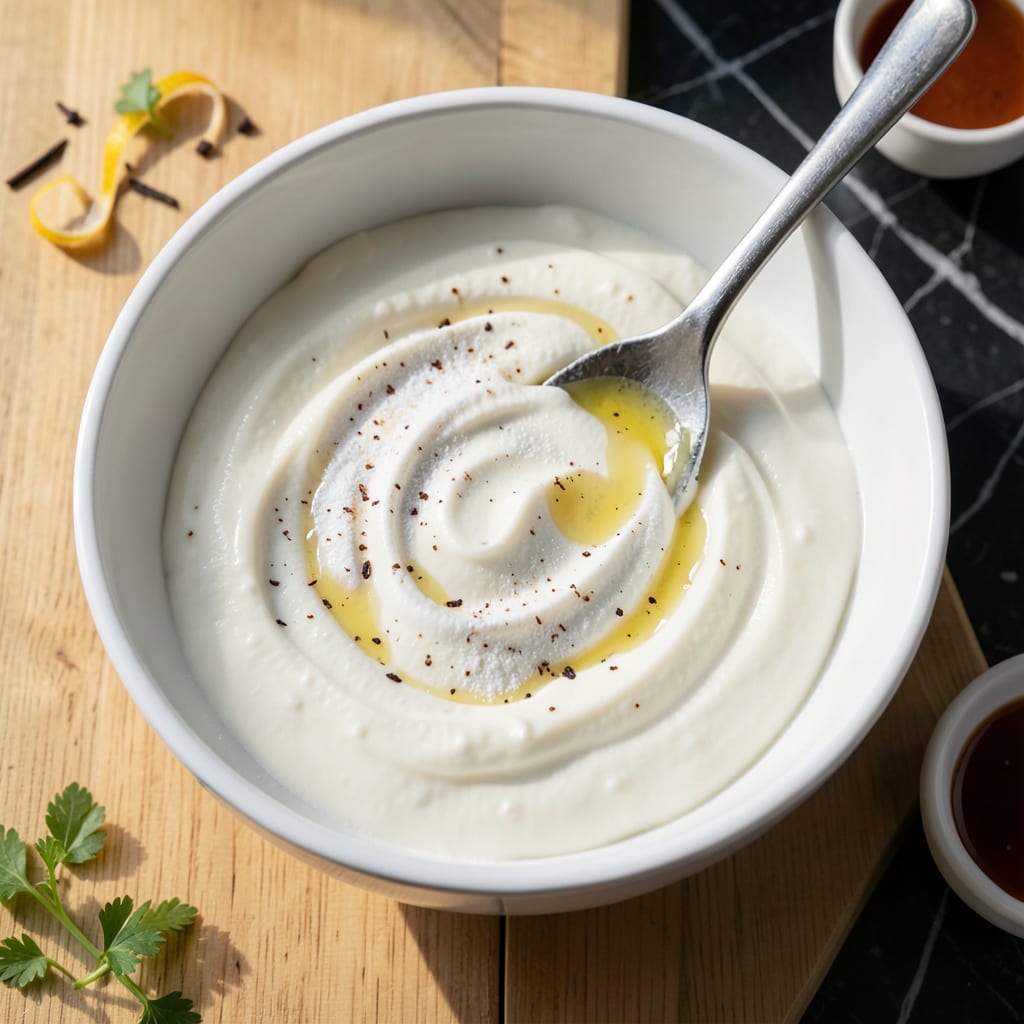
Crafting a lighter cake icing doesn’t mean sacrificing flavor or texture. This recipe delivers a smooth, spreadable topping with rich taste, all while keeping fat content minimal.
Using simple ingredients and a straightforward method, you’ll achieve a velvety finish that pairs perfectly with any cake. No butter, no compromise—just pure, guilt-free sweetness.
Ingredients for Low Fat Cake Icing
Light yet luscious, these ingredients create a velvety topping without butter.
| Ingredient | Amount | Notes |
|---|---|---|
| Powdered Sugar 🍚 | 3 cups | Sifted for smooth texture |
| Non-Fat Greek Yogurt 🥛 | 1 cup | Plain, unsweetened variety |
| Vanilla Extract 🌿 | 2 tsp | Pure extract for best flavor |
| Almond Milk 🥛 | 2 tbsp | Unsweetened for neutral taste |
| Cornstarch 🌾 | 1 tbsp | Thickens without fat |
| Lemon Juice 🍋 | 1 tsp | Freshly squeezed for brightness |
| Salt 🧂 | ¼ tsp | Fine sea salt preferred |
Powdered sugar quality matters here. Domino or C&H brands dissolve smoothly without grittiness. For the Greek yogurt, Fage or Chobani non-fat versions provide the creamiest texture. Avoid sweetened yogurts—they’ll make your icing cloyingly sweet. Cornstarch acts as the secret thickener, giving body without added fat.
No Greek yogurt? Low-fat cream cheese works at a 1:1 ratio (add a splash more milk). Swap almond milk for any unsweetened plant milk. Want extra flavor? Almond extract at half the vanilla amount adds depth. Skip the cornstarch? Let the icing sit 10 minutes to thicken naturally—just stir well before using.
This icing keeps beautifully. Store in an airtight container in the fridge for up to 5 days. Stir before reusing as it may thicken slightly. Best used at room temperature for easy spreading. Freezing? Not recommended—it can separate upon thawing.
Why You’ll Love This Recipe
- Five-Minute Mix: I just dump the powdered sugar, Greek yogurt, and a splash of almond milk in a bowl—no mixer, no fuss.
- Velvety Vanilla: The non-fat Greek yogurt gives it that rich, creamy texture while the vanilla extract adds a warm, sweet depth.
- Cupcakes to Layer Cakes: I’ve piped it onto sheet cakes, swirled it into cupcakes, and even spread it between graham crackers for a quick treat.
- Stays Fresh: Honestly, it keeps in the fridge for days, so I can ice a cake today and still have enough for a midnight snack tomorrow.
Step-by-Step Instructions for Low Fat Cake Icing
This method ensures a smooth, spreadable consistency with rich flavor despite the reduced fat content.
Step 1: Sift and Prepare the Dry Ingredients
Begin by sifting the 3 cups Powdered Sugar through a fine-mesh sieve into a large mixing bowl. Sifting is crucial here—it breaks up any lumps and aerates the sugar, preventing a grainy texture in your finished icing.
Add the 1 tbsp Cornstarch and 0.25 tsp Salt to the sifted powdered sugar. Whisk these dry ingredients together until fully combined. The cornstarch acts as a stabilizer, while the salt enhances the overall flavor profile without adding fat.
Step 2: Combine Wet Ingredients for Creamy Base
In a separate bowl, whisk together the 1 cup Non-Fat Greek Yogurt and 2 tsp Vanilla Extract until smooth. The Greek yogurt provides the creamy foundation without the saturated fat of traditional butter-based icings.
Pour in the 2 tbsp Almond Milk and 1 tsp Lemon Juice, then whisk again. The almond milk thins the mixture slightly for easier incorporation, while the lemon juice adds a subtle brightness that balances the sweetness of the powdered sugar.
Step 3: Gradually Incorporate Dry and Wet Mixtures
Create a well in the center of your dry ingredients. Slowly pour the wet mixture into this well while stirring with a silicone spatula. Start by mixing in small circles, gradually expanding to incorporate all the powdered sugar.
Continue mixing until no dry streaks remain. The icing should be thick but still pourable. If it appears too stiff, add almond milk 1 teaspoon at a time until reaching the desired consistency. Avoid overmixing, as this can introduce air bubbles.
Step 4: Achieve the Perfect Spreadable Texture
Let the icing rest for 5 minutes at room temperature. This allows the cornstarch to fully hydrate and thicken the mixture. During this time, the texture will transform from slightly runny to velvety smooth.
After resting, give the icing one final stir. It should now hold its shape when dolloped onto a spoon but still spread easily. If it remains too thin, whisk in an additional ½ teaspoon of Cornstarch and let it rest for another 3 minutes.
Step 5: Apply to Cooled Cake and Serve
Spread the icing over your completely cooled cake using an offset spatula. Work from the center outward in smooth, even strokes. The consistency is designed to hold its shape without running down the sides.
For best results, let the iced cake sit at room temperature for 15 minutes before serving. This brief setting time allows the icing to firm up slightly while maintaining its creamy texture. The flavor develops further as it rests, offering a perfect balance of sweetness and tang.
Pro Tips For Making Low Fat Cake Icing
- Chill the Yogurt: Take the non-fat Greek yogurt out of the fridge 10 minutes before mixing—cold yogurt can make the icing too thick and hard to spread.
- Sift the Sugar: Always sift the powdered sugar first to break up clumps, or you’ll end up with grainy icing no matter how long you whisk it.
- Add Milk Slowly: Pour the almond milk in 1 tablespoon at a time while mixing, because it’s easy to overshoot and end up with runny icing.
- Use Cornstarch Last: Mix the cornstarch with the powdered sugar before adding wet ingredients—this prevents lumps and gives a smoother texture.
Make-Ahead Tips for low fat cake icing
Prep Ahead
You can mix the dry ingredients the night before—just sift 3 cups Powdered Sugar with 1 tbsp Cornstarch and 0.25 tsp Salt and store in an airtight container. This saves time and ensures a lump-free base.
Wet Ingredients
Whisk the 1 cup Non-Fat Greek Yogurt, 2 tsp Vanilla Extract, 2 tbsp Almond Milk, and 1 tsp Lemon Juice together and refrigerate. Combine them with the dry mix just before using for the freshest taste. 💡
Fridge Storage
This icing keeps well in the fridge for up to 5 days in an airtight container. Stir it thoroughly before use, as it may thicken slightly over time.
Room Temperature
For easiest spreading, let the icing sit at room temperature for 15-20 minutes before using. If it’s too thick, add almond milk 1 tsp at a time to adjust.
Avoid Freezing
Freezing isn’t recommended—it can cause separation and a grainy texture. Stick to refrigeration for best results. ❄️
Batch Making
Double the recipe and store half in the fridge for later. This way, you’ll always have a quick, healthy topping ready for last-minute desserts.
Nutrition Facts
Frequently Asked Questions
Can I use regular yogurt instead of Greek?
Yes, but strain regular yogurt in a cheesecloth for 30 minutes to remove excess liquid first. Greek yogurt’s thickness ensures the right consistency without extra steps.
Why does my icing taste too sweet?
Balance the sweetness by adding 1/2 tsp Lemon Juice or a pinch more salt. The acidity cuts through the sugar while enhancing other flavors.
How thick should the icing be?
It should hold its shape when dolloped but spread smoothly. If too thin, add 1/2 tsp Cornstarch; if too thick, thin with almond milk 1 tsp at a time.
Can I color this icing?
Use gel food coloring for vibrant hues without thinning the mixture. Add sparingly and mix well to avoid streaks.

- 8 Bean Soup Recipe Crock Pot: Hearty Vegetable Medley in One Pot - September 25, 2026
- 4C Bread Crumbs Meatballs Recipe: Crispy Crust and Juicy Centers - September 25, 2026
- 6 Oz Chocolate Chip Cookie Recipe: Perfectly Balanced Crispy Edges and Chewy Hearts - September 25, 2026