
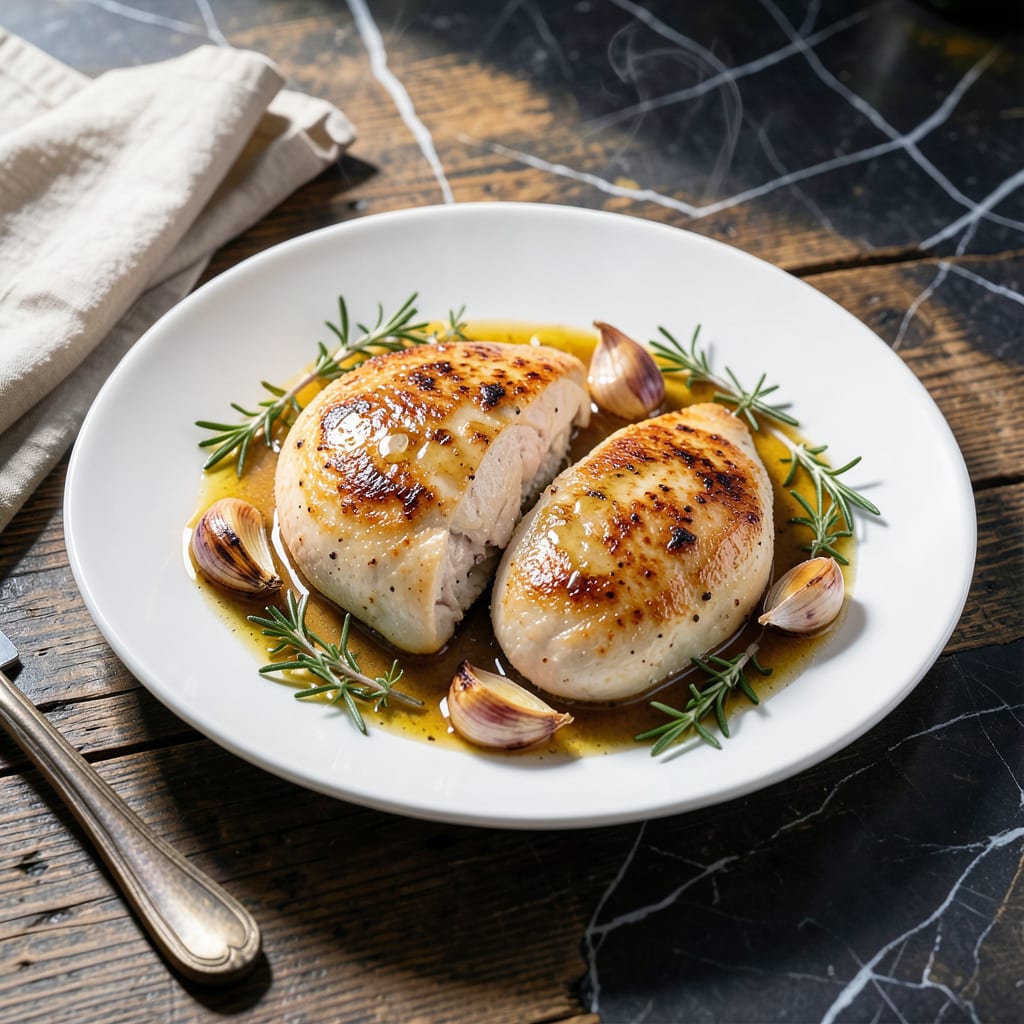
I’ve perfected a cooking method that keeps chicken breast moist and flavorful without excess fat. This approach relies on gentle heat and smart seasoning to lock in natural juices.
With simple techniques like brining or marinating, you’ll achieve tender, savory results every time. The key is avoiding overcooking while using lean preparation methods to preserve both texture and nutrition.
Ingredients for Low Fat Chicken Breast
Lean protein meets vibrant herbs and bright acid for a dish that stays moist.
| Ingredient | Amount | Notes |
|---|---|---|
| Boneless Skinless Chicken Breasts 🍗 | 1 ½ lb | Pounded to even thickness |
| Low-Sodium Chicken Broth 🥣 | 1 cup | For poaching moisture |
| White Wine Vinegar 🍷 | 2 tbsp | Acid for tenderizing |
| Garlic Cloves 🧄 | 4 cloves | Minced for aromatic base |
| Fresh Rosemary Sprigs 🌿 | 2 whole | Stems removed, chopped |
| Fresh Thyme Leaves 🍃 | 1 tbsp | Stripped from stems |
| Dijon Mustard 🟡 | 1 tbsp | For glaze emulsification |
| Extra-Virgin Olive Oil 🫒 | 1 tbsp | For minimal sautéing |
| Lemon Juice 🍋 | 1 tbsp | Freshly squeezed for brightness |
| Kosher Salt 🧂 | 1 tsp | Diamond Crystal preferred |
| Ground Black Pepper 🌶️ | ½ tsp | Freshly ground for best flavor |
| Shallot 🧅 | 1 whole | Finely diced for depth |
| Low-Fat Greek Yogurt 🥛 | ½ cup | For creamy finish without fat |
The chicken is the foundation—opt for air-chilled, organic breasts from Whole Foods or Trader Joe’s for superior texture and flavor. Uniform thickness ensures even cooking, so pound them to about 1/2 inch (worth the extra minute). The broth should be low-sodium to control seasoning precisely. Fresh herbs are non-negotiable here; dried won’t deliver the same aromatic impact for this lean preparation.
No white wine vinegar? Apple cider vinegar at equal volume works in a pinch. Shallots can be swapped for red onion at half the amount. For the yogurt, non-fat Greek yogurt maintains creaminess without added fat. If avoiding dairy entirely, unsweetened almond milk yogurt is a viable substitute, though texture may vary slightly. The mustard is flexible—whole grain at same quantity adds visual interest.
Poached chicken keeps 3-4 days refrigerated in its liquid. The yogurt sauce should be stored separately and used within 5 days. For meal prep, cook the chicken, slice, and store with a drizzle of the sauce to maintain moisture. Freezes well for 2 months without the sauce.
Why You’ll Love This Recipe
- One Pan Wonder: I just toss everything in a skillet—chicken, broth, vinegar—and let the garlic and rosemary do the work.
- Bright and Zesty: The white wine vinegar cuts through the richness, making each bite taste fresh and lively.
- Meal Prep MVP: I make a big batch on Sunday and it stays moist and flavorful all week for salads or wraps.
- Budget Stretch: Boneless skinless breasts are affordable, and this method keeps them juicy without fancy ingredients.
Step-by-Step Instructions for Low Fat Chicken Breast
Master these technique-driven steps to achieve perfectly moist and flavorful results every time.
Step 1: Prepare and Season the Chicken
Begin by pounding the 1.5 lb Boneless Skinless Chicken Breasts to an even ½-inch thickness using a meat mallet. This ensures uniform cooking and prevents dry spots where the meat might be thicker. Place the pounded breasts between sheets of parchment paper for easier cleanup.
Season both sides generously with the 1 tsp Kosher Salt and 0.5 tsp Ground Black Pepper. The salt will penetrate the surface, enhancing both moisture retention and flavor development. Let the seasoned chicken rest at room temperature for 10 minutes to allow the salt to begin working its magic.
Step 2: Create the Aromatic Poaching Liquid
In a large skillet with a tight-fitting lid, heat the 1 tbsp Extra-Virgin Olive Oil over medium heat. Add the finely diced Shallot and sauté for 2-3 minutes until translucent and just beginning to soften. This builds the flavor foundation without adding excess fat.
Add the minced 4 cloves Garlic Cloves, chopped 2 whole Fresh Rosemary Sprigs, and 1 tbsp Fresh Thyme Leaves. Cook for an additional 30 seconds until fragrant—just until the herbs release their essential oils. Immediately pour in the 1 cup Low-Sodium Chicken Broth and 2 tbsp White Wine Vinegar to deglaze the pan.
Step 3: Poach the Chicken to Perfection
Place the seasoned chicken breasts in the skillet with the aromatic liquid. The liquid should come about halfway up the sides of the chicken. Cover with the lid and reduce heat to medium-low. Poach for 12-15 minutes, maintaining a gentle simmer.
You’ll know it’s done when the chicken reaches an internal temperature of 165°F and the thickest part feels firm yet springy to the touch. The poaching method guarantees moisture retention while infusing the meat with the herbs and shallots. Transfer the chicken to a cutting board and tent loosely with foil.
Step 4: Create the Creamy Yogurt Pan Sauce
Increase the heat to medium-high and let the poaching liquid reduce by half, about 3-4 minutes. Stir in the 1 tbsp Dijon Mustard and 1 tbsp Lemon Juice, whisking to combine. The mustard acts as an emulsifier, while the lemon brightens the flavors.
Reduce heat to low and whisk in the 0.5 cup Low-Fat Greek Yogurt until smooth and creamy. Taste and adjust seasoning if needed. The yogurt adds richness without the fat of traditional cream sauces, delivering on the promise of a lighter yet satisfying finish.
Step 5: Serve with Sauce
Slice the chicken against the grain into ½-inch thick pieces. This shortens the muscle fibers, ensuring each bite remains tender. Arrange the slices on a platter or individual plates.
Spoon the warm yogurt sauce over the chicken, allowing it to pool slightly on the plate. The sauce should coat the back of a spoon with a velvety texture. Serve immediately while the chicken is still warm and the sauce maintains its creamy consistency.
Pro Tips For Making Low Fat Chicken Breast
- Pound the Breasts: Use a meat mallet or rolling pin to even out the thickness to ½ inch—I learned this the hard way after too many dry, overcooked ends.
- Don’t Boil the Broth: Keep the chicken broth at a gentle simmer, not a rolling boil, or the breasts will turn tough and rubbery.
- Bruise the Rosemary: Lightly crush the rosemary sprigs with the flat of your knife before adding them to release more aroma into the poaching liquid.
- Use a Thermometer: Pull the chicken at 160°F and let it rest to 165°F—no guessing, or you’ll overcook it every time.
Flavor Customization for These Flavors
Herb-Forward Variations
Swap the rosemary and thyme for fresh dill and tarragon to create a brighter, more spring-like profile. I love this combo with a squeeze of extra lemon juice—about 1 additional tablespoon—for a zesty finish. 🌿
Spicy Kick
Add ½ teaspoon red pepper flakes to the poaching liquid for subtle heat. For more intensity, stir 1 teaspoon sriracha into the yogurt sauce. This gives the dish warmth without adding fat.
Citrus Twist
Replace the white wine vinegar with orange juice and add zest from 1 lemon to the sauce. The citrus lifts the flavor while keeping the preparation light and fresh.
Mediterranean Flare
Add 1 teaspoon dried oregano and ½ teaspoon ground cumin to the poaching liquid. Finish with chopped Kalamata olives and a sprinkle of feta for a Greek-inspired version. 💫
Creamy Garlic Boost
Double the garlic to 8 cloves and add 1 teaspoon garlic powder to the yogurt sauce. This creates a deep, savory flavor that still stays low-fat.
Sweet and Tangy
Stir 1 tablespoon honey into the yogurt sauce for a touch of sweetness. Balance it with an extra ½ teaspoon Dijon mustard to maintain the tangy edge.
Nutrition Facts
Frequently Asked Questions
Can I use frozen chicken breasts instead?
Yes, but thaw them completely in the fridge first. Cooking from frozen can lead to uneven doneness. Pound to ½-inch thickness after thawing for best results.
What if I don’t have a skillet with a lid?
Use a large pot or deep sauté pan and cover with foil. The key is maintaining a gentle simmer for 12-15 minutes to keep the chicken moist.
How do I avoid dry chicken?
Poach at medium-low heat and remove from liquid as soon as it hits 165°F. Letting it rest 5 minutes before slicing also helps retain juices.
Can I make this ahead?
Store cooked chicken in its liquid for 3-4 days in the fridge. Reheat gently in the liquid to maintain moisture. The sauce stays fresh for 5 days.

- 8 Bean Soup Recipe Crock Pot: Hearty Vegetable Medley in One Pot - September 25, 2026
- 4C Bread Crumbs Meatballs Recipe: Crispy Crust and Juicy Centers - September 25, 2026
- 6 Oz Chocolate Chip Cookie Recipe: Perfectly Balanced Crispy Edges and Chewy Hearts - September 25, 2026