
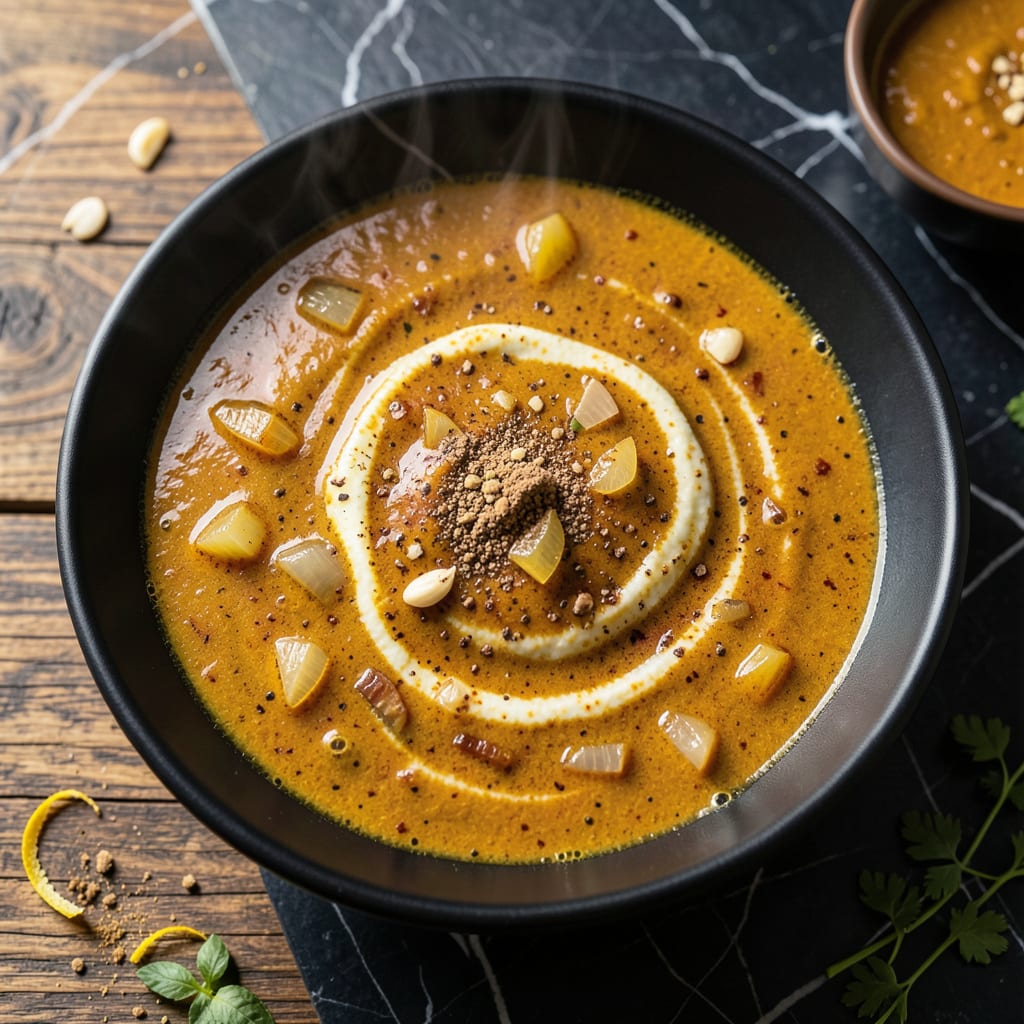
This low-fat curry sauce proves you don’t need heavy cream to achieve rich, complex flavor. A carefully balanced blend of spices, tomatoes, and aromatic vegetables creates depth without excess calories.
Perfect for meal prep, this versatile sauce stores well and transforms simple proteins or vegetables into restaurant-worthy dishes. The secret lies in slow simmering to develop layers of taste.
Ingredients for Low Fat Curry Sauce
Twelve ingredients transform into a sauce that’s rich without the cream.
| Ingredient | Amount | Notes |
|---|---|---|
| Olive Oil 🫒 | 2 tbsp | Extra-virgin for depth |
| Yellow Onion 🧅 | 1 whole | Finely diced for base |
| Garlic Cloves 🧄 | 4 cloves | Minced for aromatic base |
| Fresh Ginger 🌿 | 1 tbsp | Peeled and grated |
| Curry Powder 🌶️ | 2 tbsp | Mild or hot variety |
| Ground Cumin 🌿 | 1 tsp | Toasted for warmth |
| Ground Coriander 🌿 | 1 tsp | Balances spice blend |
| Turmeric Powder 🟡 | ½ tsp | For golden color |
| Cayenne Pepper 🔥 | ¼ tsp | Adjust for heat level |
| Crushed Tomatoes 🍅 | 1 can | 28 oz can preferred |
| Low-Sodium Chicken Broth 🥣 | 1 ½ cups | Or vegetable broth |
| Unsweetened Coconut Milk 🥥 | ½ cup | Light for lower fat |
| Fresh Cilantro 🌿 | ¼ cup | Chopped for finish |
The coconut milk is key here—Thai Kitchen’s light version keeps it low-fat while adding body. Spices lose potency fast, so Penzeys or bulk bins for freshness. Onions and garlic form the base (don’t skip these), and ginger adds that bright zing. Most grocery stores carry all of this—no specialty shops needed unless you want top-tier spices.
No coconut milk? Unsweetened almond milk with a cornstarch slurry works in a pinch. Short on fresh ginger? Ground ginger at one-third the amount. For heat, swap cayenne for red pepper flakes. Chicken broth can be veggie if you’re going meat-free. The crushed tomatoes can be fresh if you’re feeling fancy (about 4 ripe ones, peeled and chopped).
Sauce keeps 5-6 days in the fridge, freezes for 3 months. Best made ahead—flavors meld overnight. Reheat gently to avoid separating. Always stir before serving.
Why You’ll Love This Recipe
- One Pot Wonder: I love that I only dirty one pan—olive oil, onion, garlic, ginger, and curry powder all sizzle together in minutes.
- Warm Spice Hug: The garlic and ginger bloom in the oil, making the curry powder taste deep and aromatic without heaviness.
- Meal Prep Hero: Honestly, this sauce keeps for days and works with chicken, tofu, or just rice and veggies.
- Pantry Friendly: Between us, I always have these ingredients on hand, so dinner’s never far away.
Step-by-Step Instructions for Low Fat Curry Sauce
This method builds layers of flavor while keeping it light and satisfying.
Step 1: Sauté Aromatics to Build the Foundation
Heat the 2 tbsp olive oil in a large pot over medium heat. Add the yellow onion and cook for 5-6 minutes, stirring occasionally, until it turns translucent and just begins to caramelize around the edges.
Stir in the 4 cloves garlic cloves and 1 tbsp fresh ginger, cooking for 1-2 minutes until fragrant. This is where the magic starts—don’t let the garlic burn, or it’ll turn bitter. You want it golden, not brown.
I always keep the heat at medium here. Too high, and you’ll scorch the aromatics; too low, and they’ll steam instead of developing those deep, complex flavors that define a great curry base.
Step 2: Bloom the Spices for Maximum Flavor
Add the 2 tbsp curry powder, 1 tsp ground cumin, 1 tsp ground coriander, 0.5 tsp turmeric powder, and 0.25 tsp cayenne pepper to the pot. Stir constantly for 30 seconds to 1 minute until the spices become deeply fragrant and the turmeric turns the mixture a vibrant golden color.
This step—blooming the spices in oil—is non-negotiable. It wakes up the flavors and ensures they infuse the entire dish. If you skip this, your sauce will taste flat and one-dimensional.
Watch for the moment the spices start to stick slightly to the bottom of the pot. That’s your signal they’re ready for the next step. Don’t let them burn, or you’ll need to start over.
Step 3: Develop the Sauce Base
Pour in the 1 can crushed tomatoes and stir well, scraping up any browned bits from the bottom of the pot. These little bits are pure flavor—don’t waste them. Let the mixture simmer for 3-4 minutes until it thickens slightly and the oil starts to separate at the edges.
Now add the 1.5 cups low-sodium chicken broth. Stir to combine, then bring the mixture to a gentle simmer. This is where the sauce starts to come together. You’ll notice the color deepen and the aroma fill your kitchen.
Let it cook for 8-10 minutes at a low simmer, stirring occasionally. The goal is to reduce the liquid by about a third, concentrating the flavors without making it too thick.
Step 4: Finish with Coconut Milk and Cilantro
Stir in the 0.5 cup unsweetened coconut milk and let the sauce simmer for another 5 minutes. The coconut milk adds creaminess without the fat of heavy cream, and it balances the acidity of the tomatoes beautifully.
Taste and adjust seasoning if needed, though the spices should provide plenty of flavor. The sauce should be rich and velvety, with a deep golden color and a complex aroma that makes your mouth water.
Just before serving, stir in the 0.25 cup fresh cilantro. The cilantro adds a bright, fresh note that cuts through the richness. Remove from heat and let it sit for 2-3 minutes to allow the flavors to meld completely.
Pro Tips For Making Low Fat Curry Sauce
- Sauté Onions Slowly: Cook the yellow onions over medium-low heat for at least 8-10 minutes until soft and translucent—I learned this the hard way when my first few batches tasted harsh from rushed cooking.
- Bloom the Spices: Add the curry powder to the olive oil for 30 seconds before adding liquids to wake up the flavors, about 2 tablespoons of oil is perfect for this.
- Skip Raw Ginger: Always mince or grate the fresh ginger finely, or it’ll leave stringy bits in your sauce that ruin the texture.
- Use Water First: Deglaze the pan with a splash of water after sautéing the aromatics to lift all those browned bits into the sauce without extra fat.
Serving Suggestions for This low fat curry sauce
Protein Pairings
This sauce clings beautifully to grilled chicken breast—simmer 1 lb diced pieces for 10-12 minutes until fully coated. For seafood lovers, shrimp cooks in just 4-5 minutes in the simmering sauce. The flavors penetrate quickly without overpowering.
Vegetable Ideas
Toss 2 cups cauliflower florets or 1 diced eggplant into the sauce and simmer for 15 minutes until tender. Chickpeas (1 can, drained) add protein and soak up the flavors in about 10 minutes. I love how the sauce transforms humble veggies. 🥗
Grain Companions
Serve over ½ cup cooked quinoa or brown rice per serving for a hearty, low-fat meal. The sauce’s bold flavors pair especially well with the nutty taste of whole grains. For a lighter option, try it over zucchini noodles—just 1-2 minutes of simmering softens them perfectly.
Garnish Tips
Fresh cilantro is already in the sauce, but additional toppings elevate it further. A dollop of plain Greek yogurt (2 tbsp) adds creaminess without the fat. Sprinkle with 1 tbsp toasted cashews for crunch, or add lime wedges for a bright citrus note.
Meal Prep Friendly
Portion the sauce with proteins or veggies into airtight containers for easy lunches. It reheats beautifully in the microwave—2-3 minutes on medium power preserves the texture. I always make a double batch for the week ahead. 💡
Nutrition Facts
Frequently Asked Questions
Can I use fresh curry leaves instead of powder?
Yes, but adjust carefully. Use 10-12 fresh curry leaves for 2 tbsp powder. Crush them lightly to release oils, then remove before serving. They’ll add a citrusy depth that powder can’t match.
How do I prevent the sauce from separating?
Stir frequently while simmering, especially after adding coconut milk. If it separates, whisk vigorously over low heat for 1-2 minutes to re-emulsify. A cornstarch slurry can help stabilize it.
Is this sauce freezer-friendly?
Cool completely, then store in airtight containers for up to 3 months. Thaw overnight in the fridge and reheat gently on low-medium heat. Freezing may slightly dull spices, so adjust to taste.

- 8 Bean Soup Recipe Crock Pot: Hearty Vegetable Medley in One Pot - September 25, 2026
- 4C Bread Crumbs Meatballs Recipe: Crispy Crust and Juicy Centers - September 25, 2026
- 6 Oz Chocolate Chip Cookie Recipe: Perfectly Balanced Crispy Edges and Chewy Hearts - September 25, 2026