
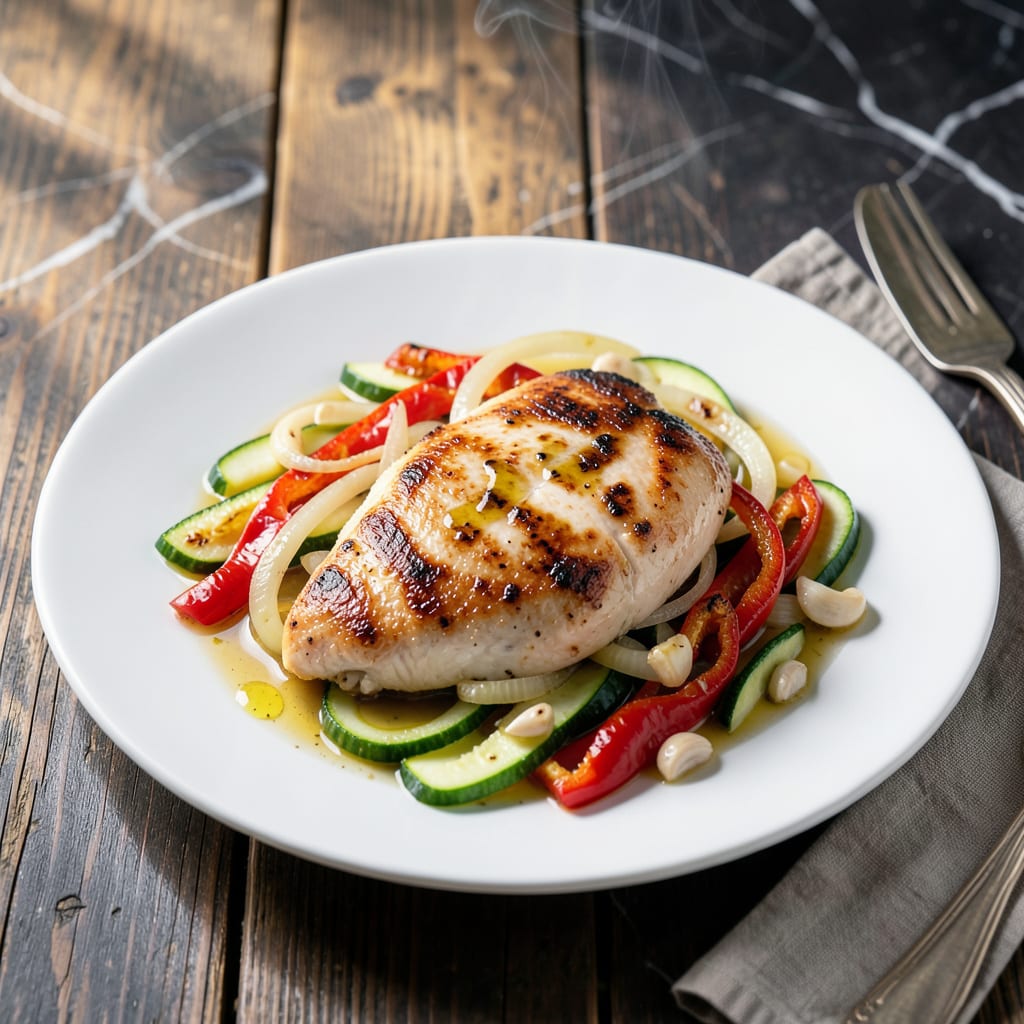
Creating flavorful meals with minimal fat is entirely achievable with the right techniques. This dish proves that reducing fat doesn’t mean sacrificing taste or satisfaction.
Using smart cooking methods and fresh ingredients, you can enjoy bold flavors while keeping the meal light. The result is a dish that’s both nutritious and delicious.
Ingredients for Low Fat Food
Pantry staples and fresh produce create bold flavors without excess fat.
| Ingredient | Amount | Notes |
|---|---|---|
| Boneless Skinless Chicken Breast 🍗 | 1 ½ lb | Pounded to even thickness |
| Zucchini 🥒 | 2 whole | Medium size, sliced |
| Red Bell Pepper 🌶️ | 1 whole | Diced into small pieces |
| Fresh Garlic Cloves 🧄 | 4 cloves | Minced finely |
| Yellow Onion 🧅 | 1 whole | Finely diced |
| Low-Sodium Chicken Broth 💧 | 1 ½ cups | Divided for cooking |
| Diced Tomatoes 🍅 | 1 can | No salt added variety |
| Tomato Paste 🍅 | 2 tbsp | For depth of flavor |
| Dried Oregano 🌿 | 1 tsp | Crushed between fingers |
| Dried Basil 🍃 | 1 tsp | For Italian flair |
| Paprika 🌶️ | ½ tsp | Sweet or smoked variety |
| Olive Oil 🫒 | 1 tbsp | Divided for sautéing |
| Kosher Salt 🧂 | ¾ tsp | Divided to taste |
| Ground Black Pepper 🌶️ | ½ tsp | Freshly ground preferred |
| Fresh Lemon Juice 🍋 | 2 tbsp | For brightness |
The chicken quality matters most here. Look for air-chilled breasts at Whole Foods or Trader Joe’s—they retain moisture better without added sodium. Zucchini should be firm with vibrant green skin; skip any with soft spots. Fresh garlic and onion add depth without calories, so don’t skip them. The broth should be low-sodium to keep the dish light yet flavorful.
No fresh zucchini? Yellow squash or eggplant work just as well (salt eggplant first to remove bitterness). Substitute vegetable broth for chicken broth if needed. Out of tomato paste? Use double the diced tomatoes and cook them down. Dried herbs can be swapped with half the amount of fresh—just chop them fine. The paprika adds color and mild heat (smoked paprika deepens the flavor).
This keeps beautifully for 4-5 days in the fridge. Store leftovers in airtight containers—reheats well for quick lunches. Freezes for up to 3 months if you want to batch cook. The flavors actually intensify overnight.
Why You’ll Love This Recipe
- One Pan Wonder: I toss the chicken, zucchini, and bell peppers together with garlic and onion—minimal cleanup, maximum satisfaction.
- Garlicky Kick: The fresh garlic and sweet onion make every bite pop without heavy sauces or guilt.
- Meal Prep Magic: This keeps beautifully for three days, so I always have a light lunch ready to grab.
- Budget Friendly: Chicken breast and seasonal veggies stretch far, and honestly, it’s one of the cheapest meals I make.
Step-by-Step Instructions for Flavor-Packed Meals Without the Guilt
Here’s the method, straightforward and designed to maximize flavor while keeping it light.
Step 1: Sear the Chicken for Maximum Flavor
Heat ½ tbsp olive oil in a large nonstick skillet over medium-high heat. Season the 1.5 lb boneless skinless chicken breast with ½ tsp kosher salt and ½ tsp ground black pepper, then add it to the pan. Cook for 5-6 minutes per side until golden brown and the internal temperature reaches 165°F.
This high-heat sear creates a flavorful crust without added fat. I press down gently with a spatula during the first minute to ensure even contact with the pan. Remove the chicken and set aside—it’ll finish cooking in the sauce later.
Step 2: Sauté the Vegetables Until Tender
In the same skillet, add the remaining ½ tbsp olive oil. Stir in the finely diced yellow onion, diced red bell pepper, and sliced zucchini. Cook over medium heat for 5-6 minutes until the vegetables soften and the onion becomes translucent.
Add the minced fresh garlic cloves, 1 tsp dried oregano, 1 tsp dried basil, and ½ tsp paprika. Stir for 30 seconds until fragrant. This builds a robust aromatic base for the dish without relying on excess oil.
Step 3: Simmer in Broth and Tomatoes for Depth
Pour in 1.5 cups low-sodium chicken broth, 1 can diced tomatoes, and 2 tbsp tomato paste. Stir well to combine, scraping up any browned bits from the bottom of the pan. Bring the mixture to a gentle simmer.
Return the chicken to the skillet, nestling it into the sauce. Reduce the heat to medium-low and let it simmer for 5-7 minutes until the chicken is fully cooked and the sauce has thickened slightly. The tomatoes and broth create a rich, savory base without heavy cream or butter.
Step 4: Finish with Fresh Lemon for Brightness
Remove the skillet from heat and stir in the remaining ¼ tsp kosher salt (or to taste) and 2 tbsp fresh lemon juice. Let the dish rest for 2-3 minutes to allow the flavors to meld.
This final touch of acidity brightens the dish and balances the savory notes. Serve hot, ensuring each portion has a generous amount of the vegetable-packed sauce. The result is a satisfying, low-fat meal that doesn’t skimp on taste.
Pro Tips For Making Low Fat Food
- Preheat the Pan: I learned this the hard way—crank your pan to medium-high before adding the chicken, otherwise it’ll steam instead of sear and turn rubbery.
- Salt the Zucchini: Sounds weird, but it works: sprinkle salt on sliced zucchini and let it sit for 10 minutes to draw out excess water so it doesn’t turn mushy when cooked.
- Skip the Overcrowding: Resist the urge to dump all the veggies in at once—cook the peppers and onions first, then add zucchini, or they’ll just steam each other into sogginess.
- Slice Against the Grain: Cut the chicken breast crosswise into strips for shorter fibers, making every bite more tender without adding fat or marinades.
Wine and Beer Pairings for These Flavors
White Wine Selections
For this light dish, a crisp Pinot Grigio works beautifully—the citrus notes complement the lemon juice and brighten the chicken. I prefer one from Italy’s Alto Adige region for its mineral finish. 🍷
Red Wine Options
If you prefer red, go for a light-bodied Pinot Noir with bright acidity. The Oregon Willamette Valley versions have earthy notes that pair well with the herbs. Serve slightly chilled for best results.
Light Beer Pairings
A wheat beer like Blue Moon or Hoegaarden offers a refreshing contrast with its citrusy, slightly sweet profile. The effervescence cleanses your palate between bites of the savory chicken. 🍺
Non-Alcoholic Choices
Sparkling water with a squeeze of fresh lemon mirrors the dish’s brightness. For tea lovers, an iced hibiscus tea provides a tart, floral counterpoint to the rich tomato base.
I always keep these options on hand for guests who don’t drink alcohol.
Temperature Matters
Serve white wines and beers at 45-50°F for optimal flavor. Red wines should be slightly cooler than room temp—about 60°F. This temperature range enhances the pairing experience.
Nutrition Facts
Frequently Asked Questions
Can I use chicken thighs instead of breasts?
Yes, but skinless thighs work best to keep it light. They stay juicier but add about 5g fat per serving. Adjust cooking time to 8-10 minutes per side since they’re thicker.
How do I reduce fat even more?
Skip the oil entirely and use a nonstick pan with 1-2 tbsp broth to sauté. The chicken will still brown, and you’ll save 120 calories per serving from oil.
Can I make this ahead of time?
Cook and store in the fridge for up to 5 days. The flavors deepen overnight. Reheat gently on the stove with a splash of broth to prevent drying.
What if my sauce is too thin?
Simmer uncovered for 2-3 extra minutes to thicken. For a quicker fix, mix 1 tsp cornstarch with cold water, stir into the sauce, and cook for 1 minute.

- 8 Bean Soup Recipe Crock Pot: Hearty Vegetable Medley in One Pot - September 25, 2026
- 4C Bread Crumbs Meatballs Recipe: Crispy Crust and Juicy Centers - September 25, 2026
- 6 Oz Chocolate Chip Cookie Recipe: Perfectly Balanced Crispy Edges and Chewy Hearts - September 25, 2026