
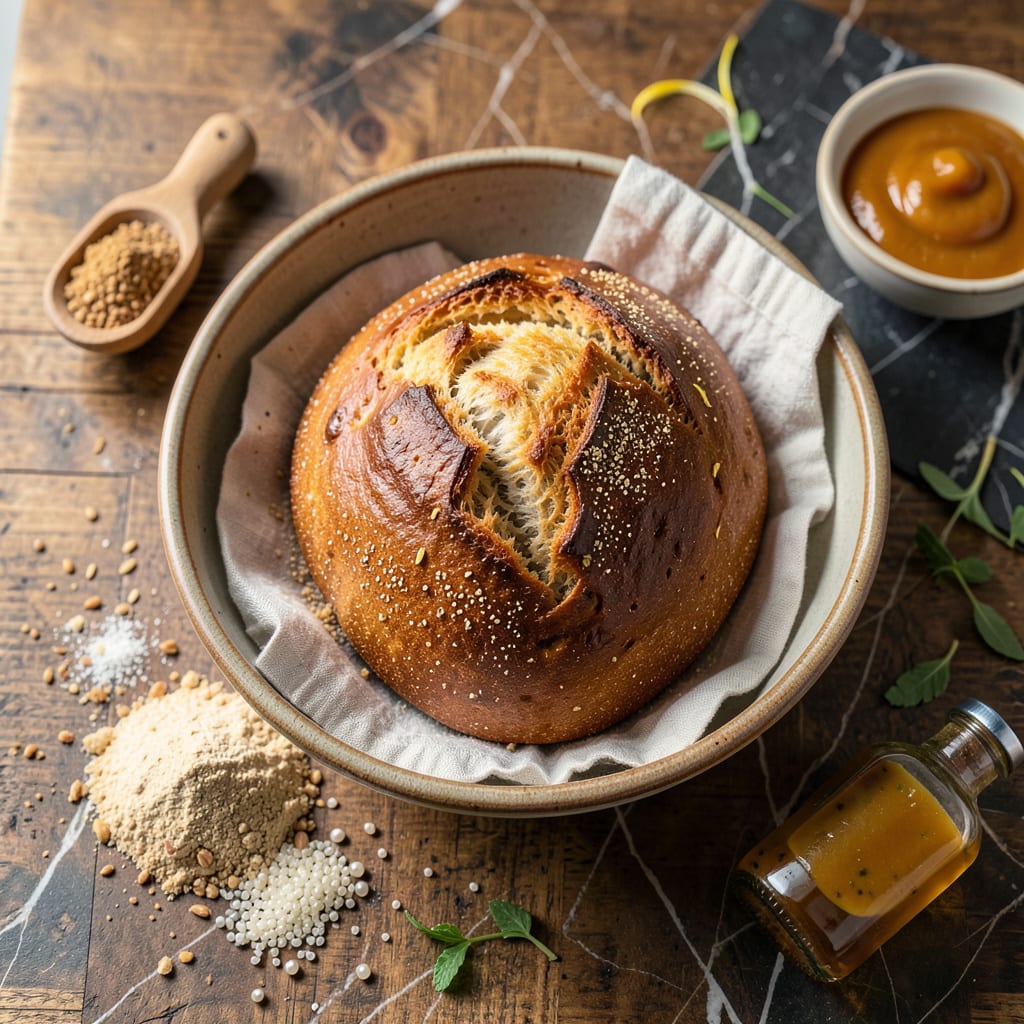
This bread proves you don’t have to sacrifice texture or flavor for dietary needs. A carefully balanced mix of gluten-free flours and low-fat ingredients creates a loaf that’s soft and fluffy.
Perfect for sandwiches or toast, this recipe delivers the satisfaction of fresh-baked bread while meeting strict dietary requirements. No compromise on taste or quality.
Ingredients for Low Fat Gluten Free Bread
Carefully selected gluten-free flours and fat-conscious components deliver exceptional texture without compromise.
| Ingredient | Amount | Notes |
|---|---|---|
| Brown Rice Flour 🌾 | 1 ½ cups | Finely milled for best texture |
| Tapioca Starch 🌾 | ¾ cup | Also called tapioca flour |
| Almond Flour 🌰 | ½ cup | Blanched, fine texture |
| Psyllium Husk Powder 🌿 | 2 tbsp | Essential for binding |
| Active Dry Yeast 🍞 | 2 ¼ tsp | One packet, proofed in warm water |
| Unsweetened Applesauce 🍎 | ¾ cup | Fat-free moisture replacement |
| Warm Water 💧 | 1 ¼ cups | 110°F for activating yeast |
| Maple Syrup 🍁 | 2 tbsp | Vegan sweetener alternative |
| Apple Cider Vinegar 🍏 | 1 tbsp | Balances flavors and aids rise |
| Olive Oil 🫒 | 1 tbsp | Light for low-fat requirement |
| Salt 🧂 | 1 ½ tsp | Fine sea salt preferred |
| Xanthan Gum 🧪 | 1 tsp | Improves elasticity and rise |
For optimal results, Bob’s Red Mill offers reliable gluten-free flours with consistent quality. The psyllium husk powder is non-negotiable—it provides the structure that gluten would normally offer. Almond flour from Costco or Trader Joe’s is cost-effective and finely ground, which prevents grittiness in the final loaf. Ensure your yeast is fresh (check the expiration date) for proper rising.
No almond flour? Sunflower seed flour works as a nut-free alternative. Out of psyllium husk? Ground flaxseed at double the amount can substitute in a pinch, though texture may vary slightly. For sweetness, agave nectar at a 1:1 ratio replaces maple syrup. The applesauce can be swapped with mashed banana, but it will add a mild fruit flavor to the bread.
Store the loaf wrapped tightly at room temperature for up to 3 days, or slice and freeze for 1 month. To maintain freshness, warm slices briefly in a toaster or oven. The flours keep indefinitely in airtight containers in a cool, dark pantry.
Why You’ll Love This Recipe
- I’ll be real: most gluten-free bread turns to brick by day two, but this one stays soft for days thanks to the psyllium husk.
- One Bowl Wonder: I just dump the dry ingredients—brown rice flour, tapioca starch, almond flour, psyllium husk—mix, add yeast, and let it rise. No fancy steps.
- Nutty Warmth: The almond flour gives it this cozy, toasty depth that makes it taste way more indulgent than it is.
- Meal Prep MVP: Honestly, I bake two loaves on Sunday and we’re set for sandwiches and toast all week.
Step-by-Step Instructions for Low Fat Gluten Free Bread
This method ensures a soft, airy loaf with proper rise and texture every time.
Step 1: Activate the Yeast and Hydrate Binders
In a stand mixer bowl, combine the 1.25 cups Warm Water, 2.25 tsp Active Dry Yeast, 2 tbsp Maple Syrup, and 1 tbsp Apple Cider Vinegar. Let this mixture sit for 5 minutes until the yeast becomes frothy and active—this visual cue confirms your yeast is alive and ready to work.
Add the 2 tbsp Psyllium Husk Powder and 1 tsp Xanthan Gum to the bowl. These are critical for structure in gluten-free baking. Whisk vigorously and let this sit for 2-3 minutes until it thickens into a gel-like consistency. This transformation indicates the binders are properly hydrated and will provide the elasticity missing from gluten.
Step 2: Combine Dry Ingredients and Wet Mixture
In a separate bowl, whisk together the 1.5 cups Brown Rice Flour, 0.75 cup Tapioca Starch, 0.5 cup Almond Flour, and 1.5 tsp Salt. The combination of these flours creates the ideal texture balance, while the salt enhances flavor and controls yeast activity.
Attach the paddle to your stand mixer and add the dry ingredients to the hydrated mixture. Pour in the 0.75 cup Unsweetened Applesauce and 1 tbsp Olive Oil. Mix on medium speed for 2-3 minutes until the batter is smooth and elastic. It should resemble thick pancake batter rather than traditional dough.
Step 3: First Rise for Volume Development
Transfer the batter to a greased loaf pan (approximately 9×5 inches) and smooth the top with a wet spatula. This prevents sticking and creates an even surface. Cover the pan with a damp towel and place it in a warm, draft-free location.
Allow it to rise for 45-60 minutes until the batter has expanded to about 1.5 times its original volume. In gluten-free baking, you won’t see the dramatic dome of wheat bread, but the surface should look puffy and slightly domed at the center.
Step 4: Second Rise and Final Preparation
After the first rise, gently press down the center of the loaf with wet fingers to create a slight indentation. This technique encourages the bread to rise upward rather than spreading outward. Cover again and let it rise for an additional 30-45 minutes until it nearly reaches the top of the pan.
Preheat your oven to 375°F during the last 15 minutes of rising. The timing here is crucial—you want the oven fully preheated when the bread goes in, but not so early that it sits waiting. The bread should jiggle slightly when gently shaken, indicating it’s ready for baking.
Step 5: Bake to Golden Perfection
Bake the loaf on the center rack for 50-55 minutes until the top is deep golden brown and the internal temperature reaches 205-210°F. Rotate the pan 180 degrees halfway through baking to ensure even browning.
Remove from the oven and let it cool in the pan for 10 minutes, then transfer to a wire rack to cool completely. This cooling period is essential—slicing too soon will result in a gummy texture. The bread will develop its final structure as it cools, becoming soft and sliceable. Wait at least 1 hour before slicing for optimal texture.
Pro Tips For Making Low Fat Gluten Free Bread
- Proof the Yeast: Always bloom your active dry yeast in warm water (110°F) with a pinch of sugar for 5-10 minutes—I learned this the hard way after wasting a batch because the yeast never activated in the dry mix.
- Hydrate Psyllium First: Mix psyllium husk powder with water and let it sit for 3-5 minutes before adding other ingredients. Sounds weird, but it works: this prevents gummy texture in your gluten-free loaf.
- Avoid Overmixing: Once you combine the flours and wet ingredients, stir just until incorporated—overmixing develops too much structure in gluten-free batters, leading to dense bread.
- Use a Scale: Measure your brown rice flour and almond flour by weight, not volume. After burning three batches, I finally figured out that 1 cup of almond flour can vary by 30 grams, and that matters in gluten-free baking.
Regional Styles of These Flavors
European Style
In France, I make this bread with buckwheat flour replacing 0.5 cup Brown Rice Flour for a nuttier flavor. The French tradition emphasizes a longer rise (2 hours) at a cooler temperature (75°F) to develop complex flavors. 🌟
Mediterranean Approach
Greek bakers often add 1 tsp dried oregano and 1 tsp dried rosemary to the dry ingredients for an herbaceous twist. They also prefer extra virgin olive oil over light, using 2 tbsp for richer flavor while keeping it low-fat.
Asian Fusion
For a Japanese-inspired version, I incorporate 0.25 cup sweet rice flour for chewiness and reduce Tapioca Starch to 0.5 cup. Adding 1 tsp matcha powder gives a subtle green tea flavor and beautiful color. 💚
Latin American
In Mexico, they might use masa harina instead of Brown Rice Flour for a corn-based version. The addition of 1 tsp lime zest brightens the flavor profile, complementing the natural sweetness of the maple syrup.
Middle Eastern
Lebanese bakers often include 1 tbsp tahini and 1 tsp ground cumin for depth. They also use date syrup instead of maple syrup, maintaining the vegan requirement while adding Middle Eastern authenticity.
Nutrition Facts
Frequently Asked Questions
Can I make this without a stand mixer?
Yes! Use a large bowl and a sturdy whisk. Mix vigorously for 3-4 minutes to develop the batter’s elasticity. The texture may be slightly denser but still delicious.
Why does my bread sink in the middle?
This usually means the loaf wasn’t fully baked. Ensure the internal temperature reaches 205-210°F and avoid opening the oven too early. Letting it cool completely helps prevent collapse.
What can I use instead of almond flour?
Sunflower seed flour works as a nut-free alternative. Use the same amount, but note it may slightly alter the flavor. Always check for freshness in your substitutions.
How do I store leftovers?
Wrap tightly and keep at room temperature for up to 3 days. For longer storage, slice and freeze for up to 1 month. Toast slices to refresh before serving.

- 8 Bean Soup Recipe Crock Pot: Hearty Vegetable Medley in One Pot - September 25, 2026
- 4C Bread Crumbs Meatballs Recipe: Crispy Crust and Juicy Centers - September 25, 2026
- 6 Oz Chocolate Chip Cookie Recipe: Perfectly Balanced Crispy Edges and Chewy Hearts - September 25, 2026