
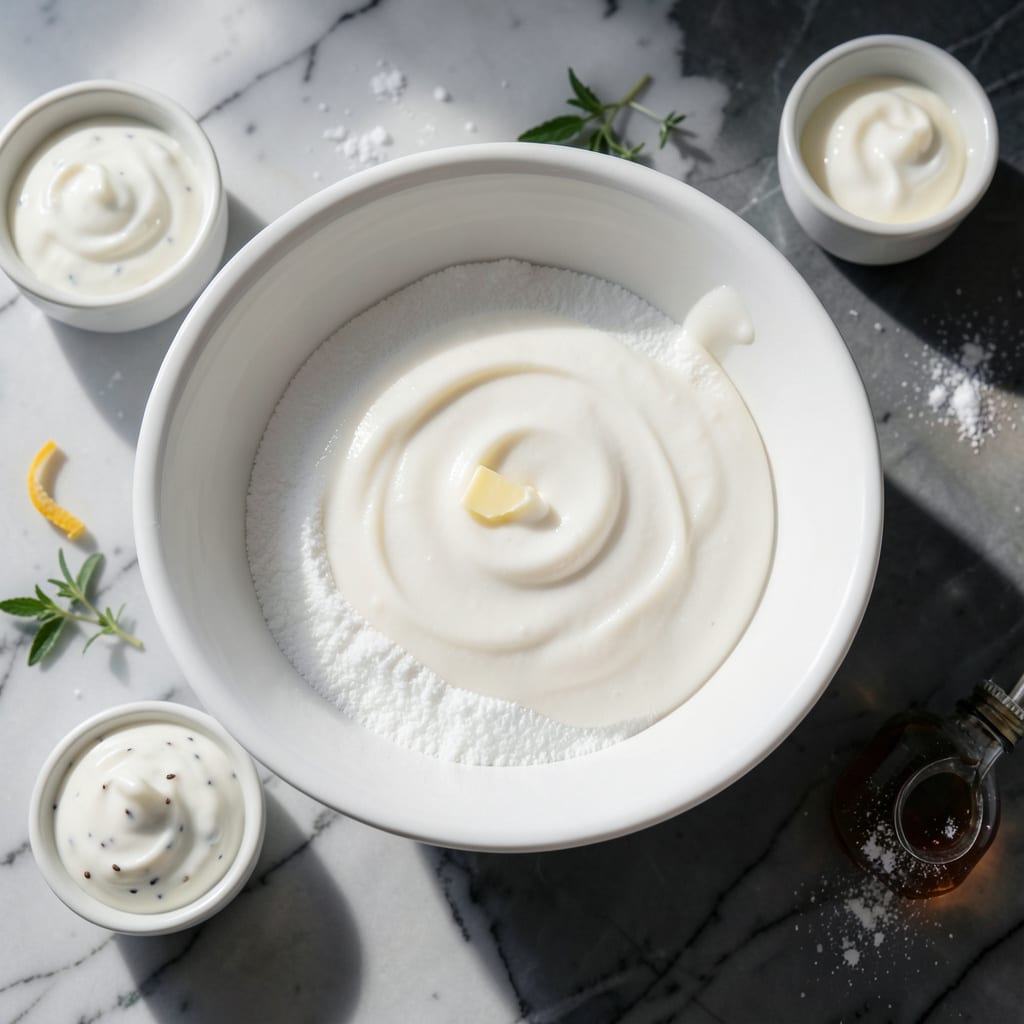
This light icing delivers the same sweet satisfaction as traditional versions without the heavy ingredients. I developed this recipe to maintain a smooth, spreadable texture while cutting calories significantly.
Using simple substitutions like Greek yogurt and reduced-fat milk, this creation pipes beautifully and stays stable. It proves you can enjoy guilt-free cupcake topping without sacrificing flavor or appearance.
Ingredients for Low Fat Icing Recipe for Cupcakes
Eight simple swaps. Lighter texture. Same irresistible sweetness for your cupcakes.
| Ingredient | Amount | Notes |
|---|---|---|
| Powdered Sugar 🍚 | 2 cups | Sifted for smooth texture |
| Non-Fat Greek Yogurt 🥛 | ½ cup | Plain, unsweetened variety |
| Reduced-Fat Milk 🥛 | 2 tbsp | 2% or skim works best |
| Vanilla Extract 🌿 | 1 tsp | Pure vanilla for best flavor |
| Light Butter 🧈 | 2 tbsp | Softened to room temperature |
| Cornstarch 🌾 | 1 tsp | For stability and thickness |
| Almond Extract 🌰 | ¼ tsp | Optional, enhances depth |
| Salt 🧂 | 0.125 tsp | Fine grain for even distribution |
[recipeingredientscaler]
The Greek yogurt is doing most of the heavy lifting here—Fage 0% or Chobani are my go-tos (thick and creamy, no weird aftertaste). Powdered sugar is non-negotiable for that smooth finish, so don’t try granulated. For the milk, any reduced-fat works, but I’ve found 2% gives the best consistency without thinning it out too much. The light butter? Land O’Lakes Light melts in perfectly.
No Greek yogurt? Low-fat sour cream works at a 1:1 swap, but it’s a touch tangier. Skipping the butter? Coconut oil (melted and cooled) adds richness without the dairy. Need it thicker? Add another ½ tsp cornstarch. Prefer a different flavor? Swap the almond extract for lemon or coconut—just keep the amount tiny.
This icing pipes best fresh but holds up in the fridge for 3-4 days. Store in an airtight container with plastic wrap pressed right on the surface (no skin forming). Freezes for 1 month—thaw in the fridge, then re-whip before using.
Why You’ll Love This Recipe
- 5-Minute Magic: I just dump powdered sugar, Greek yogurt, and a splash of reduced-fat milk in a bowl—no mixer, no fuss.
- Rich Without Guilt: The light butter and vanilla give it that classic bakery taste, but I can actually enjoy a second cupcake.
- Birthday to Brunch: I’ve used this on everything from my kid’s cupcakes to a last-minute coffee cake for book club.
- Stays Fresh: Honestly, it keeps in the fridge for days, so I can ice a batch on Sunday and still have perfect frosting by Wednesday.
Step-by-Step Instructions for Low Fat Icing
Here’s the method. Straightforward, tested, works every time.
Step 1: Sift and Combine Dry Ingredients
Begin by sifting the 2 cups Powdered Sugar through a fine-mesh sieve into a medium bowl. This step removes any lumps and ensures a silky-smooth texture in your finished icing. I never skip this—it makes a noticeable difference.
Add the 1 tsp Cornstarch and 0.125 tsp Salt to the powdered sugar. Whisk these together thoroughly until no streaks remain. The cornstarch adds stability and prevents weeping, while the salt balances the sweetness perfectly.
Step 2: Cream the Light Butter and Sweeteners
In a separate large bowl, beat the 2 tbsp Light Butter with a hand mixer on medium speed until it’s pale and fluffy, about 1-2 minutes. The butter should be softened but not melted—room temperature is key here.
Gradually add the sifted powdered sugar mixture to the butter, beating on low speed until just combined. Don’t overmix at this stage. You’re building the base that will hold everything together without adding excess fat.
Step 3: Incorporate Wet Ingredients for Creaminess
Now add the 0.5 cup Non-Fat Greek Yogurt, 2 tbsp Reduced-Fat Milk, 1 tsp Vanilla Extract, and 0.25 tsp Almond Extract. Beat on medium speed for 2-3 minutes until the mixture is completely smooth and creamy.
The Greek yogurt replaces traditional butter or cream cheese, giving you that rich mouthfeel with a fraction of the fat. Watch for the mixture to lighten slightly in color and develop a glossy sheen—that’s how you know it’s properly emulsified. If it seems too thick, add the milk one tablespoon at a time until you reach the perfect spreading consistency.
Step 4: Adjust and Perfect the Texture
Stop the mixer and scrape down the sides of the bowl with a rubber spatula. Give it one final beat for 30 seconds to ensure everything is fully incorporated. The icing should hold soft peaks when you lift the beaters.
If your icing is too thin, add a bit more powdered sugar, one tablespoon at a time. If it’s too thick, add the milk a teaspoon at a time. This recipe is forgiving, so don’t stress—just taste as you go and adjust to your preference. The almond extract adds a subtle depth, but feel free to omit it if you prefer pure vanilla flavor.
Step 5: Apply and Serve
Use the icing immediately to frost cooled cupcakes. The texture is perfect for piping—it holds its shape but spreads smoothly. If you’re not using it right away, press plastic wrap directly onto the surface to prevent a crust from forming.
This icing pipes beautifully and sets up just enough to hold decorative swirls without being stiff. For best results, ice your cupcakes the same day you make them. The flavors meld beautifully over a few hours, and the texture remains light and fluffy. This makes enough to generously frost 4 cupcakes with some left over for touch-ups.
Pro Tips For Making Low Fat Icing Recipe For Cupcakes
- Chill the Bowl: I learned this the hard way—place your mixing bowl in the fridge for 10 minutes before combining the Greek yogurt and powdered sugar. It keeps the icing from getting too runny while you work.
- Sift the Sugar: Sounds tedious, but sifting the powdered sugar first breaks up clumps and gives you that smooth, professional finish without overmixing.
- Skip the Overmixing: Resist the urge to beat the icing for more than 2-3 minutes—overworking it incorporates too much air and can make the texture grainy, especially with light butter.
- Thin Gradually: If the icing is too thick, add the reduced-fat milk one teaspoon at a time. After ruining a batch by pouring in too much at once, I now measure like my grandmother’s patience depended on it.
Regional Styles of This low fat icing recipe for cupcakes
Southern Style
Down South, we lighten up icing with sweetened condensed milk instead of heavy cream. Replace the Greek yogurt with ½ cup fat-free sweetened condensed milk for a caramel-like richness that’s still low in fat. It pipes like a dream. 💛
West Coast Twist
California bakers love incorporating avocado for creaminess without dairy. Use ¼ cup mashed ripe avocado in place of the light butter. The flavor is neutral, but it gives a beautiful pale green hue. Perfect for spring-themed cupcakes.
Midwest Classic
The Midwest keeps it simple with a marshmallow fluff base. Swap the yogurt for 1 cup marshmallow creme and reduce the milk to 1 tbsp. Beat until fluffy—it’s lighter than buttercream but holds its shape well.
New England Approach
In New England, maple syrup often replaces sugar entirely. Use ½ cup pure maple syrup with 1½ cups powdered sugar and skip the milk. The result is a glossy, slightly runny icing that’s perfect for drizzling. 🍁
Texas Bold
Everything’s bigger in Texas, including flavor. Add 1 tbsp instant coffee granules dissolved in the milk for a mocha twist. Or stir in 1 tsp cocoa powder with the dry ingredients for a subtle chocolate note without extra fat.
Nutrition Facts
Frequently Asked Questions
Can I use regular yogurt instead of Greek?
Stick with Greek yogurt for best results. Regular yogurt has more liquid, which can make your icing too thin. If that’s all you have, strain it through a cheesecloth for 30 minutes first.
How long does this icing keep?
Store in an airtight container in the fridge for up to 4 days. Press plastic wrap on the surface to prevent drying. It freezes well for 1 month too.
Why is my icing runny?
This usually means too much liquid. Add 1-2 tbsp powdered sugar at a time until thickened. Chilling for 15 minutes can also help it firm up.
Can I make this chocolate?
Add 2 tbsp cocoa powder with the dry ingredients. For richer flavor, dissolve 1 oz melted dark chocolate in the milk before adding.

- 8 Bean Soup Recipe Crock Pot: Hearty Vegetable Medley in One Pot - September 25, 2026
- 4C Bread Crumbs Meatballs Recipe: Crispy Crust and Juicy Centers - September 25, 2026
- 6 Oz Chocolate Chip Cookie Recipe: Perfectly Balanced Crispy Edges and Chewy Hearts - September 25, 2026