
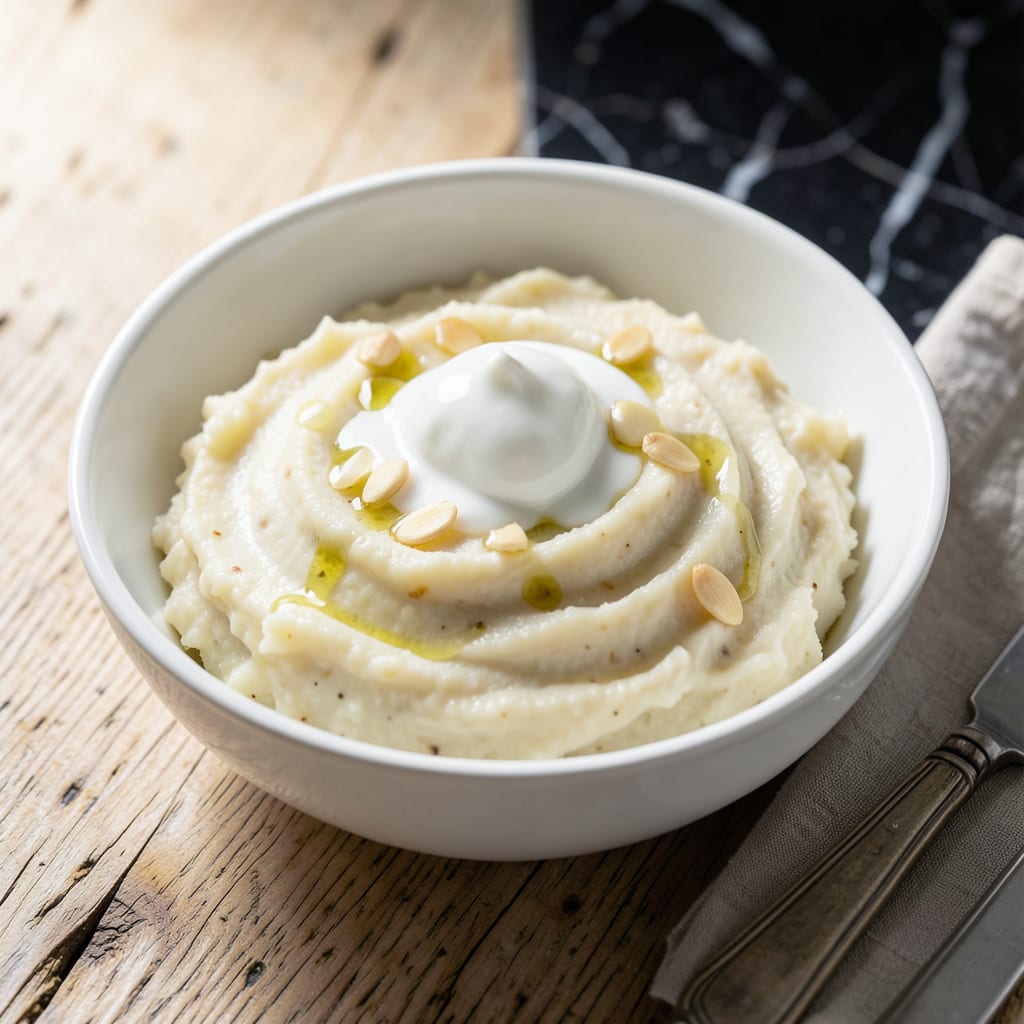
I’ve perfected a lighter take on classic mashed potatoes that doesn’t sacrifice flavor or texture. By swapping butter and cream for Greek yogurt, you get the same creamy consistency with a fraction of the fat.
This method ensures light and fluffy results every time, with simple ingredients and minimal effort. The yogurt adds a subtle tang that complements the potatoes beautifully.
Ingredients for Low Fat Mashed Potatoes
Simple ingredients create light, fluffy mashed potatoes with a tangy Greek yogurt twist.
| Ingredient | Amount | Notes |
|---|---|---|
| Yukon Gold Potatoes 🥔 | 2 lb | Peeled and cubed evenly |
| Plain Nonfat Greek Yogurt 🥛 | 1 cup | Full-fat works but reduces lightness |
| Low-Fat Milk 🥛 | ½ cup | Warmed before mixing |
| Garlic Cloves 🧄 | 3 cloves | Minced or pressed |
| Unsalted Butter 🧈 | 1 tbsp | Optional for richness |
| Sea Salt 🧂 | 1 tsp | Adjust to taste |
| Freshly Ground Black Pepper 🌶️ | ½ tsp | To taste |
| Fresh Chives 🌿 | 2 tbsp | Chopped, for garnish |
| Dried Thyme 🍃 | ½ tsp | Optional for depth |
| Bay Leaf 🍃 | 1 whole | For boiling potatoes |
The potatoes are key—Yukon Gold offers the perfect balance of creaminess and structure. Avoid waxy red potatoes as they lack the right starch content. Organic varieties from Whole Foods or your local farmers market often have superior texture. For the Greek yogurt, Fage Total 0% is ideal (thick, high-protein, no added fat). The milk should be warmed to prevent cooling the potatoes during mixing.
No Greek yogurt? Sour cream at half the quantity works, though it adds fat. For dairy-free, unsweetened almond yogurt is a decent substitute. Skip the butter entirely for the lightest version. Fresh garlic is non-negotiable—jarred minced garlic lacks the punch. The chives can be swapped for green onions (use the green parts only) or fresh parsley.
Mashed potatoes are best served immediately, but leftovers keep 3-4 days refrigerated. Reheat gently with a splash of milk to restore creaminess. This recipe doesn’t freeze well—the texture separates. For make-ahead, boil and peel potatoes a few hours early, then mash just before serving.
Why You’ll Love This Recipe
- One Pot Wonder: I just boil, mash, and mix—no fancy steps, and the Yukon Golds practically do the work for me.
- Garlic Creamy Dream: The Greek yogurt and roasted garlic give it that rich, tangy depth without the heavy guilt.
- Meal Prep MVP: Makes a big batch that reheats beautifully for lunches all week. Honestly, it tastes even better the next day.
- Budget Stretcher: A few potatoes, a dollop of yogurt, and I’ve got a side that feeds four for pennies. I’ll be real: it’s my go-to when the wallet’s feeling light.
Step-by-Step Instructions for Low Fat Mashed Potatoes
Here’s the method. Straightforward, tested, works every time.
Step 1: Boil Potatoes with Aromatics
Place the 2 lb Yukon Gold Potatoes in a large pot and cover with cold water by 1 inch. Add the 1 whole Bay Leaf and 0.5 tsp Dried Thyme to the water. Bring to a boil over high heat, then reduce to medium and cook for 15-20 minutes until the potatoes are fork-tender.
This step infuses the potatoes with subtle herbal notes while ensuring even cooking. The potatoes are done when a knife slides through with no resistance. Drain immediately and discard the bay leaf and thyme to prevent overpowering flavors.
Step 2: Warm the Dairy Components
While the potatoes cook, warm the 0.5 cup Low-Fat Milk in a small saucepan over low heat for 2-3 minutes until just steaming. Avoid boiling, as this can scald the milk and create an unpleasant texture in the final dish.
In a separate bowl, combine the 1 cup Plain Nonfat Greek Yogurt with the minced 3 cloves Garlic Cloves. The warmth of the milk will help integrate the yogurt smoothly later, preventing a lumpy consistency. Set both aside until the potatoes are ready.
Step 3: Mash and Incorporate Wet Ingredients
Return the drained potatoes to the pot and let them sit for 1-2 minutes to evaporate excess moisture. Mash them with a potato masher or ricer until smooth, ensuring no lumps remain. For ultra-smooth texture, press them through a fine-mesh sieve while still hot.
Gradually add the warm milk, stirring constantly to achieve a creamy base. Then fold in the yogurt and garlic mixture until fully combined. The warmth of the potatoes will temper the yogurt, maintaining a silky texture without curdling.
Step 4: Season and Finish
Stir in the 1 tsp Sea Salt and 0.5 tsp Freshly Ground Black Pepper, adjusting to taste as needed. For richness, fold in the 1 tbsp Unsalted Butter until melted and fully incorporated. This optional step adds depth while keeping the dish light.
Taste and adjust seasoning one final time. The mashed potatoes should be smooth, creamy, and well-balanced in flavor. If they seem too thick, stir in a splash of warm milk to reach your desired consistency.
Step 5: Garnish and Serve
Transfer the mashed potatoes to a serving bowl and garnish with the 2 tbsp Fresh Chives. The chives add a pop of color and a mild oniony brightness that complements the creamy texture. Serve immediately while hot for the best experience.
Pro Tips For Making Low Fat Mashed Potatoes
- Start in Cold Water: I learned this the hard way—begin boiling your Yukon Golds in cold, salted water rather than dropping them into boiling water to guarantee even cooking all the way through.
- Warm the Milk: Skip the cold low-fat milk straight from the fridge; warm it for about 30 seconds in the microwave first so it blends smoothly into the potatoes without making the mash gummy.
- Dry the Potatoes: After draining, return the potatoes to the pot and let them sit for 2 minutes with the heat off to evaporate excess moisture—this prevents watery mashed potatoes.
- Fold in Yogurt Last: Mix your unsalted butter and warm milk first, then gently fold in the nonfat Greek yogurt at the very end to keep the texture light and fluffy instead of dense.
Storing and Reheating This Recipe
Refrigerator Storage
Let your mashed potatoes cool completely before transferring to an airtight container. They’ll keep in the fridge at 40°F or below for 3-4 days without losing much quality. I find they actually taste better the next day as the flavors meld. ❄️
Freezer Storage
While not ideal, you can freeze this dish for up to 1 month. Portion into freezer-safe bags, removing as much air as possible to prevent freezer burn. The texture may separate slightly upon thawing, but it’s still usable in soups or casseroles.
Stovetop Reheating
This is my go-to method for best results. Warm in a saucepan over low heat, adding 2-3 tbsp low-fat milk to restore creaminess. Stir frequently to prevent sticking and heat evenly for 5-7 minutes. 🔥
Microwave Reheating
For quick portions, microwave in 30-second intervals at 70% power, stirring between each. Add a splash of milk and cover with a damp paper towel to retain moisture. This method works well for single servings.
Reviving Texture
If your leftovers seem dry, fold in 1-2 tbsp warm Greek yogurt or milk while reheating. Avoid overmixing, as this can make them gummy. The key is gentle heat and patience.
Nutrition Facts
Frequently Asked Questions
Why use Greek yogurt instead of butter?
Greek yogurt adds creaminess with minimal fat and boosts protein. It also introduces a subtle tang that balances the dish beautifully. 1 cup has just 100-120 calories vs butter’s 800+ for the same amount.
Can I make this ahead of time?
Yes, but mash just before serving for best texture. Boil and peel potatoes 2-3 hours early, then store in cold water. Reheat gently with warm milk to restore creaminess.
What if my potatoes turn out gummy?
Overmixing is the usual culprit. Use a potato ricer or masher, not a food processor. Stop mashing once smooth—excess stirring releases too much starch.
Can I use a different potato variety?
Stick with Yukon Gold or Russet for best results. Waxy potatoes like red or new potatoes lack the starch needed for fluffy texture.

- 8 Bean Soup Recipe Crock Pot: Hearty Vegetable Medley in One Pot - September 25, 2026
- 4C Bread Crumbs Meatballs Recipe: Crispy Crust and Juicy Centers - September 25, 2026
- 6 Oz Chocolate Chip Cookie Recipe: Perfectly Balanced Crispy Edges and Chewy Hearts - September 25, 2026