
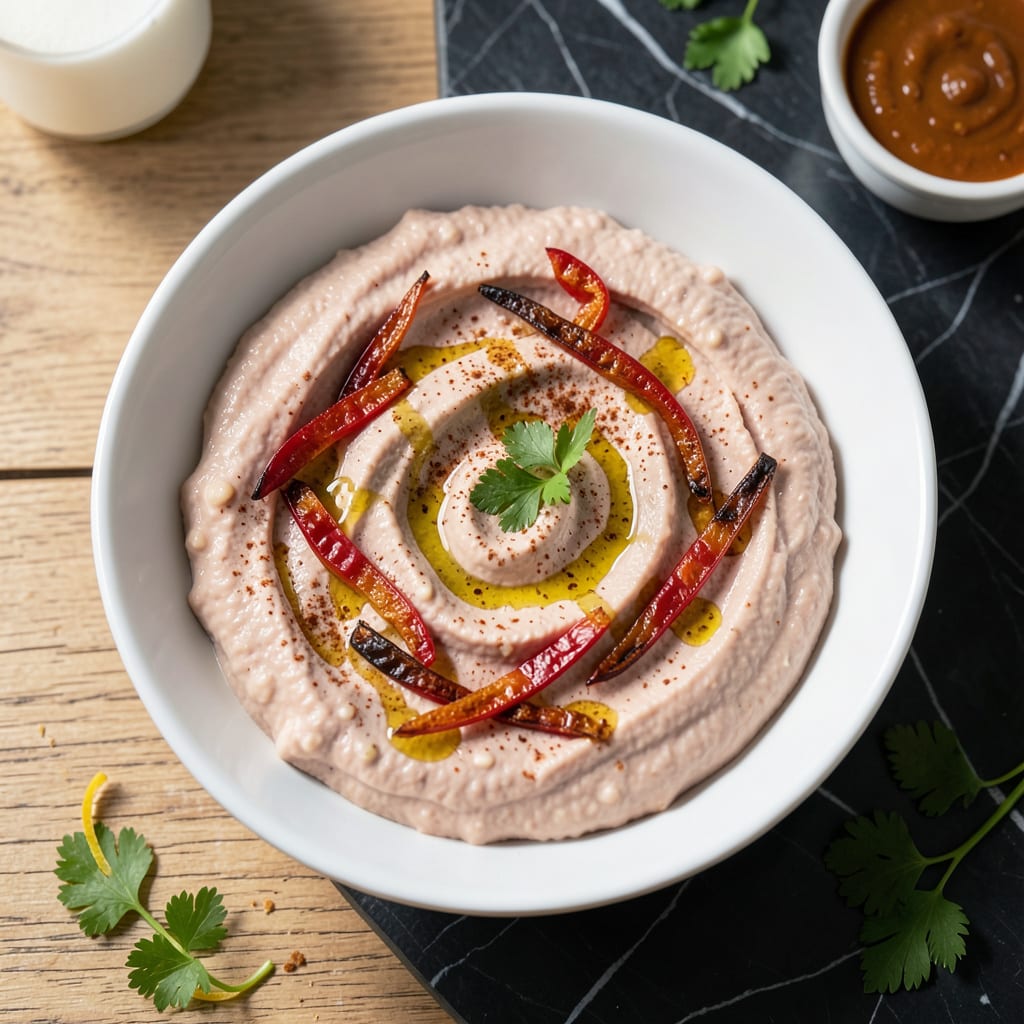
This lightened hummus delivers all the bold Mediterranean flavors you love without the added oil. The roasted red peppers add natural sweetness and vibrant color that makes every bite pop.
With a smooth texture and zesty finish, it’s perfect for dipping, spreading, or topping. You won’t miss the fat—just the guilt.
Ingredients for Low Fat Red Pepper Hummus
Nine simple ingredients for bold Mediterranean flavor without the oil. Ready in minutes.
| Ingredient | Amount | Notes |
|---|---|---|
| Canned Chickpeas 🥘 | 15 oz | Drained and rinsed, liquid reserved |
| Roasted Red Peppers 🌶️ | 12 oz | Jarred, drained and patted dry |
| Tahini 🥜 | 2 tbsp | Well-stirred before measuring |
| Fresh Lemon Juice 🍋 | 3 tbsp | About 1 large lemon |
| Garlic Cloves 🧄 | 2 cloves | Peeled and minced |
| Ground Cumin 🌿 | 1 tsp | Toasted for extra depth |
| Smoked Paprika 🌶️ | ½ tsp | Adds subtle smokiness |
| Salt 🧂 | ½ tsp | Adjust to taste |
| Water 💧 | 2 tbsp | As needed for texture |
[recipeingredientscaler]
The chickpeas are the foundation here. Goya or Bush’s brands work great—just drain and rinse them well. The roasted red peppers add that signature sweetness and color. Mejjadra brand at Middle Eastern markets are my go-to (they come in a jar, packed in water, not oil). Look for peppers with vibrant color and no added preservatives if you’re being picky.
No tahini? Blended cashews or almond butter can work in a pinch, but they’ll change the flavor a bit. Short on lemon juice? White vinegar at half the amount will give you the acidity you need. The cumin is key—if you’ve got whole seeds, toast and grind them fresh (worth the extra minute). Fresh garlic is non-negotiable though—jarred stuff just doesn’t cut it here.
This keeps beautifully in the fridge for about 1 week. The flavors actually deepen after a day or two. Freeze portions for up to 3 months—perfect for meal prep. A thin layer of water on top before sealing keeps it from drying out.
Why You’ll Love This Recipe
- Blender Friendly: Just dump everything in—canned chickpeas, roasted red peppers, tahini, lemon, garlic—and blend. No chopping, no fuss.
- Smoky & Bright: The roasted red peppers add this deep, smoky sweetness that plays so well with the sharp garlic and zingy lemon.
- Meal Prep Hero: I make a big batch on Sunday and it’s my lunchbox savior all week—spread on wraps, dipped with veggies, or dolloped on salads.
- Pantry Staples: Honestly, I always have these ingredients on hand. Canned chickpeas and jarred peppers mean I can whip this up whenever a craving hits.
Step-by-Step Instructions for Low Fat Red Pepper Hummus
Here’s how to blend these ingredients into a creamy, flavorful dip that’s light but satisfying.
Step 1: Drain and Prep the Chickpeas
Drain and rinse the 15 oz canned chickpeas thoroughly under cold water. I like to give them a good shake in the colander to remove excess liquid. Reserve about ¼ cup of the chickpea liquid (aquafaba) in case you need it later for adjusting texture.
Pat the chickpeas dry with a clean kitchen towel. This step removes any lingering starch that could make your hummus gummy. You want them as dry as possible for the smoothest texture. The chickpeas should feel slightly firm to the touch, not mushy.
Step 2: Combine All Ingredients Except Water
In the bowl of a food processor, combine the 15 oz canned chickpeas, 12 oz roasted red peppers (drained and patted dry), 2 tbsp tahini, 3 tbsp fresh lemon juice, 2 cloves minced garlic, 1 tsp ground cumin, 0.5 tsp smoked paprika, and 0.5 tsp salt.
Pulse the mixture a few times to break everything up before running the processor continuously. This initial pulse helps prevent the tahini from clumping and ensures even blending. You’ll notice the mixture start to turn pale as the tahini incorporates.
Step 3: Blend to Creamy Perfection
With the food processor running, gradually add the 2 tbsp water through the feed tube. Stop and scrape down the sides of the bowl as needed. The mixture will start to look smooth and creamy after about 2-3 minutes of blending.
Watch for the texture to become uniform and slightly glossy. If it’s too thick, add a little of the reserved chickpea liquid, 1 tbsp at a time, until it reaches your desired consistency. The hummus should be smooth enough to scoop but hold its shape on a chip.
Step 4: Taste and Adjust
Transfer the hummus to a serving bowl and give it a taste. This is where you can make it perfect. If it needs more zing, add a bit more fresh lemon juice. If it’s too thick, stir in a little more water or reserved chickpea liquid.
The flavors will meld together after about 30 minutes in the fridge, so I always let it rest before serving. The hummus should have a vibrant red-orange color from the peppers and a smooth, creamy texture that’s light on the palate but rich in flavor.
Step 5: Serve and Enjoy
Drizzle the top with a little extra fresh lemon juice for brightness and a sprinkle of smoked paprika for color. Serve with warm pita, fresh vegetables, or as a spread on sandwiches. This makes about 4 servings, perfect for sharing or meal prepping.
The hummus will keep in an airtight container in the refrigerator for up to 5 days. If it thickens in the fridge, just stir in a splash of water to bring it back to the perfect dipping consistency.
Pro Tips For Making Low Fat Red Pepper Hummus
- Drain the Chickpeas Well: Rinse and drain the canned chickpeas thoroughly, then pat them dry with a paper towel—excess liquid makes the hummus watery instead of creamy.
- Roast Your Garlic: Swap raw garlic for roasted cloves; the mellow, sweet flavor blends better with the red peppers and cuts the sharpness that can overpower the dip.
- Skip the Tahini Overpour: Start with 1-2 tablespoons of tahini and adjust—it’s easy to add more, but too much makes the hummus bitter and thick, especially in a low-fat version.
- Blend the Lemon Last: Add the fresh lemon juice at the end of blending and taste as you go; it brightens the flavors without thinning the texture, which is crucial when you’re keeping fat content low.
Wine and Beer Pairings for These Flavors
Crisp White Wines
A chilled Sauvignon Blanc from New Zealand cuts through the smoky sweetness of the red peppers beautifully. Its citrus notes and bright acidity refresh your palate between bites. I love the Kim Crawford or Oyster Bay labels for this pairing. 🍷
Light Red Options
If you prefer red wine, go for a light-bodied Pinot Noir. The earthy notes complement the cumin without overpowering the dip. Try Meiomi from California—its soft tannins work perfectly with the hummus’s creamy texture.
Mediterranean Whites
For an authentic pairing, try a Greek Assyrtiko or Lebanese Chardonnay. These wines have the mineral quality that enhances the chickpeas’ nuttiness. I find Gaia Assyrtiko from Santorini particularly refreshing with this dip.
Wheat Beer Choices
A Hefeweizen with its banana and clove notes offers a delightful contrast to the hummus’s smokiness. Weihenstephaner from Germany is my top pick. The effervescence cleanses your palate beautifully. 🍺
Light Lager Alternatives
For a simpler option, a crisp pilsner like Stella Artois works wonderfully. Its clean, slightly bitter finish balances the sweetness of the roasted peppers without competing with the other flavors.
Non-Alcoholic Pairing
Sparkling water with a squeeze of lemon enhances the hummus’s zesty notes. For something more flavorful, try a Mediterranean-style sparkling lemonade—its citrus notes mirror the lemon juice in the recipe. 💫
Nutrition Facts
Frequently Asked Questions
Can I use fresh red peppers instead of jarred?
Yes, roast fresh peppers at 400°F for 20-25 minutes until charred. Peel, seed, and drain them well. Jarred saves time but fresh adds brighter flavor.
Why does my hummus taste bitter?
Bitterness often comes from tahini or over-blended chickpea skins. Use fresh tahini and blend just until smooth. Adding 1 tsp honey can balance bitterness.
How long does it keep in the fridge?
Stored in an airtight container, it stays fresh for 4-5 days. A thin water layer on top prevents drying. Stir before serving.

- 8 Bean Soup Recipe Crock Pot: Hearty Vegetable Medley in One Pot - September 25, 2026
- 4C Bread Crumbs Meatballs Recipe: Crispy Crust and Juicy Centers - September 25, 2026
- 6 Oz Chocolate Chip Cookie Recipe: Perfectly Balanced Crispy Edges and Chewy Hearts - September 25, 2026