
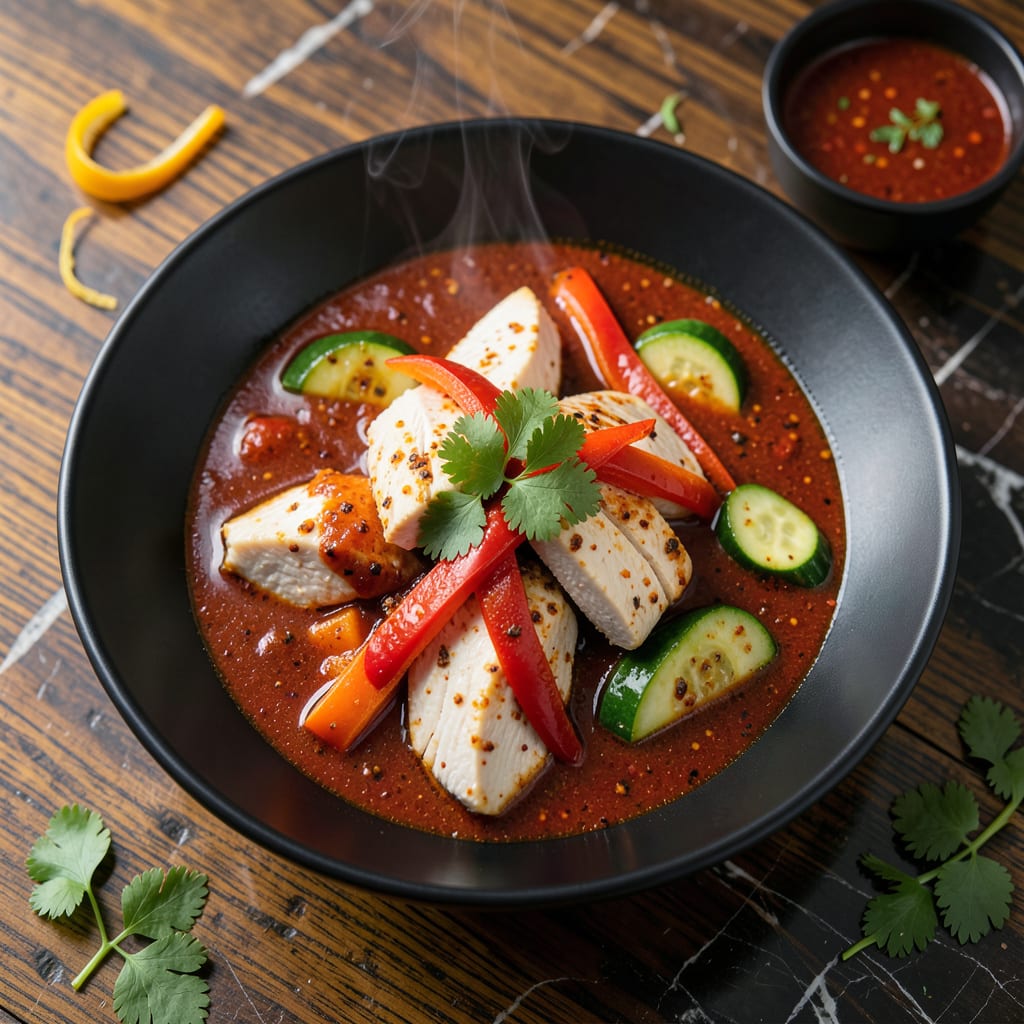
This lightened version delivers all the bold Thai flavors without the coconut milk. I’ve replaced the traditional fats with a clever combination of broth and puréed vegetables for a rich texture.
The result is a flavor-packed curry that’s just as satisfying as the original but with a fraction of the calories. Perfect for a nutritious weeknight meal.
Ingredients for Low Fat Red Thai Curry
Bold Thai flavors with a lighter touch. No coconut milk, all satisfaction.
| Ingredient | Amount | Notes |
|---|---|---|
| Red Curry Paste 🌶️ | 3 tbsp | Thai kitchen brand preferred |
| Low-Sodium Chicken Broth 🥣 | 3 cups | Or substitute vegetable broth |
| Carrots 🥕 | 2 whole | Peeled and diced small |
| Red Bell Pepper 🌶️ | 1 whole | Seeded and sliced thin |
| Zucchini 🥒 | 1 whole | Diced into 1-inch pieces |
| Lean Chicken Breast 🍗 | 1 lb | Boneless, skinless, cut into strips |
| Onion 🧅 | 1 whole | Yellow or white, finely chopped |
| Garlic Cloves 🧄 | 4 cloves | Minced for maximum flavor |
| Fresh Ginger 🌿 | 1 tbsp | Peeled and finely grated |
| Tomato Paste 🍅 | 2 tbsp | For depth of flavor |
| Fish Sauce 🐟 | 1 tbsp | Or sub soy sauce for vegetarian |
| Lime Juice 🍈 | 2 tbsp | Freshly squeezed preferred |
| Brown Sugar 🍚 | 1 tsp | Light or dark works fine |
| Fresh Cilantro 🌿 | ¼ cup | Chopped for garnish |
| Cornstarch 🌾 | 1 tbsp | Mixed with 1 tbsp water |
The curry paste is non-negotiable for authentic flavor. Thai Kitchen or Maesri are my go-tos—look for them in the Asian aisle. The chicken broth does heavy lifting here, so low-sodium lets you control the salt. I grab mine from Costco in bulk. For the veggies, pick whatever’s freshest—bell peppers add sweetness, zucchini soaks up flavor like a sponge.
No chicken? Tofu or shrimp swap in perfectly. Fish sauce is traditional but soy sauce works at a 1:1 ratio for a vegetarian take. Missing a veggie? Green beans or bamboo shoots add great texture. The brown sugar balances the heat—skip it and it’ll taste one-dimensional. And yes, fresh lime juice matters more than you’d think.
Curry tastes even better the next day. Stores 4-5 days in the fridge, freezes for 3 months. The veggies might soften when reheated, but the flavor holds up (worth the extra minute to thaw properly).
Why You’ll Love This Recipe
- One Pot Wonder: I toss everything in a single pan and let the red curry paste do the heavy lifting.
- Big Flavor, Less Guilt: The broth and paste create that rich Thai taste without the usual coconut milk heaviness.
- Meal Prep Magic: Honestly, it tastes even better the next day and freezes like a dream.
- Budget Hero: I use whatever veggies are on sale—carrots, bell peppers, zucchini—all stretch this dish far.
Step-by-Step Instructions for Low Fat Red Thai Curry
Here’s how I build bold Thai flavors without the coconut milk. Works every single time.
Step 1: Bloom the Curry Paste and Aromatics
Heat a large nonstick skillet over medium-high heat. Add the 3 tbsp Red Curry Paste and cook for 1 minute, stirring constantly, until it becomes fragrant and slightly darkened. This step wakes up the spices and builds the flavor foundation.
Immediately add the finely chopped onion, minced 4 cloves Garlic Cloves, and grated 1 tbsp Fresh Ginger. Sauté for 3-4 minutes until the onion is translucent and softened. The mixture should be highly aromatic at this point—if it starts to stick, add a splash of the 3 cups Low-Sodium Chicken Broth.
Step 2: Build the Vegetable and Protein Base
Add the diced 2 whole Carrots to the skillet first—they take the longest to cook. Stir to coat with the curry paste mixture, then add the thinly sliced 1 whole Red Bell Pepper and diced 1 whole Zucchini. Cook for 5 minutes until the carrots start to soften slightly.
Push the vegetables to one side of the skillet and add the 1 lb Lean Chicken Breast strips. I like to cut them into uniform ½-inch thick strips for even cooking. Cook for 3-4 minutes until the chicken turns opaque and is lightly browned on the outside.
Step 3: Simmer in Flavorful Broth
Pour in the remaining 3 cups Low-Sodium Chicken Broth, then stir in the 2 tbsp Tomato Paste, 1 tbsp Fish Sauce, 1 tsp Brown Sugar, and 2 tbsp Lime Juice. The tomato paste adds depth, while the fish sauce and lime juice create that classic Thai balance of salty and sour.
Bring the mixture to a boil, then reduce heat to medium-low and let it simmer for 10-12 minutes until the chicken is cooked through and the vegetables are tender-crisp. The broth should be slightly reduced and have taken on a rich, reddish hue from the curry paste.
Step 4: Thicken and Finish
Mix the 1 tbsp Cornstarch with 1 tbsp water to create a slurry. Stir this into the simmering curry and cook for 2-3 minutes until the sauce has thickened enough to coat the back of a spoon. This light thickening gives the dish body without the richness of coconut milk.
Taste and adjust seasoning if needed—you might want a touch more lime for brightness or fish sauce for saltiness. Remove from heat and let it sit for 2 minutes to allow the flavors to meld together completely.
Garnish with the chopped 0.25 cup Fresh Cilantro just before serving. The cilantro adds a fresh, herbal note that cuts through the richness of the curry paste and complements the bright flavors perfectly.
Pro Tips For Making Low Fat Red Thai Curry
- Bloom the Paste: Cook the red curry paste in a dry pan for 1-2 minutes before adding broth—I learned this the hard way after my first few curries tasted flat. The heat wakes up the flavors in the paste, especially important when using low-fat ingredients.
- Slice Evenly: Cut your carrots, bell pepper, and zucchini into uniform, thin strips, about ¼-inch thick. Sounds tedious, but it guarantees everything cooks at the same rate and you won’t end up with crunchy carrots and mushy zucchini.
- Skip the Boil: Keep the broth at a gentle simmer, never a rolling boil. After ruining a batch with overcooked veggies, I now know that low and slow preserves texture and flavor in a low-fat curry.
- Use a Splash of Lite Coconut Milk: I was skeptical until I tried it, but a ¼ cup of light coconut milk at the end adds richness without the fat. It rounds out the spices and makes the dish feel more indulgent.
Pro Cooking Tips for This Dish
Blooming the Paste
Cooking the 3 tbsp Red Curry Paste for exactly 1 minute over medium-high heat is critical—this releases the oils and deepens the flavor. I use a wooden spoon to stir constantly, scraping the bottom to prevent burning. The paste should darken slightly and become incredibly fragrant. 🔥
Layering Aromatics
Add the onion, 4 cloves Garlic Cloves, and 1 tbsp Fresh Ginger immediately after blooming. Sauté for 3-4 minutes until translucent, not browned. If it starts sticking, add a splash of Low-Sodium Chicken Broth to deglaze.
Vegetable Timing
Start with 2 whole Carrots first since they take longest to cook. After 3 minutes, add 1 whole Red Bell Pepper and 1 whole Zucchini. This staggered approach ensures even tenderness without overcooking any single ingredient.
Slurry Technique
Mix 1 tbsp Cornstarch with 1 tbsp water before adding to the curry. Pour it in slowly while stirring to prevent lumps. Simmer for 2-3 minutes until the sauce coats a spoon—this mimics coconut milk’s body without the fat.
Flavor Balancing
Taste before serving and adjust with more Lime Juice for acidity or Fish Sauce for saltiness. The 1 tsp Brown Sugar is non-negotiable—it rounds out the heat and acidity perfectly. I always let it rest 2 minutes off heat before serving.
Nutrition Facts
Frequently Asked Questions
Can I make this with tofu instead of chicken?
Use 14 oz extra-firm tofu, pressed and cubed. Add it with the veggies in Step 2 for best texture. It soaks up the bold flavors beautifully
What if my curry is too thin?
Simmer uncovered for 2-3 extra minutes to reduce. For faster results, mix 1 tsp cornstarch with 1 tsp water and stir in. This thickens without adding fat
How do I adjust the spice level?
Start with 2 tbsp curry paste for mild heat. Add more to taste after simmering. A drizzle of honey can balance excess spice if needed

- 8 Bean Soup Recipe Crock Pot: Hearty Vegetable Medley in One Pot - September 25, 2026
- 4C Bread Crumbs Meatballs Recipe: Crispy Crust and Juicy Centers - September 25, 2026
- 6 Oz Chocolate Chip Cookie Recipe: Perfectly Balanced Crispy Edges and Chewy Hearts - September 25, 2026