
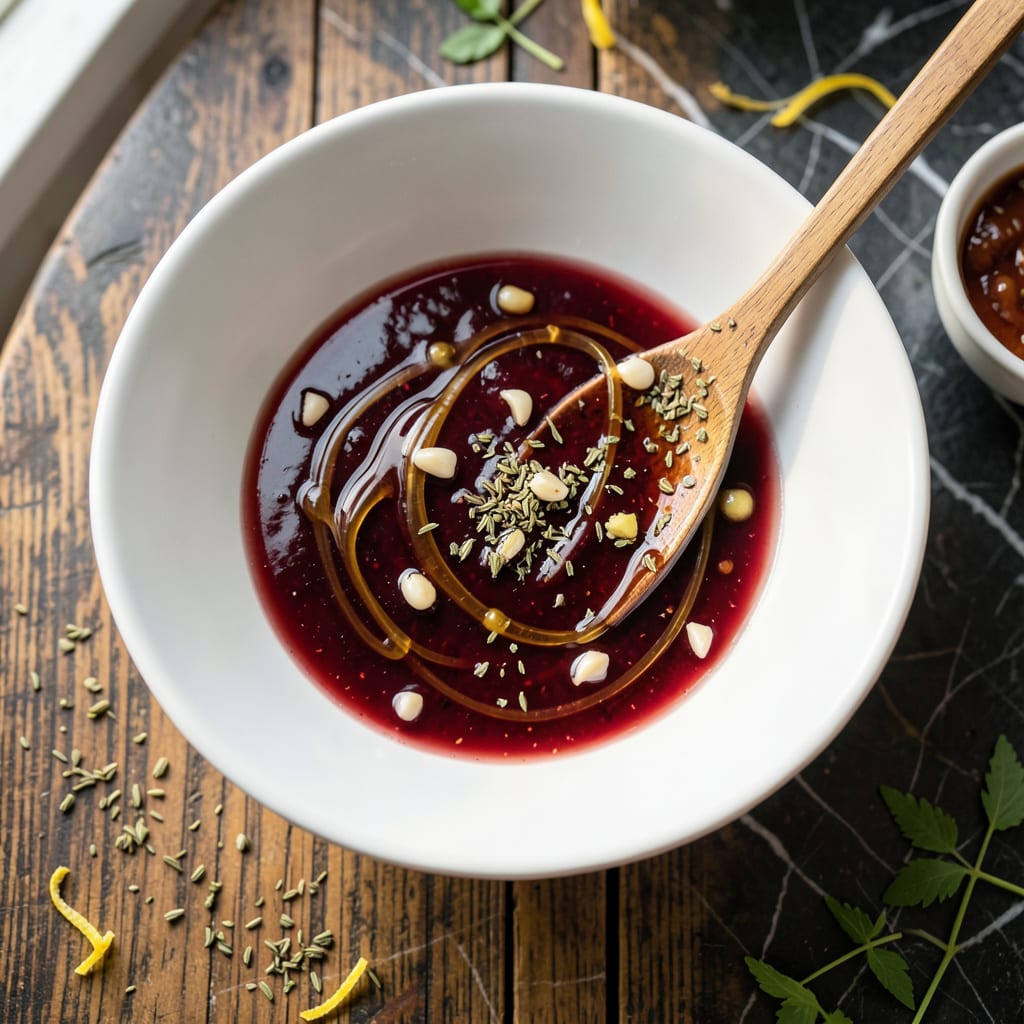
This low-fat vinaigrette delivers the same bold flavor of traditional versions with a fraction of the oil. The secret is using red wine vinegar as the base, balanced with a touch of sweetness and herbs.
Whisk it together in minutes for a dressing that brightens salads, marinates proteins, or drizzles over roasted vegetables. Tangy, versatile, and guilt-free.
Ingredients for Low Fat Red Wine Vinaigrette
Bold red wine vinegar base with minimal oil for guilt-free tangy dressing
| Ingredient | Amount | Notes |
|---|---|---|
| Red Wine Vinegar 🍷 | ¾ cup | High-quality for best flavor |
| Water 💧 | ¼ cup | Filtered or distilled |
| Dijon Mustard 🟡 | 1 tbsp | Smooth, not whole grain |
| Maple Syrup 🍁 | 1 tbsp | Or agave nectar for sweetness |
| Garlic Clove 🧄 | 1 clove | Minced or pressed |
| Dried Oregano 🌿 | ½ tsp | Crushed between fingers |
| Salt 🧂 | ½ tsp | Sea salt or kosher |
| Black Pepper 🌶️ | ¼ tsp | Freshly ground preferred |
| Extra-Virgin Olive Oil 🫒 | 2 tbsp | Reduced quantity for low-fat |
[recipeingredientscaler]
The vinegar is the foundation here—look for a robust red wine vinegar with good acidity. Colavita or Pompeian are reliable brands at most supermarkets. For the mustard, Grey Poupon Dijon is widely available and delivers consistent sharpness. The maple syrup adds balance without overwhelming (substitute honey only if vegan isn’t required). Fresh garlic is non-negotiable for bright, clean flavor.
No Dijon? Yellow mustard at half the amount works in a pinch. Swap maple syrup for date syrup or coconut sugar if needed. The olive oil can be reduced further or replaced with avocado oil for a neutral taste. Oregano not on hand? Dried basil or thyme at equal amounts maintains the herbaceous note. Water can be replaced with vegetable broth for added depth.
This keeps for 1 week in the fridge in an airtight container. The flavors meld and mellow over 24 hours, so make it ahead if possible. Shake or whisk before each use—the minimal oil may separate slightly. Do not freeze, as the texture suffers.
Why You’ll Love This Recipe
- 5-Minute Whisk: I toss everything in a jar, shake it, and it’s ready—no blender, no fuss.
- Tangy Sweet Balance: The sharp vinegar and maple syrup hit that just-right sweet-tart note every time.
- Salad’s Best Friend: Honestly, it brightens up greens, grains, even roasted veggies without weighing them down.
- Stays Fresh: I make a big batch and it keeps for a week, so I’m never scrambling for a last-minute dressing.
Step-by-Step Instructions for Low Fat Red Wine Vinaigrette
This method delivers a perfectly balanced emulsion with minimal oil while maintaining vibrant flavor.
Step 1: Combine Acidic Base and Aromatics
In a medium mixing bowl, whisk together the 0.75 cup red wine vinegar and 0.25 cup water until fully incorporated. The water dilutes the vinegar’s intensity just enough to create a bright but approachable acidity.
Add the minced garlic clove, 0.5 tsp dried oregano, 0.5 tsp salt, and 0.25 tsp black pepper. I crush the oregano between my fingers as I add it to release its aromatic oils. This base mixture should sit for 2 minutes to allow the flavors to begin melding.
Step 2: Incorporate Emulsifiers and Sweetener
Add the 1 tbsp Dijon mustard to the vinegar mixture. The mustard acts as the primary emulsifier, allowing the minimal oil to suspend properly in the dressing. Whisk vigorously for 15-20 seconds until the mustard is completely dissolved and the mixture takes on a slightly creamy appearance.
Next, drizzle in the 1 tbsp maple syrup while continuing to whisk. This step balances the acidity with natural sweetness. The mixture should now have a glossy sheen and a light amber color, with all dry ingredients fully dissolved.
Step 3: Slowly Emulsify with Olive Oil
Begin adding the 2 tbsp extra-virgin olive oil in a very thin, steady stream while whisking constantly. This gradual incorporation is crucial for creating a stable emulsion with such a small amount of oil. The dressing will begin to thicken slightly as the oil suspends in the liquid.
Continue whisking for an additional 30 seconds after all the oil is incorporated. You’ll notice the dressing transform from a thin liquid to a slightly viscous, uniform mixture. The color should deepen to a richer amber, and the texture should coat the back of a spoon.
Step 4: Adjust Consistency and Finalize
Let the dressing rest for 1 minute to allow the emulsion to fully stabilize. If the mixture appears too thick, add 1 tsp water at a time, whisking after each addition until it reaches your desired consistency. For a salad dressing, it should flow easily but still cling to greens.
Taste and adjust seasoning if necessary. The balance should be bright and tangy with a subtle sweetness, and the garlic and oregano should be present but not overpowering. Transfer to a clean jar or bottle and store in the refrigerator for up to 5 days. Shake well before each use as the emulsion may separate slightly over time.
Pro Tips For Making Low Fat Red Wine Vinaigrette
- Whisk Vigorously: After adding the maple syrup, whisk for at least 30 seconds—this helps the vinaigrette emulsify properly despite the low fat content. I learned this the hard way when my first few attempts separated immediately.
- Mince Garlic Fine: Press or finely mince the garlic clove to avoid chunks in your dressing. Sounds obvious, but I’ve ruined a batch by being lazy with the knife.
- Skip the Water First: Start with just the vinegar, mustard, and syrup, then thin with water as needed. Adding water too early can make the emulsion unstable.
- Use Room-Temp Ingredients: If your maple syrup is cold, warm it slightly before mixing—it blends smoother and prevents clumping. A quick 10-second microwave burst does the trick.
Flavor Customization for This low fat red wine vinaigrette
Herb Infusions
Swap the dried oregano for fresh dill or tarragon—use 1 tbsp chopped for a brighter, more complex profile. Fresh herbs add a vibrant pop that works especially well with spring greens. I love the anise-like note tarragon brings to this dressing.
Spice It Up
Add ¼ tsp crushed red pepper flakes or a pinch of cayenne for heat. The warmth contrasts beautifully with the tangy vinegar and sweet maple. Start with a small amount—you can always add more to taste. 🌶️
Citrus Brightness
Incorporate 1 tsp lemon zest or orange zest to add a citrusy lift. The zest’s oils amplify the freshness, making the vinaigrette perfect for summer salads. Pair it with segmented citrus fruit in your salad for a cohesive flavor experience.
Creamy Variation
For a richer texture, whisk in 2 tbsp non-fat Greek yogurt after emulsifying. This adds creaminess without extra fat. The yogurt also mellows the acidity slightly, making it more approachable for delicate greens like butter lettuce.
Umami Depth
Stir in 1 tsp soy sauce or Worcestershire sauce for a savory dimension. This works particularly well when using the dressing as a marinade for grilled chicken or tofu. The umami balances the sweetness and acidity perfectly.
Fruit-Infused
Add 2 tbsp finely diced fresh strawberries or raspberries for a fruity twist. The berries add natural sweetness and a subtle tartness. Strain out the seeds if you prefer a smoother texture. 💛
Nutrition Facts
Frequently Asked Questions
Can I use a different vinegar?
Try balsamic or apple cider vinegar for different flavor profiles. Just note that balsamic is sweeter, so you may want to reduce the maple syrup slightly.
Why does my dressing separate?
Separation is normal with minimal oil. Simply shake or whisk before each use. The mustard helps stabilize it, but a tight-sealing jar makes mixing easier.
How long does it last in the fridge?
Stays fresh for up to 5-7 days in an airtight container. The flavors actually improve after 24 hours as they meld together.
Can I make it oil-free?
Yes! Omit the oil entirely and add 1 extra tbsp water or vegetable broth for consistency. The mustard will still help bind the ingredients.

- 4C Bread Crumbs Meatballs Recipe: Crispy Crust and Juicy Centers - September 25, 2026
- 6 Oz Chocolate Chip Cookie Recipe: Perfectly Balanced Crispy Edges and Chewy Hearts - September 25, 2026
- 6-Inch Coffee Cake Recipe: Vanilla Bean Swirls and Buttery Streusel Topping - September 25, 2026