
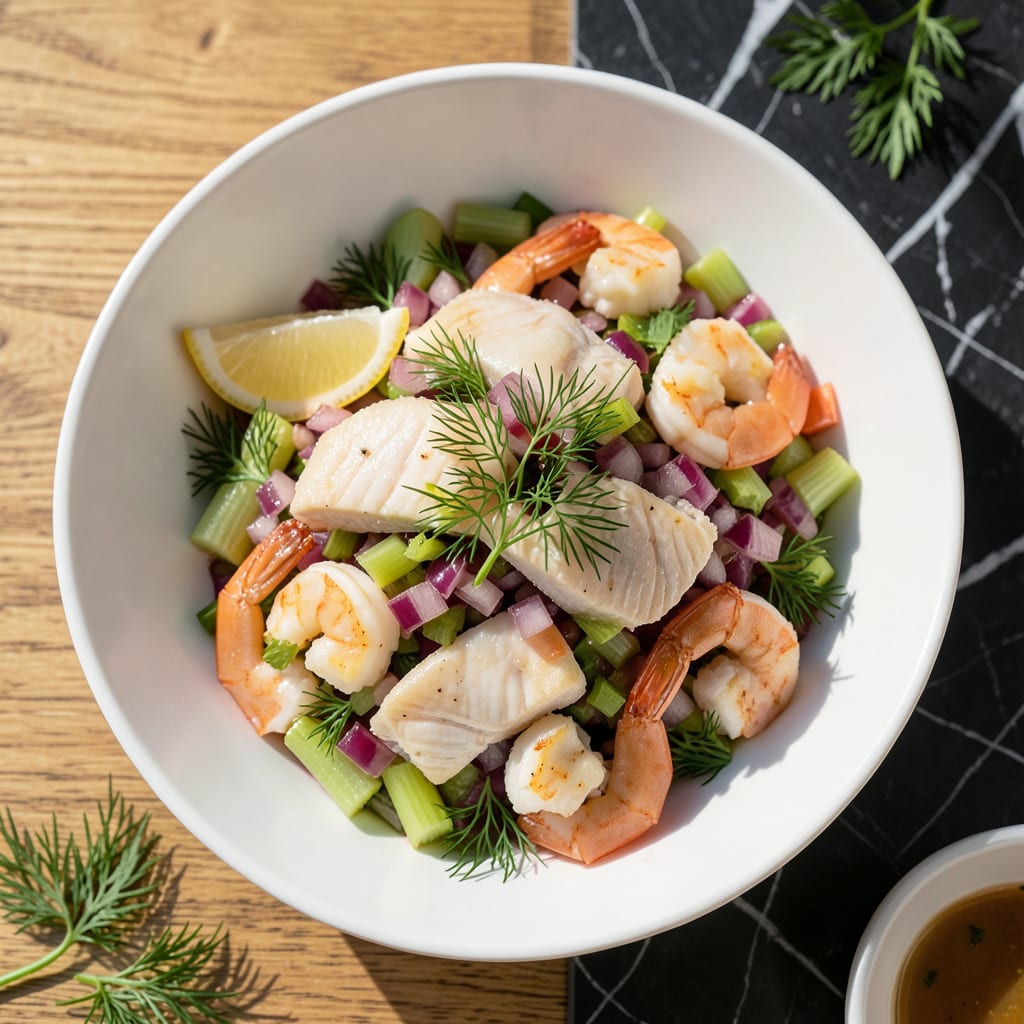
This light seafood salad brings fresh catch to life with zesty lemon and fragrant dill, creating a dish that’s both nutritious and satisfying. Perfect for warm days or a quick, healthy meal, it highlights the natural flavors of the sea without heavy add-ons.
With low fat and high protein, this salad packs omega-3s and bright, clean flavors into every bite. The simple preparation lets the seafood shine while keeping it fuss-free and beginner-friendly.
Ingredients for Low Fat Seafood Salad
Fresh seafood, zesty citrus, and fragrant herbs create this light, omega-3 packed dish with minimal effort.
| Ingredient | Amount | Notes |
|---|---|---|
| Fresh White Fish Fillets 🐟 | 1 ½ lb | Cod or tilapia, skinless |
| Cooked Shrimp 🦐 | ½ lb | Peeled and deveined, tail-off |
| Fresh Lemon Juice 🍋 | ¼ cup | About 2-3 lemons |
| Fresh Dill 🌿 | ¼ cup | Chopped, stems removed |
| Red Onion 🧅 | ½ whole | Finely diced for mild bite |
| Celery Stalks 🥬 | 2 whole | Diced for crunch |
| Low-Fat Greek Yogurt 🥛 | ½ cup | Plain, unsweetened |
| Dijon Mustard 🟡 | 1 tbsp | For tangy depth |
| Extra-Virgin Olive Oil 🫒 | 2 tbsp | Light, for dressing |
| Capers 🌱 | 2 tbsp | Drained, for briny pop |
| Salt 🧂 | ½ tsp | Sea salt preferred |
| Ground Black Pepper 🌶️ | ¼ tsp | Freshly ground for best flavor |
| Mixed Baby Greens 🥗 | 5 oz | For serving base |
| Lemon Zest 🍋 | 1 tbsp | From 1-2 lemons |
| Fresh Parsley 🌿 | 2 tbsp | Chopped, for garnish |
The seafood is the foundation here. Wild-caught cod or tilapia from Whole Foods or a trusted fishmonger ensures optimal freshness and flavor. Shrimp should be previously frozen and thawed—looks for labels indicating sustainable sourcing. The fish should have a mild aroma and firm texture. For the yogurt, Fage 2% provides the perfect low-fat tang without sacrificing creaminess.
No fresh dill? Dried dill at one-third the amount works in a pinch, though fresh is ideal. Out of capers? Chopped green olives add similar brininess. The Greek yogurt can be swapped for non-fat if preferred, but full-fat offers richer mouthfeel. For a dairy-free option, unsweetened coconut yogurt maintains the creamy texture while keeping it light.
This salad holds up beautifully for 2 days refrigerated in an airtight container. The flavors meld and deepen over time. Avoid freezing, as the seafood texture degrades. Best served chilled, allowing the ingredients to marinate for at least 30 minutes before serving.
Why You’ll Love This Recipe
- Minimal Effort: I just toss the fish, shrimp, and chopped red onion with lemon juice and dill—no cooking, no fuss.
- Bright & Zesty: That fresh lemon and dill combo makes every bite taste like a seaside breeze.
- Lunchbox Hero: I prep it Sunday and it stays fresh all week for quick, healthy lunches.
- Budget Stretcher: A little seafood goes a long way here, so I can serve four without breaking the bank.
Step-by-Step Instructions for Low Fat Seafood Salad
Master this technique-driven process to balance bright acidity with delicate seafood textures.
Step 1: Poach the Fresh White Fish Fillets to Tender Perfection
Fill a large skillet with 2 inches of water and bring to a gentle simmer over medium heat. Add the 1.5 lb fresh white fish fillets and poach for 8-10 minutes until the flesh flakes easily with a fork and turns opaque white throughout.
Remove the fillets with a slotted spatula and transfer to a paper towel-lined plate to drain. While still warm, flake the fish into 1-inch chunks using two forks—this preserves the delicate texture. The fish should be just cooked through; overcooking will make it dry and crumbly.
Step 2: Prepare the Vegetable Base and Aromatics
Finely dice the 0.5 whole red onion and 2 whole celery stalks to achieve uniform ¼-inch pieces. This size ensures each bite contains balanced texture without overwhelming the seafood. Chop the 0.25 cup fresh dill and 2 tbsp fresh parsley just before using to preserve their vibrant color and aroma.
In a large bowl, combine the diced onion, celery, dill, and parsley. Add the 0.5 lb cooked shrimp, ensuring they’re uniformly distributed. The shrimp’s pre-cooked state means you only need to incorporate them gently to avoid breaking their delicate structure.
Step 3: Craft the Lemon-Dill Dressing with Precision
In a separate bowl, whisk together the 0.5 cup low-fat Greek yogurt, 0.25 cup fresh lemon juice, 1 tbsp Dijon mustard, 2 tbsp extra-virgin olive oil, 2 tbsp capers, 0.5 tsp salt, and 0.25 tsp ground black pepper until completely smooth. The dressing should have a creamy consistency with visible flecks of capers.
Stir in the 1 tbsp lemon zest last—this preserves its volatile oils, which provide an intense citrus aroma. Taste and adjust seasoning if needed, though the capers and mustard already contribute significant saltiness and tang.
Step 4: Assemble and Chill for Optimal Flavor Fusion
Add the flaked fish to the vegetable and shrimp mixture. Pour the dressing over and fold gently with a silicone spatula until everything is evenly coated. The dressing should lightly glaze each component without creating a soupy consistency.
Cover the bowl and refrigerate for at least 30 minutes to allow the flavors to meld. This chilling period is crucial—it lets the fish absorb the bright lemon-dill notes while the yogurt base thickens slightly, ensuring each serving maintains its structure on the plate.
Step 5: Serve Over Greens with Professional Presentation
Divide the 5 oz mixed baby greens among four serving plates, creating a bed for the seafood salad. Use a large spoon to portion the salad over the greens, arranging it in a gentle mound rather than packing it down.
Garnish with additional dill sprigs if desired. The contrast between the crisp greens and the tender seafood, all tied together by the creamy dressing, creates a restaurant-quality presentation that highlights the dish’s fresh, vibrant character.
Pro Tips For Making Low Fat Seafood Salad
- Poach Fish Gently: I learned this the hard way—use barely simmering water (around 160°F) for the white fish fillets to keep them tender and prevent dryness.
- Soak the Onion: Toss the thinly sliced red onion in cold water for 10 minutes to mellow its bite, so it doesn’t overpower the dill and lemon.
- Pat Shrimp Dry: After cooking, blot the shrimp with a paper towel to remove excess moisture—otherwise, your salad will be watery.
- Add Lemon Last: Stir in the fresh lemon juice just before serving to preserve its bright flavor and prevent the seafood from toughening.
Storing and Reheating Leftovers
Refrigerator Storage
Transfer your seafood salad to airtight glass containers within 2 hours of preparation. It keeps beautifully for 2 days at 40°F or below. The flavors actually improve as the lemon and dill infuse into the fish. ❄️
Freezing Not Recommended
Avoid freezing this salad. The fish and shrimp texture becomes mushy and watery when thawed. If you must freeze, do so without the dressing and mixed baby greens, but expect quality loss. I never freeze my seafood salads.
Chilling for Best Flavor
Before serving, always refrigerate for at least 30 minutes to let flavors meld. This step is non-negotiable—the fish absorbs the bright dressing notes beautifully. I often chill mine for 2 hours when time allows.
Reheating Not Needed
This salad is meant to be served cold, straight from the fridge. The poached fish and shrimp stay tender and refreshing without any heat. Simply give it a stir before portioning over mixed baby greens.
Make-Ahead Tip
Prepare the salad up to 1 day ahead. Store the dressing separately and combine just before serving to keep the vegetables crisp. The lemon juice in the dressing prevents browning of the celery and onion.
Nutrition Facts
Frequently Asked Questions
Can I use canned seafood instead of fresh?
Yes, canned tuna or salmon works well as a budget-friendly alternative. Drain and rinse thoroughly to remove excess sodium. The texture will be slightly different but still delicious.
How do I keep the salad from getting watery?
Pat the fish and shrimp completely dry before mixing. Also, drain the capers well. Chill the salad in a fine-mesh strainer over a bowl for 10 minutes if needed.
What greens work best as a base?
Butter lettuce, spinach, or arugula all pair beautifully. Avoid hearty greens like kale—they can overpower the delicate seafood flavors.
Can I make this ahead for a party?
Prepare up to 1 day in advance. Store dressing separately and combine just before serving to maintain crispness.

- 8 Bean Soup Recipe Crock Pot: Hearty Vegetable Medley in One Pot - September 25, 2026
- 4C Bread Crumbs Meatballs Recipe: Crispy Crust and Juicy Centers - September 25, 2026
- 6 Oz Chocolate Chip Cookie Recipe: Perfectly Balanced Crispy Edges and Chewy Hearts - September 25, 2026