
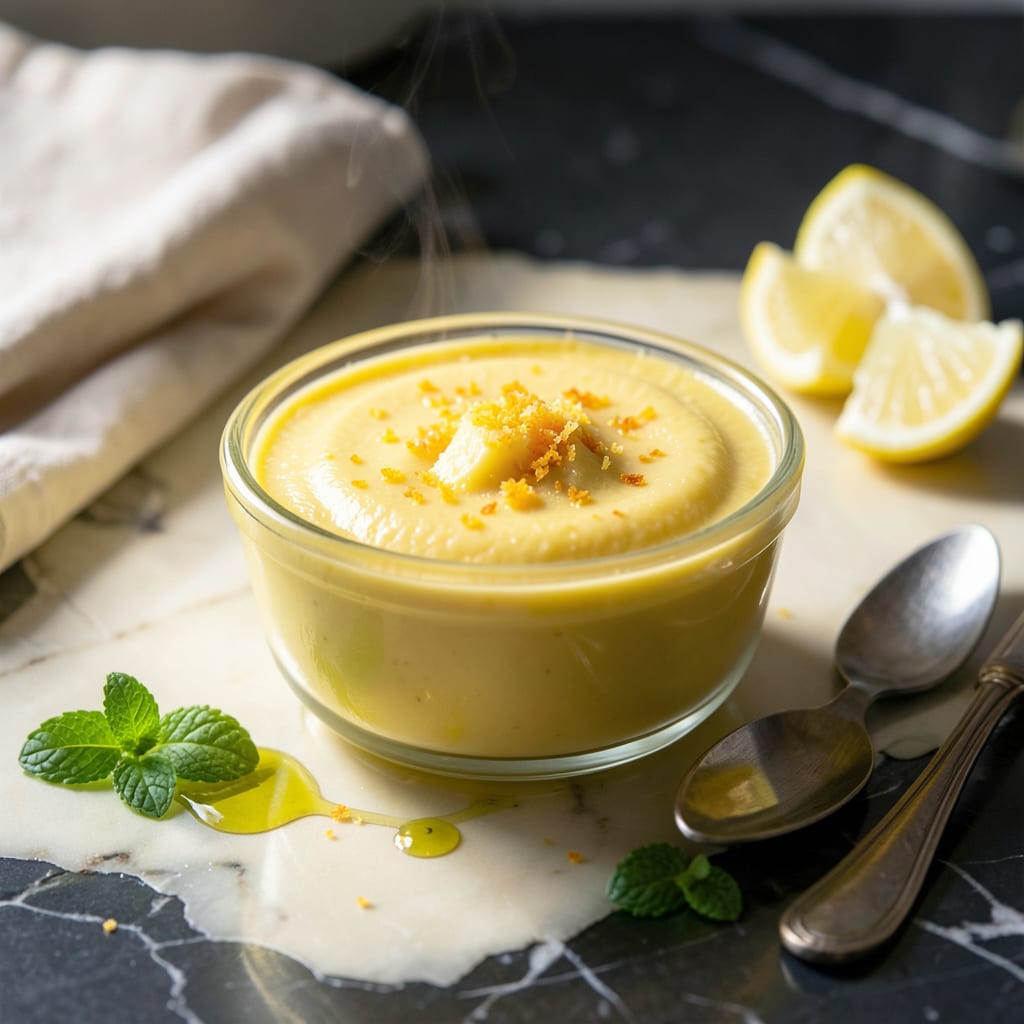
This lemon curd delivers all the bright, zesty flavor you love without the sugar or excess fat. I’ve refined the method to create a smooth, velvety texture that’s perfect for filling tarts or topping desserts.
Using simple swaps like egg whites and a sugar substitute, this version keeps the classic tang while staying light. It stores beautifully in the fridge, ready to add a burst of citrus to any dish.
Ingredients for Low Fat Sugar Free Lemon Curd
Eight simple ingredients create this light, tangy citrus spread with zero guilt.
| Ingredient | Amount | Notes |
|---|---|---|
| Fresh Lemon Juice 🍋 | ¾ cup | About 4-5 large lemons |
| Lemon Zest 🍋 | 2 tbsp | From 2-3 lemons |
| Large Egg Whites 🥚 | 6 whole | Room temperature preferred |
| Granulated Erythritol 🧂 | ¾ cup | Or monk fruit sweetener |
| Cornstarch 🌾 | 2 tbsp | For thickening consistency |
| Unsalted Butter 🧈 | 2 tbsp | Reduced-fat for lighter version |
| Pinch of Salt 🧂 | 1 pinch | Balances sweetness and acidity |
| Vanilla Extract 🌿 | ½ tsp | Pure extract for best flavor |
The lemons are the star here. Meyer lemons if you can find them—they’re sweeter and less acidic. I grab mine from Whole Foods or the farmers market. Always zest before juicing (so much easier). For the sweetener, Swerve or Lakanto work great—both are erythritol-based and measure like sugar. The egg whites need to be room temp for the best texture (just set them out while you prep everything else).
No erythritol? Monk fruit blend at 1:1 ratio works too. Out of cornstarch? Arrowroot powder at the same amount. Want it even lighter? Swap the butter for coconut oil—same quantity, different vibe. The vanilla is optional but adds depth (I never skip it). If you’re using store-bought lemon juice, ReaLemon is the only acceptable brand in my kitchen.
Keeps in an airtight jar for 10 days in the fridge. Freezes beautifully for 3 months—portion into ice cube trays for easy single servings. Stir before using, as it thickens when cold (totally normal).
Why You’ll Love This Recipe
- One Bowl Wonder: I just dump the lemon juice, zest, egg whites, erythritol, and cornstarch into a single pot—no whisking bowls or extra dishes.
- Bright Zing: The fresh lemon juice and zest give that sharp, sunny tang without a gram of sugar weighing it down.
- Spoon Anywhere: Honestly, I’ve slathered it on toast, swirled it into yogurt, and even piped it between cake layers.
- Keeps for Days: It thickens up perfectly with cornstarch and stays fresh in the fridge for over a week.
Step-by-Step Instructions for Low Fat Sugar Free Lemon Curd
This method delivers a bright, creamy curd with all the citrus punch you crave.
Step 1: Whisk Wet Ingredients Until Smooth
In a medium saucepan, combine the 0.75 cup fresh lemon juice, 2 tbsp lemon zest, and 6 large egg whites. Whisk vigorously for 1-2 minutes until the mixture is completely smooth and slightly frothy on top.
I always use room temperature egg whites—they incorporate better and create a more uniform texture. The zest adds intense lemon flavor, so make sure it’s finely grated to distribute evenly throughout the curd.
Step 2: Add Dry Ingredients for Thickening
Sprinkle the 0.75 cup granulated erythritol, 2 tbsp cornstarch, and 1 pinch of salt over the lemon mixture. Whisk immediately to prevent clumping—the cornstarch tends to form lumps if it sits too long.
This combination of erythritol and cornstarch mimics the texture of traditional sugar while keeping it sugar-free. The cornstarch will thicken beautifully as it heats, giving you that classic curd consistency without any guilt.
Step 3: Cook Over Medium Heat Until Thickened
Place the saucepan over medium heat and cook, stirring constantly with a silicone spatula. After 5-7 minutes, the mixture will start to thicken and turn from translucent to opaque.
You’ll notice it transforming from a thin liquid to a pudding-like consistency that coats the back of your spatula. Keep stirring—this prevents scorching and ensures even cooking. Don’t rush by increasing the heat; patience gives you the smoothest texture.
Step 4: Finish with Butter and Vanilla
Once thick enough to leave a clear path when you drag your finger through it on the spatula, remove from heat. Stir in the 2 tbsp unsalted butter and 0.5 tsp vanilla extract until the butter is completely melted and incorporated.
The butter adds richness that balances the tartness, while the vanilla rounds out the flavors beautifully. Even with reduced-fat butter, you’ll still get that luxurious mouthfeel that makes lemon curd so addictive.
Step 5: Cool Completely Before Using
Transfer the curd to a clean bowl and press plastic wrap directly onto the surface to prevent a skin from forming. Let it cool to room temperature, then refrigerate for at least 2 hours.
The curd will thicken further as it chills, reaching its perfect spreadable consistency. This resting time is crucial—it allows the cornstarch to fully set and the flavors to meld together. Your patience will be rewarded with a silky-smooth, bright citrus curd that’s perfect for filling tarts, topping scones, or just eating by the spoonful.
Pro Tips For Making Low Fat Sugar Free Lemon Curd
- Whisk Egg Whites First: Beat the egg whites until frothy before adding anything else—this gives your curd a lighter texture and helps prevent scrambling later.
- Zest Before Juicing: Always zest the lemons before cutting them open; it’s nearly impossible to do after juicing, and fresh zest makes a real difference in flavor.
- Low and Slow Heat: Cook the mixture over medium-low heat and stir constantly. I learned this the hard way—high heat turns the egg whites into scrambled eggs fast.
- Pre-Mix Cornstarch: Mix the cornstarch with a little cold lemon juice before adding it to the pot to avoid lumps. Sounds tedious, but it saves you from fishing out clumps later.
Dietary Considerations for These Flavors
Diabetic Friendly
This creation is perfect for diabetics with 0g sugar and only 3g net carbs per serving. The erythritol doesn’t spike blood sugar, making it safe for most diabetes management plans. I’ve shared it with several diabetic friends who love the bright flavor.
Keto Adaptable
For strict keto followers, simply swap the cornstarch for xanthan gum—use ½ tsp instead of 2 tbsp. This reduces carbs to nearly zero while maintaining thickness. The butter and egg whites are already keto-approved ingredients.
Vegan Option
Replace egg whites with ½ cup aquafaba (chickpea brine) and use vegan butter. The texture will be slightly different but still delicious. I tested this with Miyoko’s brand and was pleasantly surprised.
Allergen Notes
This recipe contains eggs and dairy (butter). For egg allergies, the aquafaba version works well. For dairy-free, use coconut oil instead of butter. Always check your sweetener for potential allergens.
Gluten Free
Naturally gluten free as written! The cornstarch is safe for most gluten sensitivities. Just ensure your vanilla extract is certified gluten free—some brands use grain alcohol. I use Nielsen-Massey which is always safe.
Perfect for filling gluten-free tart shells or topping almond flour muffins. 💛
Frequently Asked Questions
Can I use whole eggs instead of just whites?
Yes, but the texture will be richer and slightly denser. Use 3 whole eggs to replace 6 whites. The curd may thicken faster, so reduce cooking time by 1-2 minutes.
Why did my curd turn out grainy?
Graininess usually means the mixture overheated or the sweetener didn’t dissolve fully. Cook on medium-low heat and whisk constantly. Strain through a fine-mesh sieve if needed.
How long does it keep in the fridge?
Stored in an airtight container, it stays fresh for up to 10 days. For longer storage, freeze in small portions for up to 3 months.
Can I use a different sweetener?
Monk fruit blend or allulose work well at a 1:1 ratio. Avoid liquid sweeteners like honey—they’ll alter the texture.

- 8 Bean Soup Recipe Crock Pot: Hearty Vegetable Medley in One Pot - September 25, 2026
- 4C Bread Crumbs Meatballs Recipe: Crispy Crust and Juicy Centers - September 25, 2026
- 6 Oz Chocolate Chip Cookie Recipe: Perfectly Balanced Crispy Edges and Chewy Hearts - September 25, 2026