
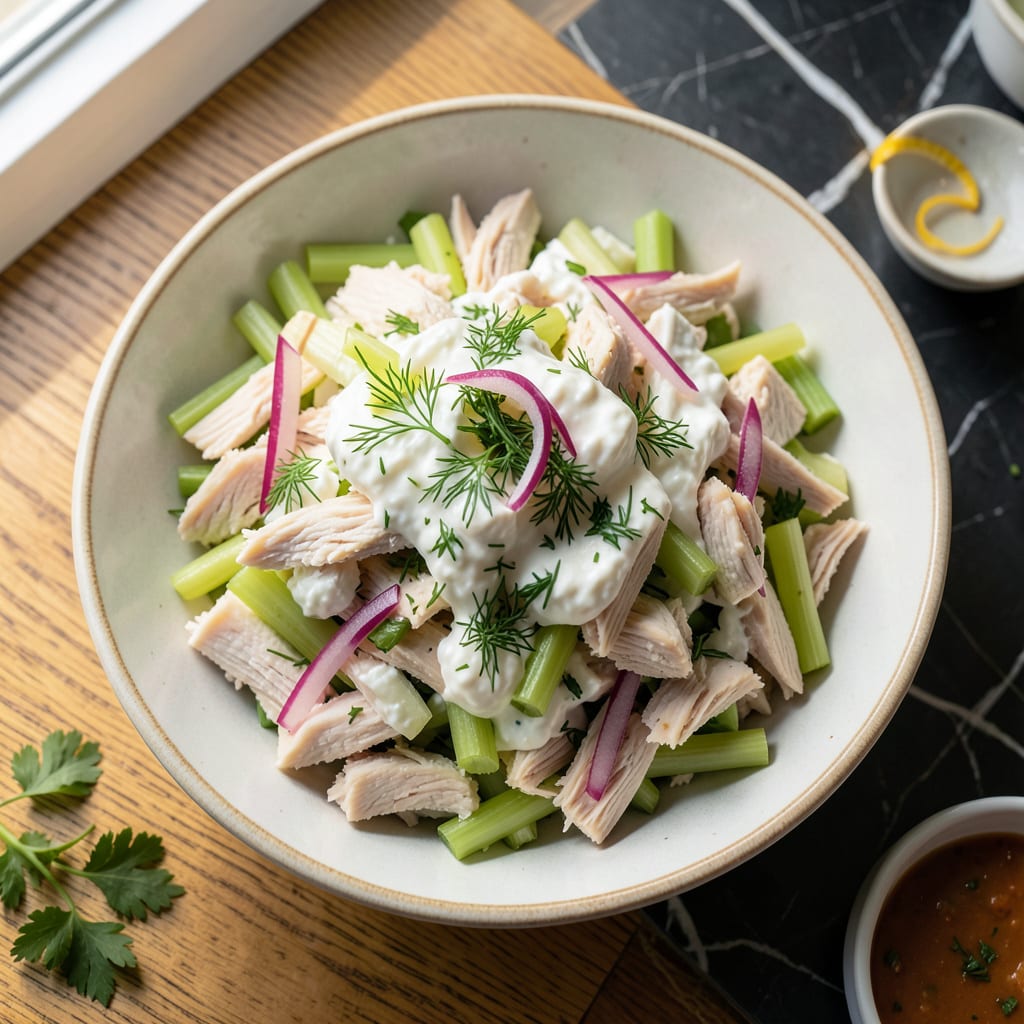
This turkey salad proves you don’t need heavy mayo to enjoy bold flavor and satisfying texture. A light Greek yogurt base keeps it creamy while cutting fat significantly.
Crisp celery, sweet red onion, and fresh herbs add bright crunch to every bite. The result is a light yet filling dish perfect for sandwiches or lettuce wraps.
Ingredients for Low Fat Turkey Salad
Probably have most of this already. Fresh herbs make it sing.
| Ingredient | Amount | Notes |
|---|---|---|
| Cooked Turkey Breast 🦃 | 2 cups | Shredded or diced |
| Plain Greek Yogurt 🥛 | ¾ cup | Non-fat or low-fat |
| Celery Stalks 🌿 | 3 whole | Finely diced for crunch |
| Red Onion 🧅 | ½ whole | Small, finely minced |
| Fresh Dill 🌿 | 2 tbsp | Chopped, or sub parsley |
| Fresh Parsley 🍃 | 2 tbsp | Chopped, or sub chives |
| Dijon Mustard 🟡 | 1 tbsp | For tangy depth |
| Lemon Juice 🍋 | 1 tbsp | Freshly squeezed preferred |
| Honey 🍯 | 1 tsp | Or maple syrup |
| Salt 🧂 | ½ tsp | Kosher or sea salt |
| Black Pepper 🌶️ | ¼ tsp | Freshly ground preferred |
| Garlic Powder 🧄 | ¼ tsp | For subtle savory note |
The Greek yogurt is non-negotiable here—Fage 2% or Chobani Non-Fat give the best texture without thinning out. Look for turkey breast that’s already cooked (rotisserie style at Whole Foods or Trader Joe’s saves time). If you’re cooking your own, poach it in broth for extra flavor (worth the extra minute). The celery needs to be crisp—bend a stalk and if it snaps, it’s perfect.
No Greek yogurt? Low-fat sour cream works in a pinch (just strain it first). Skip the red onion if it’s too sharp—green onions at twice the amount add a milder bite. Fresh dill is ideal but dried dill at one-third the amount gets you close. Want more tang? Add an extra spoon of Dijon or a dash of apple cider vinegar.
This keeps beautifully for 4-5 days in the fridge—actually tastes better after a night. Don’t dress it too early if you’re prepping ahead (the celery stays crisper). Pack into lettuce cups for lunchboxes—holds up great for 3 days.
Why You’ll Love This Recipe
- No Fuss Mixing: I just dump the shredded turkey, Greek yogurt, and chopped veggies in a bowl—no fancy techniques, no mess.
- Bright and Fresh: The crunch of celery and bite of red onion with that fresh dill? Honestly, it tastes like summer in a spoonful.
- Meal Prep Dream: I make a big batch Sunday and it’s my lunch all week—great on wraps, crackers, or straight from the container.
- Leftovers Reinvented: That leftover turkey breast from dinner? Here’s what sold me—it turns into something new and even better the next day.
Step-by-Step Instructions for Low Fat Turkey Salad
This method keeps every bite fresh and crunchy with minimal effort.
Step 1: Prep the Vegetables and Herbs
Finely dice the 3 whole Celery Stalks into small, uniform pieces—this ensures even distribution in every bite. You want them small enough to blend in but large enough to add that satisfying crunch. I like to use the inner stalks for their tender texture.
Finely mince the 0.5 whole Red Onion until it’s almost paste-like. This prevents any harsh, raw onion flavor while still adding that essential bite. Chop the 2 tbsp Fresh Dill and 2 tbsp Fresh Parsley finely as well, removing any thick stems. The herbs should be delicate enough to mix in seamlessly.
Step 2: Mix the Creamy Dressing Base
In a large bowl, combine the 0.75 cup Plain Greek Yogurt, 1 tbsp Dijon Mustard, 1 tbsp Lemon Juice, and 1 tsp Honey. Whisk until completely smooth and uniform in color. The yogurt should lose its thick, clumpy texture and become silky.
Add the 0.5 tsp Salt, 0.25 tsp Black Pepper, and 0.25 tsp Garlic Powder, then whisk again. Taste and adjust seasoning—you want a bright, tangy base with just a hint of sweetness from the honey. This dressing should coat the back of a spoon but still be pourable.
Step 3: Combine All Ingredients Gently
Add the 2 cups Cooked Turkey Breast to the bowl with the dressing. Use a fork or your hands to break it into bite-sized pieces if it isn’t pre-shredded. I prefer shredded for texture, but diced works too. Fold everything together until the turkey is evenly coated.
Now add the prepped celery, onion, dill, and parsley. Gently fold to combine, being careful not to overmix—the celery should stay crisp, not mushy. The mixture should look vibrant with flecks of green and white throughout. If it seems too thick, you can add a splash of water, but I find the yogurt base stays creamy as is.
Step 4: Chill and Let Flavors Meld
Cover the bowl tightly with plastic wrap or a lid and refrigerate for at least 30 minutes. This resting time is crucial—it allows the flavors to develop and the celery to soften just slightly while maintaining its crunch.
I like to let mine chill for 1-2 hours if possible. The longer it sits, the more the dill and lemon will shine through. Give it a quick stir before serving to redistribute any liquid that may have separated to the top. Serve on whole-grain bread, over greens, or with crackers for a satisfying, light meal.
Pro Tips For Making Low Fat Turkey Salad
- Chill the Turkey: I learned this the hard way—shred the turkey breast while it’s still cold from the fridge, about 40°F. It holds together better and doesn’t turn mushy when mixed with the yogurt.
- Drain the Yogurt: Sounds weird, but it works: strain plain Greek yogurt in a fine mesh sieve for 10 minutes to remove excess liquid—prevents a watery salad.
- Soak the Onion: Resist the urge to skip this: soak finely diced red onion in cold water for 5 minutes to mellow its harsh bite without losing crunch.
- Add Dill Last: Fresh dill wilts fast. I was skeptical until I tried it, but folding it in at the very end keeps the flavor bright and the color vibrant.
Common Mistakes When Making Great low fat turkey salad
Overmixing the Salad
Stirring too vigorously breaks down the celery and turns your salad mushy. I fold everything gently with a spatula just until combined—about 8-10 turns usually does it. The celery should stay crisp, not wilted. 💡
Skipping the Chill Time
Serving immediately robs the dish of depth. The 30-minute rest lets flavors meld and the celery soften slightly. I often prep this the night before—it actually tastes better the next day.
Using Watery Yogurt
Thin yogurt makes a runny salad. I always use Greek yogurt and drain it in a strainer for 10 minutes if it looks watery. Fage 2% or Chobani Non-Fat are my go-to brands for perfect consistency.
Overpowering Onion
Raw red onion can dominate the dish. I finely mince ½ small onion and soak it in cold water for 5 minutes to mellow the bite. This keeps the flavor present without overwhelming the turkey.
Dry Turkey Texture
Pre-cooked turkey can dry out. I always use rotisserie turkey from Whole Foods or poach my own in broth. Shredding by hand rather than chopping helps maintain moisture in every bite.
Underseasoning the Base
The dressing needs bold flavor to carry the salad. I taste and adjust with extra Dijon mustard or lemon juice if needed. Don’t be shy with the salt—½ tsp is just the starting point. 🌟
Nutrition Facts
Frequently Asked Questions
Can I use rotisserie turkey instead of cooked breast?
Rotisserie turkey works perfectly and saves time. Just remove the skin and shred the meat. It adds extra flavor from the seasoning.
How do I prevent the salad from getting watery?
Drain your Greek yogurt in a strainer for 10 minutes before using. Also, pat the turkey dry if it’s very moist. This keeps the texture creamy, not runny.
What’s the best way to serve this?
Try it in whole-grain wraps, on lettuce cups, or over mixed greens. It also makes a great protein-packed dip with veggie sticks.
Can I make this ahead of time?
Yes! It actually tastes better after 24 hours in the fridge. Store in an airtight container for up to 5 days.

- 4C Bread Crumbs Meatballs Recipe: Crispy Crust and Juicy Centers - September 25, 2026
- 6 Oz Chocolate Chip Cookie Recipe: Perfectly Balanced Crispy Edges and Chewy Hearts - September 25, 2026
- 6-Inch Coffee Cake Recipe: Vanilla Bean Swirls and Buttery Streusel Topping - September 25, 2026