
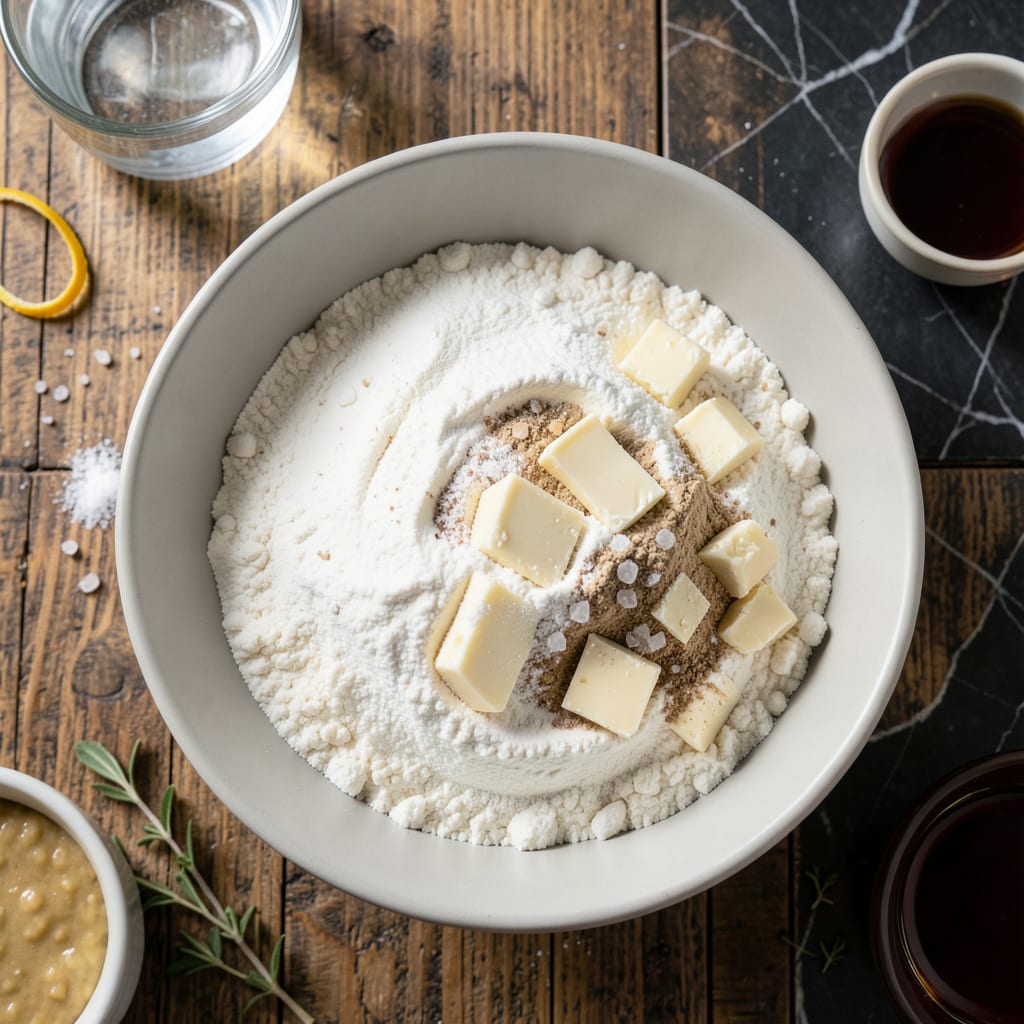
Achieving a flaky pie crust without butter or excess fat is absolutely possible with this proven method. The secret lies in cold ingredients and precise technique.
This vegan version delivers the same tender, layered texture you expect from traditional crusts. It holds its shape beautifully and bakes to golden perfection every time.
Ingredients for Low Fat Vegan Pie Crust
Minimal fat, maximum flake. These plant-based ingredients create a tender, golden crust every time.
| Ingredient | Amount | Notes |
|---|---|---|
| All-Purpose Flour 🌾 | 2 ½ cups | Spoon and level method |
| Cold Water 💧 | ½ cup | Ice-cold for flakiness |
| Vegan Butter 🧈 | ¼ cup | Cold, cubed, low-fat variety |
| Apple Cider Vinegar 🍏 | 1 tbsp | For tenderness and elasticity |
| Salt 🧂 | ½ tsp | Fine sea salt preferred |
| Sugar 🍬 | 1 tsp | Optional, for slight sweetness |
| Unsweetened Applesauce 🍎 | ¼ cup | Fat substitute for moisture |
| Baking Powder ⚗️ | ¼ tsp | For slight lift |
The flour is the foundation here. King Arthur or Gold Medal all-purpose are ideal for consistent protein content. Cold ingredients are non-negotiable—chill your mixing bowl and utensils for 10 minutes before starting. Vegan butter must be cold and cubed; Miyoko’s or Earth Balance have reliable low-fat options that still deliver structure without excess grease.
No vegan butter? Coconut oil in solid form works (use refined to avoid coconut flavor). Out of apple cider vinegar? White vinegar or lemon juice at the same amount. The applesauce adds moisture without fat—unsweetened only to avoid excess sugar. For extra flakiness, replace 2 tbsp water with vodka (it evaporates during baking, leaving no alcohol taste).
This dough keeps 2-3 days wrapped tightly in the fridge, or freeze for 1 month. Bring to room temperature before rolling for best results. Pre-baked crusts can be stored at room temperature for 1 day in an airtight container.
Why You’ll Love This Recipe
- 5-Minute Mix: I just pulse the flour, cold vegan butter, and a splash of apple cider vinegar in my food processor—no chilling required.
- Buttery, Flaky Layers: The vinegar makes the crust tender, while the vegan butter gives it that rich, golden finish everyone craves.
- Fits Any Pie: Sweet or savory, this crust handles fruit fillings, quiches, even pot pies without falling apart.
- Pantry Staples Only: All-purpose flour, salt, and a few basics are all I need—no special trips to the store.
Step-by-Step Instructions for Vegan Pie Crust
This method ensures a flaky, tender crust using plant-based ingredients with professional results.
Step 1: Combine Dry Ingredients for Base Structure
In a large mixing bowl, whisk together the 2.5 cups all-purpose flour, 0.5 tsp salt, 1 tsp sugar, and 0.25 tsp baking powder until evenly distributed. The baking powder adds subtle lift, while the salt enhances all the other flavors in your creation.
I always sift my dry ingredients first to prevent lumps and ensure even distribution. This step creates the foundation for your crust’s texture. The sugar, though minimal, balances the acidity from the vinegar and adds a hint of sweetness that complements both sweet and savory fillings.
Step 2: Cut in Vegan Butter and Applesauce
Add the 0.25 cup cold vegan butter (cubed) and 0.25 cup unsweetened applesauce to the dry ingredients. Using a pastry cutter or your fingers, work the mixture until it resembles coarse crumbs with some pea-sized pieces remaining. The applesauce replaces traditional fat while maintaining moisture and tenderness.
Keep the butter as cold as possible during this process—warm butter leads to tough crust. The combination of solid fat and applesauce creates steam during baking, which is what gives you those coveted flaky layers. Work quickly but thoroughly to maintain the right texture.
Step 3: Incorporate Liquid Ingredients
Create a well in the center of the mixture and add the 1 tbsp apple cider vinegar and 0.5 cup ice-cold water. The vinegar tenderizes the gluten while adding subtle complexity to the flavor profile. Use a fork to gradually incorporate the liquid into the dry ingredients.
Mix just until the dough begins to come together—it will look shaggy and slightly dry. Overworking the dough develops gluten, which results in a tough crust rather than a flaky one. The cold water helps keep everything at the right temperature while the vinegar ensures elasticity without excessive gluten formation.
Step 4: Rest and Chill the Dough
Turn the dough out onto a lightly floured surface and gently knead it just until it forms a cohesive ball. Divide into two equal portions and shape into discs. Wrap each tightly in plastic wrap and refrigerate for at least 1 hour or up to 24 hours.
This resting period allows the flour to fully hydrate and the gluten to relax. The chilling also firms up the vegan butter, making the dough easier to roll out and preventing it from sticking to your surface. The longer you can chill it, the better your results will be—this is where the magic of flaky layers begins.
Pro Tips For Making Low Fat Vegan Pie Crust
- Chill the Butter: Keep your vegan butter ice cold until the last second—warm butter blends into the flour and kills flakiness. I learned this the hard way after making three dense, sad crusts in a row.
- Use Ice Water: Swap the cold water for actual ice water (a few cubes floating in it) to keep the dough crisp and prevent the vegan butter from melting prematurely.
- Skip Overworking: Mix just until the dough comes together—overworking develops gluten, and your crust will turn out tough instead of tender.
- Add Vinegar Last: Stir in the apple cider vinegar at the very end, after the water. It helps relax the gluten without making the dough sticky if added too early.
Flavor Customization for low fat vegan pie crust
Herb Infusions
Add 1 tbsp fresh rosemary or thyme leaves to the dry ingredients for a savory crust perfect for pot pies. The herbs release their oils during baking, creating an aromatic base. I love this with mushroom or lentil fillings. 🌿
Citrus Zest Twist
Mix in 1 tbsp lemon or orange zest with the flour for a bright, zesty note that pairs beautifully with fruit fillings. The citrus oils enhance the crust’s flavor without adding fat. This works especially well with apple or berry pies.
Spiced Sweetness
For dessert pies, add ½ tsp cinnamon or ¼ tsp nutmeg to the dry ingredients. These warm spices complement pumpkin, sweet potato, or apple fillings. I often add ¼ tsp cardamom for an exotic touch.
Savory Cheese Alternative
Stir in 2 tbsp nutritional yeast for a cheesy, umami flavor that works great with savory pies. It adds depth without any dairy. This pairs wonderfully with spinach or tofu-based fillings.
Nutty Crunch
Replace ¼ cup flour with finely ground almonds or walnuts for added texture and richness. Toast the nuts first for maximum flavor. This works well for both sweet and savory applications. 💡
Chocolate Lovers
Add 2 tbsp cocoa powder for a chocolate crust that’s perfect for cream pies or custard fillings. Reduce flour by the same amount to maintain the right texture. The cocoa adds depth without extra fat.
Frequently Asked Questions
Can I use oil instead of vegan butter?
Yes, use ¼ cup cold coconut oil as a direct substitute. It maintains flakiness while keeping the crust low-fat. Ensure it’s solid, not melted, for best texture.
Why does the dough need to chill?
Chilling firms the fat and relaxes gluten, preventing a tough crust. 1 hour minimum ensures layers form properly during baking.
Can I make this gluten-free?
Substitute the flour with a 1:1 gluten-free blend. Add ½ tsp xanthan gum for structure. Results may be slightly less flaky.
How do I prevent a soggy bottom crust?
Pre-bake the crust for 10 minutes at 375°F before adding filling. Brushing with a thin layer of applesauce also creates a barrier.

- 8 Bean Soup Recipe Crock Pot: Hearty Vegetable Medley in One Pot - September 25, 2026
- 4C Bread Crumbs Meatballs Recipe: Crispy Crust and Juicy Centers - September 25, 2026
- 6 Oz Chocolate Chip Cookie Recipe: Perfectly Balanced Crispy Edges and Chewy Hearts - September 25, 2026